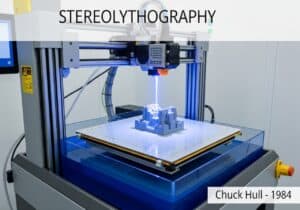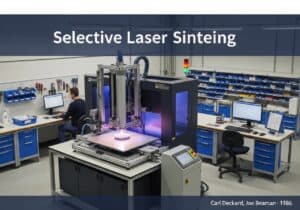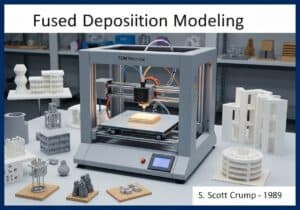
Additive manufacturing builds parts layer by layer from a digital model. Polymer processes include fused deposition, Stereolithographie and powder bed sintering, while metals use laser or electron beam melting and directed energy deposition. The method makes internal channels, lattices and part consolidation possible. It also suits schneller Prototypenbau and low-volume production.
Qualification is the main obstacle for end-use parts. Porosity, residual Stress, surface roughness and anisotropy must be controlled and verified. In-process monitoring and standardized test methods are being developed to close that gap. Post-processing, from heat treatment to support removal, adds cost that is easy to underestimate. The listings below follow process, material and certification progress.
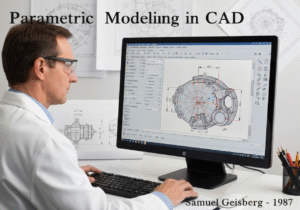
Das schichtweise Drucken von Bauteilen verändert die Konstruktionsregeln, und diese Seite verfolgt diese Veränderung. Titan und Metallpulver sind im Einsatz. Titan, Polymere auf Thermoplaste. Formveränderliche gedruckte Strukturen sind auf 4D-Druckund biologisches Drucken auf BiodruckDigitale Planungstools verbinden sich mit CAD-Software.
Dies ist unsere neueste Auswahl an weltweiten Veröffentlichungen und Patenten in englischer Sprache zum Thema Additive Manufacturing, die in zahlreichen wissenschaftlichen Online-Zeitschriften zu den Themen Additive Manufacturing, 3D-Druck, Fused Deposition, Sintern, Stereolithographie, Metalldruck, Rapid Prototyping, Layer-by-Layer und Energy Deposition veröffentlicht wurden.
Additive manufacturing for transverse thermoelectric materials and composites
Patent published on the 2026-11-19 in WO under Ref WO2026241491 by UNIV TEMPLE [US] (Ren Fei [us], Gao Weixiao [us])
Abstract: An additive manufacturing device comprising: at least one print head, the at least one print head comprising a print nozzle, a material loading chamber, and an extrusion screw; a material reservoir connected to the material loading chamber; a pressure source connected to the material reservoir and configured to drive a fluid material from the material reservoir to the material loading chamber; a print bed; and at least one controller, wherein the at least one controller directs the extrusion scr[...]
Our summary: This content describes an additive manufacturing device designed for creating transverse thermoelectric materials and composites. It includes components such as a print head with a nozzle, a material loading chamber, and an extrusion screw. The device is controlled by a controller that manages the extrusion process and fluid material delivery.
Additive manufacturing, thermoelectric materials, extrusion system, fluid compositions
Patent
Wc-co powder for additive manufacturing
Patent published on the 2026-11-19 in WO under Ref WO2026241307 by KENNAMETAL INC [US] (Wang Zhuqing [us], Bonidie Matthew [us], Collins Gabriel [us])
Abstract: Disclosed herein are powder compositions that may be used for additive manufacturing comprising cemented carbide particles having controlled particle sizes and distributions. Also disclosed are methods of making such powder compositions and using such powder compositions for additive manufacturing. The single sintering process may eliminate the need for complex multiple high-temperature thermal treatments when producing the cemented carbide particles.[...]
Our summary: This document discusses WC-Co powder compositions for additive manufacturing. It details the controlled particle sizes and distributions of cemented carbide particles. Additionally, it describes a single sintering process that simplifies production by eliminating complex thermal treatments.
WC-Co, additive manufacturing, powder compositions, sintering process
Patent
Method for producing three-dimensional (3d) molded article using room temperature-curable organopolysiloxane composition, and three-dimensional (3d) m
Patent published on the 2026-11-19 in US under Ref US20260364874 by SHINETSU CHEMICAL CO [JP] (Fujiwara Akitsugu [jp], Satou Tokuo [jp])
Abstract: Provided is a method for producing a three-dimensional (3D) molded article capable of being cured without consuming energy specifically intended for curing such as heating or light irradiation. The method comprises the steps of: i) applying a first room temperature-curable organopolysiloxane composition onto a base material using a 3D printing device to form a first layer, wherein the first composition exhibits a thixotropy index of 5 or higher and lower than 10; ii) allowing the first layer und[...]
Our summary: This method produces 3D molded articles using a room temperature-curable organopolysiloxane composition. The process involves applying layers of the composition with specific thixotropy indices using a 3D printer. Each layer cures under non-heated conditions without requiring additional energy for curing.
3D printing, organopolysiloxane, room temperature-curable, thixotropy
Patent
Method for detecting geometric features of a workpiece
Patent published on the 2026-11-19 in WO under Ref WO2026238482 by SIEMENS AG [DE] (Ertelthalner-Nikolaev Dimitrii [de])
Abstract: The invention relates to a method for detecting geometric features of a workpiece, involving: a) carrying out a wire-based additive manufacturing process using a CNC machine, a current source, and a material wire; b) while carrying out the manufacturing process, identifying contact points between the material wire and the workpiece on the basis of primary and/or derived process parameters of the additive manufacturing process; and c) determining the geometric features of the workpiece by determi[...]
Our summary: The method detects geometric features of a workpiece during a wire-based additive manufacturing process. It identifies contact points between the material wire and the workpiece using process parameters. The positions of these contact points are determined within the workpiece s coordinate system, referencing CNC machine coordinates.
additive manufacturing, geometric features, CNC machine, contact points
Patent
Systems and Methods for Additive Manufacturing Using Thermally Cross-Linkable Materials
Patent published on the 2026-11-19 in US under Ref US20260364875 by TEXAS A & M UNIV SYS [US] (Odom Morgan G B [us], Green Micah J [us], Sweeney Charles B [us])
Abstract: The invention relates to additive manufacturing systems and methods using thermally cross-linkable materials. The thermally cross-link-able material includes at least one thermally cross-linkable polymeric material and an amount of at least one electromagnetic energy susceptor there-in. A system with at least one print head and an electromagnetic energy generator is provided to produce electromagnetic energy in the area of the thermally cross-linkable material after being dispensed from the prin[...]
Our summary: This invention involves systems and methods for additive manufacturing using thermally cross-linkable materials. It includes a print head and an electromagnetic energy generator to cure the material. The process utilizes an electromagnetic energy susceptor to facilitate the heating and curing.
Additive Manufacturing, Thermally Cross-Linkable Materials, Electromagnetic Energy, Curing
Patent
Hydrocarbon Material for 3D Printing and Pre-Structuring
Patent published on the 2026-11-19 in US under Ref US20260365845 by ARXADA AG [CH] (Kirchner Eva [ch], Tomas Kohlberg Carla [ch], La Delfa Gaetano [ch], Kieliger Flavio [ch], Abgottspon Magnus [ch], Ellinger Stefan [ch], Fournier Jean [ch], Mayerhoeffer Ulrich [ch], Schulte Heinrich [ch])
Abstract: The present invention relates to resin compositions, structures comprising said resin compositions, and the use of the inventive resin compositions as well as methods of manufacturing pre-structured objects comprising certain resin compositions.[...]
Our summary: The invention focuses on resin compositions suitable for 3D printing. It includes structures made from these resin compositions. Additionally, it outlines methods for creating pre-structured objects using the specified resins.
3D Printing, Hydrocarbon Resin, Pre-Structured Objects, Manufacturing Methods
Patent
Topology optimization with void exclusion constraint based on a novel virtual physical field method
Published on 2026-07-20 by @OXFORD
Abstract: AbstractExcluding enclosed voids during design remains a critical challenge in additive manufacturing, impacting performance and manufacturability. This study presents a topology optimization method featuring a novel explicit void exclusion constraint. Unlike classical methods requiring additional physical fields, our innovative virtual displacement method addresses common mechanical problems through just one type of physical field, leveraging virtual compliance with polarized distribution for v[...]
Our summary: This study introduces a novel topology optimization method that effectively excludes voids in additive manufacturing. It utilizes a virtual displacement method for enhanced efficiency and simplifies parameter tuning through a penalized auxiliary volume term. The approach has been validated through various examples and demonstrates significant improvements in performance and manufacturability.
Topology optimization, void exclusion, virtual displacement method, additive manufacturing
Publication
Virtual Reality Setup to Assess Space-Time Geometry Effects on Retrospective Temporal Perception
Published on 2026-06-09 by @MIT
Abstract: AbstractThis pilot study introduces an innovative approach to researching time perception in virtual reality (VR) by utilizing the Neos Metaverse Engine to design an experimental setup. Participants engaged in trials to assess how Euclidean and non-Euclidean (equi-affine) geometries affect time perception by observing a dot moving along an elliptical trajectory with varying velocity profiles. The study highlights the potential of VR technology, emphasizing the benefits of developing and running [...]
Our summary: This study explores time perception in virtual reality using the Neos Metaverse Engine. Participants assessed the effects of different geometries on their perception of time through an experimental setup. The findings suggest that VR technology provides a valuable framework for future research in this area.
Virtual Reality, Time Perception, Neos Metaverse, Experimental Setup
Publication