Product Design, Manufacturing & Innovation Resources
Heim » Gute Herstellungspraxis (GMP)

Gute Herstellungspraxis (GMP)

1960
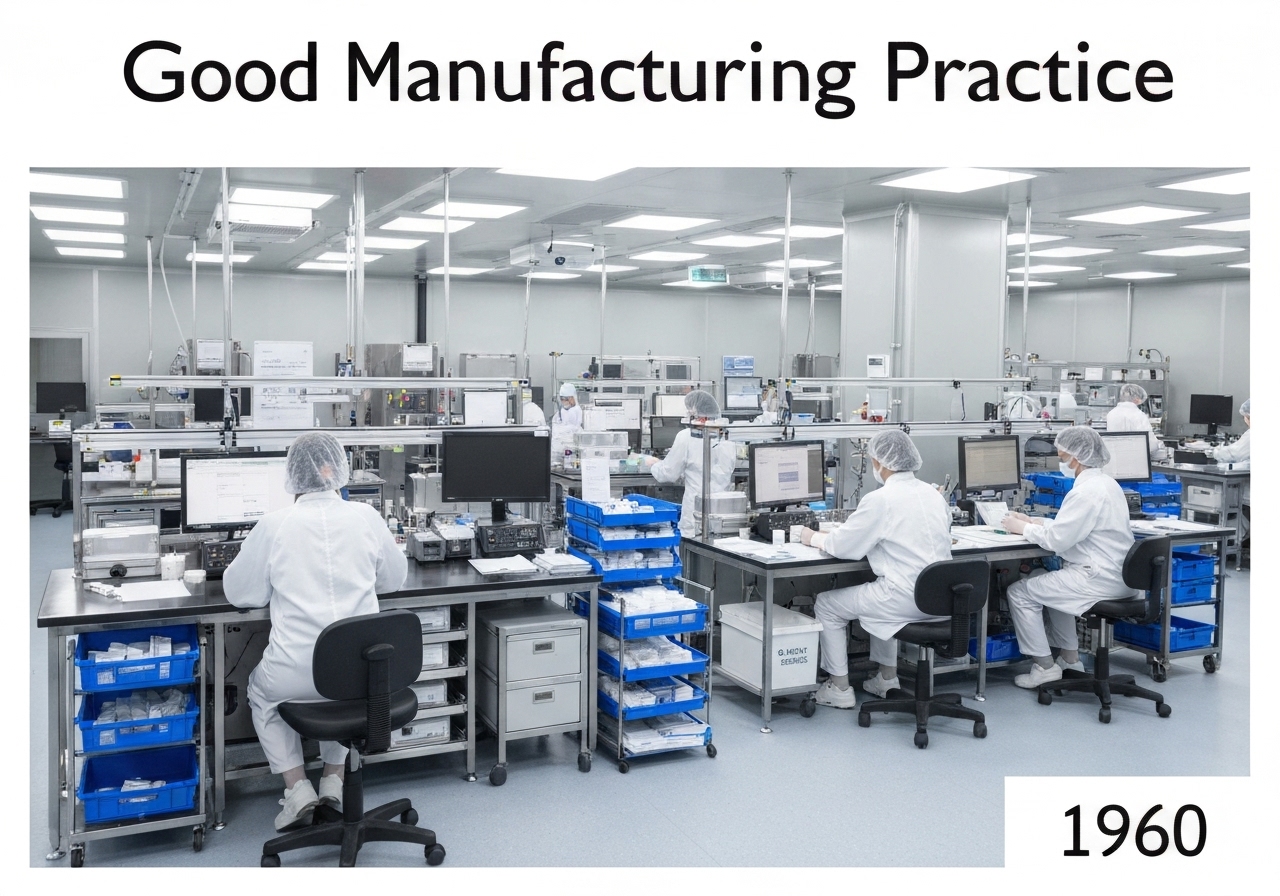
Pharmazeutische Produktionsstätte, die die Standards der Guten Herstellungspraxis (GMP) erfüllt.

(Abbildung dient nur zur Veranschaulichung)

Gute Herstellungspraxis (GMP) is a system of regulations and guidelines ensuring that pharmaceutical products are consistently produced and controlled according to quality standards. It covers all aspects of production, from the starting materials, premises, and equipment to the training and personal hygiene of staff. GMP is designed to minimize the risks involved in any pharmaceutical production. GMP compliance is demonstrated in practice through IQ OQ PQ process validation of the equipment and processes.


Gute Herstellungspraxis (GMP) represents the minimum standard that a medicines manufacturer must meet in their production processes. The core principle of GMP is that quality cannot be tested into a final product; it must be built into the product during all stages of manufacturing. This proactive approach is critical because failures in quality can have life-threatening consequences. GMP guidelines provide a framework for managing production and quality control, often referred to as cGMP, with the ‘c’ standing for ‘current’, emphasizing that the standards must be up-to-date with the latest technology and scientific understanding. Key components of GMP include robust quality management systems, stringent control over raw materials, validated manufacturing processes, and comprehensive documentation. Every step, from receiving raw materials to shipping the final product, must be documented in detail. This creates a traceable batch record that can be audited to ensure compliance and investigate any deviations or product defects. Personnel must be properly trained for their specific roles, and facilities must be designed and maintained to prevent contamination, mix-ups, and errors. Equipment must be calibrated, cleaned, and validated to ensure it performs as intended. Adherence to GMP is enforced by national regulatory agencies, such as the Food and Drug Administration (FDA) in the United States and the European Medicines Agency (EMA) in Europe, through regular inspections of manufacturing facilities. Failure to comply can result in product recalls, fines, and even facility shutdowns.

UNESCO Nomenclature: 3308
- Apotheke

Typ

Abstraktes System

Störung

Wesentliche

Verwendung

Weitverbreitete Verwendung

Vorläufer

  • das US-amerikanische Bundesgesetz über Lebensmittel, Arzneimittel und Kosmetika aus dem Jahr 1938, das eine Sicherheitszulassung vor der Markteinführung vorschrieb
  • die Contergan-Tragödie der späten 1950er und frühen 1960er Jahre, die gravierende Lücken in der Arzneimittelregulierung und -prüfung aufzeigte
  • Fortschritte in der industriellen Prozesskontrolle und Qualitätsmanagementtheorien aus anderen Branchen

Anwendungen

  • Herstellung von verschreibungspflichtigen und rezeptfreien Arzneimitteln
  • Produktion von Impfungen and biologics
  • Herstellung von Medizinprodukten
  • Herstellung pharmazeutischer Wirkstoffe (APIs)
  • Qualitätskontrolle in der Lebensmittel- und Kosmetikindustrie

Patente:

NA

Potenzielle Innovationsideen

  • implementation of ‘quality by design’ (QbD) principles for proactive quality management
  • Einsatz von Prozessanalysetechnologie (PAT) zur Echtzeitüberwachung der Fertigung
  • kontinuierliche Fertigungsprozesse statt traditioneller Batchproduktion
  • Automatisierung und Robotik in Produktionslinien zur Reduzierung menschlicher Fehler
  • Blockchain for secure and transparent supply chain tracking (track and trace)
  • Einwegtechnologie zur Reduzierung des Kreuzkontaminationsrisikos
  • KI-gesteuerte vorausschauende Wartung für Fertigungsanlagen
  • digitale Chargenprotokolle und elektronische Qualitätsmanagementsysteme
  • fortschrittliche aseptische Verarbeitungstechniken für sterile Produkte
  • 3D-Druck personalisierter Darreichungsformen unter GMP-Bedingungen
Verwandt mit: GMP, cGMP, Qualitätskontrolle, Qualitätssicherung, Arzneimittelherstellung, fda, Regulierung, Arzneimittelsicherheit, Validierung, Chargenprotokoll.

Historischer Kontext

Gute Herstellungspraxis (GMP)

1958
1960
1960
1960
1960
1960
1960
1956
1960
1960
1960
1960
1960
1960
1960

(wenn das Datum unbekannt oder nicht relevant ist, z. B. „Strömungsmechanik“, wird eine gerundete Schätzung seines bemerkenswerten Auftretens bereitgestellt)

10. Jahr Jubiläum

Bilder in voller Größe und Downloads sind nur für registrierte Mitglieder 100% kostenlos verfügbar.

> Login <