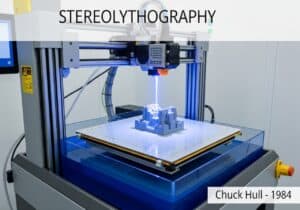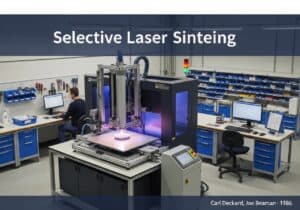
Voici notre dernière sélection de publications et de brevets mondiaux en anglais sur la fabrication additive, parmi de nombreuses revues scientifiques en ligne, classées et axées sur la fabrication additive, l'impression 3D, le dépôt par fusion, le frittage, la stéréolithographie, l'impression de métal, le prototypage rapide, le dépôt couche par couche et le dépôt d'énergie.
Method for mixing ceramic base powder and method for producing ceramic sintered compact
Patent published on the 2026-10-15 in WO under Ref WO2026216440 by NITERRA MAT CO LTD [JP] (Ookubo Kazuya [jp], Yamaguti Haruhiko [jp], Sano Shoya [jp], Sano Takashi [jp])
Abstract: A method for mixing a ceramic base powder according to an embodiment comprises a mixing step for mixing a ceramic base powder, a sintering aid powder, and an additive to prepare a slurry. In the mixing step, at least one additive constituting the additive is obtained by being preheated. The additive preferably contains one or more selected from binders, plasticizers, dispersants, solvents, and viscosity modifiers. More preferably, the preheating temperature of the additive to be preheated is wit[...]
Our summary: The method involves mixing a ceramic base powder with a sintering aid and additives to create a slurry. At least one additive is preheated before mixing, enhancing its effectiveness. The preferred preheating temperature for the additive ranges from 15°C to 70°C.
ceramic mixing, sintering aid, slurry preparation, additive preheating
Patent
Method for generating control data for a device for additive manufacturing, and additive manufacturing method
Patent published on the 2026-10-15 in WO under Ref WO2026215064 by EOS GMBH ELECTRO OPTICAL SYSTEMS [DE] (Birg Markus [de], Holfelder-schwalme Peter [de], Mirzabeigi Narges [de], Novotny Tobias [de], Sonnen Fabian [de])
Abstract: The invention relates to a method for generating control data (SD) for a device for the additive manufacturing of a manufacturing product in a manufacturing method in which the manufacturing product is manufactured layer-by-layer by selectively solidifying construction material (13, 17, 19), wherein the layer-by-layer manufacture is carried out by successive solidification of layers (L) in a vertical manufacturing direction (V), wherein the construction material (13, 17) is selectively solidifie[...]
Our summary: The invention describes a method for generating control data for additive manufacturing devices. It specifies different irradiation types for energy beams to achieve varying growth direction distributions and welding depths in construction materials. The generated control data enables the intermittent use of these irradiation types across multiple layers of the manufacturing product.
additive manufacturing, control data, energy beam, crystal structure
Patent
Powder material for use in 3d printing
Patent published on the 2026-10-15 in WO under Ref WO2026215275 by SYENSQO SPECIALTY POLYMERS USA LLC [US] (Mondschein Ryan [us], Jeol StÉphane [fr], Ward Christopher [us], Booher Matthew [us])
Abstract: The invention relates to a method for manufacturing a three-dimensional (3D) object with an additive manufacturing system, the method comprising: - step A): fusing and bonding particles of a powder (P) as described herein; - optional step B): subjecting the 3D object to a thermal treatment at a temperature TB greater than or equal to 100.0°C; wherein powder (P) comprises, consists essentially of or consists of: - at least 90.0 wt% of polymeric particles comprising at least one polyamide (PA) as[...]
Our summary: The invention describes a method for creating 3D objects using a specific powder material. The powder consists primarily of polyamide particles and may include various plastic additives and flow agents. An optional thermal treatment step can enhance the properties of the printed object.
3D printing, powder material, polyamide, additive manufacturing
Patent
Dental appliance with multiple materials and corresponding method of forming the dental appliance
Patent published on the 2026-10-15 in WO under Ref WO2026215732 by INST STRAUMANN AG [CH] (Chavanne Philippe [ch], Traversa Flavio [ch])
Abstract: The present disclosure discusses dental appliances and techniques for fabricating dental appliances. The dental appliances are fabricated using an additive manufacturing technique and include a primary material, formed from a first polymeric material, with cavities shaped to fit over a patient s teeth. A second polymeric material is used to form reinforcing elements that have an elastic modulus that is higher than the elastic modulus of the first polymeric material. The reinforcing elements form[...]
Our summary: The disclosure presents dental appliances created through additive manufacturing. These appliances consist of a primary polymeric material with cavities for teeth and a secondary material for reinforcement. The design enhances aligner retention, applies customized forces, and optimizes force distribution.
Dental appliances, additive manufacturing, polymeric materials, reinforcing elements
Patent
Charcoal aggregate for producing sintered ore
Patent published on the 2026-10-15 in WO under Ref WO2026216255 by NIPPON STEEL CORP [JP] (Yabe Hideaki [jp])
Abstract: The present invention provides: a charcoal aggregate that makes it possible to improve the production rate of a sintered ore in a method for producing a sintered ore using carbonized wood as part of solid fuel in a sintering step; and a method for producing a sintered ore using the charcoal aggregate. Provided is a charcoal aggregate for producing a sintered ore containing charcoal and a binder, said charcoal aggregate satisfying: a volatile content of the charcoal being 30 mass % or less, an ap[...]
Our summary: The invention presents a charcoal aggregate that enhances sintered ore production rates. It incorporates carbonized wood as solid fuel during sintering. The aggregate meets specific criteria for volatile content, density, and crushing strength.
charcoal aggregate, sintered ore, carbonized wood, production rate
Patent
Silicon nitride powder, silicon nitride-based sintered body, highly thermally conductive member, and method for producing silicon nitride powder
Patent published on the 2026-10-15 in WO under Ref WO2026216627 by UBE CORP [JP] (Oda Hiroshi [jp], Kawano Takafumi [jp], Yamada Tetsuo [jp], Shibata Koji [jp])
Abstract: [PROBLEM] To provide a silicon nitride powder exhibiting excellent effects in sintering characteristics such as easy sinterability and high thermal conductivity by setting the sulfur content of the silicon nitride powder to within an appropriate requisite range. Additionally, adopting this powder will enable provision of a silicon nitride-based sintered body that also has sufficient thermal conductivity. The present disclosure also provides a highly thermally conductive member including the sili[...]
Our summary: The disclosure presents a silicon nitride powder with optimized sulfur content for enhanced sintering and thermal conductivity. It enables the creation of a silicon nitride-based sintered body with high thermal performance. A method for producing this silicon nitride powder is also provided.
silicon nitride powder, sintered body, thermal conductivity, sulfur content
Patent
Topology optimization with void exclusion constraint based on a novel virtual physical field method
Published on 2026-07-20 by @OXFORD
Abstract: AbstractExcluding enclosed voids during design remains a critical challenge in additive manufacturing, impacting performance and manufacturability. This study presents a topology optimization method featuring a novel explicit void exclusion constraint. Unlike classical methods requiring additional physical fields, our innovative virtual displacement method addresses common mechanical problems through just one type of physical field, leveraging virtual compliance with polarized distribution for v[...]
Our summary: This study introduces a novel topology optimization method that effectively excludes voids in additive manufacturing. It utilizes a virtual displacement method for enhanced efficiency and simplifies parameter tuning through a penalized auxiliary volume term. The approach has been validated through various examples and demonstrates significant improvements in performance and manufacturability.
Topology optimization, void exclusion, virtual displacement method, additive manufacturing
Publication
Virtual Reality Setup to Assess Space-Time Geometry Effects on Retrospective Temporal Perception
Published on 2026-06-09 by @MIT
Abstract: AbstractThis pilot study introduces an innovative approach to researching time perception in virtual reality (VR) by utilizing the Neos Metaverse Engine to design an experimental setup. Participants engaged in trials to assess how Euclidean and non-Euclidean (equi-affine) geometries affect time perception by observing a dot moving along an elliptical trajectory with varying velocity profiles. The study highlights the potential of VR technology, emphasizing the benefits of developing and running [...]
Our summary: This study explores time perception in virtual reality using the Neos Metaverse Engine. Participants assessed the effects of different geometries on their perception of time through an experimental setup. The findings suggest that VR technology provides a valuable framework for future research in this area.
Virtual Reality, Time Perception, Neos Metaverse, Experimental Setup
Publication