본 자료는 적층 제조, 3D 프린팅, 융합 적층, 소결, 스테레오리소그래피, 금속 프린팅, 쾌속 조형, 층별 적층 및 에너지 증착 등 다양한 적층 제조 관련 분야를 다루는 전 세계 영문 논문 및 특허를 엄선하여 정리한 최신 자료입니다.
Composite flooring or building component
Patent published on the 2026-07-02 in WO under Ref WO2026137048 by COMPOSITE BUILDING TECH PTY LTD [AU] (Perkins Jason [au], Williamson Justin [au])
Abstract: A composite flooring or building component is disclosed comprising a first surface forming a floor or building element and a second surface supported on pile caps, beams or bearers with recessed compartments. Formed of fibre reinforced polymer, embodiments use a multilayer assembly with a tailored core of structural and/or insulating materials encapsulated by an FRP skin. Encapsulated beam forms provide beam-like strength; solid inserts create hardpoints for columns, fixings and penetrations. Pe[...]
Our summary: The composite flooring component features a first surface for flooring and a second surface supported on structural elements. It utilizes fibre reinforced polymer with a tailored core for strength and insulation, and includes various design options for drainage and installation. The system supports modular dimensions and multiple manufacturing techniques for efficient construction.
composite flooring, fibre reinforced polymer, multilayer assembly, modular panel dimensions
Patent
Granules and building component containing the granules
Patent published on the 2026-07-02 in US under Ref US20260182566 by CERTAINTEED LLC [US] (Amid Hooman [us], Wang Hua [us], Trabelsi Siwar [us], Watkins Nicholas James [us])
Abstract: In one embodiment, a granule can comprise a mixture, the mixture comprising an amorphous phase material and a biocidal agent including calcium oxide, wherein a 24-hour Ca2+ leaching factor change of the granule (24-LF Change) is at least 10%, the 24-LF Change=(24-LFG710/24-LFG)×100%, with 24-LFG being a 24 hour Ca2+ leaching factor of the granule and 24-LFG710 being a 24 hour leaching factor of the granule after subjecting the granule to sintering for 3 hours at a temperature of 710° C. In ano[...]
Our summary: The content describes a granule that includes an amorphous phase material and a biocidal agent like calcium oxide. It specifies conditions for the granule s leaching factor, including a significant change after sintering. The granule is designed for use in building components, ensuring long-term biocidal activity while being free of certain metal compounds.
granules, biocidal agent, calcium oxide, leaching factor
Patent
Method for producing sintered magnet containing manganese-aluminum alloy, and sintered magnet containing manganese-aluminum alloy
Patent published on the 2026-07-02 in WO under Ref WO2026141299 by AGC INC [JP] (Naito Koji [jp], Ishikawa Yasunari [jp])
Abstract: The present invention pertains to a method for producing a sintered magnet containing a manganese-aluminum alloy, the method comprising (i) preparing magnetic particles having a manganese-aluminum alloy containing a τ phase, (ii) molding the magnetic particles to form a molded body, and (iii) sintering the molded body in a predetermined temperature range while a predetermined pressure is applied, wherein a sintered body obtained after (iii) has a plurality of domains in a predetermined observat[...]
Our summary: This invention describes a method for producing a sintered magnet using a manganese-aluminum alloy. It involves preparing magnetic particles with a τ phase, molding them, and sintering under specific conditions. The resulting sintered body exhibits multiple domains with a defined crystal structure.
sintered magnet, manganese-aluminum alloy, magnetic particles, sintering process
Patent
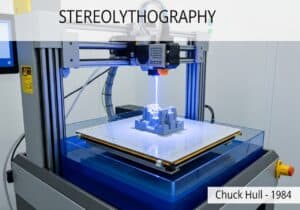
Stereolithography device and platform
Patent published on the 2026-07-02 in WO under Ref WO2026140384 by FUJIKURA LTD [JP] (Kusaka Hiroyuki [jp], Kunai Yuichiro [jp])
Abstract: To suppress unintended stereolithography of a stereolithography product, a platform of a stereolithography device has a reflection reduction region (light transmission region ) that comprises an insulator at at least a portion of a surface that is irradiated with an exposure beam.[...]
Our summary: A stereolithography device features a platform designed to minimize unintended stereolithography. It includes a reflection reduction region that incorporates an insulator. This insulator is present on a surface exposed to an irradiation beam.
Stereolithography, reflection reduction, exposure beam, insulator
Patent
Method and system for segmenting faces of component(s) in stereolithography (stl) files
Patent published on the 2026-07-02 in US under Ref US20260187812 by HCL TECH LIMITED [IN] (B Manoj [in], C Tathagata [in], K Abhijit [in], U Nitin [in])
Abstract: [0000] This disclosure relates to a method and system for segmenting faces of component in STL files. The method may include detecting by a controller an expanding and contiguous set of triangles based on an order of occurrence thereof in the STL file. Further, the method may include identifying by the controller a plurality of hard edges and a plurality of hard co-edges of each triangle from the expanding and contiguous set of triangles. Further, the method may include determining by the contro[...]
Our summary: The method involves detecting an expanding set of triangles in STL files. It identifies hard edges and co-edges to determine closed loops. These closed loops form boundaries for segmenting faces of components.
stereolithography, STL files, face segmentation, triangle detection
Patent
Recoater assembly for additive manufacturing systems
Patent published on the 2026-07-01 in EP under Ref EP4768227 by GEN ELECTRIC [US] (Sterle John Thomas [us])
Abstract: A recoater assembly is movable across a working surface in a forward stroke and in a return stroke and includes a powder plow. One or more actuators are coupled to the powder plow and are actuable to provide vertical movement of the powder plow with respect to the working surface. A controller is operable to control the one or more actuators to maintain the powder plow in a retracted position during the forward stroke, lower the powder plow to an extended position when the powder plow is at or n[...]
Our summary: The recoater assembly moves across the working surface in forward and return strokes. It includes a powder plow controlled by actuators for vertical movement. The controller manages the positions of the powder plow during operation to optimize performance.
recoater assembly, additive manufacturing, powder plow, actuators
Patent
Virtual Reality Setup to Assess Space-Time Geometry Effects on Retrospective Temporal Perception
Published on 2026-06-09 by @MIT
Abstract: AbstractThis pilot study introduces an innovative approach to researching time perception in virtual reality (VR) by utilizing the Neos Metaverse Engine to design an experimental setup. Participants engaged in trials to assess how Euclidean and non-Euclidean (equi-affine) geometries affect time perception by observing a dot moving along an elliptical trajectory with varying velocity profiles. The study highlights the potential of VR technology, emphasizing the benefits of developing and running [...]
Our summary: This study explores time perception in virtual reality using the Neos Metaverse Engine. Participants assessed the effects of different geometries on their perception of time through an experimental setup. The findings suggest that VR technology provides a valuable framework for future research in this area.
Virtual Reality, Time Perception, Neos Metaverse, Experimental Setup
Publication
Geometry-resolved suppression of patch-potential heating in skeleton-electrode ion traps
Published on 2026-06-02 by Chon-Teng Belmiro Chu, Hao-Chung Chen, Ting Hsu, Hsiang-Yu Lo, Ming-Shien Chang and Guin-Dar Lin @IOP SCIENCE
Abstract: We present a quantitative, geometry-resolved framework to evaluate the effects of patch-potential noise in realistic three-dimensional Paul-trap structures. As a concrete application, we analyze a skeleton-electrode architecture and compare its performance against a conventional blade trap under identical ion-to-electrode distances and matched confinement parameters. The skeleton geometry achieves a suppression of motional heating exceeding 50%, with heating rate ratios of for the axial mode and[...]
Our summary: A geometry-resolved framework evaluates patch-potential noise in Paul-trap structures. The skeleton-electrode architecture reduces motional heating by over 50% compared to conventional designs. Heating maps reveal noise contributions primarily from surfaces within 500 µm, guiding effective electrode reconfiguration strategies.
patch-potential, ion traps, motional heating, electrode architecture
Publication