
Neueste Veröffentlichungen und Patente zum 4D-Druck
This week: wearable audio device, smart material, optical transparency, transducers, shape memory polymer, pipe connection, mechanical retaining flange, sealing element,
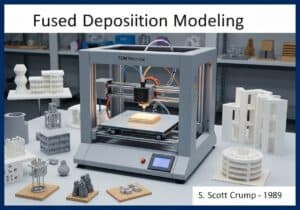 Additive processes build parts layer by layer, and that changes the design rules. Undercuts cost nothing. Overhangs need support. Strength depends on build orientation, and a lattice can replace solid material where loads are low. Design for Additive Fertigung, DfAM, is the practice of using these facts instead of copying a machined shape.
Part consolidation is the usual first gain: several brackets and Verbindungselemente become one printed body. The second is internal geometry, such as conformal cooling channels, that no cutter could reach.
Content here pairs tools with research. The CAD software directory and the Reverse Engineering article help produce printable geometry. Digests report on 4D printing, bio-printing, MEMS and additive manufacturing at large. For conventional processes, compare with Konstruktion für die Fertigung.
This week: wearable audio device, smart material, optical transparency, transducers, shape memory polymer, pipe connection, mechanical retaining flange, sealing element,

This week: piezoelectric, fermentation, bioreactor, virucidal, spheroids, extracellular vesicles, bioreactor, cell culture, Diphenylsulfone, Macromers, Polymeric Sidechains, Porous Membranes, stem cell

Ingenieure Witze Ingenieure nutzen systematische Ansätze und Methoden, um den aktuellen Weg effektiv zu navigieren.[/caption] Warum hat der Ingenieur die
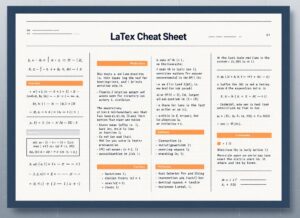
Im technischen und akademischen Bereich kann die Bedeutung einer qualitativ hochwertigen Dokumentenerstellung gar nicht hoch genug eingeschätzt werden. LaTeX, ein Schriftsatzsystem, das für seine
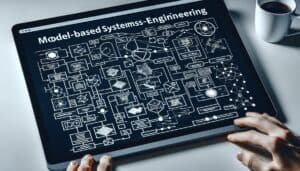
Im Zuge der rasanten Entwicklung der Industrie hat die Einführung von Model-Based Systems Engineering (MBSE) stark zugenommen, wobei Studien zeigen, dass Unternehmen, die MBSE einsetzen

The most complete selection of IRC channels for engineering Internet Relay Chat offers engineering disciplines distinct advantages through its established

Cad software for technical drawings[/caption] Nowadays, there is no physical product design or innovation without a CAD system: it enables

Die Phrase "It's not a bug, it's a feature" hat sich in der Softwarebranche zu einem bekannten Ausdruck entwickelt
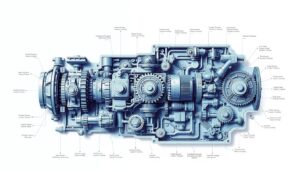
Ob Mechanik, Software oder Hardware, Reverse Engineering ermöglicht eine detaillierte Analyse der Systemarchitektur und -funktionalität. Es unterstützt die Interoperabilität durch

Hier finden Sie die meisten internationalen Standards und Normen für die wichtigsten Bereiche der Luft- und Raumfahrt: Kommerzielle Luftfahrt: Konstruktion,