Product Design, Manufacturing & Innovation Resources
Heim » Der iterative Produktentwicklungsprozess

Der iterative Produktentwicklungsprozess

1960
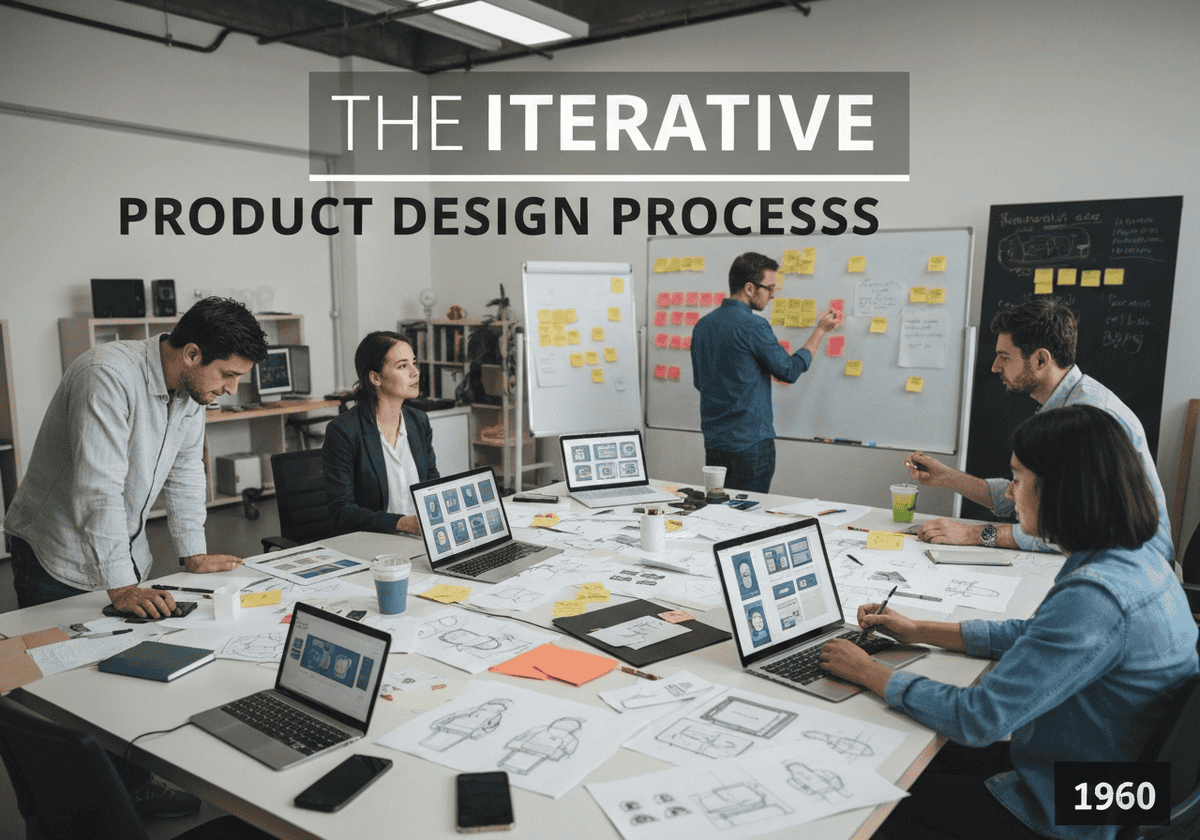
Modernes Designstudio, in dem Industriedesigner gemeinsam an der Produktentwicklung arbeiten.

(Abbildung dient nur zur Veranschaulichung)

Eine strukturierte Methodik zur Entwicklung neuer Produkte, die typischerweise Analyse, Konzeptentwicklung und Synthese umfasst. Es handelt sich um einen iterativen Zyklus, in dem Designer Nutzerbedürfnisse erforschen, Ideen sammeln, Prototypen erstellen und diese testen, um das Endprodukt zu optimieren. Dieser Prozess stellt sicher, dass das Endprodukt funktional ist und die Marktanforderungen effektiv erfüllt, bevor die Serienproduktion beginnt.

The product design process is a framework that guides designers and engineers from an initial idea to a market-ready product. It begins with the ‘Analysis’ phase, which involves deep market research, competitive analysis, and understanding user needs through methods like interviews and surveys. This phase defines the problem and sets the design constraints and goals. The subsequent ‘Concept’ phase is a creative exploration where designers brainstorm a wide range of potential solutions. Techniques like sketching, mind-mapping, and storyboarding are common. Multiple ideas are generated without initial judgment to foster innovation. Following this, the ‘Synthesis’ phase involves refining and combining the most promising concepts into a tangible design. This is where detailed specifications are created, and early prototypes, such as mockups or 3D models, are built. The process is inherently iterative; feedback from testing these prototypes is used to circle back to earlier stages for refinement. For example, a Benutzerfreundlichkeit test might reveal a flaw that requires a return to the concept phase to explore alternative solutions. This cyclical nature ensures continuous improvement and reduces the risk of market failure by validating the design against real-world user feedback and technical feasibility before committing to mass production.

UNESCO Nomenclature: 3305
– Industrial Technology

Typ

Abstract System

Störung

Foundational

Verwendung

Weitverbreitete Verwendung

Vorläufer

  • the scientific method
  • craftsmanship traditions and apprenticeship models
  • early engineering drawing and drafting techniques
  • the industrial revolution’s focus on mass production processes

Anwendungen

  • development of smartphones
  • creation of ergonomic office furniture
  • design of modern automobiles
  • software application development (ui/ux)

Patente:

NA

Potenzielle Innovationsideen

  • ai-driven design process that automates user research analysis and suggests initial concepts
  • a subscription box service that sends users monthly prototype kits to test and provide feedback on
  • a collaborative vr platform for global teams to co-design and synthesize product concepts in real-time
  • an open-source platform for sharing and iterating on sustainable product designs
  • gamified mobile app for crowdsourcing design concepts for social impact projects
  • a modular product design system with interchangeable components for ultimate customization
  • a blockchain-based system for tracking design iterations and geistiges Eigentum Rechte
  • a bio-integrated design process that uses living organisms as part of the product’s function
Related to: product design process, iteratives Design, analysis, concept, synthesis, prototyping, user research, product development.

Historischer Kontext

Der iterative Produktentwicklungsprozess

1950
1955
1956
1960
1960
1960
1960
1950
1950
1955
1958
1960
1960
1960
1960

(wenn das Datum unbekannt oder nicht relevant ist, z. B. „Strömungsmechanik“, wird eine gerundete Schätzung seines bemerkenswerten Auftretens bereitgestellt)

10. Jahr Jubiläum

Bilder in voller Größe und Downloads sind ausschließlich für registrierte Mitglieder kostenlos verfügbar.

> Login <





























