Sterilisation mit Ethylenoxid (EtO)
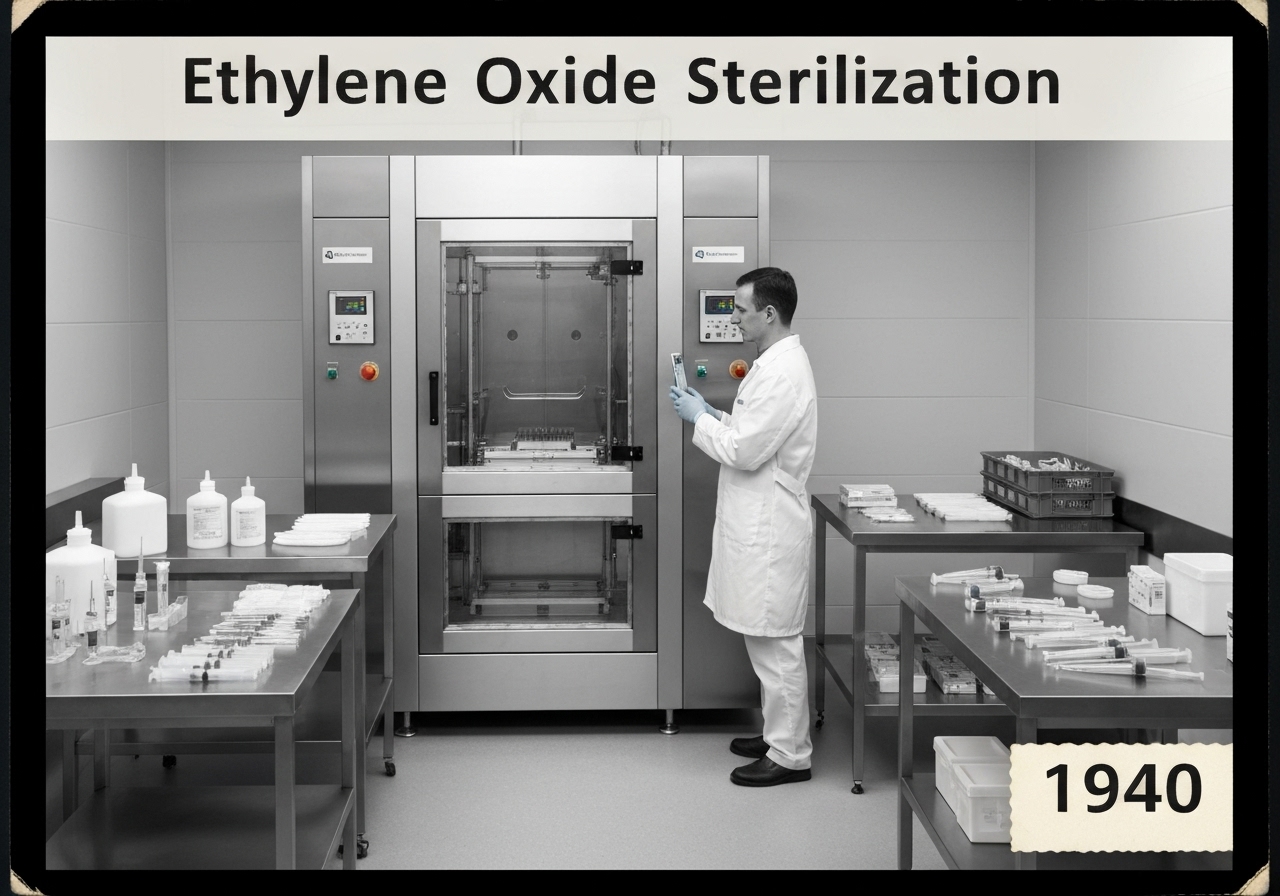
Ein chemisches Sterilisationsverfahren bei niedrigen Temperaturen unter Verwendung von Ethylenoxidgas. Es eignet sich zur Sterilisation von hitze- und feuchtigkeitsempfindlichen Materialien wie z. B. Kunststoffe, electronic devices, and optical instruments. The process involves alkylation, where EtO disrupts the DNA and proteins of microorganisms, preventing their replication. It requires careful control of gas concentration, temperature, humidity, and exposure time. Before routine use, the sterilizer and its gas control system go through IQ and OQ validation, so that each cycle can be trusted to reach the required conditions.
Ethylene oxide (C2H4O) is a colorless, flammable, and highly reactive gas. Its effectiveness as a sterilant lies in its ability to act as a potent alkylating agent. The process works at a molecular level. The strained three-membered ring of the ethylene oxide molecule readily opens and reacts with nucleophilic groups in essential cellular components. It primarily targets sulfhydryl (-SH), amino (-NH2), carboxyl (-COOH), and hydroxyl (-OH) groups found in proteins and nucleic acids (DNA and RNA). By adding an alkyl group to these sites, EtO permanently modifies the molecules, blocking reactive sites, causing cross-linking, and ultimately preventing microbial metabolism and replication. This mechanism is effective against all forms of microorganisms, including highly resistant bacterial spores. A typical EtO sterilization cycle is complex and must be carefully controlled. It consists of several phases: preconditioning (adjusting temperature and humidity), gas injection (introducing the EtO), exposure or dwell time (holding the load under specified conditions for several hours), and aeration (removing residual EtO gas). Key parameters are gas concentration (typically 400–1200 mg/L), temperature (usually 37–63 °C), relative Luftfeuchtigkeit (40–80%), and exposure time (1–6 hours). The lower temperature range makes it ideal for materials that would be damaged by the heat of autoclaving, such as polymers, electronics, and medical devices with complex designs. However, EtO is toxic, carcinogenic, and explosive, requiring stringent safety protocols and a lengthy aeration period to ensure residual gas is removed from the sterilized items to safe levels before they can be used.
Ethylenoxid wurde zwar bereits 1859 von Charles-Adolphe Wurtz synthetisiert, seine starke biologische Aktivität wurde jedoch erst viel später voll erkannt. In den 1920er Jahren ließ Lloyd L. Schrader es als Begasungsmittel zur Insektenvernichtung patentieren. Seine Anwendung als Sterilisationsmittel für medizinische Bedarfsartikel begann in den 1940er Jahren und verbreitete sich in den 1950er Jahren, insbesondere mit der Verbreitung medizinischer Einwegprodukte aus Kunststoff. Berichten zufolge entwickelte das US-Militär das Verfahren zur Sterilisation von Geräten. Diese Innovation war revolutionär, da sie eine entscheidende Lücke füllte: Vor EtO gab es keine zuverlässige Methode zur Sterilisation der wachsenden Zahl hitzeempfindlicher Instrumente und Bedarfsartikel, die für die moderne Medizin unverzichtbar wurden. Sie ermöglichte die Massenproduktion und Verwendung vorverpackter, steriler Einwegprodukte, die das Risiko von Infektionen im Gesundheitswesen deutlich reduziert haben.
UNESCO Nomenclature: 2401
- Mikrobiologie
Verwendung
Weitverbreitete Verwendung
Vorläufer
- Entdeckung von Ethylenoxid
- Verständnis für chemische Desinfektion und Alkylierungsmittel
- Notwendigkeit der Sterilisation von Materialien, die mit Hitze oder Dampf nicht kompatibel sind
Anwendungen
- Sterilisation von medizinischen Einwegprodukten (z. B. Spritzen, Katheter)
- processing of spices to reduce mikrobiell load
- Sterilisation empfindlicher chirurgischer Instrumente
- Archiv- und Museumserhaltung von Artefakten
Potenzielle Innovationsideen
- closed-loop eto sterilization systems with integrated catalytic converters to neutralize 100% of the gas emissions
- Entwicklung hochspezifischer Sensoren zur Echtzeitüberwachung der ETO-Konzentration und -Rückstände in der Verpackung
- eto-alternative Gasgemische, die die gleiche alkylierende Wirkung bei geringerer Toxizität und Karzinogenität bieten
- Mikrodosier-ETO-Systeme zum Sterilisieren kleiner, empfindlicher Gegenstände wie Mikroelektroden mit minimalem Gasverbrauch
- gentechnisch veränderte Enzyme, die ETO-Rückstände auf sterilisierten Produkten schnell und sicher neutralisieren und so die Belüftungszeiten verkürzen können
- integration of eto sterilization chambers into 3d printers for in-situ sterilization of medizinische Implantate as they are fabricated
- Entwicklung intelligenter Verpackungen, die nach dem Sterilisationszyklus aktiv restliches ETO-Gas entfernen
- mobile ETO-Sterilisationseinheiten zur Vor-Ort-Aufbereitung medizinischer Geräte in Katastrophenfällen
- Modellierung der numerischen Strömungsdynamik zur Optimierung der Gaszirkulation und -penetration bei komplexen Gerätelasten
- Hybrid-Sterilisationszyklen, bei denen niedrig konzentriertes ETO mit verdampftem Wasserstoffperoxid kombiniert wird, um die Wirksamkeit zu verbessern und die Zykluszeiten zu verkürzen
Verwandte Themen: Ethylenoxid, Eto, chemische Sterilisation, Niedrigtemperatur, Alkylierung, medizinische Geräte, Kunststoffe, Toxizität, Belüftung, hitzeempfindlich.