Product Design, Manufacturing & Innovation Resources
Heim » Design für X (DFX)

Design für X (DFX)

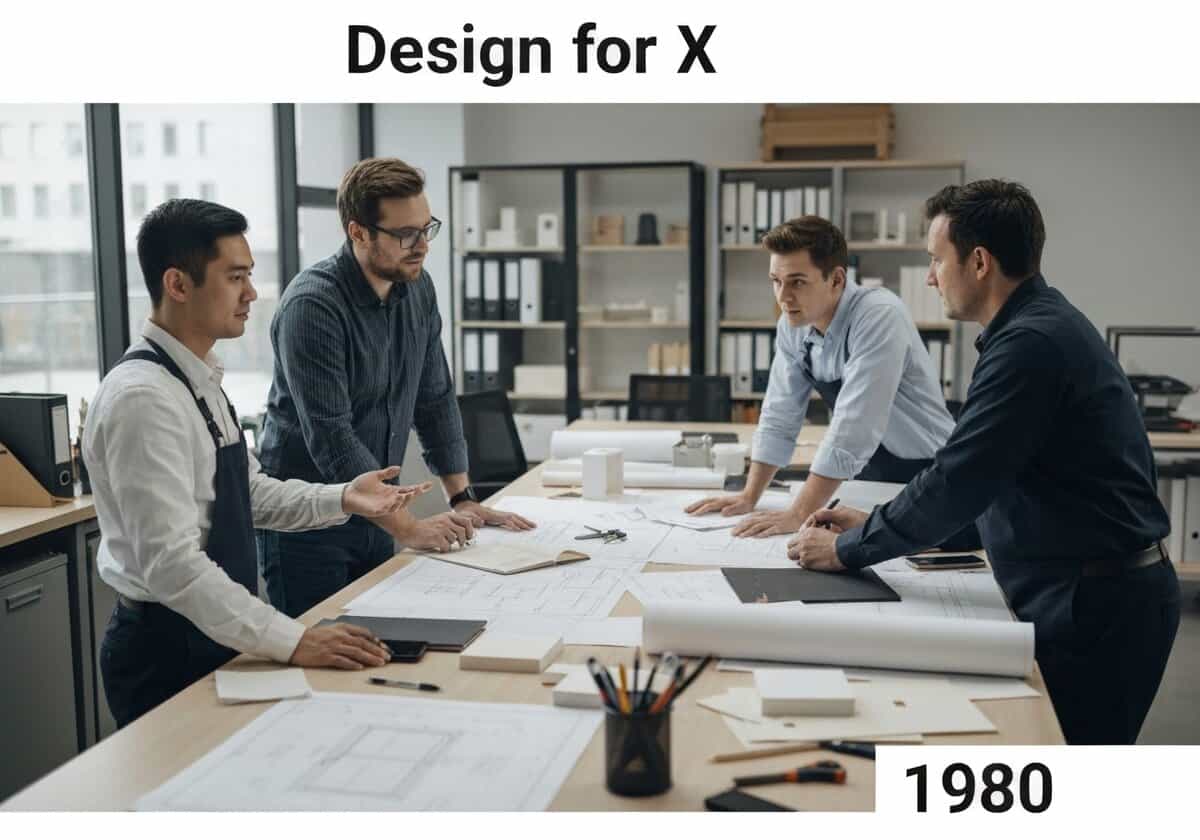
1980
Konstruktionsbüro für Industrietechnik mit Ingenieuren, die Flachmöbel für die Montage optimieren.

(Abbildung dient nur zur Veranschaulichung)

Eine Entwurfsmethodik, bei der 'X' für ein bestimmtes Produkt steht Lebenszyklus objective. DFX encompasses a collection of guidelines and techniques aimed at optimizing a product’s design for a particular goal, such as manufacturability (DFM), assembly (DFA), reliability (DFR), or sustainability (DfS). This proactive approach addresses potential issues early in the design phase, reducing costs and improving quality. DFX is itself one of the most used design acronyms, and each X stands for a different life cycle objective. Applying DFX to a new product under the clean sheet design meaning, that is without legacy parts, gives the most freedom to optimize.


Design for X (DFX), also known as Design for Excellence, is a systematic approach that integrates downstream life cycle considerations into the early stages of product design. The ‘X’ is a variable that can stand for numerous objectives. For instance, Design for Manufacturability (DFM) focuses on simplifying the design to make it easier and more cost-effective to produce, often by minimizing part count, using standard components, and designing parts that are easy to handle and process. Design for Assembly (DFA) is closely related, concentrating on reducing assembly time and errors by designing for top-down assembly, minimizing Verbindungselemente, and incorporating self-locating features. Other common ‘X’s include Reliability (DFR), which involves selecting robust components and incorporating redundancy; Serviceability (DFS), which ensures parts that are likely to fail are easily accessible for repair or replacement; and Sustainability (also DfS), which considers the environmental impact throughout the product’s life, from material sourcing to end-of-life disposal. By considering these factors upfront, companies can avoid costly redesigns, shorten time-to-market, and deliver a higher quality, more competitive product. It represents a shift from a sequential, ‘over-the-wall’ engineering process to a more concurrent and integrated one.

UNESCO Nomenclature: 3305
- Industrielle Technologie

Typ

Abstraktes System

Störung

Wesentliche

Verwendung

Weitverbreitete Verwendung

Vorläufer

  • die Prinzipien der Massenproduktion, die von Henry Ford entwickelt wurden
  • Wertanalysetechniken, die in den 1940er Jahren entwickelt wurden
  • Statistische Prozesskontrolle und Bewegungen im Bereich des Qualitätsmanagements
  • der Aufstieg von Concurrent-Engineering-Methoden

Anwendungen

  • flat-pack furniture design (ikea) for ease of assembly (dfa)
  • Schnappgehäuse in der Unterhaltungselektronik zur Reduzierung der Schraubenanzahl und der Montagezeit (dfa)
  • Verwendung gemeinsamer Komponenten für verschiedene Automodelle zur Rationalisierung der Fertigung (DFM)
  • designing products with recycled materials and for easy Demontage (dfs)

Patente:

NA

Potenzielle Innovationsideen

  • an ai-powered cad plugin that automatically analyzes a design and suggests modifications for multiple ‘x’ criteria simultaneously
  • ‘design for adaptation’ guidelines for creating products that can be easily upgraded or modified by the user over time
  • A Blockchain ledger for ‘design for traceability’ to track materials and components from source to disposal
  • ‘design for resilience’ frameworks for critical infrastructure that can withstand and recover from disruptions
  • a consumer-facing app that scores products on their ‘design for repairability’ to inform purchasing decisions
  • ‘design for mental well-being’ principles for software and devices to reduce digital stress
  • a modular construction system based on ‘design for disassembly’ principles for creating reusable buildings
  • ‘design for microbial health’ in consumer products, using materials that support a healthy microbiome
Verwandt mit: design for x, dfx, dfm, dfa, design for manufacturing, design for assembly, concurrent engineering, product life cycle.

Historischer Kontext

Design für X (DFX)

1972
1974
1975-06-01
1980
1980
1980
1980
1970
1974
1974
1978
1980
1980
1980
1980

(wenn das Datum unbekannt oder nicht relevant ist, z. B. „Strömungsmechanik“, wird eine gerundete Schätzung seines bemerkenswerten Auftretens bereitgestellt)

10. Jahr Jubiläum

Bilder in voller Größe und Downloads sind nur für registrierte Mitglieder 100% kostenlos verfügbar.

> Login <