Product Design, Manufacturing & Innovation Resources
家 » X 设计 (DFX)

X 设计 (DFX)

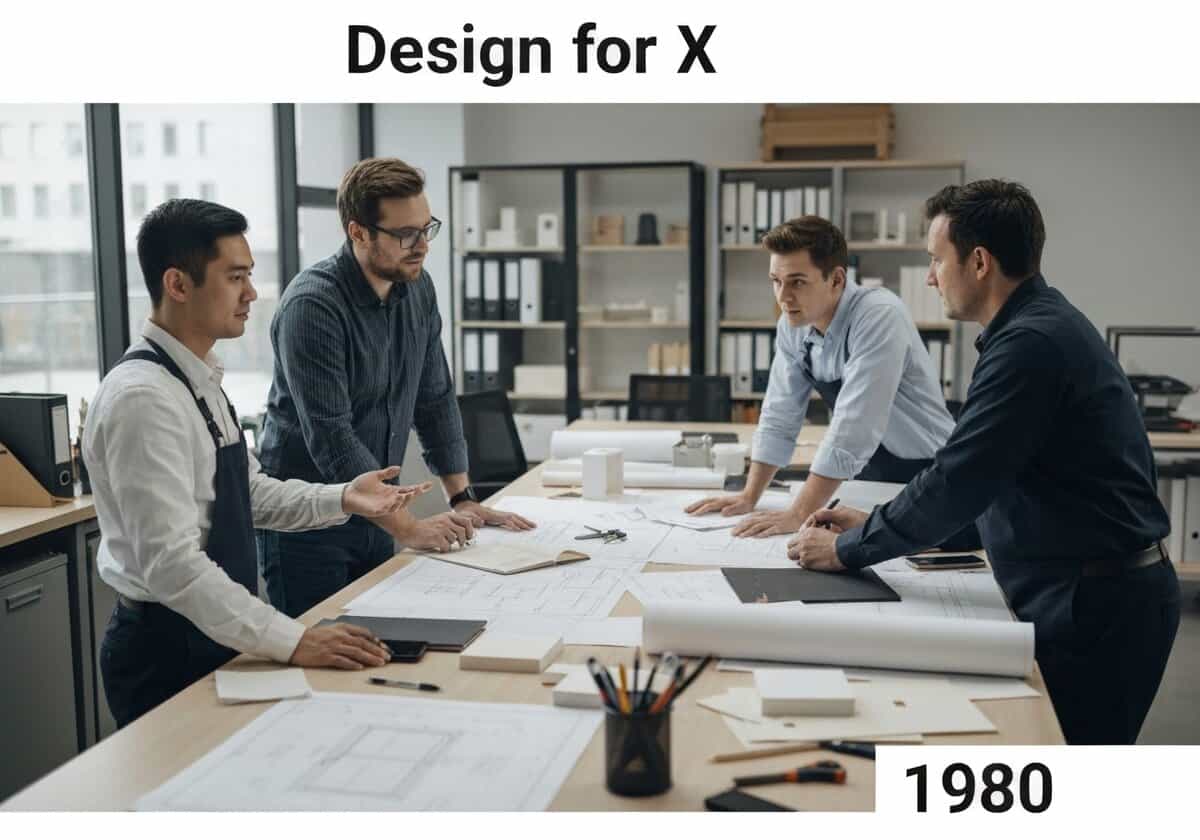
1980
工业技术设计室,工程师们正在优化组装用平板包装家具。

(图片仅供参考)

一种设计方法,其中 "X "代表一种特定产品 生命周期 objective. DFX encompasses a collection of guidelines and techniques aimed at optimizing a product’s design for a particular goal, such as manufacturability (DFM), assembly (DFA), reliability (DFR), or sustainability (DfS). This proactive approach addresses potential issues early in the design phase, reducing costs and improving quality. DFX is itself one of the most used design acronyms, and each X stands for a different life cycle objective. Applying DFX to a new product under the clean sheet design meaning, that is without legacy parts, gives the most freedom to optimize.


Design for X (DFX), also known as Design for Excellence, is a systematic approach that integrates downstream life cycle considerations into the early stages of product design. The ‘X’ is a variable that can stand for numerous objectives. For instance, Design for Manufacturability (DFM) focuses on simplifying the design to make it easier and more cost-effective to produce, often by minimizing part count, using standard components, and designing parts that are easy to handle and process. Design for Assembly (DFA) is closely related, concentrating on reducing assembly time and errors by designing for top-down assembly, minimizing 紧固件, and incorporating self-locating features. Other common ‘X’s include Reliability (DFR), which involves selecting robust components and incorporating redundancy; Serviceability (DFS), which ensures parts that are likely to fail are easily accessible for repair or replacement; and Sustainability (also DfS), which considers the environmental impact throughout the product’s life, from material sourcing to end-of-life disposal. By considering these factors upfront, companies can avoid costly redesigns, shorten time-to-market, and deliver a higher quality, more competitive product. It represents a shift from a sequential, ‘over-the-wall’ engineering process to a more concurrent and integrated one.

UNESCO Nomenclature: 3305
- 工业技术

类型

抽象系统

中断

重大的

用法

广泛使用

前体

  • 亨利·福特开创的大规模生产原则
  • 20 世纪 40 年代发展起来的价值工程技术
  • 统计过程控制 和质量管理运动
  • 并行工程方法的兴起

应用程序

  • flat-pack furniture design (ikea) for ease of assembly (dfa)
  • 消费电子产品中的卡扣式外壳可减少螺钉数量和组装时间(dfa)
  • 使用不同车型的通用部件来简化制造流程(DFM)
  • designing products with recycled materials and for easy 拆卸 (dfs)

专利:

NA

潜在创新理念

  • an ai-powered cad plugin that automatically analyzes a design and suggests modifications for multiple ‘x’ criteria simultaneously
  • ‘design for adaptation’ guidelines for creating products that can be easily upgraded or modified by the user over time
  • 一个 区块链 ledger for ‘design for traceability’ to track materials and components from source to disposal
  • ‘design for resilience’ frameworks for critical infrastructure that can withstand and recover from disruptions
  • a consumer-facing app that scores products on their ‘design for repairability’ to inform purchasing decisions
  • ‘design for mental well-being’ principles for software and devices to reduce digital stress
  • a modular construction system based on ‘design for disassembly’ principles for creating reusable buildings
  • ‘design for microbial health’ in consumer products, using materials that support a healthy microbiome
相关内容: X 设计、DFX、DFM、DFA、制造设计、装配设计、并行工程、产品生命周期。

历史背景

X 设计 (DFX)

1972
1974
1975-06-01
1980
1980
1980
1980
1970
1974
1974
1978
1980
1980
1980
1980

(如果日期未知或不相关,例如“流体力学”,则提供其显著出现的近似估计)

第十年 周年纪念日

只有注册会员才能免费获得 100% 的全尺寸图片和下载。.

> 登录 <