Product Design, Manufacturing & Innovation Resources
घर » डिसअसेंबली के लिए डिज़ाइन (डीएफडी)

डिसअसेंबली के लिए डिज़ाइन (डीएफडी)

1990
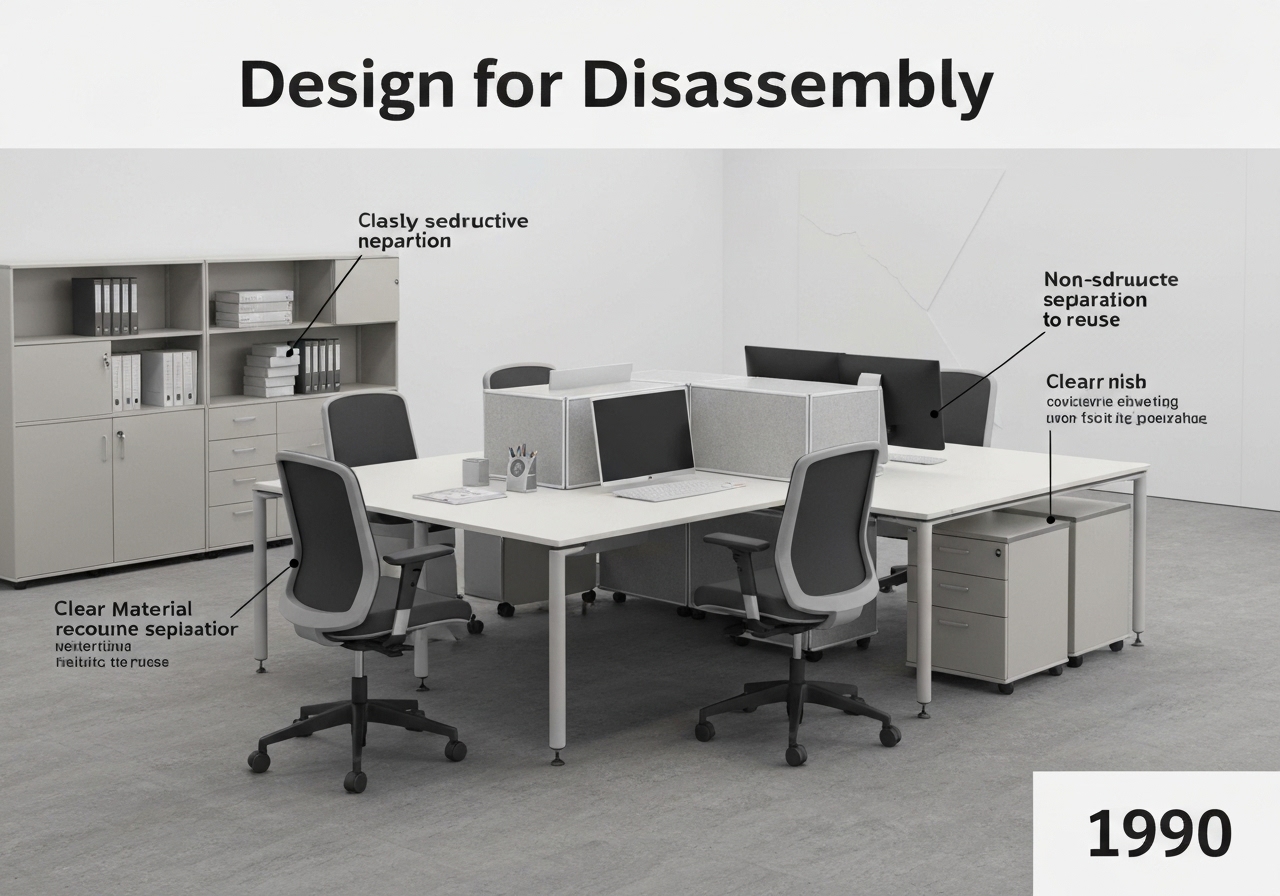
औद्योगिक डिजाइन में अलग-अलग हिस्सों में बांटकर दोबारा इस्तेमाल करने के लिए डिजाइन किया गया मॉड्यूलर ऑफिस फर्नीचर।

(यह छवि केवल उदाहरण के लिए बनाई गई है)

Design for Disassembly (DfD) is a design strategy focused on enabling the easy and cost-effective separation of a product’s components and materials at its end-of-life. By prioritizing non-destructive separation, DfD facilitates repair, reuse, पुनर्निर्माण, and high-purity पुनर्चक्रण. Key techniques include using mechanical fasteners over adhesives, modular construction, and clear material labeling to maximize value recovery.


Design for Disassembly is a practical application of चक्रीय अर्थव्यवस्था principles. Its technical execution involves a deliberate choice of product architecture and joining methods. Designers employing DfD minimize the variety and quantity of fasteners, opting for common types like screws instead of permanent bonds like glue or ultrasonic welds. Products are often designed with a clear hierarchy, allowing major modules to be removed without disturbing the entire assembly. Materials are selected not only for performance but also for their compatibility in recycling streams, and are clearly marked with international recycling codes to aid in sorting. This approach stands in contrast to conventional Design for Assembly (DfA), which often prioritizes initial production speed and can lead to integrated, inseparable designs that are destined for landfill. The novelty of DfD was its explicit consideration of the end-of-life phase as a critical design constraint, shifting the perspective from a linear ‘take-make-dispose’ model to a circular one where components and materials retain their value through multiple life cycles.

UNESCO Nomenclature: 3301
• वास्तुकला

Type

सार प्रणाली

व्यवधान

संतोषजनक

उपयोग

व्यापक उपयोग

शगुन

  • पारंपरिक मरम्मत और रखरखाव पद्धतियाँ
  • असेंबली के लिए डिज़ाइन (डीएफए) सिद्धांत
  • लैंडफिल की सीमाओं और संसाधनों की कमी के बारे में बढ़ती जागरूकता
  • विस्तारित उत्पादक उत्तरदायित्व (ईपीआर) पर कानून
  • इलेक्ट्रॉनिक्स उद्योग का उदय और उससे जुड़ी ई-कचरा समस्या

आवेदन

  • मॉड्यूलर स्मार्टफोन (जैसे, फेयरफोन)
  • मरम्मत योग्य घरेलू उपकरण
  • आसान सर्विसिंग और पुर्जों की उपलब्धता के लिए ऑटोमोटिव डिज़ाइन
  • पुनर्संरचना और पुनः उपयोग के लिए डिज़ाइन किया गया कार्यालय फर्नीचर
  • वेल्डिंग के बजाय बोल्टेड कनेक्शन का उपयोग करने वाली निर्माण प्रणालियाँ

पेटेंट:

NA

संभावित नवाचार विचार

  • smart fasteners that release with a specific signal (e.g., heat, electronic)
  • self-healing materials that reduce the need for component replacement
  • संवर्धित वास्तविकता guides for consumer-led disassembly and repair
  • robotic disassembly lines that use ai to identify and separate components
  • product passports using qr codes that detail disassembly instructions and material composition
  • biodegradable adhesives that dissolve under specific conditions at end-of-life
  • subscription models for products where the manufacturer is responsible for disassembly
  • standardized modular battery packs for various electronic devices
  • 3d-printed replacement parts available through a digital library
  • architectural components designed for deconstruction and reuse in new buildings
Related to: design for disassembly, dfd, circular economy, repairability, recycling, modular design, product end-of-life, sustainable engineering, right to repair, e-waste.

ऐतिहासिक संदर्भ

डिसअसेंबली के लिए डिज़ाइन (डीएफडी)

1987-03
1990
1990
1990
1990
1990
1990
1987
1989
1990
1990
1990
1990
1990
1990

(यदि तिथि अज्ञात है या प्रासंगिक नहीं है, उदाहरण के लिए "द्रव यांत्रिकी", तो इसके उल्लेखनीय उद्भव का एक अनुमानित आंकड़ा प्रदान किया गया है)

नवीनतम परिवर्धन

शीर्ष पोस्ट और लेख

शीर्ष मूल उपकरण

10वां वर्ष सालगिरह

पंजीकृत सदस्यों के लिए पूर्ण आकार की छवियाँ और डाउनलोड 100% निःशुल्क उपलब्ध हैं।