Product Design, Manufacturing & Innovation Resources
집 » X용 디자인(DFX)

X용 디자인(DFX)

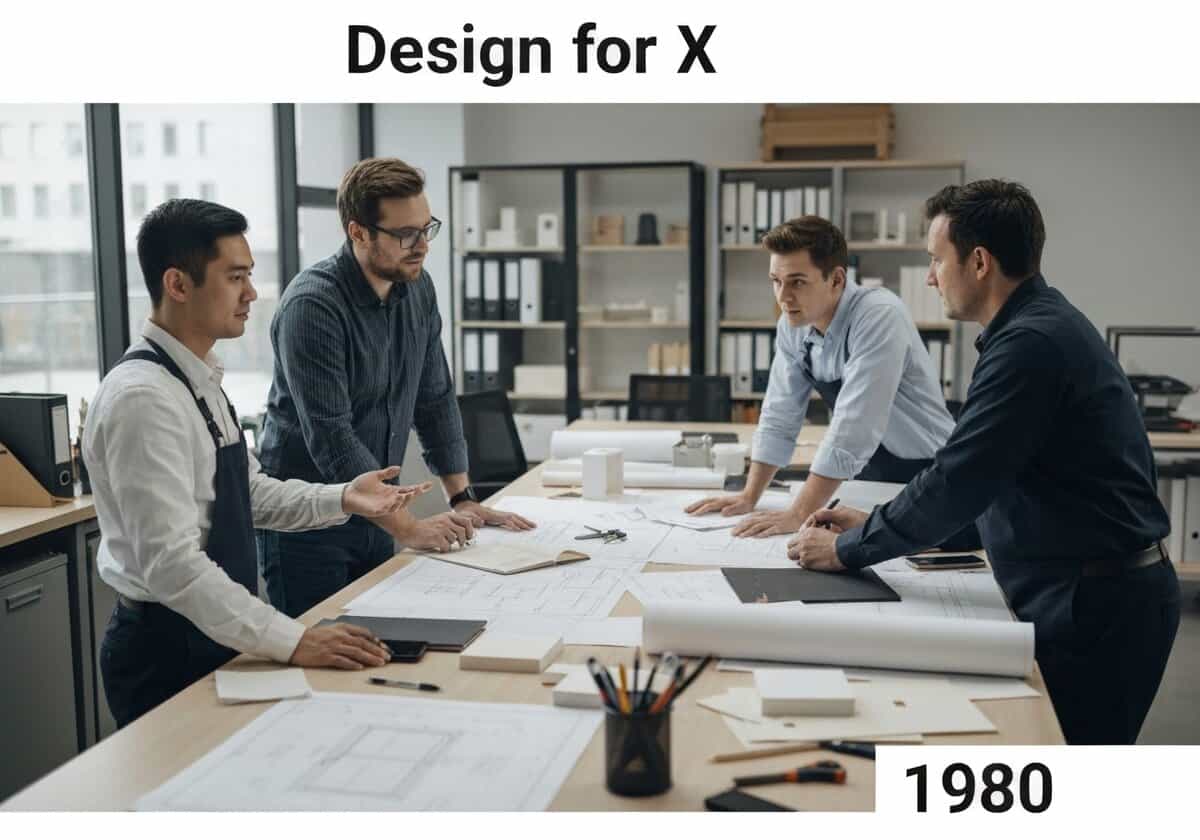
1980
Industrial Technology design office with engineers optimizing flat-pack furniture for assembly.

(설명을 위한 생성된 이미지입니다)

'X'가 특정 제품을 나타내는 디자인 방법론 생명주기 objective. DFX encompasses a collection of guidelines and techniques aimed at optimizing a product’s design for a particular goal, such as manufacturability (DFM), assembly (DFA), reliability (DFR), or sustainability (DfS). This proactive approach addresses potential issues early in the design phase, reducing costs and improving quality. DFX is itself one of the most used design acronyms, and each X stands for a different life cycle objective. Applying DFX to a new product under the clean sheet design meaning, that is without legacy parts, gives the most freedom to optimize.


Design for X (DFX), also known as Design for Excellence, is a systematic approach that integrates downstream life cycle considerations into the early stages of product design. The ‘X’ is a variable that can stand for numerous objectives. For instance, Design for Manufacturability (DFM) focuses on simplifying the design to make it easier and more cost-effective to produce, often by minimizing part count, using standard components, and designing parts that are easy to handle and process. Design for Assembly (DFA) is closely related, concentrating on reducing assembly time and errors by designing for top-down assembly, minimizing fasteners, and incorporating self-locating features. Other common ‘X’s include Reliability (DFR), which involves selecting robust components and incorporating redundancy; Serviceability (DFS), which ensures parts that are likely to fail are easily accessible for repair or replacement; and Sustainability (also DfS), which considers the environmental impact throughout the product’s life, from material sourcing to end-of-life disposal. By considering these factors upfront, companies can avoid costly redesigns, shorten time-to-market, and deliver a higher quality, more competitive product. It represents a shift from a sequential, ‘over-the-wall’ engineering process to a more concurrent and integrated one.

UNESCO Nomenclature: 3305
산업 기술

유형

추상 시스템

분열

상당한

용법

널리 사용됨

전구체

  • 헨리 포드가 개척한 대량 생산의 원칙
  • 1940년대에 개발된 가치 공학 기법
  • statistical process control and quality management movements
  • 동시 공학 방법론의 부상

응용 프로그램

  • flat-pack furniture design (ikea) for ease of assembly (dfa)
  • 소비자 가전 제품의 스냅핏 케이스를 사용하여 나사 개수와 조립 시간을 줄입니다. (dfa)
  • 다양한 자동차 모델에 공통 부품을 사용하여 제조 공정을 간소화합니다(DFM).
  • designing products with recycled materials and for easy 분해 (dfs)

특허:

NA

잠재적 혁신 아이디어

  • an ai-powered cad plugin that automatically analyzes a design and suggests modifications for multiple ‘x’ criteria simultaneously
  • ‘design for adaptation’ guidelines for creating products that can be easily upgraded or modified by the user over time
  • 에이 블록체인 ledger for ‘design for traceability’ to track materials and components from source to disposal
  • ‘design for resilience’ frameworks for critical infrastructure that can withstand and recover from disruptions
  • a consumer-facing app that scores products on their ‘design for repairability’ to inform purchasing decisions
  • ‘design for mental well-being’ principles for software and devices to reduce digital stress
  • a modular construction system based on ‘design for disassembly’ principles for creating reusable buildings
  • ‘design for microbial health’ in consumer products, using materials that support a healthy microbiome
관련 개념: 설계 for X, DFX, DFM, DFA, 제조를 위한 설계, 조립을 위한 설계, 동시 공학, 제품 수명 주기.

역사적 맥락

X용 디자인(DFX)

1972
1974
1975-06-01
1980
1980
1980
1980
1970
1974
1974
1978
1980
1980
1980
1980

(날짜를 알 수 없거나 관련이 없는 경우, 예를 들어 "유체역학"의 경우, 주목할 만한 등장 시기를 대략적으로 추정하여 제공합니다.)

10년차 기념일

고화질 이미지 및 다운로드는 등록된 회원에게만 100% 무료로 제공됩니다.

> 로그인 <