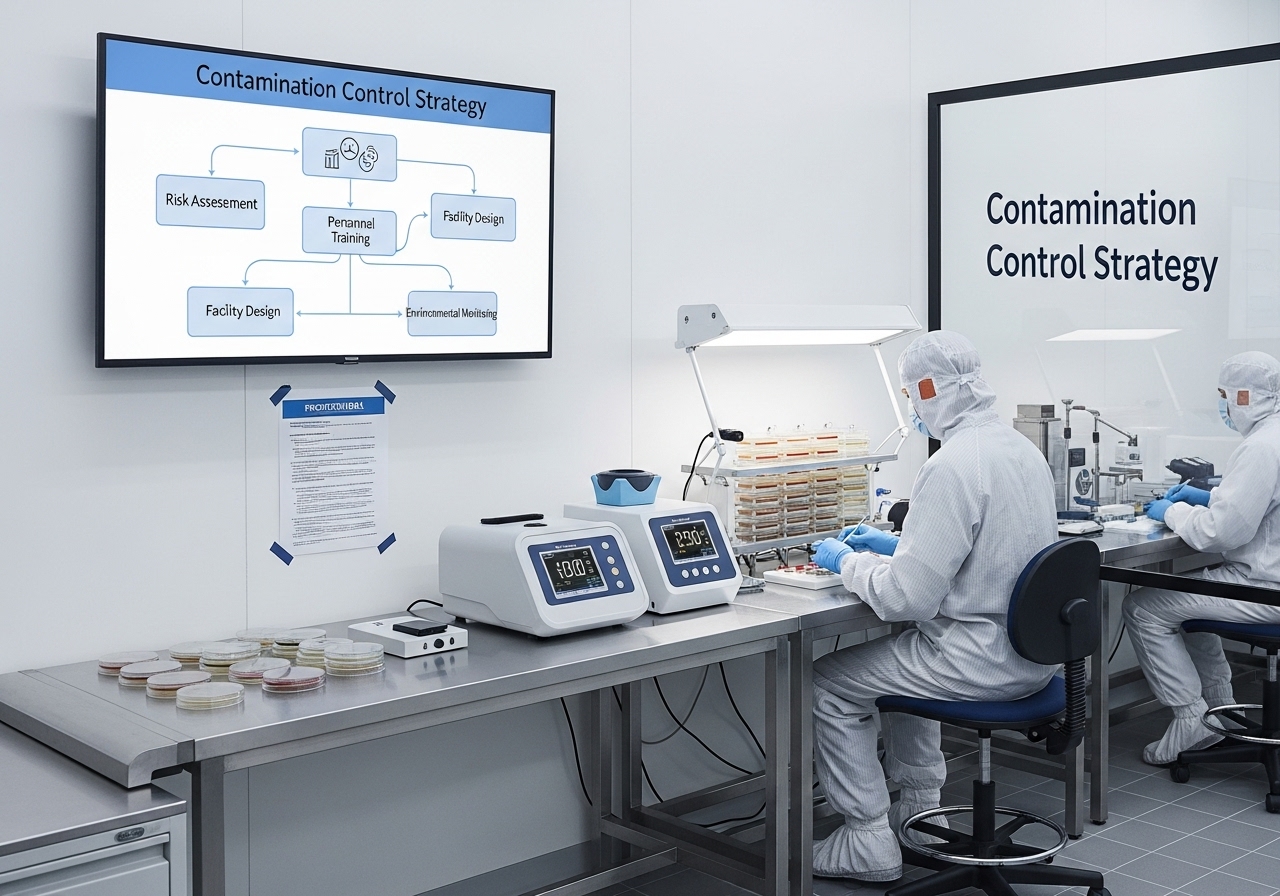
A Contamination Control Strategy (CCS) is a comprehensive, documented framework that establishes the formal approach for managing risks to product quality from all forms of contamination. It is a living document that goes far beyond facility design, integrating disparate elements such as personnel training, material transfer protocols, process flows, environmental monitoring, and utility qualification into a single, cohesive plan. The CCS is not merely a summary of existing procedures; it is the strategic justification, based on risk management, that defines why specific controls are implemented, how they are monitored, and what actions are taken when they deviate from their intended state of control.
The cleanroom is one of the physical components, but it is fundamentally governed by the CCS. Its classification, operational parameters, and monitoring limits are direct outputs of the risk assessments detailed within the strategy. The CCS provides the rationale for the cleanroom’s existence and dictates its performance requirements to mitigate identified contamination risks.
Key Takeaways

- CCS should be built upon the principles of Quality Risk Management (QRM)
- Holistic, facility-wide implementation strategy.
- Define and monitor critical control points.
- Personnel are a primary contamination source.
- Proactive and continuous environmental monitoring.
- Implement strict material and waste controls.
- Process design to minimize exposure
- Ensure regulatory compliance (e.g., Annex 1).
What is a Contamination Control Strategy (CCS)?
A Contamination Control Strategy (CCS) is a formal, comprehensive, and living document that defines a manufacturer’s entire approach to minimizing contamination in their products.
Mandated by the revised EU GMP Annex 1, its core purpose is to move away from a fragmented collection of separate procedures (for cleaning, gowning, monitoring, etc.) towards a single, holistic strategy that demonstrates a deep understanding of all potential contamination risks and the scientific rationale for the controls put in place to mitigate them.
The philosophy behind the CCS is that sterility and product quality are not achieved by any single action, but by the cumulative effect of a series of interconnected controls. The CCS is the master document that identifies every potential source of contamination—particulate, microbial, endotoxin/pyrogen, and chemical—and describes how the combination of facility design, equipment, procedures, and monitoring programs work together to protect the product throughout its lifecycle.
Key Elements of a Contamination Control Strategy
1. Facility and Equipment Design
This element is the physical foundation of the Contamination Control Strategy. It’s not enough to have a cleanroom; you must justify why it was designed the way it was, based on risk.
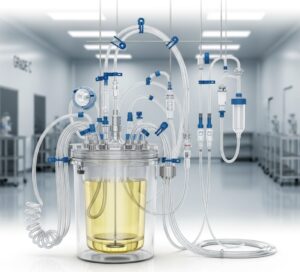
Rationale for the design: the CCS must detail the logic behind the facility’s layout, including unidirectional flows for personnel, materials, equipment, and waste to prevent mix-ups and backtracking from “dirty” to “clean” areas. It must scientifically justify the pressure cascades between rooms (e.g., the Grade B cleanroom is maintained at a significant positive pressure relative to the surrounding Grade C support area), providing data from the Building Management System (BMS) to prove these differentials are continuously maintained. The design of material and personnel airlocks, including their interlock mechanisms and purge times, must be rationalized as critical control points.
Equipment design: the Contamination Control Strategy justifies the selection of process equipment based on its ability to mitigate contamination. This includes specifying sanitary design features like crevice-free surfaces, 316L stainless steel, and Tri-Clamp fittings to prevent microbial colonization and facilitate effective cleaning. Crucially, it details the rationale for using advanced aseptic technologies. For example, it would justify the use of a Restricted Access Barrier System (RABS) or a fully contained isolator by referencing a risk assessment (FMEA) that shows these technologies significantly reduce the risk of operator-borne contamination compared to a conventional open-process cleanroom.
Regulatory References:
- EU: EudraLex – Volume 4 – Annex 1: “Manufacture of Sterile Medicinal Products” (August 2022), specifically Section 4, “Premises.”
- FDA: Code of Federal Regulations, Title 21, Part 211.42, “Design and construction features” and 211.46, “Ventilation, air filtration, air heating and cooling.”
Tip: use Computational Fluid Dynamics (CFD) modeling during the design phase of a new cleanroom or the installation of new equipment. Supplement this with physical smoke studies during qualification. The visual evidence from these studies provides irrefutable, science-based proof that your airflow patterns are unidirectional, effectively protecting the critical zone from contamination, which is far more powerful during an audit than simply presenting air velocity and pressure differential data.
2. Personnel
This element recognizes that humans are the primary source of microbial and particulate contamination in a cleanroom.
Gowning: the Contamination Control Strategy details the entire gowning system, not just the procedure. This includes the material science behind the chosen garments (e.g., non-shedding, fluid-resistant), the validation of their sterilization cycle, and the results of gowning qualification studies for each operator. These studies must provide objective data (e.g., contact plates from gloves and sleeves) to prove that an individual can gown without compromising the sterility of the garment.

Training and aseptic technique: the strategy goes beyond simple procedural training. It describes a formal qualification program where operators must demonstrate proficiency in aseptic manipulations, often through successful participation in media fills (aseptic process simulations). The CCS emphasizes the “why” behind the rules, ensuring personnel understand the microbiological principles of contamination control, such as the importance of slow, deliberate movements to avoid generating air turbulence.
Regulatory References:
- EU: EudraLex – Volume 4 – Annex 1 (August 2022), Section 7, “Personnel.”
- FDA: Code of Federal Regulations, Title 21, Part 211.28, “Personnel responsibilities” and 211.113, “Control of microbiological contamination.”
Tip: implement a “human factors” study for your most critical aseptic interventions. Instead of just writing a procedure, observe operators performing the task and analyze the ergonomics and cognitive load. A procedure that is difficult, awkward, or confusing is a contamination risk. Simplifying the process based on human factors engineering is a proactive control that is far more effective than simply retraining personnel on a flawed procedure.
3. Utilities
Utilities that contact the product or product-contact surfaces are a direct potential pathway for contamination.
Control of critical utilities: the Contamination Control Strategy provides a comprehensive overview of the design, validation, and ongoing monitoring of critical utility systems. For a Water-for-Injection (WFI) system, it would detail the continuous hot-loop circulation (>80°C) to prevent biofilm formation, the validation of the multi-stage purification process, and the routine monitoring program for bioburden, endotoxin, Total Organic Carbon (TOC), and conductivity. Similarly, it would describe the filtration (e.g., sterile 0.22 µm filters) and qualification of process gases like compressed air or nitrogen that come into direct product contact.
Regulatory References:
- EU: EudraLex – Volume 4 – Annex 1 (August 2022), Section 6, “Utilities.”
- FDA: Code of Federal Regulations, Title 21, Part 211.63, “Equipment design, size, and location,” supported by the principles in the “Guidance for Industry: Sterile Drug Products Produced by Aseptic Processing — Current Good Manufacturing Practice.”
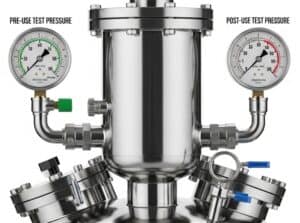
Application example: the CCS for a biologics facility details the risk assessment for the process air system. It identifies the point-of-use sterile filters on the bioreactor air inlet as Critical Control Points. The strategy can mandate an integrity test of these filters not only before the batch (pre-use) but also after the batch is harvested (post-use, pre-sterilization) to prove the filter remained integral throughout the entire cell culture process, thus ensuring the batch was protected.
Tip: use online Total Organic Carbon (TOC) monitoring in your WFI loop not just as a quality attribute test, but as a leading indicator for system health. Establish a tight internal alert limit, well below the official action limit. A slow, upward trend in TOC levels is often the very first sign of developing biofilm in the system, allowing maintenance to intervene with sanitization cycles long before a significant microbial or endotoxin event occurs.
4. Raw Materials and Components
Contamination control begins with the materials that enter the facility.

Bioburden and endotoxin control: the CCS outlines a proactive strategy for managing the microbial quality of all incoming materials. This involves setting specifications for bioburden and endotoxin levels on raw materials, primary packaging (vials, stoppers), and product-contact components. This data is critical, as it is used to validate the robustness of downstream removal or sterilization steps (e.g., proving an autoclave cycle can achieve the required Sterility Assurance Level based on the maximum potential starting bioburden).
Supplier management: this section details the risk-based supplier qualification program. It describes how suppliers of critical components are audited and qualified, and the role of formal Quality Agreements in defining quality responsibilities. It also specifies the program for periodically verifying a supplier’s Certificate of Analysis (CoA) through in-house testing to ensure ongoing consistency and control.
Regulatory References:
- EU: EudraLex – Volume 4 – Part I, Chapter 5, “Production” and Chapter 7, “Outsourced Activities.”
- FDA: Code of Federal Regulations, Title 21, Part 211.84, “Testing and approval or rejection of components, drug product containers, and closures.”
Tip: implement a risk-based program for your incoming component testing that goes beyond the standard pharmacopeia. For stoppers used in sensitive biologic drug products, your CCS should include a testing regime for extractables and leachables under worst-case conditions to ensure that no compounds that could degrade the drug molecule are introduced from the component itself.
Bioburden Details
The bioburden refers to the population of viable microorganisms present on a surface, in a liquid, or within a raw material before it undergoes a sterilization or disinfection process.
This microbial load, measured in Colony Forming Units (CFU), is a key indicator of the cleanliness of the manufacturing environment and a crucial factor in ensuring product safety and efficacy.
The primary goal in these industries is to maintain a low bioburden to minimize the challenge to the final sterilization process and to prevent product contamination. High bioburden levels can compromise the sterility of a product, potentially leading to infections in patients or defects in sensitive electronic components.
Bioburden in the pharmaceutical industry The pharmaceutical industry operates under stringent regulatory requirements to control microbial contamination. The United States Pharmacopeia (USP) provides specific guidelines for bioburden limits in both sterile and non-sterile drug products. Non-sterile products: for non-sterile pharmaceuticals, the acceptable bioburden levels vary depending on the product’s intended use and route of administration. USP chapter <61> outlines the microbial enumeration tests, while chapter <1111> provides the acceptance criteria. These criteria are designed to ensure that the product is safe for its intended use and that the microorganisms present will not proliferate to harmful levels. Sterile products: for sterile drug products, the bioburden must be meticulously controlled before the final sterilization process. According to USP chapter <62>, sterile products should have a total aerobic microbial count (TAMC) and total yeast and mold count (TYMC) of no more than 10 CFU per 100 mL. The European Medicines Agency (EMA) also recommends a pre-sterilization bioburden limit of less than 100 CFU per 100 mL. | Bioburden in the medical device industry Similar to pharmaceuticals, the medical device industry places a strong emphasis on controlling bioburden to ensure the effectiveness of sterilization and the safety of the device. The international standard ISO 11737-1 provides guidance on the determination of the population of microorganisms on medical devices. The acceptable bioburden for a medical device can vary depending on its classification, intended use, and the materials it is made from. While there are no universal, mandated limits for all devices, a typical bioburden level for a medical device is between 0 and 150 CFUs. For some devices, a lower limit of less than 100 CFU may be targeted to ensure a higher sterility assurance level. The size and complexity of the device can also influence its bioburden, with larger and more intricate devices potentially having higher microbial loads. |
5. Cleaning and Disinfection
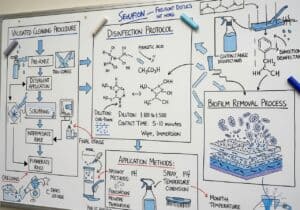
This element describes the chemical and physical removal of contaminants from surfaces (cleaning) and living organisms removal (disinfection).
Validated procedures: the CCS provides the scientific justification for the entire disinfection program. This includes the rationale for selecting specific disinfectants (e.g., a broad-spectrum bactericide) and sporicides (e.g., a peracetic acid-based agent), supported by coupon studies that prove their efficacy against the facility’s common microbial isolates. It details the validated parameters for their use, including dilution, contact time, and application method.
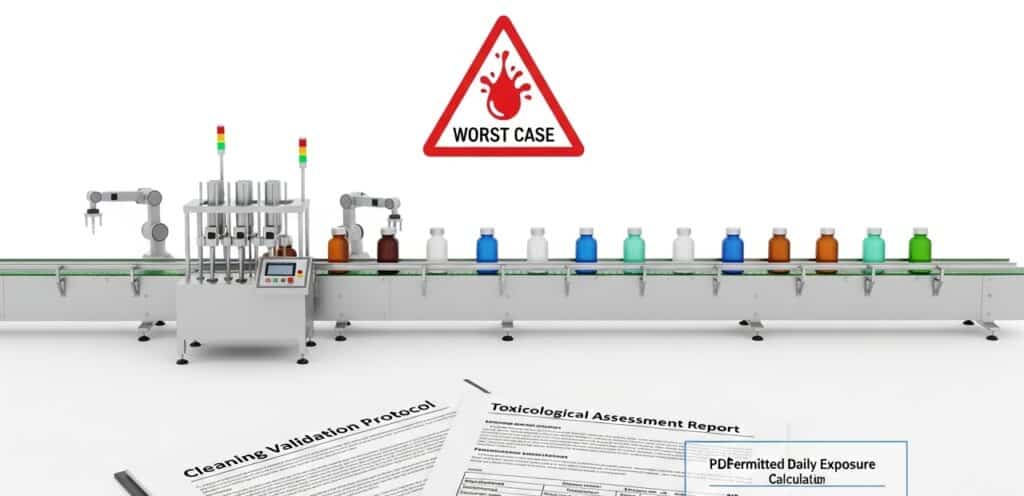
Efficacy and rotation: the strategy must include a disinfectant rotation program to prevent the development of resistant microbial strains. The CCS explains the frequency and logic of this rotation. It also describes the validation of cleaning procedures for product-contact equipment, proving they can effectively remove both chemical residues of the previous product and any microbial contamination to pre-defined, health-based limits.
Regulatory References:
- EU: EudraLex – Volume 4 – Annex 1 (August 2022), Section 5, “Cleaning and disinfection.”
- FDA: Code of Federal Regulations, Title 21, Part 211.67, “Equipment cleaning and maintenance.”
Tip: your disinfectant efficacy validation should not be a one-time event. Your Contamination Control Strategy should mandate an ongoing “in-situ” efficacy program. Periodically, take environmental isolates (the actual bacteria and molds growing in your facility) and re-challenge your validated disinfectants in the lab. This verifies that your program remains effective against the current, relevant microflora, which can change over time.
6. Process Risk Management
This is the intellectual core of the CCS, where all potential hazards are formally identified and controlled.
Risk identification: the CCS must contain or reference a formal process risk assessment, typically an FMEA or HACCP. This assessment systematically breaks down the entire manufacturing process, step-by-step, to identify every potential contamination risk (e.g., aseptic connection, operator intervention, material transfer).

Critical Control Points: based on the risk assessment, the CCS identifies the Critical Control Points (CCPs)—the specific steps where control is essential to prevent or eliminate a risk. For each CCP, the CCS defines the specific control measure (e.g., use of a single-use sterile connector, continuous particle monitoring during filling) and the scientific rationale for why that control is effective.
Regulatory References:
- EU: EudraLex – Volume 4 – Annex 1 (August 2022), Section 2, “Pharmaceutical Quality System (PQS),” which explicitly requires the application of Quality Risk Management (ICH Q9).
- FDA: The principles are embedded throughout the Aseptic Processing Guidance, which is built on a foundation of risk management. The FDA has formally adopted the ICH Q9 guideline.
Tip: make your process risk assessments “living documents.” The CCS should mandate a formal review of the FMEA for a given process after a set period (e.g., one year) or after a set number of batches. During this review, use actual deviation and batch failure data to re-score the “Probability” and “Detection” elements of the FMEA. This transforms the FMEA from a theoretical exercise into a dynamic, data-driven tool that accurately reflects the real-world performance of your process.
7. Environmental and Process Monitoring
This element describes the systems used to verify that the facility and process remain in a state of control.
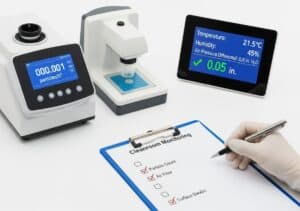
The EM program: the CCS provides a detailed rationale for the Environmental Monitoring (EM) program. It justifies every sampling location based on the process risk assessment (e.g., locations where sterile product is exposed, areas of frequent operator activity). It defines the methods (e.g., active air sampling, settle plates, contact plates), frequencies, and alert/action limits for both non-viable particulates and viable microbial counts.
Process monitoring: this section describes the use of modern monitoring technologies. This includes continuous, real-time particle monitoring in the Grade A critical zone, with alarms linked to the Batch Record. It also describes the trending of pressure differentials and other critical parameters. The Contamination Control Strategy must also define the program for identifying microbial isolates recovered from the EM program to the species level, which is crucial for tracking the facility’s microbial flora and investigating deviations.
Regulatory References:
- EU: EudraLex – Volume 4 – Annex 1 (August 2022), Section 9, “Viable and non-viable environmental and process monitoring.”
- FDA: Code of Federal Regulations, Title 21, Part 211.113(b), which requires “appropriate written procedures… designed to prevent microbiological contamination.” The Aseptic Processing Guidance provides detailed expectations.
Tip: use the microbial identification data from your EM program to create a “microbial map” of your facility. Track not just the counts, but the species and where they are found. This allows you to identify resident “house” organisms and track their movement. If a media fill or sterility test failure occurs, you can compare the contaminating organism to your facility map, which can dramatically accelerate the root cause investigation by pointing to the likely source area.
8. Continuous Improvement
The CCS is not a static document; it must evolve and is highly related to the “c” of the cGMP.
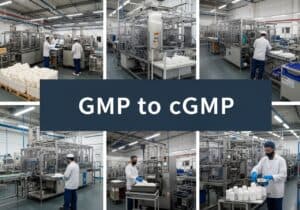
Data trending: the CCS mandates a formal system for the routine trending of all data related to contamination control, including EM results, personnel monitoring, utility monitoring, and batch-related deviations. Statistical Process Control (SPC) should be used to identify negative trends, even if the results are still within specification.

Feedback loop: this is the most critical part of the continuous improvement cycle. The Contamination Control Strategy must be a formal agenda item in the site’s Quality Management Review. The trend data must be reviewed by senior management, and the output must be a set of documented actions for improvement. If a new microbial strain is frequently recovered, for example, the CCS must be updated to reflect a potential change in the disinfection program or an investigation into its source.
Regulatory References:
- EU: EudraLex – Volume 4 – Annex 1 (August 2022), Section 2.5, which states the CCS “should be actively updated and should drive continuous improvement.” This links directly to ICH Q10, “Pharmaceutical Quality System.”
- FDA: The principles of continuous improvement are central to the PQS model described in ICH Q10, which the FDA has adopted.
Tip: integrate the CCS review directly with the site’s Quality Management Review (QMR) and use a “Quality Risk Management” dashboard. Present KPIs derived from the CCS (e.g., EM excursion rates, media fill pass rates, contamination-related deviation trends) directly to senior leadership. This ensures that the health of your contamination control program has high-level visibility, which is critical for securing the resources and management commitment needed to drive meaningful continuous improvement.
The rest of this article is reserved for members
To limit scraping bots (currently 40,000 hits per day!),
we had to restrict access to full articles and tools to registered members only.
to access all the rest.
FAQ
How does a Contamination Control Strategy (CCS) differ from individual cleaning and gowning SOPs?
A CCS is the overarching strategic document that integrates all control elements based on risk. SOPs are the detailed, tactical instructions for executing specific tasks defined within that strategy.
What is the correct technique for wiping items for transfer into a Grade A/B area, and why is contact time critical?
The correct technique involves using sterile, low-lint wipes saturated with a validated disinfectant in overlapping, unidirectional strokes. Contact time is critical because it is the validated duration required for the disinfectant to achieve its sporicidal or bactericidal action.
What are the most critical data inputs for the periodic review and update of a CCS?
The most critical inputs are environmental and personnel monitoring trend data, process deviations, media fill results, and CAPA effectiveness data. These inputs verify control and highlight areas needing reassessment.
What is the best practice for integrating supplier and raw material controls into the facility’s CCS?
The CCS must reference the supplier qualification program, which mandates audits, quality agreements, and microbial specifications for incoming materials. This extends contamination control to the entire supply chain.
Why are unidirectional, overlapping strokes mandated for cleaning and disinfecting surfaces in a cleanroom?
This technique ensures complete surface coverage and prevents the re-contamination of areas that have already been cleaned. It physically lifts and removes contaminants rather than just spreading them around the surface.
What are the key validation requirements for cleaning and disinfection agents cited in a CCS?
Validation requires efficacy studies (coupon studies) using in-house microbial isolates on representative manufacturing surfaces. These studies must prove the effectiveness of the agents at their specified contact times.
What are the primary differences in a CCS for an aseptic process versus a terminally sterilized product?
An aseptic process CCS focuses intensely on the exclusion of all microorganisms, as there is no final kill step. A CCS for terminal sterilization focuses on controlling the pre-sterilization bioburden to a validated limit.
What is the correct sequence for de-gowning, and why is it as critical as the gowning process itself?
De-gowning proceeds from the “dirtiest” items to the “cleanest,” typically starting with gloves and moving inward to the coverall, to contain contaminants on the gown. This prevents the operator from contaminating their scrubs or skin and dispersing particles from the used gown into the changing room.
Related Readings
- Aseptic Process Simulation (Media Fill) design and interpretation: it involves designing worst-case simulations to qualify a process’s aseptic integrity. Interpreting the results is critical for validating the process and qualifying operators.
- Microbial identification strategies and data trending: this deals with identifying environmental isolates to the species level to understand the facility’s microflora. Trending this data is essential for detecting shifts that indicate a loss of control.
- Design and control of RABS and isolator technology: it explores the validation and operation of advanced barrier systems. It includes integrity testing and glove management to ensure a superior aseptic environment.
- WFI and Pure Steam System validation and biofilm control: it shall cover the design and routine monitoring of high-purity water systems. A primary focus is on system validation and ongoing strategies to prevent and control biofilm formation.
- Container Closure Integrity Testing (CCIT) methodologies: the technologies used to ensure the final product seal is integral, guaranteeing sterility until use. It includes methods like vacuum decay and high voltage leak detection.
- Supplier and raw material microbial control programs: it shall extend contamination control to the supply chain through supplier audits and quality agreements. It involves setting and verifying microbial specifications for all incoming materials.
- Sterilization validation for components and equipment: validating the lethality and repeatability of sterilization cycles (e.g., autoclave, dry heat) for all items entering the aseptic processing area.
- Management of disinfectant and cleaning agent residues: it addresses the potential for chemical residues to inhibit disinfectant efficacy or become a product contaminant. It covers strategies for residue detection, removal, and rotation of cleaning agents.
External Links on Contamination Control Strategy (CCS)
International Standards
- ISO 14644-1: 2015 Cleanrooms and controlled environments – Part 1: Classification of air cleanliness
- ISO 14644-2: 2015 Cleanrooms and controlled environments – Part 2: Monitoring to provide evidence of cleanroom performance related to air cleanliness by airborne particulate contamination
- ISO 14644-3: 2019 Cleanrooms and controlled environments – Part 3: Test methods
(hover the link to see our description of the content)
Glossary of Terms Used
Bioburden: the presence of viable microorganisms on a surface or in a substance, typically measured to assess contamination levels in pharmaceuticals, medical devices, and other sterile products. It is crucial for determining sterilization efficacy and product safety.
Building Management System (BMS): a centralized control system that monitors and manages a building's mechanical and electrical equipment, including heating, ventilation, air conditioning, lighting, security, and fire safety systems, to enhance operational efficiency, comfort, and energy management.
Carbon Capture & Sequestration (CCS): a process that captures carbon dioxide emissions from sources like power plants and industrial processes, transporting it for storage underground or utilizing it in various applications, thereby reducing greenhouse gas concentrations in the atmosphere.
Certificate of Analysis (CoA): a document issued by a manufacturer or testing laboratory that confirms a product's specifications, quality, and compliance with regulatory standards, detailing test results and methods used for analysis.
Certificate of Conformance (CoC): a document issued by a manufacturer or supplier confirming that a product meets specified standards, regulations, or contractual requirements, often used in quality assurance and compliance verification processes.
Colony Forming Units (CFU): a measurement used to estimate the number of viable microorganisms in a sample, indicating the number of cells capable of forming colonies under specific growth conditions.
Computational Fluid Dynamics (CFD): a numerical method used to analyze fluid flow, heat transfer, and related phenomena by solving the governing equations of fluid motion and thermodynamics through discretization techniques, enabling simulation and visualization of complex fluid behavior in various engineering applications.
Contamination Control Strategy (CCS): a systematic approach to prevent, detect, and mitigate contamination in controlled environments, ensuring product quality and safety through defined procedures, monitoring, and risk management practices.
Corrective Action and Preventative Action (CAPA): a systematic approach to identifying, investigating, and addressing nonconformities and potential issues to prevent recurrence and ensure compliance with regulatory standards in quality management systems.
Critical Control Points (CCP): specific stages in a process where control can be applied to prevent, eliminate, or reduce food safety hazards to acceptable levels. Identifying these points is essential for effective hazard analysis and critical control management in food production systems.
current Good Manufacturing Practice (cGMP): a system ensuring that products are consistently produced and controlled according to quality standards, encompassing regulations and guidelines for manufacturing processes, facilities, equipment, and personnel to ensure safety, quality, and efficacy in pharmaceuticals, food, and other regulated industries.
Environmental Monitoring System (EMS): a system designed to systematically collect, analyze, and report data on environmental conditions, including air, water, and soil quality, to assess compliance with regulations, track changes over time, and support decision-making for environmental management and protection.
Failure Mode and Effects Analysis (FMEA): a systematic method for evaluating potential failure modes within a system, process, or product, assessing their effects on performance, and prioritizing risks to improve reliability and safety through corrective actions.
Food and Drug Administration (FDA): a federal agency of the United States Department of Health and Human Services responsible for regulating food safety, pharmaceuticals, medical devices, cosmetics, and tobacco products to ensure public health and safety through scientific evaluation and enforcement of compliance standards.
Good Manufacturing Practice (GMP): a system ensuring products are consistently produced and controlled according to quality standards, minimizing risks involved in pharmaceutical production and related industries. It encompasses guidelines for manufacturing processes, facility conditions, personnel qualifications, and documentation practices to ensure product safety and efficacy.
Hazard Analysis and Critical Control Points (HACCP): a systematic approach to food safety that identifies, evaluates, and controls hazards at critical points in the production process to prevent foodborne illnesses and ensure product safety.
Heating Ventilation and Air Conditioning (HVAC): a system designed to regulate indoor climate by controlling temperature, humidity, and air quality through heating, cooling, and ventilation processes. It includes components such as furnaces, air conditioners, ductwork, and thermostats for efficient environmental management.
International Organization for Standardization (ISO): a non-governmental international body that develops and publishes standards to ensure quality, safety, efficiency, and interoperability across various industries and sectors, facilitating global trade and cooperation. Established in 1947, it comprises national standardization organizations from member countries.
Key Performance Indicator (KPI): a measurable value that demonstrates how effectively an organization is achieving key business objectives, often used to evaluate success at reaching targets.
Material Airlock (MAL): a sealed entryway designed to control the transfer of materials between different environments, preventing contamination and maintaining specific atmospheric conditions. It typically consists of two or more interlocking doors that ensure isolation during the transfer process.
Performance Qualification (PQ): a process that verifies a system or equipment operates according to specified requirements under real-world conditions, ensuring it consistently performs its intended function within predetermined limits.
Personnel Airlock (PAL): a sealed entryway designed to allow personnel to transition between different pressure environments while minimizing contamination and maintaining safety, typically used in space stations, laboratories, or cleanrooms. It features interlocking doors that prevent simultaneous opening.
Standard Operating Procedure (SOP): a set of step-by-step instructions created to help workers carry out routine operations consistently and efficiently, ensuring compliance with regulations and quality standards.
Statistical Process Control (SPC): a method of quality control that employs statistical techniques to monitor and control a process, ensuring it operates at its full potential by identifying variations and maintaining consistent output within specified limits.
Total Organic Carbon (TOC): a measure of the amount of carbon found in organic compounds within a sample, often used to assess water quality and environmental health. It quantifies the concentration of carbon derived from organic matter, excluding inorganic carbon sources.
Unique Selling Point (USP): a distinctive feature or benefit that sets a product or service apart from competitors, aimed at attracting customers by addressing specific needs or preferences.
Volatile Organic Compound (VOC): organic chemicals that have a high vapor pressure at room temperature, leading to significant evaporation and potential air pollution. They are commonly found in paints, solvents, and fuels, contributing to smog formation and adverse health effects.