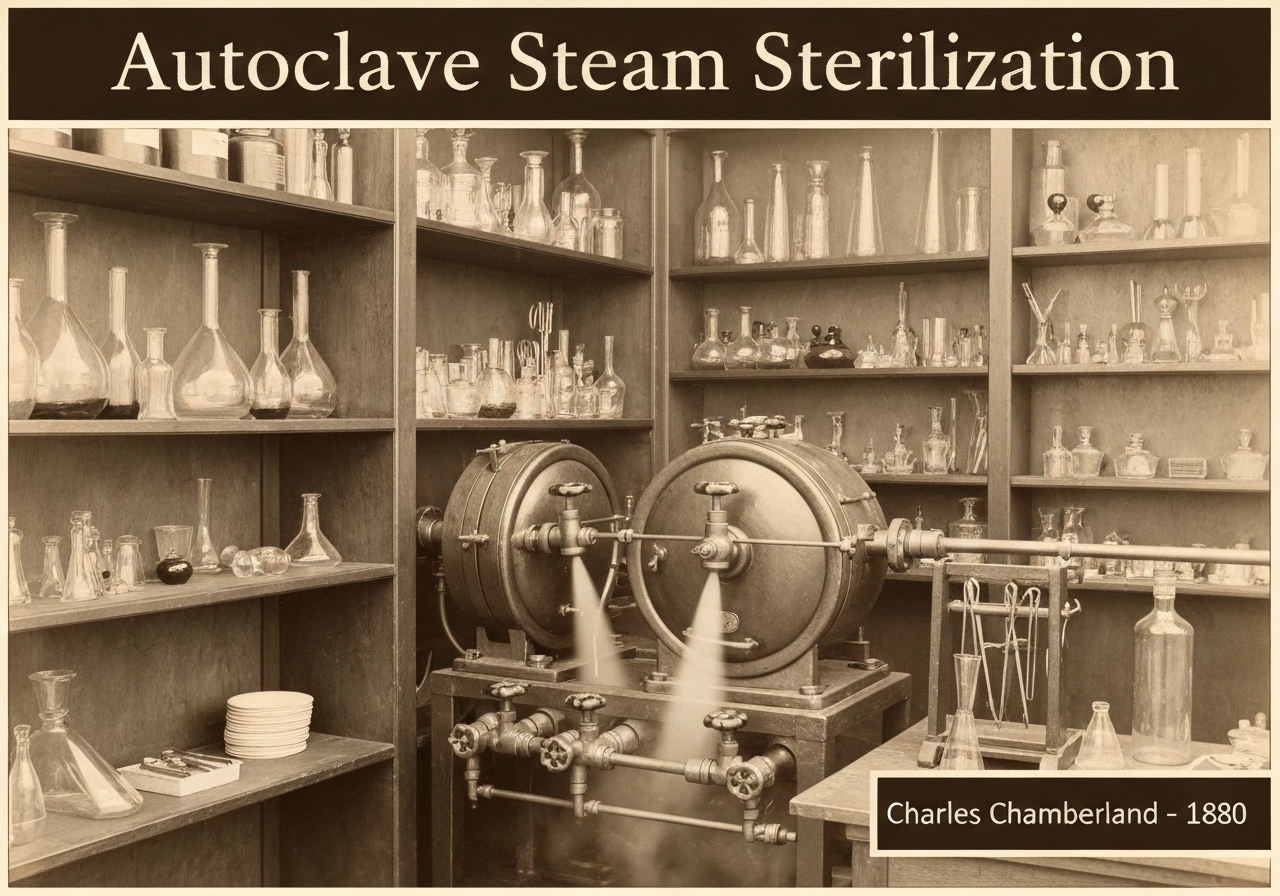
उपकरणों और सामग्रियों को कीटाणुरहित करने के लिए उच्च तापमान पर उच्च दाब वाली संतृप्त भाप का उपयोग करने की एक विधि। एक विशिष्ट चक्र 121 डिग्री सेल्सियस (250 डिग्री फारेनहाइट) पर वायुमंडलीय दाब से 100 किलोपैमा (15 साई) ऊपर होता है। दबाव for 15 minutes. This combination of heat and moisture effectively denatures proteins and enzymes, killing all microorganisms, including resilient bacterial spores. An autoclave is released for production only after IQ OQ PQ process validation shows that every cycle reaches the required temperature and exposure time.
The autoclave’s effectiveness stems from the principles of thermodynamics and microbiology. Unlike dry heat, which kills microorganisms through slow oxidation, moist heat from saturated steam is far more efficient. The steam transfers heat energy rapidly and upon contact with a cooler surface, it condenses, releasing its latent heat of vaporization. This process causes a rapid and irreversible coagulation and denaturation of essential proteins, enzymes, and nucleic acids within the microbial cells, leading to their death. The increased pressure inside the autoclave serves a critical purpose: it raises the boiling point of water. At standard atmospheric pressure, water boils at 100 °C, a temperature insufficient to reliably kill bacterial endospores, which are highly resistant dormant structures. By increasing the pressure to approximately 15 psi (100 kPa) above atmospheric pressure, the boiling point is elevated to 121 °C. This higher temperature, combined with the penetrating power of steam, ensures the destruction of even the most resilient spores, such as those from Geobacillus stearothermophilus, which is often used as a biological indicator to validate autoclave performance. The typical 15-minute cycle time at 121 °C is a standard derived from thermal death time studies, providing a significant safety margin to achieve a high नसबंदी आश्वासन स्तर (SAL). The process is not suitable for heat-sensitive materials like plastics or delicate electronics, which would be damaged by the high temperatures and pressure.
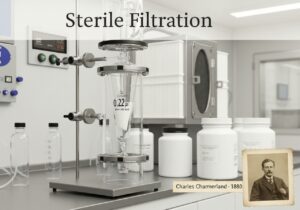
ऐतिहासिक रूप से, ऑटोक्लेव 1679 में डेनिस पापिन द्वारा आविष्कार किए गए प्रेशर कुकर "स्टीम डाइजेस्टर" का प्रत्यक्ष वंशज था। हालांकि, सूक्ष्मजीव विज्ञान में इसका अनुप्रयोग 1879 में लुई पाश्चर के सहयोगी चार्ल्स चैंबरलैंड द्वारा किया गया था। पाश्चर की प्रयोगशाला में काम करते हुए, चैंबरलैंड ने जीवाणु विज्ञान के बढ़ते क्षेत्र को समर्थन देने और रोग के रोगाणु सिद्धांत को प्रमाणित करने के लिए कल्चर मीडिया और उपकरणों को कीटाणुरहित करने की एक विश्वसनीय विधि की आवश्यकता को पहचाना। उनके आविष्कार ने सूक्ष्मजीवों के सभी रूपों को नष्ट करने का पहला मजबूत उपकरण प्रदान किया, जिसने प्रायोगिक जीव विज्ञान, चिकित्सा और शल्य चिकित्सा में क्रांति ला दी। इसने कीटाणुरहित कल्चर मीडिया तैयार करने की अनुमति दी, जिससे शुद्ध जीवाणु संस्कृतियों को अलग करना और उनका अध्ययन करना संभव हुआ, जो रॉबर्ट कोच द्वारा स्थापित आधुनिक सूक्ष्मजीव विज्ञान की आधारशिला है। ऑटोक्लेव के नैदानिक अभ्यास में आने से शल्य चिकित्सा स्थल के संक्रमण में नाटकीय रूप से कमी आई और जटिल शल्य चिकित्साएं अधिक सुरक्षित हो गईं, जिससे यह दुनिया भर के अस्पतालों में एक अनिवार्य उपकरण बन गया।
संबंधित विषय: ऑटोक्लेव, भाप से नसबंदी, सूक्ष्मजीव विज्ञान, दबाव, तापमान, बीजाणु, विसंक्रमण, चिकित्सा उपकरण, चार्ल्स चैंबरलैंड, नम ऊष्मा।