I often find myself at a crossroads between aesthetic, creativity and function in the design world. The paths of product design and industrial design intrigue me. These roles focus on bringing ideas to life but highlight different areas. Product designers look at 用户体验 and functionality, how they’re made, and making them on a large scale. Industrial designers focus on how things look, impression, social and context. Knowing the differences between these roles helps us see how each affects research and development. It’s exciting for anyone interested in design careers or understanding these roles better.
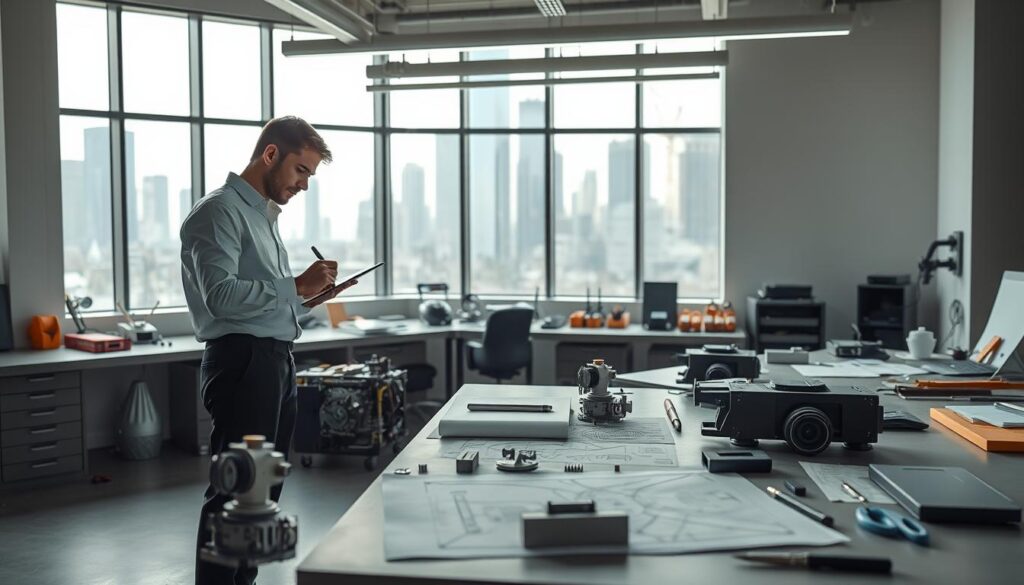
As in the introduction picture, at first, they can look very similar. In real development projects, they are not.
But their domains overlap, thus the confusion to avoid.
关键要点
- Product designers focus on user experience, manufacturing processes, and large-scale production.
- Industrial designers emphasize aesthetics and product functionality.
- Both roles require strong problem-solving skills and creativity.
- Understanding the differences aids in recognizing the contributions of each profession and helps to a fluent R&D project
- Each role plays a vital part in the research and development of innovative solutions.
Understanding the Role of an Industrial Designer这 工作 of an industrial designer is very dynamic and mixes creativity with history, trends and context. They use artistic vision and practical skills to imagine products. Having both creative and practical skills is key for doing well in design. Key Responsibilities
Skills Needed for Industrial DesignTo be really good at industrial design, you need certain skills. Important skills for this job are:
| Understanding the Role of a Product DesignerA product designer’s role is crucial in making products that both work well, safe, acceptable price, and be easy to make. As I explore this career, I see that it’s not just about the design. It’s about improving user experiences with smart design choices. Key ResponsibilitiesProduct designers have a few main responsibilities:
Skills Needed for Product DesignThere are some key skills needed to be a good product designer:
|
“Industrial design is about finding an original, yet simple, combination of shapes, colors and materials that support the functionalities and make the product unique, appealing and timeless” | A common mistake for engineers: “I’ll do the industrial design myself by rounding all corners and edges in my CAD” |
| The Product Design ProcessThe product design process is a well-planned way to make sure every part of a new product is looked at and done right. I follow a path with specific steps that help me dig deep into ideas while keeping an eye on what users need and what the market wants. This approach makes moving through the design phases smoother and more effective. Stages of Product DevelopmentEvery stage is key to creating the final product. Here’s how, overly simplified, I split it up and is much more detailed on innovation.world:
Tools Used in Product DesignTo move through the product design process effectively, I use several tools that boost how much I get done and help everyone work together better. Key tools include:
|
Product Designer vs Industrial Designer: Key Differences
 Learning the differences between a product designer and an industrial designer can deepen my understanding of their roles. Both are crucial in the design field but tackle problems differently.
An industrial designer is all about items for consumers. They focus on enhancing user experience, look, and emotional ties with the product. Their work stands out due to keen detail and a drive for novelty.
In contrast, a 产品设计师 aims for function and easy large-scale production. He balances the needs for quality manufacturing, cost, and user-friendliness in their designs.
| 工业设计师 | 产品设计师 | |
|---|---|---|
| 重点 | Individual consumer goods, mass-produced items | |
| User Interaction | Prioritizes user experience and emotional design | Emphasizes functionality and 可用性 |
| 设计过程 | Iterative with a focus on creativity | Structured with attention to engineering and practicality |
| 合作 | Often collaborates with 营销 and branding teams | Works closely with engineers and manufacturers |
Product and industrial designers each play a key role in a R&D project. They meet different challenges, improving how we use and enjoy products today.
Education and Typical Diplomas for Designers
Getting the right education is crucial for anyone wanting to succeed as a designer. Whether it’s in product or industrial fields, knowing the educational paths makes choosing easier. Formal qualifications build a base for creative and technical skills in this field.
Educational programs in the U.S. for engineering require accreditation by the Accreditation Board for Engineering and Technology (ABET) in contrast to programs for industrial design which are accredited by the National Association of Schools of Art and Design (NASAD). Of course, engineering education requires heavy training in mathematics and physical sciences, which is not typically required in industrial design education. (source: Wikipedia)
Degrees Relevant to Product DesignA Bachelor’s degree in Product Design covers how products work, their ease of use and manufacturability. It includes lessons on materials, 人体工程学, and how things are made. Top schools for this include: Later certifications like the Certified SolidWorks Professional (CSWP) or other CAD diploma also boost marketability and skills. | Degrees Relevant to Industrial DesignA Bachelor’s degree in Industrial Design teaches important topics like design theory, user experience, and how to communicate visually, modes and trends. Among others, schools known for strong programs include:
Typical diplomas and degrees take two to four years of study resulting in a Bachelor of Industrial Design (B.I.D.), Bachelor of Science (B.Sc.) or Bachelor of Fine Arts (B.F.A.). Afterwards, the bachelor programme can be extended to postgraduate degrees such as Master of Design, Master of Fine Arts and others to a Master of Arts or Master of Science. |
常问问题
What is the difference between a product designer and an industrial designer?
工业设计师专注于设计外观精美、功能实用且符合当前及长期趋势的产品,并兼顾用户及其环境的需求。产品设计师则致力于使产品易于大规模高效生产。两者的共同之处在于,效率、环保理念以及从新想法中创造实用设计都是工业设计师的驱动力。他们都从趋势、用户反馈以及为大众带来改变的愿望中汲取灵感。
What are the key responsibilities and skills of a product designer?
了解用户需求对产品设计师至关重要。他/她还要构思设计方案、制作原型并与用户进行测试。了解材料和制造工艺也很有帮助。产品设计师使用 CAD software, and tools like 3D printers. These help make designing easier and improve teamwork to prepare the later manufacturing phase.
What are the main tasks and tools of an industrial designer?
他们的目标是打造既美观又实用的产品。关键在于设计出风格独特、意图清晰的产品。创造力、笔墨运用以及Adobe创意套件等设计软件的使用都至关重要。产品设计师需要了解各种风格和流派、趋势、模式,并理解用户体验(用户体验) and communicate well.
External Links on Product and Industrial Designers
国际标准
(将鼠标悬停在链接上即可查看内容描述)
常用术语表
Computer Aided Design (CAD): 用于创建、修改、分析和优化工程、建筑和制造等各个领域的设计的软件应用程序,通过数字工具和技术实现精确的图纸和模型。
Computer-Aided Design (CAD): 用于创建、修改、分析和优化工程、建筑和制造等各个领域的设计的软件应用程序,通过数字工具和技术实现精确的图纸和模型。
Network-attached storage (NAS): 一种连接到网络的存储设备,允许多个用户和设备访问和共享数据,通常提供集中式文件存储、备份和管理功能。它独立于计算机运行,可通过标准网络协议访问。
User experience (UX): 用户与产品、系统或服务交互时的整体满意度和感知,涵盖整个交互过程中的可用性、可访问性、设计和情感反应。
Verification and Validation (V&V): 确保系统符合规范并实现其预期目的的过程,涉及两个不同的活动:验证检查产品是否符合设计规范,而确认评估其是否满足用户需求和要求。