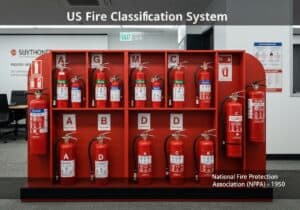
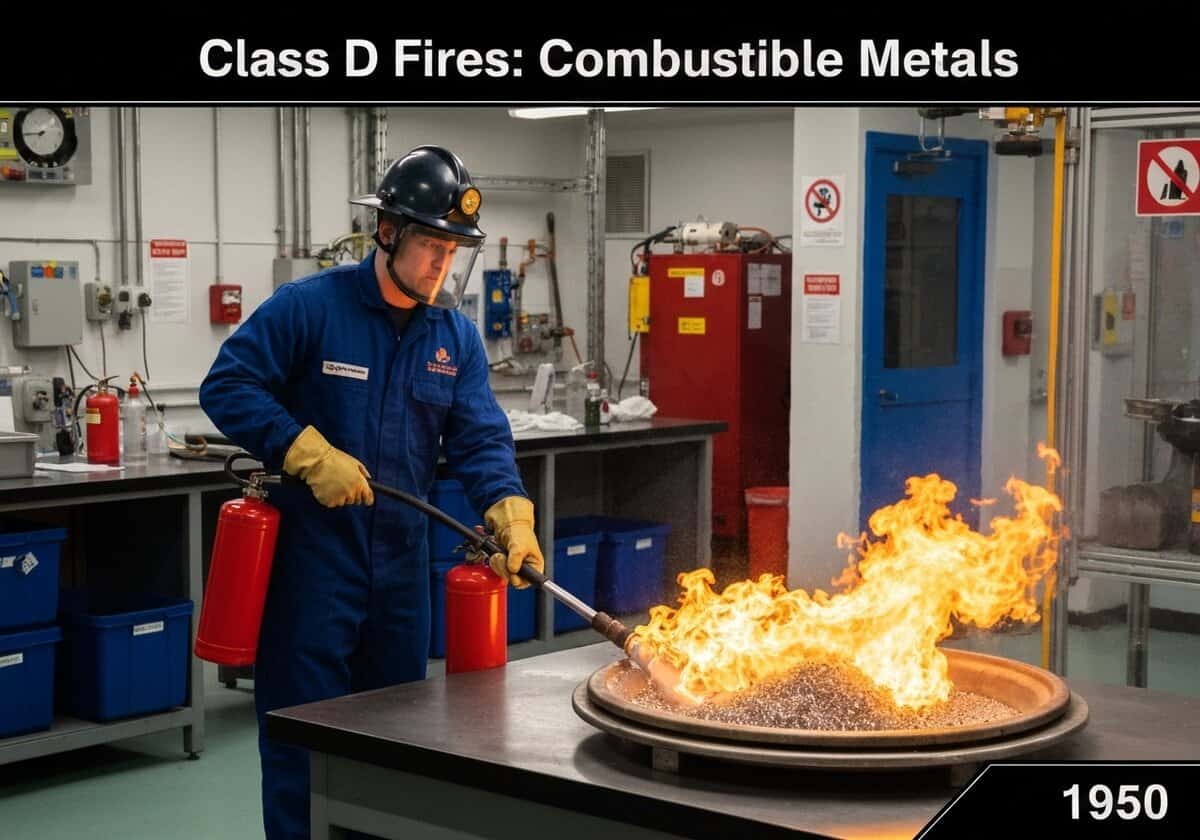
D类火灾涉及可燃金属、合金或金属化合物,例如镁、钛、钠和锂。这类火灾极其危险,因为它们在极高的温度下燃烧,并且可能与水或二氧化碳等常见灭火剂发生爆炸性反应。例如,水 在某些情况下, 与 p 相反普遍认为,它会分解成氢气和氧气,助长火势。灭火需要专门的干粉灭火剂。
The unique danger of Class D fires stems from the chemical reactivity of the burning metal. Unlike carbon-based fuels, many metals are powerful reducing agents and can strip oxygen from water (H₂O) or carbon dioxide (CO₂). For example, burning magnesium reacts with water in a highly exothermic reaction: [latex]Mg (s) + H_2O (g) \rightarrow MgO (s) + H_2 (g)[/latex]. The 氢 gas produced is itself extremely flammable, leading to a violent explosion. This makes traditional firefighting methods not only ineffective but dangerously counterproductive.
Extinguishing Class D fires requires agents that will not react with the burning metal. These are typically dry powders, not to be confused with the dry chemical agents used for Class A, B, and C fires. Class D agents work by smothering the fire, forming a crust that excludes oxygen, and by absorbing heat. Common agents include sodium chloride (NaCl) based powders (like Met-L-X), graphite-based powders (G-1), and copper-based powders, with the specific choice depending on the type of metal burning. For instance, copper powder is particularly effective on 锂 fires.
The rise of technologies like 锂离子 batteries has brought Class D fire safety into sharper focus. While a battery fire is complex, it often involves the combustion of lithium, requiring Class D-rated extinguishing agents and strategies.
self-expanding graphite pouches that can be thrown onto small metal fires to A 类火灾通常通过水的冷却作用或干化学品窒息来扑灭。 them
为消防员提供 VR 培训,帮助他们安全处理 D 类事故
能够在工业事故中精确部署 D 级特工的专用无人机
Related to: class D fire, combustible metal, magnesium, lithium, sodium, dry powder extinguisher, water-reactive, metal fire, pyrophoric, special hazard.