I often find myself at a crossroads between aesthetic, creativity and function in the design world. The paths of product design and industrial design intrigue me. These roles focus on bringing ideas to life but highlight different areas. Product designers look at experiencia de usuario and functionality, how they’re made, and making them on a large scale. Industrial designers focus on how things look, impression, social and context. Knowing the differences between these roles helps us see how each affects research and development. It’s exciting for anyone interested in design careers or understanding these roles better.
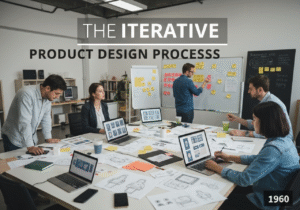
As in the introduction picture, at first, they can look very similar. In real development projects, they are not.
But their domains overlap, thus the confusion to avoid.
Conclusiones Clave
- Product designers focus on user experience, manufacturing processes, and large-scale production.
- Industrial designers emphasize aesthetics and product functionality.
- Both roles require strong problem-solving skills and creativity.
- Understanding the differences aids in recognizing the contributions of each profession and helps to a fluent R&D project
- Each role plays a vital part in the research and development of innovative solutions.
Understanding the Role of an Industrial DesignerEl trabajo of an industrial designer is very dynamic and mixes creativity with history, trends and context. They use artistic vision and practical skills to imagine products. Having both creative and practical skills is key for doing well in design. Key Responsibilities
Skills Needed for Industrial DesignTo be really good at industrial design, you need certain skills. Important skills for this job are:
| Understanding the Role of a Product DesignerA product designer’s role is crucial in making products that both work well, safe, acceptable price, and be easy to make. As I explore this career, I see that it’s not just about the design. It’s about improving user experiences with smart design choices. Key ResponsibilitiesProduct designers have a few main responsibilities:
Skills Needed for Product DesignThere are some key skills needed to be a good product designer:
|
“Industrial design is about finding an original, yet simple, combination of shapes, colors and materials that support the functionalities and make the product unique, appealing and timeless” | A common mistake for engineers: “I’ll do the industrial design myself by rounding all corners and edges in my CAD” |

| The Product Design ProcessThe product design process is a well-planned way to make sure every part of a new product is looked at and done right. I follow a path with specific steps that help me dig deep into ideas while keeping an eye on what users need and what the market wants. This approach makes moving through the design phases smoother and more effective. Stages of Product DevelopmentEvery stage is key to creating the final product. Here’s how, overly simplified, I split it up and is much more detailed on innovation.world:
Tools Used in Product DesignTo move through the product design process effectively, I use several tools that boost how much I get done and help everyone work together better. Key tools include:
|

Product Designer vs Industrial Designer: Key Differences
 Learning the differences between a product designer and an industrial designer can deepen my understanding of their roles. Both are crucial in the design field but tackle problems differently.
An industrial designer is all about items for consumers. They focus on enhancing user experience, look, and emotional ties with the product. Their work stands out due to keen detail and a drive for novelty.
In contrast, a diseñador de productos aims for function and easy large-scale production. He balances the needs for quality manufacturing, cost, and user-friendliness in their designs.
| Diseñador industrial | Diseñador de producto | |
|---|---|---|
| Enfocar | Individual consumer goods, mass-produced items | |
| User Interaction | Prioritizes user experience and emotional design | Emphasizes functionality and usabilidad |
| Proceso de diseño | Iterative with a focus on creativity | Structured with attention to engineering and practicality |
| Colaboración | Often collaborates with marketing and branding teams | Works closely with engineers and manufacturers |
Product and industrial designers each play a key role in a R&D project. They meet different challenges, improving how we use and enjoy products today.

Education and Typical Diplomas for Designers
Getting the right education is crucial for anyone wanting to succeed as a designer. Whether it’s in product or industrial fields, knowing the educational paths makes choosing easier. Formal qualifications build a base for creative and technical skills in this field.
Educational programs in the U.S. for engineering require accreditation by the Accreditation Board for Engineering and Technology (ABET) in contrast to programs for industrial design which are accredited by the National Association of Schools of Art and Design (NASAD). Of course, engineering education requires heavy training in mathematics and physical sciences, which is not typically required in industrial design education. (source: Wikipedia)
Degrees Relevant to Product DesignA Bachelor’s degree in Product Design covers how products work, their ease of use and manufacturability. It includes lessons on materials, ergonomía, and how things are made. Top schools for this include: Later certifications like the Certified SolidWorks Professional (CSWP) or other CAD diploma also boost marketability and skills. | Degrees Relevant to Industrial DesignA Bachelor’s degree in Industrial Design teaches important topics like design theory, user experience, and how to communicate visually, modes and trends. Among others, schools known for strong programs include:
Typical diplomas and degrees take two to four years of study resulting in a Bachelor of Industrial Design (B.I.D.), Bachelor of Science (B.Sc.) or Bachelor of Fine Arts (B.F.A.). Afterwards, the bachelor programme can be extended to postgraduate degrees such as Master of Design, Master of Fine Arts and others to a Master of Arts or Master of Science. |
Preguntas frecuentes
What is the difference between a product designer and an industrial designer?
An industrial designer focuses on making products that look good and work well for users and its environment in current and long-term trends. A product designer deals with making products easy and efficient to produce on a big scale. The commonalities between the two are the efficiency, the aim to be eco-friendly, and creating practical designs from new ideas drive industrial designers. They both find ideas in trends, user feedback, and a wish to make a difference for many people.
What are the key responsibilities and skills of a product designer?
Understanding what users need is crucial for a product designer. He also thinks up design ideas, make prototypes, and test them with users. Knowing about materials and how things are made also helps. Product designers use CAD software, and tools like 3D printers. These help make designing easier and improve teamwork to prepare the later manufacturing phase.
What are the main tasks and tools of an industrial designer?
Their goal is to make products that are both beautiful and work well. The key is to produce a design with unique style and clear intent. Being creative and knowing how to use pens and pencils, so as design software like Adobe Creative Suite are important. Product designers need to know styles and genres, trends, modes and understand user experience (Experiencia de usuario) and communicate well.
External Links on Product and Industrial Designers
Normas internacionales
(Pase el cursor sobre el enlace para ver nuestra descripción del contenido)
Glosario de términos utilizados
Computer Aided Design (CAD): una aplicación de software utilizada para crear, modificar, analizar y optimizar diseños en diversos campos, como ingeniería, arquitectura y fabricación, permitiendo dibujos y modelos precisos a través de herramientas y técnicas digitales.
Computer-Aided Design (CAD): una aplicación de software utilizada para crear, modificar, analizar y optimizar diseños en diversos campos, como ingeniería, arquitectura y fabricación, permitiendo dibujos y modelos precisos a través de herramientas y técnicas digitales.
Network-attached storage (NAS): Dispositivo de almacenamiento conectado a una red que permite el acceso y el intercambio de datos entre múltiples usuarios y dispositivos, y que generalmente proporciona capacidades centralizadas de almacenamiento, copia de seguridad y gestión de archivos. Funciona de forma independiente de una computadora y se puede acceder a él mediante protocolos de red estándar.
User experience (UX): la satisfacción y percepción general de un usuario al interactuar con un producto, sistema o servicio, abarcando la usabilidad, la accesibilidad, el diseño y la respuesta emocional a lo largo de todo el proceso de interacción.
Verification and Validation (V&V): un proceso para garantizar que un sistema cumple con las especificaciones y cumple su propósito previsto, que implica dos actividades distintas: la verificación verifica si el producto cumple con las especificaciones de diseño, mientras que la validación evalúa si satisface las necesidades y los requisitos del usuario.