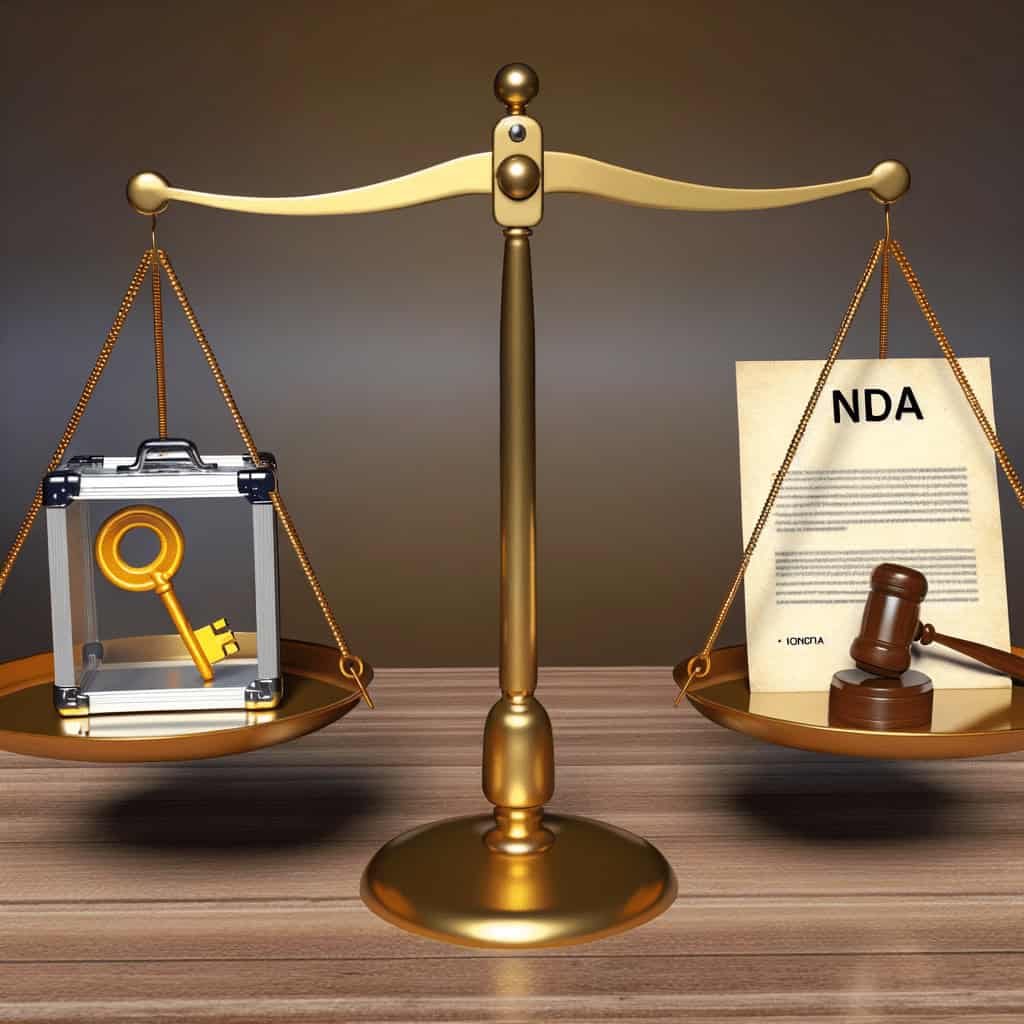
Which offers better protection for your business secrets: Trade Secret laws or Non-Disclosure Agreements (NDAs)?
It can be tricky to understand how best to protect your business secrets. Both Trade Secrets and NDAs help keep sensitive info safe. But knowing how they differ is key. This piece goes into those differences. It looks at how each one works and what they’re good for. By getting into the details of Trade Secrets and NDAs, companies can choose wisely. This ensures their secrets stay safe.
Disclaimer: this article is an introduction, but by no mean a legal advise. Your case should be handled by your lawyer or advocate, as every contract or commercial partnership can have particularities or long term consequences, so as local regulation.
Key Takeaways
- An NDA may provide broader protection than trade secret laws because it can cover proprietary and non-public information that does not meet the definition of a trade secret.
- Three basic approaches exist in defining the information covered by an NDA: general description, specific description, or marking each item covered.
- The duration of an NDA should match the life expectancy of the information at issue.
- NDAs should have a provision for the return of confidential information upon termination.
- Relief for breach of an NDA commonly includes halting ongoing misappropriation through injunctions.
What is a Trade Secret?
Trade secrets are vital for a company’s competitive edge. They include confidential info that can’t be widely known. This information has to be valuable and secret. It is key in many sectors like tech and consumer goods.
Trade Secret Definition
It’s important to know what a trade secret means in business and law. A trade secret is private business info that gives a company an advantage. In the U.S., to be a trade secret, the info must be valuable and kept secret. Examples range from secret recipes to manufacturing methods that aren’t known publicly.
Examples of Trade Secrets
Trade secrets differ across industries. For tech, it could be unique codes or algorithms. For consumer goods, it might be a secret recipe. A famous example is the Coca-Cola recipe, secret for over 100 years, aiding its success. Trade secrets also include customer lists and marketing plans, crucial for staying ahead.
Economic Value of Trade Secrets
Trade secrets have huge economic worth. They help companies work more efficiently and innovate safely. For example, when a meat packer’s freezing process was stolen, they won $10.9 million for their losses. Trade secrets boost profits, save costs, and support strategic aims.
What is a Non-Disclosure Agreement (NDA)?
An NDA is a contract that keeps secrets between people or companies. It’s also called a confidentiality agreement. Its main purpose is to protect private info and ideas.
NDA Agreement Definition
The term NDA agreement definition covers two kinds: unilateral and mutual. In a unilateral NDA, only one side shares secrets. Mutual NDAs mean both sides share. They usually last for a set time, like five years, and don’t cover public info or things not listed in the contract.
Common Clauses in NDAs
NDAs have important parts that help keep info safe. These parts include:
- What counts as a secret
- How the receiver must keep it safe
- What’s not covered as a secret
- How long the NDA lasts
- Legal details like lawyer fees and laws that apply
Companies make workers sign NDAs and non-compete agreements to guard their secrets. Enforcing an NDA can be hard, especially if the secret’s out.
Situations Necessitating an NDA
Knowing when to use an NDA matters in business. Common times include:
- Working together in business
- Hiring or working as an employee
- Talking to investors
- Pending invention patents
- Dealing with service providers
But, NDAs can look bad if they seem to hide wrongdoings. It’s smart to have a lawyer help make your NDA. NDAs are key for keeping valuable business info safe in many situations.
| Type | Common Scenarios | Clauses |
|---|---|---|
| Unilateral NDAs | Employee onboarding, vendor contracts | Definitions, exclusions, obligations |
| Mutual NDAs | Joint ventures, business partnerships | Bidirectional confidentiality, shared obligations |
The rest of this article is reserved for members
To limit scraping bots (currently 40,000 hits per day!),
we had to restrict access to full articles and tools to registered members only.
to access all the rest.
FAQ
What is the main difference between a trade secret and an NDA?
A trade secret is a type of knowledge that helps a business make money because it’s kept secret. An NDA, or Non-Disclosure Agreement, is a legal promise to keep certain information quiet between people.
What constitutes a trade secret?
A trade secret can be a special formula, method, design, or any information. It’s something not widely known and gives a business an edge over others.
Can you provide examples of trade secrets?
Some famous trade secrets are Coca-Cola’s recipe, Google’s search algorithm, and KFC’s secret blend of 11 herbs and spices.
What legal protections are available for trade secrets?
The Defend Trade Secrets Act (DTSA) helps keep trade secrets safe in the U.S. To be protected, companies need to show they’ve tried to keep their secrets safe.
What is a Non-Disclosure Agreement (NDA)?
An NDA is a legal form that protects private information. It makes sure secrets don’t get told to others without permission.
What are common clauses found in NDAs?
NDAs often state what’s considered secret, the duty to keep things secret, exceptions, and how long the agreement lasts. They also cover how the secret info should be handled or returned.
When are NDAs typically used?
NDAs are common when sharing secrets is needed, like in new partnerships, hiring, or big business deals.
How do trade secrets compare to NDAs in terms of scope of protection?
Trade secrets can be kept safe forever as long as they’re secret. NDAs, however, have limits like how long they last and what they cover.
What role do NDAs play in trade secret claims?
NDAs show a business took steps to keep things secret. But, if they’re not well written, they can make legal issues more complicated.
What are best practices for creating an effective NDA?
Great NDAs clearly say what’s secret, set boundaries on keeping secrets, detail how long it lasts, and explain how to return or destroy the secret info when it’s over.
What are common mistakes in managing trade secrets and NDAs?
Some errors include relying too much on NDAs alone, not defining secrets clearly, not training staff well, and not keeping security up-to-date.
External Links on Business Trade Secret Protection
International Standards
(hover the link to see our description of the content)
Glossary of Terms Used
Critical Control Points (CCP): specific stages in a process where control can be applied to prevent, eliminate, or reduce food safety hazards to acceptable levels. Identifying these points is essential for effective hazard analysis and critical control management in food production systems.
Non-Disclosure Agreement (NDA): a legal contract that establishes a confidential relationship between parties, prohibiting the disclosure of specified information to third parties. It is commonly used to protect sensitive information shared during business negotiations or collaborations.