Unique Device Identification (UDI)
2013-09-24
- U.S. Food and Drug Administration (FDA)
The Unique Device Identification (UDI) system is a global standard for marking and identifying medical devices throughout their lifecycle. Mandated by regulators like the US FDA, a UDI consists of a device identifier (DI) for the specific model and a production identifier (PI) for batch, serial number, or expiration date. It enhances traceability, post-market surveillance, and patient safety.
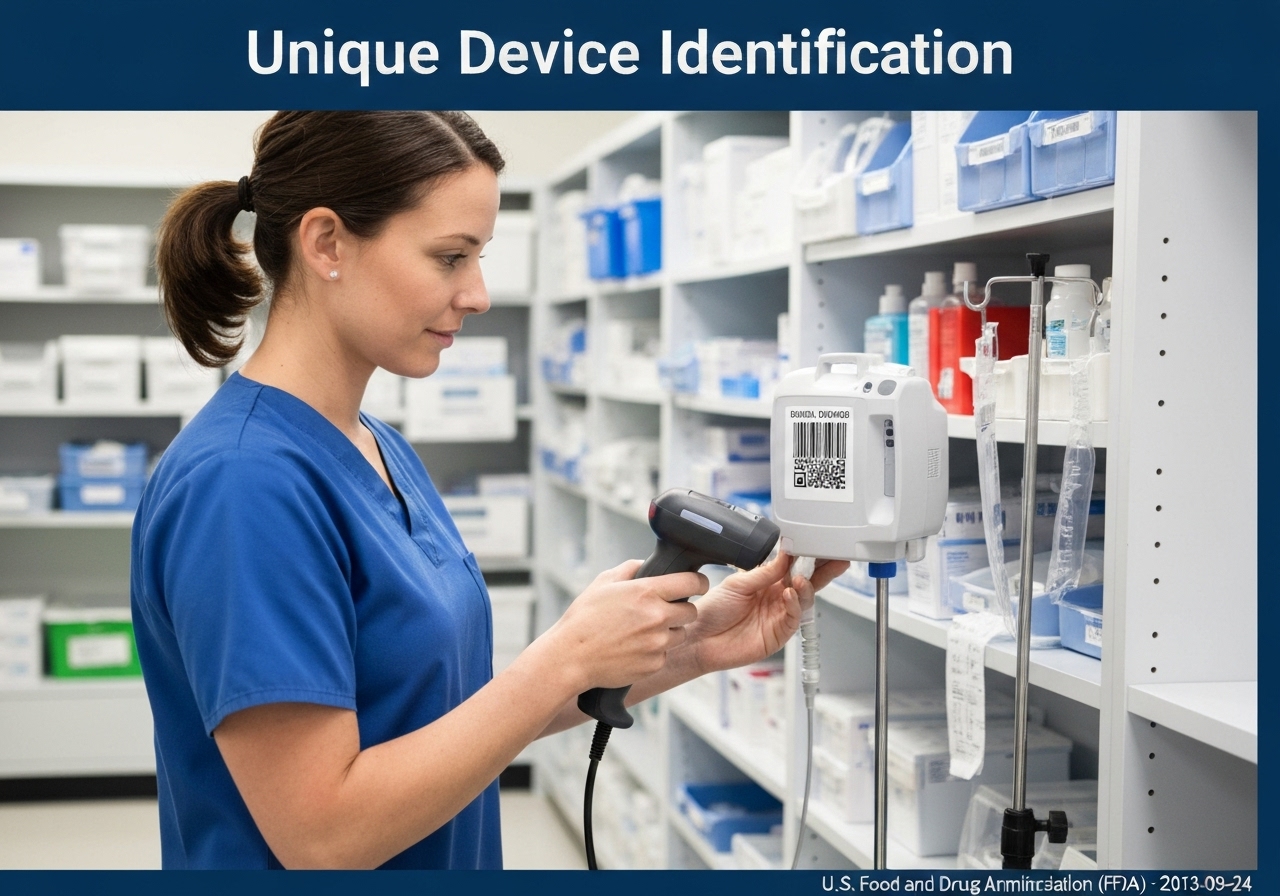
The Unique Device Identification (UDI) system was established to create a single, standardized method for identifying medical devices. Before UDI, tracking devices was difficult due to proprietary and non-standard numbering systems, which complicated recalls and adverse event analysis. The UDI code, which must appear in both human-readable and machine-readable (e.g., barcode, RFID) formats on the device label and packaging, is composed of two parts.
The first is the Device Identifier (DI), a mandatory, fixed portion that identifies the specific version or model of a device and the labeler (manufacturer). The second is the Production Identifier (PI), a conditional, variable portion that contains information like the lot or batch number, serial number, expiration date, and manufacturing date. This two-part structure allows for precise tracking not just of a device model, but of a specific production run or even an individual unit.
Manufacturers are required to submit their UDI information to a publicly accessible database, such as the FDA’s Global Unique Device Identification Database (GUDID). This database serves as a reference catalog for every device, linking the UDI to key product attributes. The implementation of UDI is a significant step towards a more transparent and secure global healthcare supply chain, enabling stakeholders—from manufacturers and distributors to hospitals and patients—to reliably identify a device and access its critical information.
UNESCO Nomenclature: 3308
– Industrial engineering
Precursors
- development of barcode and rfid technology
- universal product code (upc) system in retail
- need for improved post-market surveillance following major device recalls
- globalization of the medical device supply chain
- creation of public health databases
Applications
- rapid and precise medical device recalls
- improved adverse event reporting
- anti-counterfeiting measures in the medical supply chain
- better management of hospital inventory
- integration into electronic health records for device tracking per patient
Potential Innovations Ideas
Due to scrapping bot traffic, currently more than 40k per day, this content is reserved to community members.
> Login < or > Register < (100% free) to access this, so as all other restricted content and tools.
Related to: UDI, unique device identification, medical device tracking, FDA, gudid, supply chain management, patient safety, traceability, device identifier, production identifier.