Product Design, Manufacturing & Innovation Resources
Home » Fire Extinguishment by Smothering

Fire Extinguishment by Smothering

-500
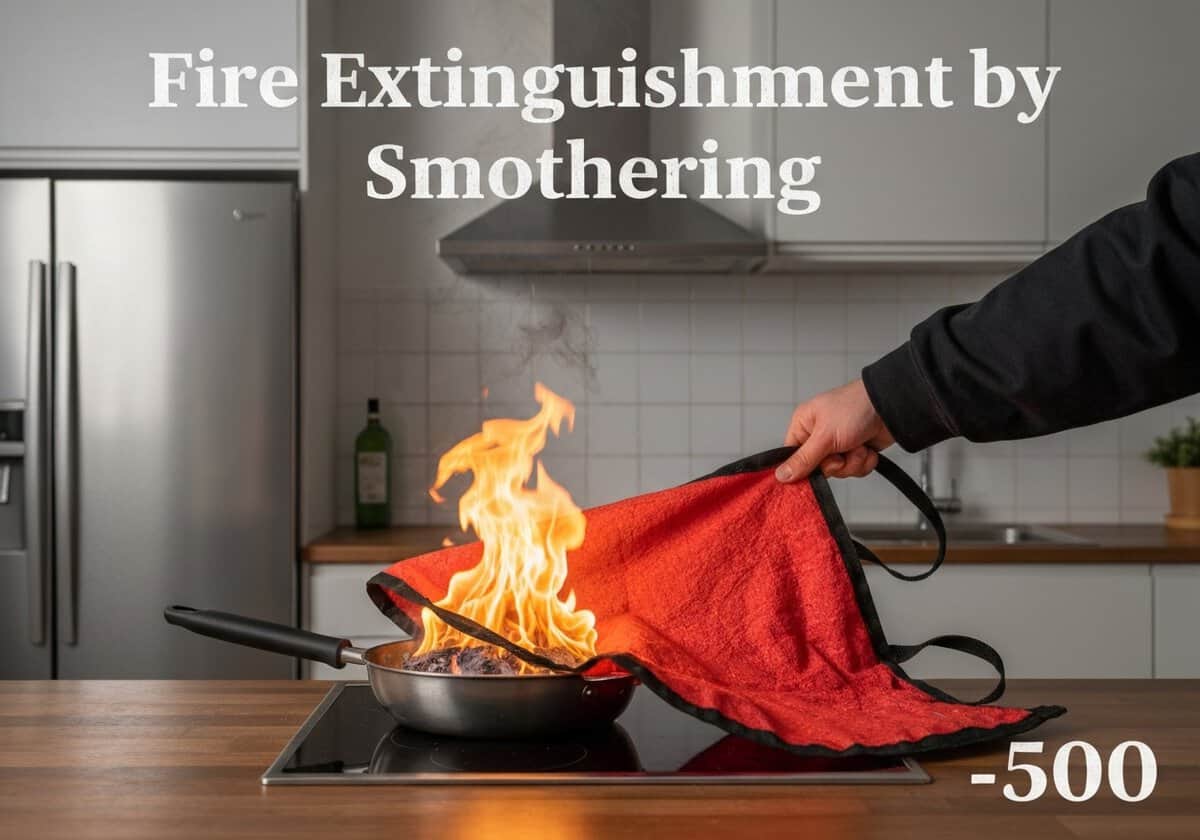
Fire blanket used for smothering flames in a kitchen fire suppression scenario.

(generated image for illustration only)

Smothering, or oxygen deprivation, is a method of fire extinguishment that removes the ‘oxidizing agent’ from the fire triangle. This is achieved by covering the fire to prevent air from reaching the fuel. Common methods include using a fire blanket, sand, or deploying an inert gas like carbon dioxide (CO2) or nitrogen.


Extinguishment by smothering works by isolating the fuel from its source of oxygen, thereby breaking the fire triangle. For combustion to occur, the concentration of oxygen in the atmosphere typically needs to be above 16%. Smothering aims to reduce this concentration below the sustainable limit. This can be done physically or chemically. Physical methods involve placing a barrier between the fire and the air. A fire blanket, for example, is a non-flammable sheet used to cover a fire, cutting off the oxygen supply. Similarly, putting a lid on a burning pan achieves the same effect on a smaller scale. Chemical methods involve flooding an area with an inert gas that displaces the oxygen. Carbon dioxide (CO2) is a common agent used in extinguishers and fixed systems. When released, the heavy CO2 gas sinks and blankets the fire, pushing the lighter, oxygen-rich air away. Other inert gases like nitrogen and argon are also used, particularly in systems designed to protect sensitive equipment where the thermal shock from CO2 could cause damage. This method is highly effective in enclosed spaces but less so in open areas where wind can quickly dissipate the smothering agent.

UNESCO Nomenclature: 3305
– Chemical engineering

Type

Physical Process

Disruption

Incremental

Usage

Widespread Use

Precursors

  • observation that fire needs air to burn
  • antoine lavoisier’s identification of oxygen’s role in combustion
  • development of methods to store and release compressed gases
  • invention of non-flammable materials like asbestos and later fiberglass for blankets

Applications

  • co2 fire extinguishers
  • fire blankets
  • inert gas fire suppression systems for server rooms
  • covering a small pan fire with a lid
  • using sand or dirt to put out campfires

Patents:

NA

Potential Innovations Ideas

  • hypoxic air (low oxygen) systems for continuous fire prevention in archives and museums
  • aerosol-based systems that release fine, non-conductive particles to create an oxygen barrier
  • self-deploying, heat-activated smothering blankets for industrial machinery
  • robotic systems that can apply sand or other smothering agents to large-scale industrial fires
  • oxygen-scavenging chemical foams that react with and consume local oxygen
  • lightweight, graphene-based fire blankets with superior thermal resistance
  • smart ventilation systems that can rapidly purge a room of oxygen in case of fire
  • bioreactors that release dense, inert gases as a byproduct for integrated fire suppression
  • acoustic devices that create a localized vacuum to momentarily deprive a flame of oxygen
  • expandable polymer foams that quickly fill a space to displace air
Related to: smothering, oxygen deprivation, fire blanket, co2 extinguisher, inert gas, fire suppression, oxidizing agent, fire triangle, asphyxiation, fire safety.

Historical Context

Fire Extinguishment by Smothering

-250
-500
1750
1788
1834
1850
1850
1850
-500
1700
1761
1807-01-01
1850
1850
1850

(if date is unknown or not relevant, e.g. "fluid mechanics", a rounded estimation of its notable emergence is provided)

10th year anniversary

Full size images and downloads are only available, 100% free, for registered members.

> Login <