Product Design, Manufacturing & Innovation Resources
Home » Biogenic Volatile Organic Compounds (BVOCs)

Biogenic Volatile Organic Compounds (BVOCs)

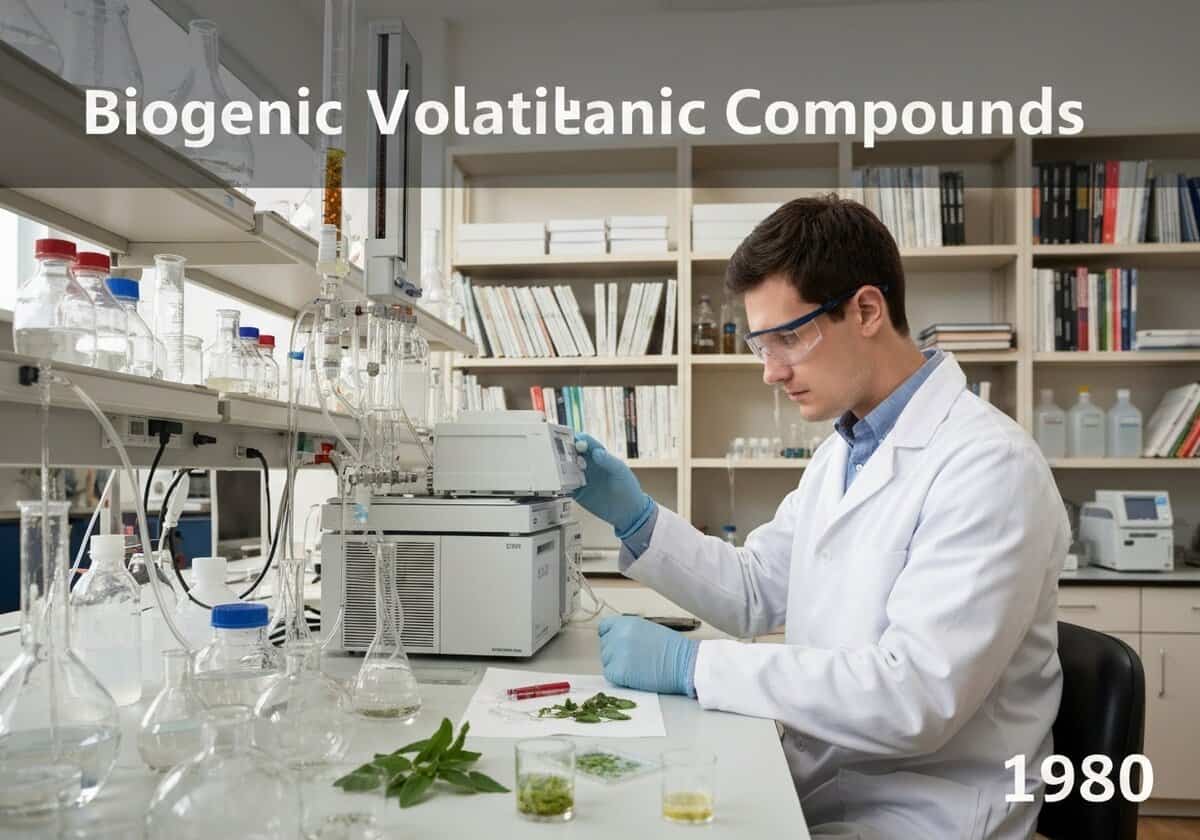
1980
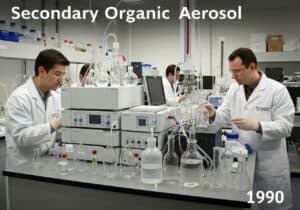
Laboratory analysis of biogenic volatile organic compounds in atmospheric chemistry.

(generated image for illustration only)

Biogenic Volatile Organic Compounds (BVOCs) are VOCs produced and emitted by living organisms, predominantly plants. Isoprene (\(C_5H_8\)) and terpenes are the most abundant BVOCs. While natural, their emissions are vast, exceeding anthropogenic VOCs globally. They play critical roles in plant defense, signaling, and are major precursors for atmospheric ozone and secondary organic aerosols, influencing air quality and climate.

Biogenic VOCs represent a massive flux of carbon from the biosphere to the atmosphere, estimated to be around 1 billion metric tons per year. Isoprene is the single most emitted non-methane organic compound, primarily from deciduous trees. Monoterpenes (\(C_{10}H_{16}\)), such as alpha-pinene and limonene, are characteristic emissions from coniferous trees. Plants produce these compounds for various ecological reasons, including deterring herbivores, attracting pollinators, protecting against thermal stress, and communicating with other plants.

Once in the atmosphere, BVOCs are highly reactive. Their oxidation, primarily by the hydroxyl radical (\(\bullet OH\)), ozone (\(O_3\)), and the nitrate radical (\(NO_3\bullet\)), is a central process in atmospheric chemistry. This oxidation contributes significantly to the formation of secondary pollutants. In polluted, high-NOx environments, BVOC oxidation can exacerbate ozone smog formation. In cleaner environments, it leads to the formation of secondary organic aerosols (SOAs), which are tiny airborne particles that can affect cloud formation, the Earth’s radiation balance, and human health. The interplay between natural BVOC emissions and anthropogenic pollutants is a key area of research in understanding regional air quality and global climate.

UNESCO Nomenclature: 2501
– Atmospheric sciences

Type

Environmental Process

Disruption

Substantial

Usage

Widespread Use

Precursors

  • discovery and characterization of isoprene and terpenes
  • development of gas chromatography for analyzing complex organic mixtures
  • understanding of plant physiology and metabolism
  • early observations of ‘blue haze’ over forested areas

Applications

  • atmospheric chemistry models
  • climate change research
  • development of natural pesticides and fragrances
  • air quality forecasting
  • understanding of plant-herbivore interactions

Patents:

NA

Potential Innovations Ideas

  • genetically engineering crops to emit specific bvocs for natural pest control
  • using satellite monitoring of bvoc emissions to predict forest fire risk
  • developing biosensors that use plant electrical signals to detect air pollutants
  • creating sustainable aviation fuels derived from terpene-producing algae
  • formulating hypoallergenic fragrances based on controlled bvoc pathways
  • deploying drone swarms to map bvoc hotspots and their impact on local weather
  • engineering bvoc-metabolizing bacteria for air purification systems
  • creating ‘smart forests’ that can be managed to optimize bvoc emissions for regional cooling
  • developing catalysts that convert bvocs into valuable industrial chemicals
  • using bvoc profiles as a diagnostic tool for plant health and agricultural stress
Related to: BVOC, biogenic, isoprene, terpenes, atmospheric chemistry, plant emissions, secondary organic aerosol, air quality, biosphere-atmosphere interaction, climate.

Historical Context

Biogenic Volatile Organic Compounds (BVOCs)

1970
1975
1980
1980
1982
1990
1990
1970
1970
1978
1980
1980
1982
1990
1990

(if date is unknown or not relevant, e.g. "fluid mechanics", a rounded estimation of its notable emergence is provided)

10th year anniversary

Full size images and downloads are only available, 100% free, for registered members.

> Login <