Product Design, Manufacturing & Innovation Resources
Heim » Nanotoxikologie und Sicherheit

Nanotoxikologie und Sicherheit

2000
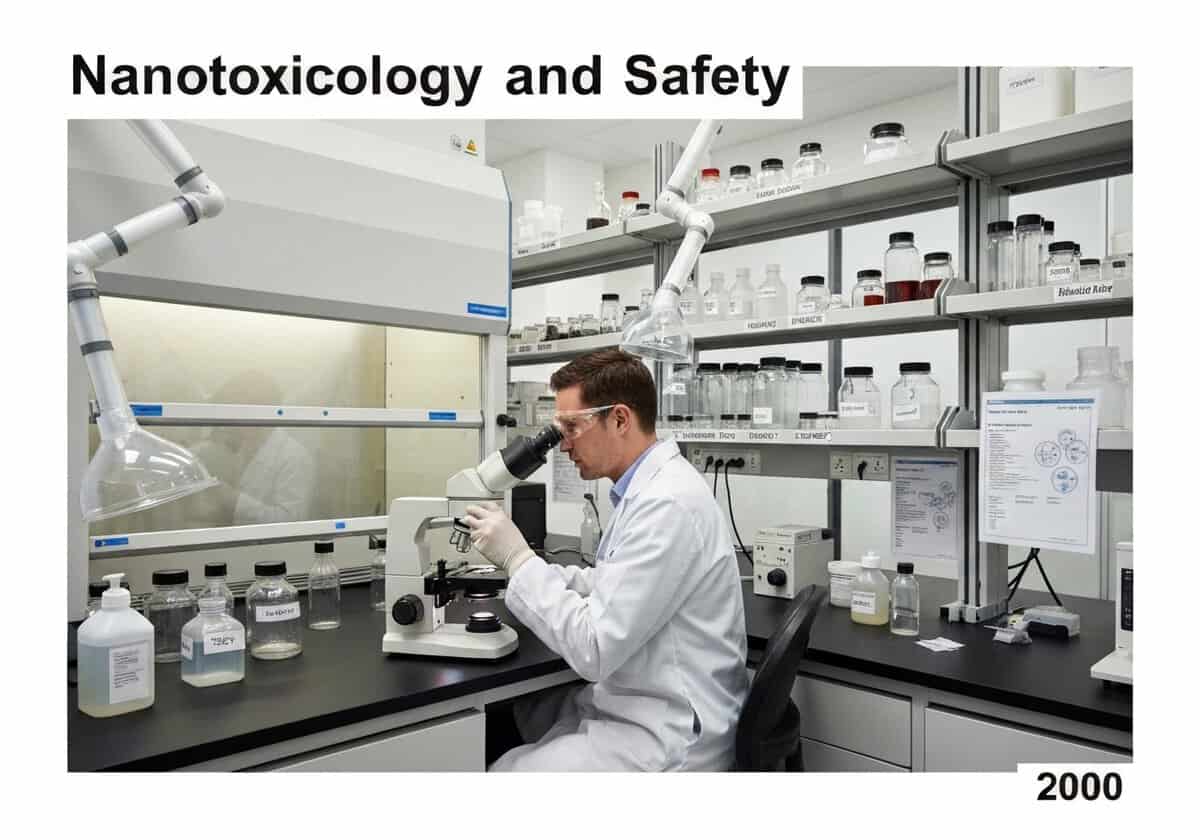
Laborszene mit einem Wissenschaftler, der Nanopartikel für Sicherheitsbewertungen in der Nanotoxikologie untersucht.

(Abbildung dient nur zur Veranschaulichung)

Die Nanotoxikologie befasst sich mit der Toxizität von Nanomaterialien. Aufgrund ihrer geringen Größe und ihres hohen Oberflächen-Volumen-Verhältnisses können Nanopartikel eine unerwartete Toxizität aufweisen, die bei ihren Massengegenstücken nicht auftritt. Sie können möglicherweise biologische Barrieren wie die Blut-Hirn-Schranke überwinden, in Zellen eindringen und auf neuartige Weise mit biologischen Systemen interagieren, was Bedenken hinsichtlich der Gesundheit und Umweltsicherheit aufwirft.
The unique physicochemical properties that make nanomaterials attractive for various applications also underlie their potential for adverse biological effects. Nanotoxicology investigates how these properties—including size, shape, surface chemistry, charge, and solubility—influence interactions with living organisms. A key concern is the ability of nanoparticles to translocate within the body after exposure through inhalation, ingestion, or skin contact. Their small size allows them to evade normal physiological clearance mechanisms, such as phagocytosis by macrophages in the lungs, and to access sensitive organs and tissues that are protected from larger particles.

Once inside the body, nanoparticles can induce toxicity through several mechanisms. One of the most studied is the generation of reactive oxygen species (ROS), leading to oxidative stress. The high surface area of nanoparticles provides a large interface for catalytic reactions that can produce free radicals, which in turn can damage cells by oxidizing proteins, lipids, and DNA. Another mechanism is inflammation, where the immune system recognizes the nanoparticles as foreign invaders, triggering a persistent inflammatory response that can lead to chronic disease. Furthermore, some nanomaterials, particularly fibrous ones like certain types of Kohlenstoff-Nanoröhrchen, have been compared to asbestos due to their high aspect ratio, raising concerns about carcinogenicity. The field aims to understand these mechanisms to establish dose-response relationships, identify hazardous materials, and guide the development of safer nanomaterials and handling protocols to mitigate risks for workers, consumers, and the environment.

UNESCO Nomenclature: 3109
- Pharmakologie

Typ

Wissenschaftliche Disziplin

Störung

Inkremental

Verwendung

Weitverbreitete Verwendung

Vorläufer

  • das Gebiet der klassischen Toxikologie und Pharmakologie
  • occupational health studies on fine and ultrafine particles (e.g., from Verschmutzung, mining)
  • Verständnis der Zellbiologie und der Mechanismen der Zellschädigung (z. B. oxidativer Stress)
  • die Asbest-Gesundheitskrise, die die Risiken von Fasermaterialien deutlich machte

Anwendungen

  • regulatorische Richtlinien für den Umgang mit Nanopartikeln (z. B. durch NIOSH, OSHA)
  • Entwicklung von „sicheren“ Nanomaterialien
  • Risikobewertung frameworks for consumer products containing nanoparticles
  • Umweltüberwachung auf Nanopartikelverschmutzung
  • Biokompatibilität testing for medical nanodevices

Patente:

NA

Potenzielle Innovationsideen

  • biologisch abbaubare Nanomaterialien, die eine Funktion erfüllen und sich dann sicher auflösen
  • standardisierte Hochdurchsatz-Screening-Plattformen für Nanotoxizität
  • computational models to predict nanoparticle toxicity based on physicochemical properties
  • Oberflächenbeschichtungen, die Nanopartikel biologisch inert machen
  • Echtzeit tragbar sensors for detecting occupational exposure to airborne nanoparticles
  • Biomarker zur Früherkennung nanoinduzierter gesundheitlicher Auswirkungen
  • geschlossener Regelkreis manufacturing systems to prevent nanoparticle release
  • Umweltsanierungsstrategien unter Verwendung von Nanopartikeln zum Einfangen und Abbau anderer Nanopartikel
  • “antidote” nanoparticles that can capture and clear toxic nanoparticles from the body
  • internationale regulatorische Rahmenbedingungen zur Harmonisierung der Anforderungen an Sicherheitstests
Verwandte Themen: Nanotoxikologie, Sicherheit, Nanopartikel, Toxizität, Gesundheitsrisiko, Umweltauswirkungen, oxidativer Stress, Entzündung, Blut-Hirn-Schranke, Regulation.

Historischer Kontext

10. Jahr Jubiläum

Bilder in voller Größe und Downloads sind ausschließlich für registrierte Mitglieder kostenlos verfügbar.

> Login <

















