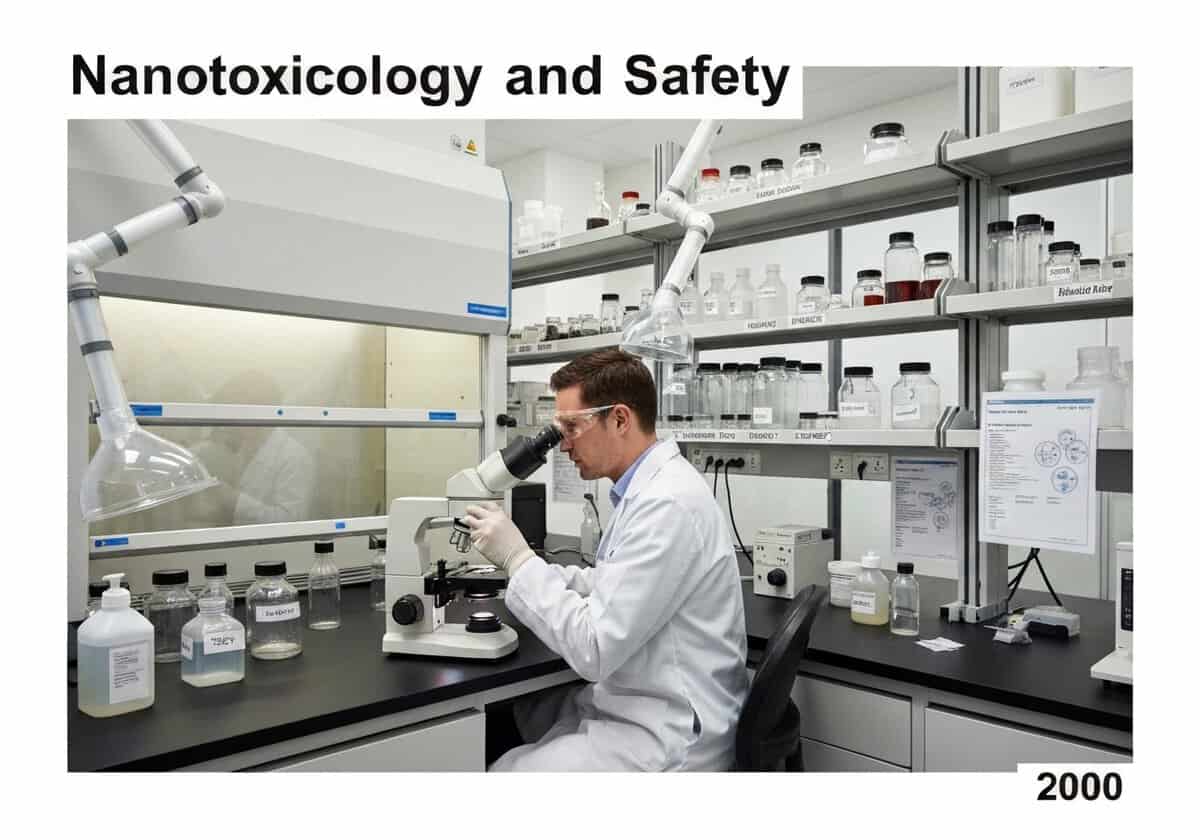
나노독성학 및 안전성
Nanotoxicology is the study of the toxicity of nanomaterials. Due to their small size and high surface-area-to-volume ratio, nanoparticles can exhibit unexpected toxicity not seen in their bulk counterparts. They can potentially cross biological barriers like the blood-brain barrier, enter cells, and interact with biological systems in novel ways, raising concerns about health and environmental safety.
나노물질을 다양한 응용 분야에 매력적으로 만드는 독특한 물리화학적 특성은 동시에 유해한 생물학적 영향을 미칠 가능성도 내포하고 있습니다. 나노독성학은 크기, 모양, 표면 화학, 전하, 용해도 등 이러한 특성이 생물체와의 상호작용에 어떻게 영향을 미치는지 연구합니다. 주요 관심사는 나노입자가 흡입, 섭취 또는 피부 접촉을 통해 노출된 후 체내에서 이동할 수 있다는 점입니다. 나노입자는 크기가 매우 작기 때문에 폐의 대식세포에 의한 식균 작용과 같은 정상적인 생리적 제거 기전을 회피하고, 더 큰 입자로부터 보호되는 민감한 장기와 조직에 접근할 수 있습니다.
Once inside the body, nanoparticles can induce toxicity through several mechanisms. One of the most studied is the generation of reactive oxygen species (ROS), leading to oxidative stress. The high surface area of nanoparticles provides a large interface for catalytic reactions that can produce free radicals, which in turn can damage cells by oxidizing proteins, lipids, and DNA. Another mechanism is inflammation, where the immune system recognizes the nanoparticles as foreign invaders, triggering a persistent inflammatory response that can lead to chronic disease. Furthermore, some nanomaterials, particularly fibrous ones like certain types of carbon nanotubes, have been compared to asbestos due to their high aspect ratio, raising concerns about carcinogenicity. The field aims to understand these mechanisms to establish dose-response relationships, identify hazardous materials, and guide the development of safer nanomaterials and handling protocols to mitigate risks for workers, consumers, and the environment.
UNESCO Nomenclature: 3109
약리학
전구체
- 고전 독성학 및 약리학 분야
- 미세 및 초미세 입자에 대한 직업 건강 연구 (예: 대기 오염, 광업)
- 세포 생물학 및 세포 손상 메커니즘(예: 산화 스트레스)에 대한 이해
- 석면 건강 위기는 섬유질 물질의 위험성을 부각시켰습니다.
응용 프로그램
- regulatory guidelines for nanoparticle handling (e.g., by niosh, osha)
- '안전 설계' 나노소재 개발
- 나노입자를 함유한 소비자 제품에 대한 위험 평가 프레임워크
- 나노입자 오염에 대한 환경 모니터링
- biocompatibility testing for medical nanodevices
잠재적 혁신 아이디어
- biodegradable nanomaterials that perform a function and then safely dissolve
- standardized high-throughput screening platforms for nanotoxicity
- computational models to predict nanoparticle toxicity based on physicochemical properties
- surface coatings that render nanoparticles biologically inert
- 실시간 의복 sensors for detecting occupational exposure to airborne nanoparticles
- biomarkers for early detection of nano-induced health effects
- 폐쇄 루프 manufacturing systems to prevent nanoparticle release
- environmental remediation strategies using nanoparticles to capture and degrade other nanoparticles
- “antidote” nanoparticles that can capture and clear toxic nanoparticles from the body
- international regulatory frameworks harmonizing safety testing requirements
관련 주제: 나노독성학, 안전성, 나노입자, 독성, 건강 위험, 환경 영향, 산화 스트레스, 염증, 혈뇌장벽, 규제.