Product Design, Manufacturing & Innovation Resources
Lar » Nanotoxicologia e Segurança

Nanotoxicologia e Segurança

2000
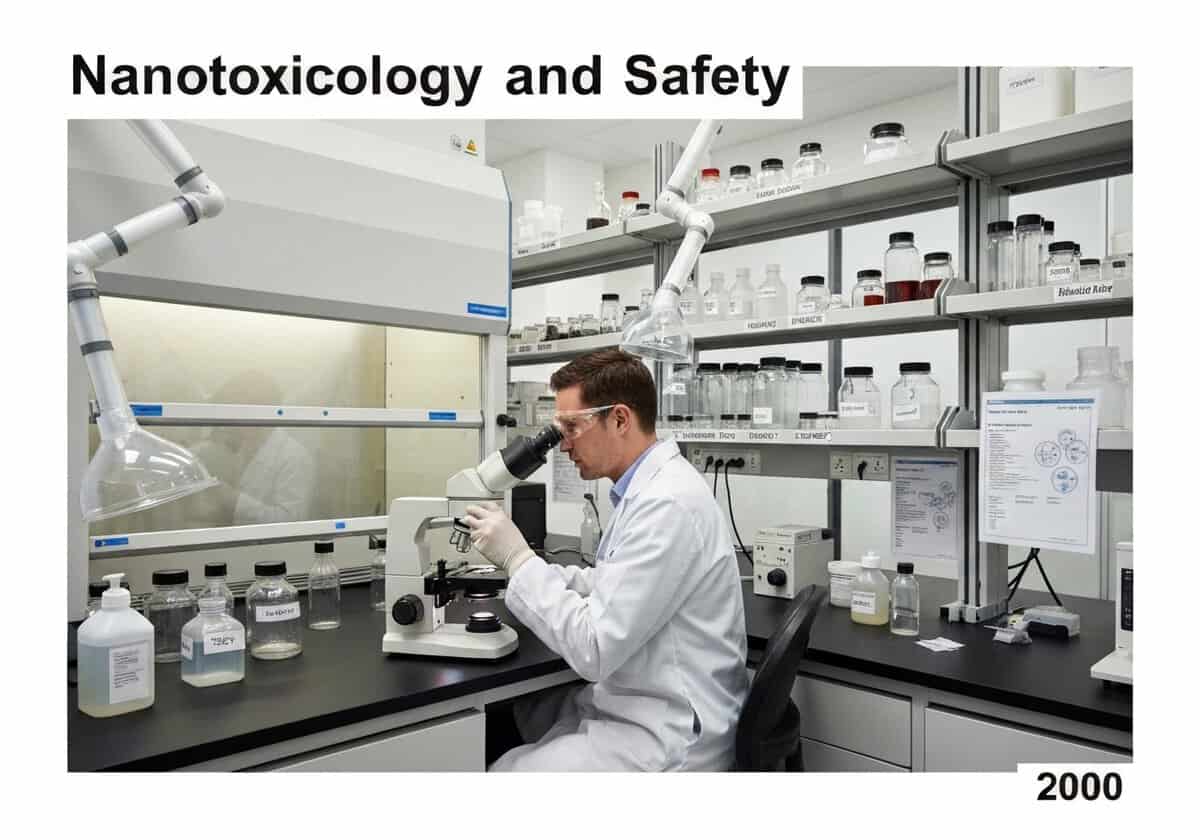
Laboratory scene with a scientist studying nanoparticles for safety assessments in nanotoxicology.

(Imagem gerada apenas para fins ilustrativos)

A nanotoxicologia é o estudo da toxicidade de nanomateriais. Devido ao seu pequeno tamanho e à elevada relação entre área superficial e volume, as nanopartículas podem apresentar toxicidade inesperada, não observada em seus equivalentes em escala macroscópica. Elas podem potencialmente atravessar barreiras biológicas como a barreira hematoencefálica, penetrar em células e interagir com sistemas biológicos de maneiras inéditas, suscitando preocupações quanto à saúde e à segurança ambiental.

The unique physicochemical properties that make nanomaterials attractive for various applications also underlie their potential for adverse biological effects. Nanotoxicology investigates how these properties—including size, shape, surface chemistry, charge, and solubility—influence interactions with living organisms. A key concern is the ability of nanopartículas to translocate within the body after exposure through inhalation, ingestion, or skin contact. Their small size allows them to evade normal physiological clearance mechanisms, such as phagocytosis by macrophages in the lungs, and to access sensitive organs and tissues that are protected from larger particles.

Once inside the body, nanoparticles can induce toxicity through several mechanisms. One of the most studied is the generation of reactive oxygen species (ROS), leading to oxidative stress. The high surface area of nanoparticles provides a large interface for catalytic reactions that can produce free radicals, which in turn can damage cells by oxidizing proteins, lipids, and DNA. Another mechanism is inflammation, where the immune system recognizes the nanoparticles as foreign invaders, triggering a persistent inflammatory response that can lead to chronic disease. Furthermore, some nanomaterials, particularly fibrous ones like certain types of nanotubos de carbono, have been compared to asbestos due to their high aspect ratio, raising concerns about carcinogenicity. The field aims to understand these mechanisms to establish dose-response relationships, identify hazardous materials, and guide the development of safer nanomaterials and handling protocols to mitigate risks for workers, consumers, and the environment.

UNESCO Nomenclature: 3109
Farmacologia

Tipo

Disciplina científica

Interrupção

Incremental

Uso

Uso generalizado

Precursores

  • o campo da toxicologia e farmacologia clássicas
  • occupational health studies on fine and ultrafine particles (e.g., from poluição, mining)
  • Compreensão da biologia celular e dos mecanismos de dano celular (ex.: estresse oxidativo)
  • a crise de saúde relacionada ao amianto, que destacou os riscos dos materiais fibrosos

Aplicações

  • diretrizes regulatórias para o manuseio de nanopartículas (por exemplo, por niosh, osha)
  • desenvolvimento de nanomateriais "seguros por design"
  • risk assessment frameworks for consumer products containing nanoparticles
  • Monitoramento ambiental da poluição por nanopartículas
  • biocompatibilidade testing for medical nanodevices

Patentes:

NA

Ideias de Inovação Potencial

  • biodegradable nanomaterials that perform a function and then safely dissolve
  • standardized high-throughput screening platforms for nanotoxicity
  • computational models to predict nanoparticle toxicity based on physicochemical properties
  • surface coatings that render nanoparticles biologically inert
  • em tempo real vestível sensors for detecting occupational exposure to airborne nanoparticles
  • biomarkers for early detection of nano-induced health effects
  • circuito fechado manufacturing systems to prevent nanoparticle release
  • environmental remediation strategies using nanoparticles to capture and degrade other nanoparticles
  • “antidote” nanoparticles that can capture and clear toxic nanoparticles from the body
  • international regulatory frameworks harmonizing safety testing requirements
Relacionado a: nanotoxicologia, segurança, nanopartículas, toxicidade, risco à saúde, impacto ambiental, estresse oxidativo, inflamação, barreira hematoencefálica, regulamentação.

Contexto histórico

10º ano aniversário

Imagens em tamanho real e downloads estão disponíveis apenas, 100% gratuitos, para membros registrados.

















