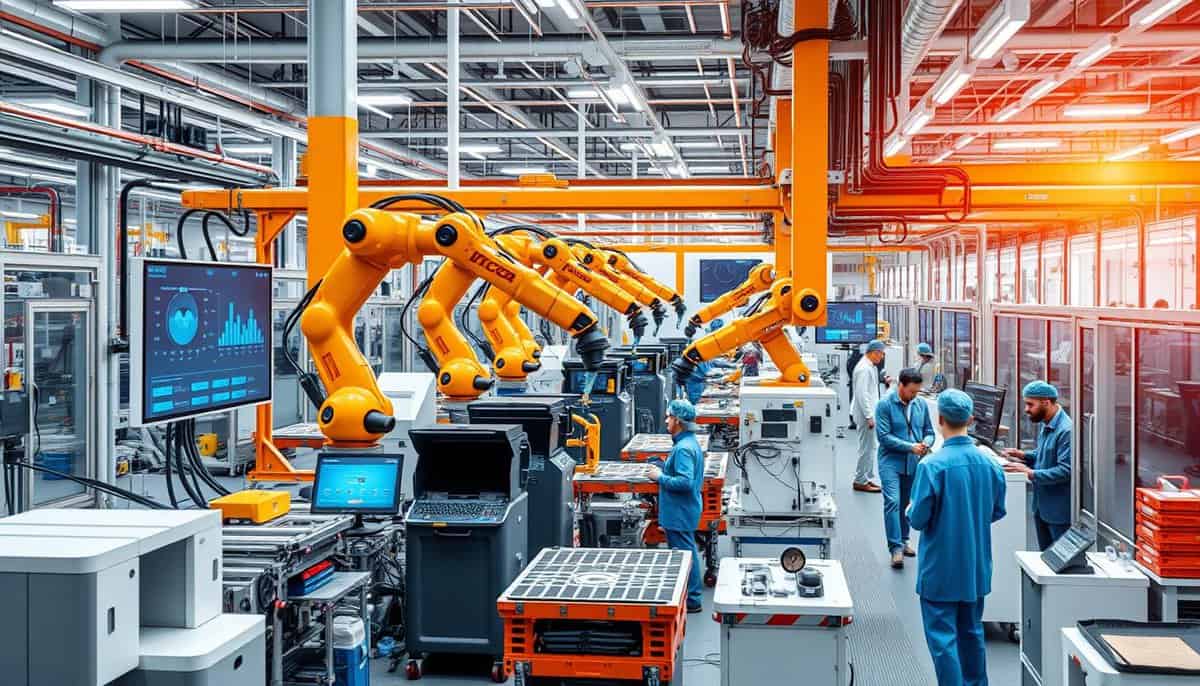
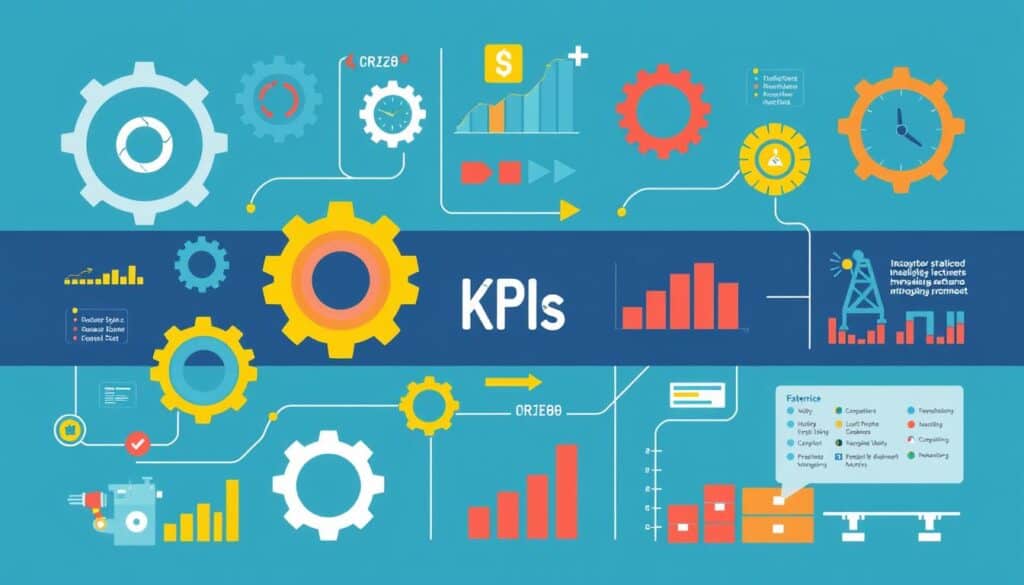
Are you making the most of every tool at your disposal to enhance production? Knowing and using the right Key Performance Indicators (KPIs) can change your operation’s success. These metrics help reduce downtime and plan production better, showing every part of the manufacturing process.
تُعدّ مؤشرات الأداء الرئيسية للإنتاج أساسية في عالم التصنيع اليوم، إذ تُساعد الشركات على مراقبة مراحل الإنتاج وتحليلها وتحسينها. وتُمكّن مقاييس مثل فعالية المعدات الإجمالية (OEE) ومعدل دوران المخزون والتسليم في الوقت المحدد الشركات من تحديد المشكلات وتقليل الهدر والتنبؤ بالاحتياجات المستقبلية. تُوجّه هذه المؤشرات الإنتاج نحو تحقيق الأهداف مع التكيف مع تحولات السوق والتغيرات البيئية، مما يجعل العمليات أكثر مرونة وكفاءة.
النقاط الرئيسية
- يمكن أن يؤدي استخدام مؤشرات الأداء الرئيسية بشكل جيد إلى تحسين الكفاءة في التصنيع بشكل كبير.
- يجمع مؤشر فعالية المعدات الإجمالية (OEE) بين التوافر والأداء والجودة.
- انخفاض معدل دوران المخزون يمكن أن يوفر السيولة النقدية ويلبي احتياجات العملاء بشكل أفضل.
- يُعدّ التسليم في الوقت المحدد أمراً أساسياً لإرضاء العملاء وتشجيع الموظفين.
- يُعد تتبع عمليات إرجاع المنتجات من قبل العملاء أمراً بالغ الأهمية لحل المشكلات في الإنتاج.
ما هي مؤشرات الأداء الرئيسية للإنتاج؟
تُعد مؤشرات الأداء الرئيسية للإنتاج مقاييس أساسية في التصنيع، إذ تُستخدم لتتبع مدى كفاءة عمليات الإنتاج وفعاليتها. وتساعد هذه المؤشرات الشركات على تحديد جوانب الأداء الناجحة وجوانب القصور، مما يُتيح لها تحسين عملياتها وتبسيطها.
تعريف مؤشرات الأداء الرئيسية للإنتاج
مؤشرات الأداء الرئيسية للإنتاج هي أرقام توضح مدى تحقيق عملية الإنتاج للأهداف. وهي تشمل عوامل مهمة مثل زمن الدورة، ومعدل الإنتاج، وفعالية المعدات الإجمالية (OEE). يتيح تتبع هذه المؤشرات للشركات تحسين الإنتاج بدقة، كما يسمح لها بقياس التقدم المحرز بدقة.
أهمية تتبع مؤشرات الأداء الرئيسية
تُعدّ متابعة مؤشرات الأداء الرئيسية ذات قيمة هائلة، فهي تُحوّل كميات هائلة من البيانات إلى رؤى قيّمة. وتُعتبر المراقبة المنتظمة أساسية لعدة أسباب:
- تحديد الأهداف وتحقيقها: تتيح مؤشرات الأداء الرئيسية تحديد أهداف واضحة، مما يضمن توافق خطوط الإنتاج مع متطلبات الشركة.
- تحديد نقاط الاختناق: من خلال النظر إلى مؤشرات الأداء الرئيسية، تستطيع الشركات رصد أي خلل في الإنتاج بسرعة. وهذا يسمح لها بإصلاح المشكلات بسرعة والحفاظ على سير العمل بسلاسة.
- تحسين كفاءة عملية الإنتاج: يساعد التركيز على مؤشرات الأداء الرئيسية الشركات على تعزيز كفاءتها، مما يعني أنها تستطيع توفير المال وإنتاج المزيد من المنتجات.
تُتيح مراقبة مؤشرات الأداء الرئيسية للمصنعين وسيلةً لتحسين أدائهم، وهو أمر بالغ الأهمية للبقاء في الصدارة في سوق سريع التغير.
أنواع مؤشرات الأداء الرئيسية للإنتاج
توجد ثلاثة أنواع رئيسية من مؤشرات الأداء الرئيسية للإنتاج. وهي تركز على الآلات والمنتجات وكفاءة التكلفة. ويساعد فهم هذه الفئات من مؤشرات الأداء الرئيسية في تحسين تتبع عمليات الإنتاج وتطويرها.
التركيز على الآلات أو الأصول
يركز هذا النوع من مؤشرات الأداء الرئيسية على الآلات و إدارة الأصولمن أهم المقاييس ما يلي:
- معدل وقت تشغيل الجهاز: يقيس هذا المؤشر مدة تشغيل المعدات. الصيغة هي: (إجمالي وقت استخدام الآلة / وقت الإنتاج المتاح) × 100. والهدف هو الحفاظ على معدل تشغيل الآلة عند 90%.
- معدل العيوب: يقيس هذا النظام جودة المنتجات المصنعة. وتُحسب النسبة كالتالي: عدد العيوب / عدد الوحدات المنتجة × 100. والهدف هو خفض معدل العيوب.
- فعالية المعدات الإجمالية (OEE): يتحقق هذا من كفاءة عمل الآلات. الصيغة هي: (عدد الوحدات المنتجة × أقصى زمن دورة) / زمن الإنتاج المتاح. نهدف إلى رفع مؤشر فعالية المعدات الكلية (OEE) بنسبة 5% هذا العام.
التركيز على الوحدة أو المنتج
هنا، تُركز مؤشرات الأداء الرئيسية على عدد الوحدات أو المنتجات، مما يُعطي رؤى حول كيفية سير عملية الإنتاج. وتشمل المقاييس المُدرجة ما يلي:
- زمن الدورةهذه هي المدة التي تستغرقها دورة إنتاج واحدة.
- معدل الطاقة الإنتاجيةيوضح هذا الحد الأقصى للإنتاج الممكن. ويتم حسابه من خلال معدل قدرة الآلة مضروبًا في الوقت.
- معدل الإنتاجية: هذا يقيس إنتاجية المنتج بمرور الوقت.
التركيز على التكلفة
تساعد مؤشرات الأداء الرئيسية التي تركز على التكلفة في تحليل الأموال والحفاظ على انخفاض التكاليف في الإنتاج. ومن أهم هذه المؤشرات:
- تكلفة الإنتاج لكل وحدةيقيس هذا المؤشر تكلفة إنتاج وحدة واحدة. ويُحسب بقسمة إجمالي تكلفة التصنيع على عدد الوحدات المنتجة. والهدف هو خفض تكلفة إنتاج الوحدة بمقدار سنتين بحلول عام ٢٠٢٢.
- تكلفة صيانة الوحدةهذا المؤشر يُعنى بتكاليف الصيانة لكل وحدة، ويتم حسابه بقسمة إجمالي تكلفة الصيانة على عدد الوحدات المنتجة. والهدف هو خفض تكاليف صيانة الوحدة بنسبة 5% هذا العام.
- تكاليف الطاقة غير المستخدمةيُقيّم هذا المؤشر أثر عدم استخدام كامل الطاقة الإنتاجية على التكلفة. وتُحسب التكلفة بضرب نسبة الطاقة الإنتاجية غير المستخدمة المتاحة في إجمالي تكلفة التصنيع. ونهدف إلى خفض الطاقة الإنتاجية غير المستخدمة بنسبة 10% خلال ستة أشهر.
فيما يلي جدول يوضح المقاييس الرئيسية في هذه الفئات:
| نوع مؤشر الأداء الرئيسي | متري | Formula | مثال على الهدف |
|---|---|---|---|
| التركيز على الآلات أو الأصول | معدل وقت تشغيل الآلة | (إجمالي وقت استخدام الآلة / وقت الإنتاج المتاح) * 100 | حافظ على معدل تشغيل كل جهاز عند 90% |
| التركيز على الوحدة أو المنتج | معدل الطاقة الإنتاجية | معدل قدرة الآلة * الوقت | تأكد من أن معدل تشغيل كل آلة هو 90% |
| التركيز على التكلفة | تكلفة الإنتاج للوحدة الواحدة | إجمالي تكلفة التصنيع / عدد الوحدات المنتجة | خفض تكلفة إنتاج الوحدة بمقدار سنتين بحلول عام 2022 |
Key Performance Indicators (KPIs) for production
KPIs for production cover many metrics key for assessing manufacturing efficiency and productivity. These indicators provide data that helps manufacturing leaders make smart choices. They work to optimize operations, lower costs, and boost output. Knowing how to track manufacturing with key metrics is vital to compete today.

Several KPIs measure different aspects of production. They are crucial for quality assurance, equipment upkeep, cost control, and overall productivity. Key production KPIs include:
- Revenue: The total income from sales or services.
- Gross Profit Margin: The revenue percentage after removing the cost of goods sold.
- Return on Investment (عائد الاستثمار): The profit to investment ratio.
- Customer Acquisition: The new customers gained within a period.
- Customer Retention: The rate of customers staying over time.
- Employee Satisfaction: How happy employees are in the company.
- Website Traffic: The site visitors count over time.
- Conversion Rate: The share of visitors who perform a desired action.
- Inventory Turnover: How often inventory is sold and replaced.
- Time to Market: The period to launch a new product.
Manufacturing-specific KPIs include:
- Count: the total products made.
- Reject ratio: the scrap production measure.
- Capacity utilization: how much production capacity is used.
- Rate: the speed of producing goods.
- Target: specific goals for production periods.
- Takt time: time needed to complete a task.
- فعالية المعدات الإجمالية (OEE): the production equipment’s efficiency.
- Downtime: the time when production equipment is idle.
- Cycle time: the total time for a full production cycle.
- Lead time: the time for a product to go through production.
To monitor manufacturing well, finding the most crucial KPIs is key. Setting targets for each KPI, and consistently watching and analyzing KPI data, helps track progress and spot improvement areas. By using these indicators, manufacturers can get better results and stay ahead in the market.
| متري | تعريف |
|---|---|
| OEE | Calculation: Availability x Performance x Quality |
| Total cycle time | Components: Production Time + Inspection Time + Transportation Time + Wait Time + Any Other Relevant Time |
| Throughput | Formula: Number of Units Produced ÷ Total Time of Production |
| عائد الاستثمار | Formula: (Total Investment / Net Profit) x 100 |
| On-time delivery | Formula: On-Time Units Delivered ÷ Total Units Delivered |
| Changeover time | Formula: Time to Produce First Quality Item – Time to Produce Last Quality Item |
| أَثْمَر | Also known as FTT; Formula: (Total Items Produced – Defective Items) ÷ Items Produced |
| Scrap | Formula: Total Scrap ÷ Total Product Run |
| Customer return rate | Formula: Rejected Goods ÷ Total Number of Goods Delivered |
| Maintenance cost | Formula: (Maintenance Labor + Parts) ÷ Hours Running |
Top Production KPIs to Monitor
Monitoring production KPIs is key to manufacturing success. By focusing on important metrics, companies can see where they need to do better. They can improve how things work. Let’s look at four main production KPIs that manufacturers can’t do without.
Cycle Time
Cycle time measures how long making a product takes, from beginning to end. This KPI shows how fast products are made. It spots slowdowns in making goods. Watching and cutting down cycle time boosts manufacturing speed and efficiency.
Throughput Rate
The throughput rate tells how many items are made in a set time. It shows if a production line is doing well. A high rate means things are running smoothly. Yet, it’s important to keep making high-quality products.

Production Attainment
Production attainment compares what was actually made to the goals. It’s vital for checking if manufacturing aims are reached. A high rate means good progress. A low rate might show problems that need to be fixed.
فعالية المعدات الإجمالية (OEE)
Overall Equipment Effectiveness (OEE) looks at three key parts: how available, performant, and quality the equipment is. The best factories score about 85% on OEE. Most companies score between 40% and 60%. Keeping an eye on OEE ensures machines work well and downtime is minimal. Forbes says downtime can cost companies $50 billion a year.
| مؤشر الأداء الرئيسي | تعريف | أهمية |
|---|---|---|
| زمن الدورة | Time to complete one production cycle | Identifies bottlenecks and improves speed |
| معدل الإنتاجية | Units produced over time | Assesses production capacity and efficiency |
| Production attainment | Actual output vs. planned targets | Tracks progress against goals |
| فعالية المعدات الإجمالية (OEE) | Combines availability, performance, quality | Maximizes equipment efficiency and uptime |
How to Calculate Essential Production KPIs
Achieving manufacturing excellence means knowing your key performance indicators (KPIs) well. Using KPI calculation effectively and setting the right KPI targets help make smart choices and improve operations. Let’s explore important performance metrics formulas and look at examples.
Formulas for Calculating KPIs
It’s crucial to understand the formulas for production KPIs. This knowledge helps measure and track accurately. Here are some essential KPIs and their performance metrics formulas:
- زمن الدورة: cycle Time = Process End Time – Process Start Time
- Asset utilization: (Actual Output / Maximum Capacity) x 100
- Opportunity gap: Maximum Capacity – Actual Output
- فعالية المعدات الإجمالية (OEE): Availability x Performance x Quality
- Capacity utilization: Actual Factory Utilization / Total Productive Capacity
- On-time delivery: Number of units ordered / Number of orders delivered on time
- معدل الإنتاجية: Production Time / Number of Units Produced
Examples of KPI Goals
After mastering KPI calculation, setting KPI targets in line with your goals is the next step. Here are examples of goals to aim for:
- Reduce cycle time: work to cut cycle time by 10% in the coming quarter.
- Improve asset utilization: boost asset use to 85% for better efficiency.
- Enhance on-time delivery: raise the on-time delivery rate to 95% to please customers.
- Optimize OEE: aim for an OEE score of 80% by tackling downtime and quality issues.
Below is a detailed table showing key KPIs, their formulas, and targets:
| مؤشر الأداء الرئيسي | Formula | Target Goal |
|---|---|---|
| Cycle Time | Process End Time – Process Start Time | Reduce by 10% |
| Asset Utilization | (Actual Output/Maximum Capacity) x 100% | Increase to 85% |
| Opportunity Gap | Maximum Capacity – Actual Output | Minimize gap by 15% |
| فعالية المعدات الإجمالية (OEE) | Availability x Performance x Quality | Achieve 80% |
| Capacity Utilization | Actual Factory Utilization/Total Productive Capacity | Maximize to 90% |
| On-time Delivery | Number of units ordered / Number of orders delivered on time | Reach 95% |
Common Challenges in Measuring Production KPIs
It’s important for organizations to measure production KPIs to improve efficiency. But, measuring KPIs has its challenges. One main challenge is ensuring the data is right.
Problems like mistakes, double entries, and old info can harm KPI efforts. Data silos make it worse by splitting up the data. This can cause wrong decisions.
For better decision-making, companies need strong data management. They should use new tech and focus on data. Choosing the best KPIs is also hard but crucial.
Organizations get overwhelmed by too many metrics, which can confuse their KPI strategy. KPIs should match the company’s goals. Teams must work together and understand their business well.
Setting realistic goals is another big hurdle. Unrealistic targets can make employees feel bad, leading to missed goals. It’s better to aim for small wins than impossible goals.
Tracking metrics like sales growth, customer happiness, and team efficiency is vital. These KPIs show where a business stands. They help spot strengths and areas to improve.
With the right data and analysis, companies can see why they’re doing well or not. KPIs can also aid in doing a كدح analysis, giving a full picture of performance.
| تحدي | تفاصيل |
|---|---|
| Data Quality Issues | Inaccuracies, inconsistencies, and incompleteness in data. |
| Data Silos | Fragmented data landscape within organizations. |
| Selecting Relevant KPIs | Difficulty in choosing specific, measurable, and contextually relevant metrics. |
| Achievable Targets | Risk of demotivation from unattainable goals. |
To beat these challenges, companies should train their teams well. Good training helps keep data correct and makes KPIs useful. Overcoming these issues is key to getting reliable insights and hitting production goals.
Best Practices for Implementing KPI Dashboards
Implementing effective KPI dashboards is key to boosting production and making data-driven decisions. They should be user-friendly and integrate real-time manufacturing data. This way, organizations can gain insights to improve their operations.
Designing Effective Dashboards
Designing a KPI dashboard requires understanding the users and their needs. It should focus on simplicity, ease of use, and clear information layout. These aspects ensure users can quickly understand data and make decisions.
High-level insights come from strategic dashboards, helpful for top management. Operational dashboards, on the other hand, provide real-time data for daily decision-making. Choosing the right software, like Klipfolio or Tableau, lets organizations customize dashboards to their needs.
Using Real-Time Data for Insights
Real-time data in KPI dashboards spot issues and opportunities instantly. Operational dashboards show live updates, helping to adjust quickly and improve constantly.
A KPI Institute study found 68% of companies with a KPI strategy saw business improvements. Analytical dashboards dive deep into data for root causes, while tactical dashboards track goal progress. This helps everyone in the organization aim for excellence.
Setting SMART KPI targets helps ensure goals are clear and achievable. For example, a الأمن السيبراني firm might aim for 50,000 monthly visitors, tracking time on site and bounce rates as success metrics.
Well-designed KPI dashboards, aligned with goals, enhance data knowledge and a culture of improvement. This leads to better efficiency and business growth.
التعليمات
ما هي مؤشرات الأداء الرئيسية للإنتاج ولماذا هي مهمة؟
تقيس مؤشرات الأداء الرئيسية للإنتاج مدى نجاح عملية التصنيع. وهي ضرورية لقياس الكفاءة، وتحديد المشكلات، وتحقيق الأهداف، مما يعزز أداء العملية برمتها.
ما هي أنواع مؤشرات الأداء الرئيسية للإنتاج التي يجب مراقبتها؟
توجد ثلاثة أنواع من مؤشرات الأداء الرئيسية للإنتاج. تشمل هذه المؤشرات ما يتعلق بالآلات أو الأصول، مثل وقت تشغيل الآلة. ثم هناك ما يتعلق بالوحدة أو المنتج، مثل معدل الإنتاج. وأخيرًا، ما يتعلق بالتكلفة، على سبيل المثال، تكاليف إنتاج الوحدة. يساعد رصد هذه المؤشرات على تحسين الإنتاج.
كيف يتم حساب مؤشرات الأداء الرئيسية للإنتاج؟
تعتمد عملية حساب مؤشرات الأداء الرئيسية للإنتاج على معادلات محددة. لحساب زمن الدورة، اطرح وقت بدء الإنتاج من وقت انتهاء الإنتاج. تساهم طرق الحساب هذه في تحديد أهداف واضحة وتتبع التحسينات.
ما هي أهم مؤشرات الأداء الرئيسية للإنتاج التي يجب مراقبتها لضمان كفاءة التصنيع؟
تشمل مؤشرات الأداء الرئيسية المهمة زمن الدورة ومعدل الإنتاجية، بالإضافة إلى تحقيق الإنتاج وفعالية المعدات الإجمالية (OEE). تُظهر هذه المؤشرات سرعة وكفاءة وإنتاجية عملية التصنيع.
روابط خارجية حول تحسين الإنتاج والجودة
المعايير الدولية
(حرك الرابط لرؤية وصفنا للمحتوى)
مسرد المصطلحات المستخدمة
Conversion Rate (CR): نسبة زوار موقع الويب أو صفحة الهبوط الذين يكملون إجراءً مرغوبًا فيه، مثل إجراء عملية شراء أو الاشتراك في النشرة الإخبارية، ويتم حسابها عن طريق قسمة عدد التحويلات على إجمالي عدد الزوار.
Cost of Goods Sold (COGS): التكاليف المباشرة المنسوبة إلى إنتاج السلع التي تبيعها الشركة، بما في ذلك المواد والعمالة، باستثناء النفقات غير المباشرة مثل تكاليف التوزيع وتكاليف قوة المبيعات.
Key Performance Indicator (KPI): قيمة قابلة للقياس توضح مدى فعالية المنظمة في تحقيق الأهداف التجارية الرئيسية، وغالبًا ما تستخدم لتقييم النجاح في الوصول إلى الأهداف.
Overall Equipment Effectiveness (OEE): مقياس يُستخدم لتقييم كفاءة عمليات التصنيع، ويُحسب بضرب معدلات التوافر والأداء والجودة. يُحدد هذا المقياس الخسائر، مما يُمكّن من تحسين الإنتاجية وفعالية العمليات.
Return on Investment (ROI): مقياس مالي يستخدم لتقييم ربحية الاستثمار، ويتم حسابه عن طريق قسمة صافي الربح من الاستثمار على التكلفة الأولية، معبرًا عنها كنسبة مئوية.
Specific Measurable Achievable Relevant Timely (SMART): إطار عمل لتحديد الأهداف الواضحة والقابلة للقياس والقابلة للتحقيق والمتوافقة مع الأهداف الأوسع والمحددة بالوقت، مما يسهل التخطيط الفعال وتقييم التقدم.
Takt Time: أقصى وقت مسموح به لإنتاج منتج يلبي طلب العميل، ويُحسب بقسمة وقت الإنتاج المتاح على الناتج المطلوب. يُساعد هذا على مزامنة وتيرة الإنتاج مع الطلب، مما يضمن سير العمل بكفاءة وتخصيص الموارد.