2022 年,全世界共颁发了 350 万项专利。由此可见,知识产权对全球创新的重要性。了解 专利 与版权的区别对于保护发明和艺术作品至关重要。专利主要关注技术进步。版权保护艺术作品。.
当创作者和发明者了解了这些法律,他们就能保护自己的作品。这种保护会带来更多的创造力和机会。
尽管专利和版权都属于知识产权,但它们的作用却各不相同。在美国,专利约占所有授权保护的 90%。专利权有助于将创意转化为资产。另一方面,版权法保护作者和创作者。它赋予作者和创作者对复制和公开分享其作品的控制权。.
解释专利与版权不仅仅是学术界的事。对于那些希望促进创新并充分利用其智力的人来说,这一点至关重要。.
关键要点
- 知识产权是法律保护的关键,也是利用发明和创意作品赚钱的关键。.
- 专利为技术创新及其工业应用提供了重要的专有权。.
- 版权允许对原创艺术和文学作品的复制和共享进行控制。
- 商标法通过联邦注册帮助企业保护其品牌并保持消费者的信任。
- 了解专利、版权和商标之间的区别会对商业策略和创作自由产生重大影响。.
- 这些权利的法律保护条款会影响其持续时间和执行方式。.
了解知识产权基础知识
知识产权是促进各行各业创新和创造力的关键领域。了解知识产权的基本原理有助于保护独特的产品和创意成果,从而确保专有权和竞争优势。
知识产权(IP)的定义
知识产权保护工业、科学、文学和艺术领域的创作成果。它赋予创作者合法控制和使用其作品的权利。这些权利涵盖新产品和创新工艺。
知识产权的四大支柱:版权、专利、商标和商业秘密
- 版权版权:保护文学、音乐和艺术等原创作品的创作者。它允许创作者控制复制、发行和展示。.
- 专利发明权:发明人对其发明享有长达 20 年的权利。这包括机器、工艺或化学成分。.
- 商标名称:用独特的标志识别商品或服务的来源。名称、标识和符号都可以注册保护。.
- 商业秘密保密:对包括配方和流程在内的商业信息进行保密。它提供了一种竞争优势。.
为什么必须区分不同的知识产权
了解不同的知识产权是获得适当法律保护的关键。例如,版权保护创意作品的思想表达。专利保护新颖实用的技术发明。了解这些区别对于最大限度地发挥创新潜力至关重要。.
这些知识可确保遵守法律,保护资产不被滥用。全面的知识产权保护可促进诚信和创新文化。
什么是版权保护?
版权法的探索揭示了版权保护如何保证原创作品的安全。它确保书籍、歌曲或戏剧等作品的独特魅力和原创性得以保留。这对创作者保持其独特贡献至关重要。.
创意作品中的原创性概念
在版权法中,原创性是获得保护的关键。作品必须展现创作者自身的技能和判断力。仅仅复制现有作品是不够的。与专利不同,版权保护的是思想的表达方式,而非思想本身。
版权法的范围和限制
版权法的适用范围非常广泛,涵盖书籍、戏剧、音乐和艺术作品等。作者可以控制其作品的使用并获得报酬。版权法旨在从经济上激励作者。然而,版权法也存在一些限制,例如合理使用原则,允许人们在未经许可的情况下使用某些受版权保护的材料。
了解这些细节有助于更好地掌握版权规则。
从美国版权局注册中获益
版权自作品创作完成并以有形形式固定下来之日起生效。但向美国版权局注册可以加强这种保护。注册是采取法律行动或处理版权问题的关键。它强化了拥有权利与能够行使权利之间的联系。
| 方面 | 细节 |
|---|---|
| 注册的必要性 | 自愿参加,但诉讼需要 |
| 创建时的保护 | 作品创作和固定后的自动权利 |
| 版权期限 | 创作者寿命加 70 年,出租作品可达 95 年或 120 年 |
| 法定损害赔偿 | 注册后即可使用 |
| 法律范围 | 文学、戏剧、音乐和艺术作品 |
版权登记至关重要。它保障了创作者的道德权利和法律权利,有助于他们保护其原创作品的完整性。
专利法导航
专利法的世界促进了创新和技术进步。它赋予发明者对其作品的专有权。了解专利类型以及如何从美国专利商标局获得专利是发明者的关键。.
美国主要有三种专利:实用专利、外观设计专利和植物专利。实用专利最常见,涵盖新工艺和新机器。外观设计专利保护物品的外观。植物专利适用于不通过种子繁殖的新型植物。
The America Invents Act changed the U.S. patent system. Now, it’s about who files first, not who invents first. This makes filing quickly with the U.S. Patent and Trademark Office very important.
| 专利类型 | 提供的保护 | 期间 |
|---|---|---|
| 实用专利 | 发明的功能方面 | 20年 |
| 设计专利 | 物体的美学外观 | 15 年 |
| 植物专利 | 植物新品种 | 20年 |
获得专利很难,通常需要一名律师。一名优秀的专利律师至关重要。他们会按照美国专利商标局的规定,确保您的发明得到正确的保护。.
专利法不仅帮助发明者保持其专有权。它们还促进了不断创新和经济增长。.
商标和服务标记的领域
Trademarks and service marks are very important in the business world. They help identify a brand and show a business’s 名声 和质量。它们使品牌从众多品牌中脱颖而出,建立起客户忠诚度和信任感。.
确定货物和服务的来源
Trademarks and service marks are key in showing where a product or service comes from. This helps consumers choose based on brand names. This choice is affected by how well they recognize and trust a brand.
在美国专利商标局注册商标的法律优势
There are many benefits to registering a trademark with the USPTO. It offers nationwide protection, very important for keeping a brand safe in the U.S. This federal status helps prevent others from using your mark and makes legal actions easier if needed. Also, USPTO registration proves you own the mark, which is good for your legal defense.
| 工具/资源 | 功能 | 关联 |
|---|---|---|
| USPTO Trademark Search System | 自 1984 年起搜索潜在冲突商标 | 申请前研究必不可少 |
| 商标电子申请系统 (TEAS) | 正在由商标中心取代,以便提交申请 | 现代在线商标注册的核心 |
| TSDR(商标状态与文件检索) | 允许公众查看商标申请和状态 | 对持续监测商标状态非常重要 |
| 商标官方公报 (TMOG) | 每周公布初步批准的商标 | 对登记前的最后反对阶段至关重要 |
Using trademarks and service marks well can really help a brand stand out. This not only makes the brand unique but also keeps it safe legally. By working with the USPTO, companies can grow and protect their brands in the market.
版权法与商标法的重叠
Understanding the similarities and distinctions between copyright and trademark laws is key. These laws are vital for protecting intellectual property. They help in keeping a business reputation and safeguarding original expressions. When logos get covered by both copyrights and trademarks, it shows how they overlap.
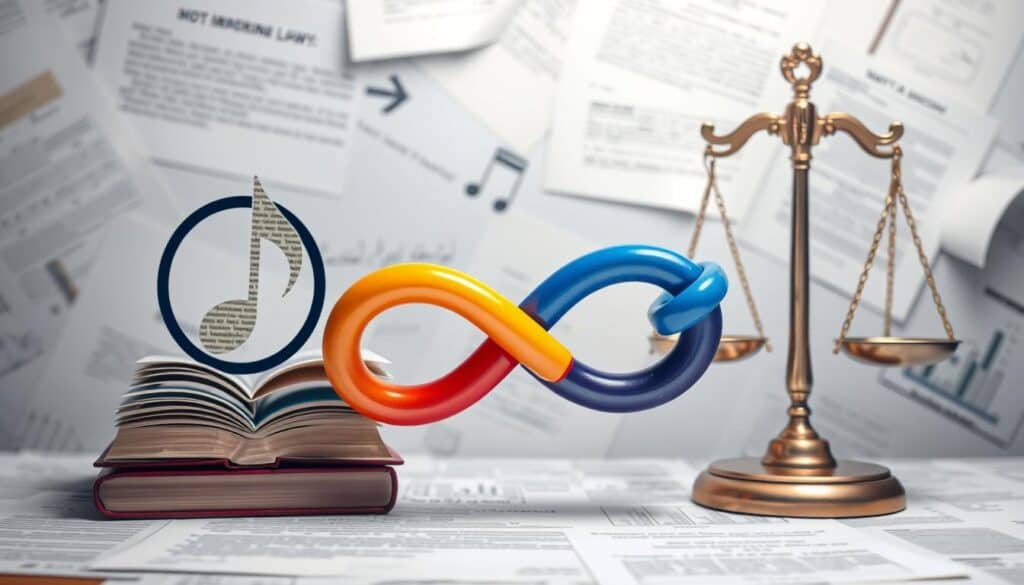
版权和商标往往在人物和设计中结合在一起。一个角色可能因品牌关联而被注册为商标,但同时也作为艺术品受到版权保护。这种双重保护阻止了非法使用。它保证了创作者的权利和经济利益。
Business reputation improves with smart use of trademarks and copyrights. A unique 标识这两者都能提升品牌形象。它还能建立消费者的信任。
这些法律之间的互动有助于商业方面和企业内部的权利管理。企业需要谨慎管理这些重叠部分。要想在遵守知识产权法的同时充分获益,就必须具备法律知识。
本表显示了版权和商标申请的重要细节。它解释了它们之间的重叠和潜在的法律问题:
| 方面 | 版权 | 商标 |
|---|---|---|
| 保护重点 | 原创艺术和文学作品 | 徽标、名称等品牌元素 |
| 例子 | 艺术作品、音乐、摄影 | 企业徽标、标语 |
| 法律文件 | 注册提供法律证明 | 注册可防止品牌身份被盗 |
| 重叠示例 | 徽标图形设计 | 带有艺术图案的徽标 |
这一解释有助于理解版权和商标法如何保护创意和商业作品。公司和个人应获得专家的法律建议。这样,他们就能避免问题,并充分受益于这两种保护。
专利保护:鼓励创新和商业化
Patent protection is crucial for sparking innovation. It also helps bring new tech to market. Inventors get a monopoly for a limited time from the U.S. Patent and Trademark Office. This ensures creative work in many fields is rewarded.
了解如何申请专利非常重要。它能将新创意转化为可以销售的产品。
美国专利商标局在专利中的作用
The U.S. Patent and Trademark Office (USPTO) leads in protecting patents. It supports the growth of new ideas across the country. The agency checks patent applications carefully.
专利局关注每一项发明的新颖性和独特性。这样,只有真正值得申请专利的发明才能获得专利。这就保持了较高的创新标准。

了解专利申请流程
申请专利似乎很难。但了解申请步骤有助于避免障碍。以下是主要阶段:
- 准备工作 starts with documenting the invention and checking if it can be patented.
- 申报: you must submit detailed documents and descriptions to the USPTO. Being precise here is very important.
- 考试: the USPTO checks if your application meets the legal requirements.
- 发行: if everything is in order, a patent is granted. This gives the inventor rights to sell their invention for a certain time.
从一个想法到可销售的产品,这说明了专利的重要性。专利鼓励创新,并帮助将创新推向市场。通过正确的专利程序,发明者可以将他们的想法变成真正的、受保护的技术。这些技术可以在各自领域带来新的进步。
专利与版权比较
了解专利和版权之间的区别是知识产权领域的关键。这对于保护和充分利用新创意和新发明非常重要。
功能与表现的二分法
In the realm of intellectual property, functional inventions are linked to patents. These include things like machines and methods that do a certain 工作. On the other hand, expressive works like art and music fall under copyright. Knowing the difference matters a lot because it affects how you can use and protect your work.
保护期限:这些知识产权的保护期有多长?
专利和版权的有效期差别很大。小发明或工艺的专利有效期为 20 年。这让发明者在一段时间内成为唯一使用其发明的人。而版权则保护作家和艺术家的作品,保护期为其有生之年加 70 年。这支持了长期的创造力。
想想一家科技公司正在制造一种新设备。专利将保护其特殊的工作方式。版权保护的是 user interface 外观和工作。拥有这两种保护对于成功非常重要。
So, knowing about functional inventions and expressive works is crucial. It helps with planning and following the law when creating something new.
商业秘密:防范未经授权的披露
In the world of intellectual property, trade secrets are very special. They protect important business details that give companies a competitive edge. Unlike patents, trade secrets keep their valuable information a secret to remain exclusive. This secret info can be anything from recipes to unique processes that keep a company ahead due to their secrecy.
To stop unauthorized disclosure, companies need to be very careful. They use strong IT security and contracts like NDAs to keep secrets safe. The real value of a trade secret comes from how hard a company works to keep it away from competitors.
| 方面 | 专利 | 商业秘密 |
|---|---|---|
| 披露要求 | 需要公开 | 无,保密 |
| 寿命 | 实用新型专利 20 年,外观设计专利 15 年 | Indefinite, as long as it remains secret |
| Protection Mechanism | Intellectual property rights granted by law | Efforts of the holder to prevent unauthorized disclosure |
| Enforcement | Legal action against infringement | Legal action against breach of confidentiality |
| 经济价值 | Derived from novelty and inventiveness | Derived from not being known and not easily ascertainable |
Keeping trade secrets safe means always staying ahead. Companies must update their security and closely watch who can see the secrets. This helps keep the secrets truly secret and their commercial value high.
The Interplay Between Copyrights, Patents, Trade Secrets, and Trademarks
Understanding how IP protections work together is key for handling intellectual property rights. It is important to know the roles of copyrights, patents, trade secrets, and trademarks. They help protect various parts of creativity and innovation.
A Chart of Differences: Protection, Requirements, and Rights
| Type of IP | 保护 | Legal Requirements | Rights Granted |
|---|---|---|---|
| 商标 | Protects brand names, logos, and other identifiers from being used by others | Must be distinctive and used in commerce | Exclusive right to use the mark to identify goods or services |
| 专利 | Covers inventions and grants the holder the right to exclude others from making, using, selling, or importing the invention | Invention must be novel, non-obvious, and useful | Exclusive exploitation rights for up to 20 years for utility patents |
| 版权 | Protects original works of authorship including literature, music, and art | Originality and some form of expression | Control over reproduction, derivative works, distribution, and public display |
| 商业秘密 | Protects confidential business information that gives a competitive edge | Information must be secret, have commercial value, and be subject to reasonable steps to keep it secret | Indefinite protection as long as secrecy is maintained |
Understanding Which IP Protection Fits Your Needs
Choosing the right IP protection requires knowing your needs and goals. Each type of intellectual property has distinct benefits. They protect different kinds of creativity and innovation.
For example, patents are critical for inventors who need exclusive rights. Copyrights give artists and authors the confidence to share their work. Trademarks protect and build consumer trust in brands. Meanwhile, trade secrets offer protection for valuable, confidential business info.
Using IP protections strategically boosts your competitive edge and encourages innovation. By understanding the legal requirements of each IP type, you can get full protection. This way, you can make the most of your intellectual property.
How to Leverage IP Rights for Business and Creative Advantage
Using IP rights well is key to gaining a business edge and boosting innovation. Knowing how to handle patents, copyrights, and trademarks lets businesses improve their place in the market. This also protects their creative efforts.
IP-focused industries push economic growth and keep the competition lively worldwide. Patents let companies like 苹果 Inc. and Google Inc. exclusively use their new ideas. This raises their value and attracts investors. Copyrights let creators earn from their work for their lifetime and after, which is vital in publishing and entertainment.
Trademarks make brands like Louis Vuitton stand out and keep customer loyalty. They fight fake products to keep their good name and consumer trust. Handling IP rights well boosts business tactics. It helps protect unique tech and makes brands stand out in busy markets.
| IP Right | Role in Business | Impact on Valuation | 挑战 |
|---|---|---|---|
| 专利 | Encourages innovation by providing exclusive rights | Significant contributor to company valuations and technological leadership | Patent trolls and the rise of litigation costs |
| Copyrights | Protects creative works, allowing for controlled distribution and monetization | Increases company valuation through exclusive content rights | Digital piracy significantly impacts revenue streams |
| 商标 | Builds brand identity and consumer trust | Enhances market positioning and competitive advantage | Counterfeits and domain name disputes |
To beat issues like digital piracy, groups like the Global Innovation Policy Center suggest strong online enforcement. This not only guards intellectual property but also keeps innovation alive online. Besides, matching innovation with solid IP laws aids creators and innovators. It pushes industry standards up and boosts the economy.
结论
The world of intellectual property is complex but well-structured. It’s made to protect new ideas and creative works. Knowing the difference between patents and copyrights is very important. It helps keep innovation safe and allows it to grow.
Utility patents protect the way inventions work for up to 20 years. Design patents protect the look of products for 15 years. This stops others from making copies too soon. So, inventors can enjoy the benefits of their hard work without worry.
Copyright law protects creative works longer. It lasts for the author’s life plus 70 years, or up to 120 years for companies. This gives a solid chance for authors and companies to make money from their creations. Plant patents also show how broad protection can be. This emphasizes how much the United States values all types of intellectual property.
Looking ahead, it’s clear we need to stay alert and informed about IP. Technology moves fast, and markets are growing worldwide. We need strong legal rules to keep inventions and creative works safe. It’s crucial for everyone to keep up with these changes. This way, we can continue respecting and growing intellectual property rights. It helps keep the United States ahead in innovation and creativity around the world.
补充阅读材料
- Patent licensing and commercialization: approaches to licensing patents and strategies for commercializing patented technologies.
- Technology transfer: processes and strategies for transferring patented technologies between organizations or from research institutions to industry.
- Licensing agreements: exploring the legal frameworks and strategies for licensing copyrighted material, allowing others to use it under specific conditions.
- Fair use doctrine: analyzing the principles that allow limited use of copyrighted material without permission, such as for commentary, criticism, or education.
- Digital Rights Management (DRM): implementing technological measures to control the use, distribution, and duplication of copyrighted digital content.
- Creative commons licensing: utilizing a set of licenses that enable creators to communicate which rights they reserve and which they waive for the benefit of recipients or other creators.
- Open access publishing: investigating the movement towards making scholarly research freely available to the public, often involving alternative copyright considerations.
- Public domain: identifying works that are not protected by copyright and are free for public use, and understanding how works enter the public domain.
- Moral rights: examining the rights of creators to protect the personal and reputational value of their work, which may exist alongside economic rights.
- Copyright law and international treaties: Studying the global framework for copyright protection, including treaties like the Berne Convention and the TRIPS Agreement.
常问问题
专利与版权的主要区别是什么?
专利适用于机器或化学品等新发明。它们有助于创新和进步。版权保护书籍、音乐和艺术等创意作品。它们侧重于创作者的权利。.
什么是知识产权(IP)?
知识产权指的是你头脑中的想法和创造。它包括发明、艺术作品和设计。知识产权赋予创作者对其作品的特殊权利。.
为什么必须了解不同类型的知识产权?
了解知识产权有助于创作者保护自己的作品。他们可以通过法律途径维护自己的权利。他们还可以从自己的创作中获得最大收益。.
什么是符合版权保护条件的创意作品的原创性?
原创性是指作者独立完成作品,并具有一定的创造性。作品不一定是全新的,只要不是抄袭就可以了。.
在美国版权局注册作品有哪些好处?
注册可为您提供公开的版权记录。这可能意味着巨大的法律利益,比如在法庭上获得金钱赔偿。但您必须在任何侵权行为发生之前或发表后三个月内进行注册。.
专利持有人有哪些权利?
专利持有人可以在 20 年内阻止他人使用其发明。这意味着他们可以单独从中赚钱。.
为什么注册商标和服务商标很重要?
注册可为您带来法律利益。在美国的任何地方,您都可以拥有该商标,这也有助于在法庭上和在其他国家注册。.
版权与商标法有何重叠?
有时,版权法和商标法涵盖同一件事。比如,徽标的外观受版权保护,但同时也被用作商标。.
美国专利商标局 (USPTO) 在专利方面扮演什么角色?
美国专利商标局检查专利是否合法。他们授予专利以保护发明。他们还处理所有专利记录。.
版权和专利保护期有多长?
版权的有效期为作者的有生之年加 70 年。专利权的有效期为 20 年,从申请时算起,如果你支付了费用的话。.
什么情况下应使用商业秘密而不是专利或版权?
当你想永远保守信息秘密时,请使用商业秘密。只要是有价值的秘密,就会受到保护。.
了解不同知识产权法之间的相互作用会如何影响知识产权保护?
了解知识产权法如何共同发挥作用,有助于更好地保护和管理你的创造。这意味着你可以更有效地使用自己的权利。.
如何利用知识产权为企业带来竞争优势?
知识产权使你能够控制自己的创作,保护自己的业务。它们使你的产品更有价值。它们还有助于创造新的利润和建立自己的品牌。.
有关知识产权保护的外部链接
(将鼠标悬停在链接上即可查看内容描述)
常用术语表
Digital Rights Management (DRM): 一组访问控制技术,用于保护受版权保护的数字内容免遭未经授权的使用、复制和分发,确保创作者和分发者对其知识产权保持控制。
Fair Use Doctrine: 一项法律原则,允许在未经版权所有者许可的情况下有限度地使用受版权保护的材料,通常用于批评、评论、新闻报道、教学、学术或研究等目的,以平衡版权所有者和公众的利益。
Non-Disclosure Agreement (NDA): 一种法律合同,用于在双方之间建立保密关系,禁止向第三方披露特定信息。它通常用于保护在商业谈判或合作期间共享的敏感信息。
Public Domain: 一种法律地位,表明作品不受版权限制,允许任何人无需许可或付费即可使用、修改和分发。此状态可能源于版权到期、创作者明确贡献或缺乏版权资格。
Software Defined Radio (SDR): 无线通信系统是一种将传统上由物理硬件执行的功能(例如调谐、滤波和调制)改为由计算机软件处理的通信系统。这项技术只需更新代码,即可使单个设备立即重新配置为接收或发送几乎任何类型的无线信号。
Unique Selling Point (USP): 使产品或服务有别于竞争对手的独特功能或优势,旨在通过满足特定需求或偏好来吸引客户。
United States Patent & Trademark Office (USPTO): 美国联邦机构,负责授予专利和注册商标,促进创新并保护知识产权。该机构负责审查申请、颁发专利,并维护注册商标数据库。
User Interface (UI): 一种支持用户与软件应用程序之间交互的系统,包括视觉元素、控件和整体布局,以方便用户执行任务并增强体验。