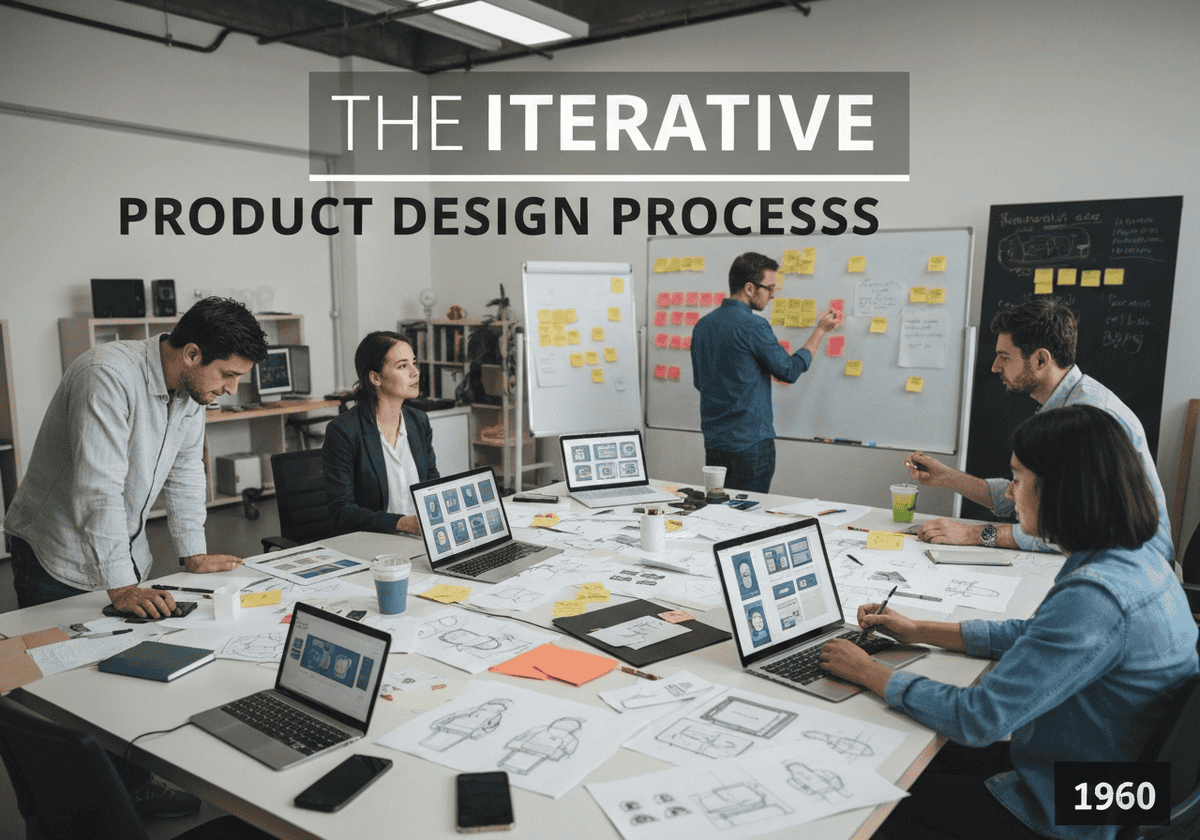
제품 개발을 위한 체계적인 방법론으로, 일반적으로 분석, 개념 개발, 종합 단계를 거칩니다. 이는 디자이너가 사용자 요구를 조사하고, 아이디어를 브레인스토밍하고, 프로토타입을 제작하고, 이를 테스트하여 최종 제품을 개선하는 반복적인 과정입니다. 이러한 과정을 통해 최종 제품이 기능적으로 우수하고 시장 요구를 효과적으로 충족하는지 확인한 후 본격적인 생산에 들어갑니다.

(설명을 위한 생성된 이미지입니다)
제품 개발을 위한 체계적인 방법론으로, 일반적으로 분석, 개념 개발, 종합 단계를 거칩니다. 이는 디자이너가 사용자 요구를 조사하고, 아이디어를 브레인스토밍하고, 프로토타입을 제작하고, 이를 테스트하여 최종 제품을 개선하는 반복적인 과정입니다. 이러한 과정을 통해 최종 제품이 기능적으로 우수하고 시장 요구를 효과적으로 충족하는지 확인한 후 본격적인 생산에 들어갑니다.

The product design process is a framework that guides designers and engineers from an initial idea to a market-ready product. It begins with the ‘Analysis’ phase, which involves deep market research, competitive analysis, and understanding user needs through methods like interviews and surveys. This phase defines the problem and sets the design constraints and goals. The subsequent ‘Concept’ phase is a creative exploration where designers brainstorm a wide range of potential solutions. Techniques like sketching, mind-mapping, and storyboarding are common. Multiple ideas are generated without initial judgment to foster innovation. Following this, the ‘Synthesis’ phase involves refining and combining the most promising concepts into a tangible design. This is where detailed specifications are created, and early prototypes, such as mockups or 3D models, are built. The process is inherently iterative; feedback from testing these prototypes is used to circle back to earlier stages for refinement. For example, a 사용성 test might reveal a flaw that requires a return to the concept phase to explore alternative solutions. This cyclical nature ensures continuous improvement and reduces the risk of market failure by validating the design against real-world user feedback and technical feasibility before committing to mass production.
반복적인 제품 설계 프로세스
(날짜를 알 수 없거나 관련이 없는 경우, 예를 들어 "유체역학"의 경우, 주목할 만한 등장 시기를 대략적으로 추정하여 제공합니다.)

고화질 이미지 및 다운로드는 등록된 회원에게만 100% 무료로 제공됩니다.
> 로그인 <