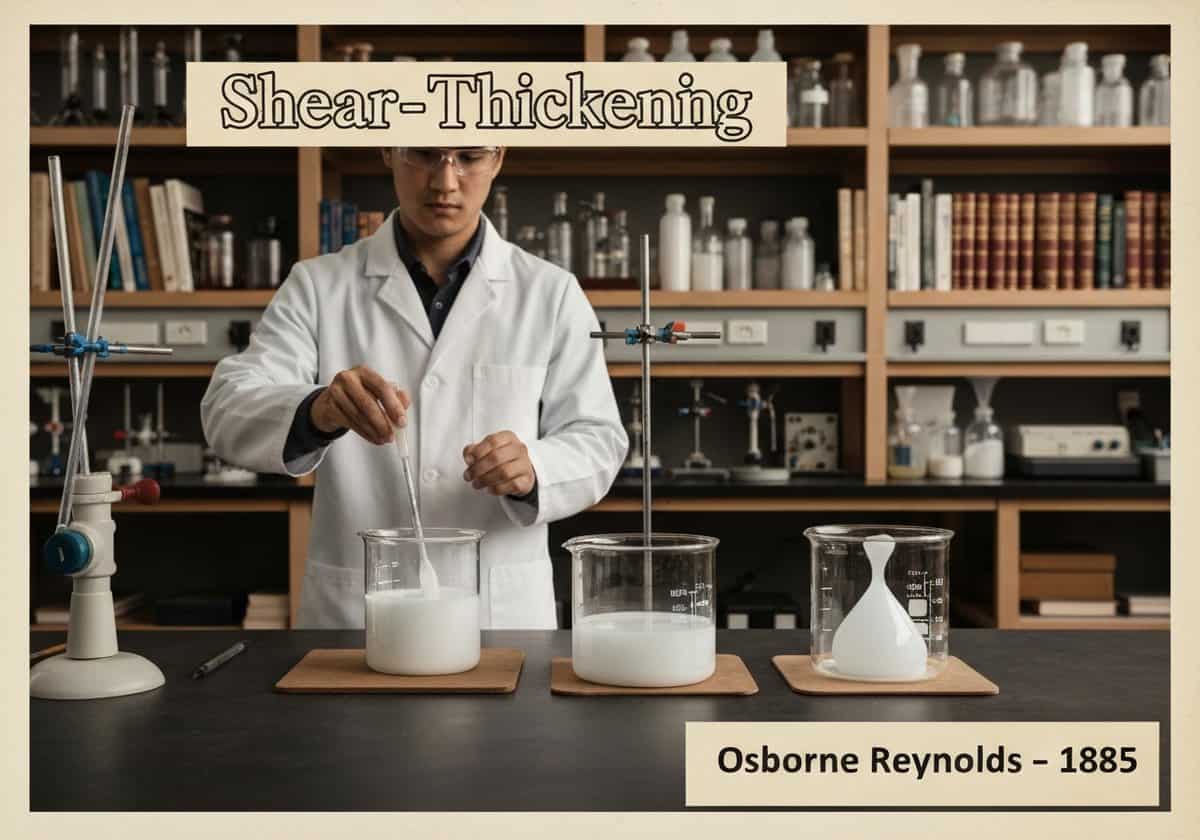
At a critical shear rate, these hydroclusters can percolate across the system, forming a rigid, stress-bearing network that spans the fluid. This transition from a flowing state to a jammed, solid-like state is what causes the dramatic increase in 粘度. This process is reversible; when the high 剪应力 is removed, the particle network breaks apart, and the material returns to its fluid state. This property is exploited in technologies like liquid body armor, where a flexible material containing a shear-thickening fluid instantly becomes rigid upon the high-speed impact of a projectile, dissipating the energy and protecting the wearer.