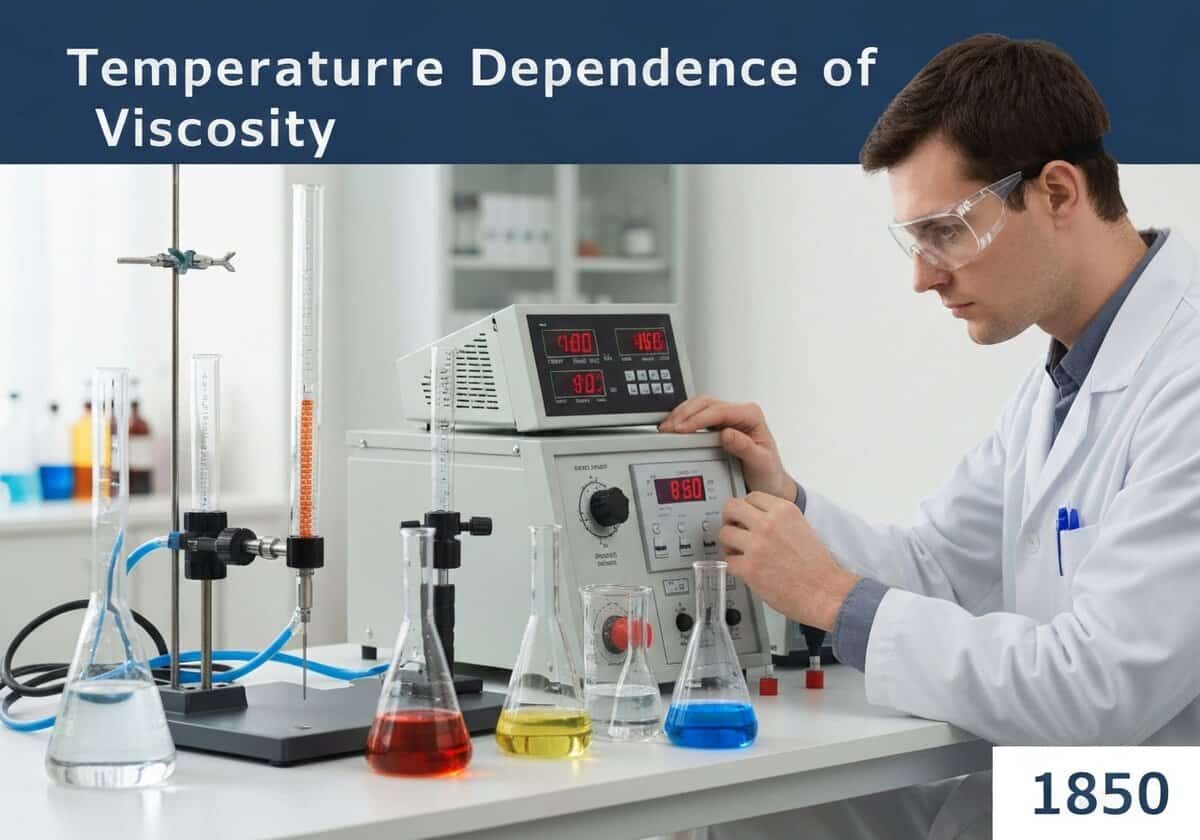
对于牛顿流体而言, 粘度 是温度的函数, 压力 但剪切速率并非如此。在液体中,粘度随温度升高而显著降低,因为更高的热能使分子更容易克服分子间内聚力。相反,在气体中,粘度随温度升高而增加,因为更频繁、速度更高的分子碰撞导致更大的动量传递。

(图片仅供参考)
对于牛顿流体而言, 粘度 是温度的函数, 压力 但剪切速率并非如此。在液体中,粘度随温度升高而显著降低,因为更高的热能使分子更容易克服分子间内聚力。相反,在气体中,粘度随温度升高而增加,因为更频繁、速度更高的分子碰撞导致更大的动量传递。
The relationship between 粘度 and temperature is fundamentally different for liquids and gases, stemming from their distinct molecular mechanisms for momentum transfer. In liquids, molecules are closely packed and held together by strong intermolecular cohesive forces. Viscous forces arise from the resistance of these molecules to sliding past one another. As temperature rises, the kinetic energy of the molecules increases, allowing them to overcome these cohesive forces more readily. This results in a decrease in the liquid’s resistance to flow, and thus, a lower viscosity. This effect is pronounced; for example, the viscosity of water decreases by a factor of about 6 between 0°C and 100°C.
在气体中,分子间距较大,主要通过碰撞相互作用。气体粘度是衡量以不同速度运动的层间动量传递的指标。这种动量是通过分子在层间移动和碰撞而传递的。随着温度升高,气体分子的随机热速度也会增大。这会导致碰撞更频繁、更剧烈,从而提高层间动量传递的效率,最终导致粘度增加。这一现象是气体动力学理论早期的一大成就,因为它是一个反直觉的预测,后来被实验证实。
粘度的温度依赖性
(如果日期未知或不相关,例如“流体力学”,则提供其显著出现的近似估计)
只有注册会员才能免费获取完整尺寸的图片和下载内容。
> 登录 <