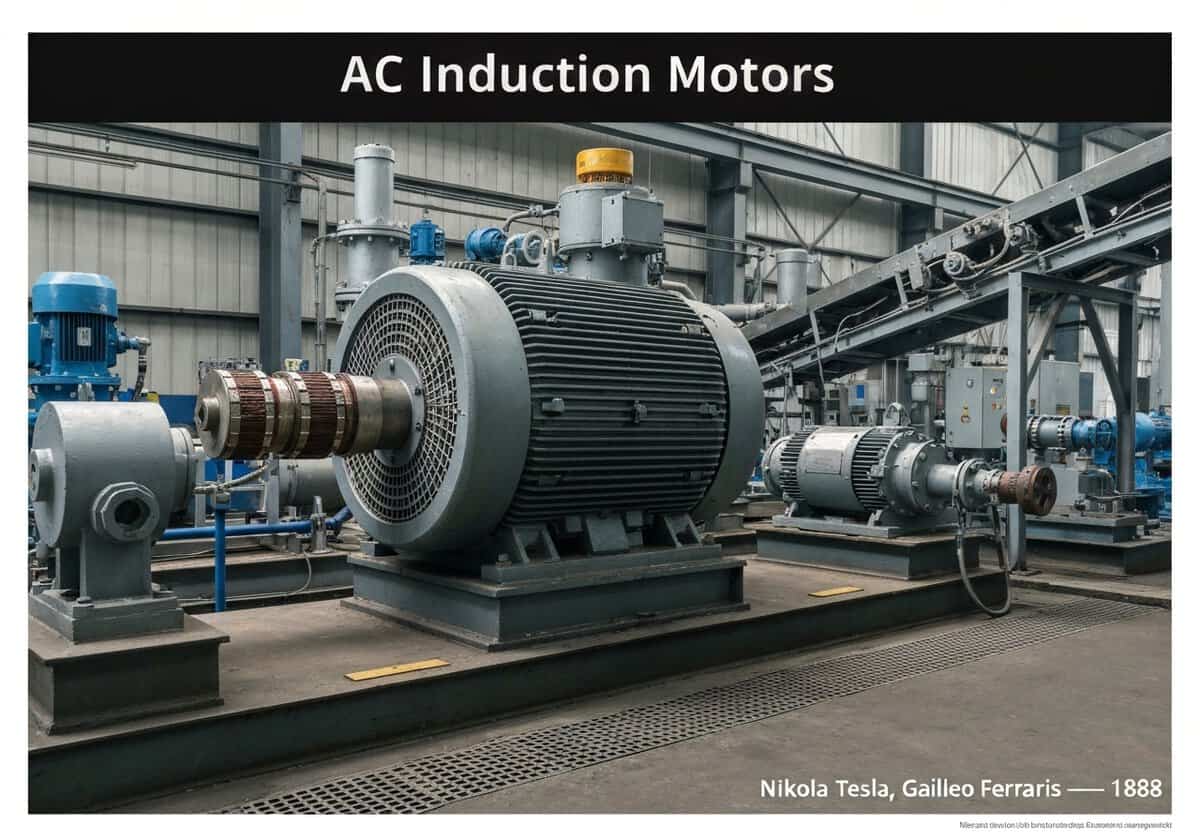
The genius of the AC induction 发动机 lies in its ability to create motion without any electrical connections to the rotor, making it simple, rugged, and reliable. The key concept is the rotating magnetic field. In a typical three-phase motor, the stator has three sets of windings, physically offset by 120 degrees. When these are energized by a three-phase AC supply (where each phase’s voltage is also offset by 120 degrees in time), the resultant magnetic field has a constant magnitude but rotates at a fixed speed, known as the synchronous speed ([latex]N_s = 120f / P[/latex], where f is the supply frequency and P is the number of poles).