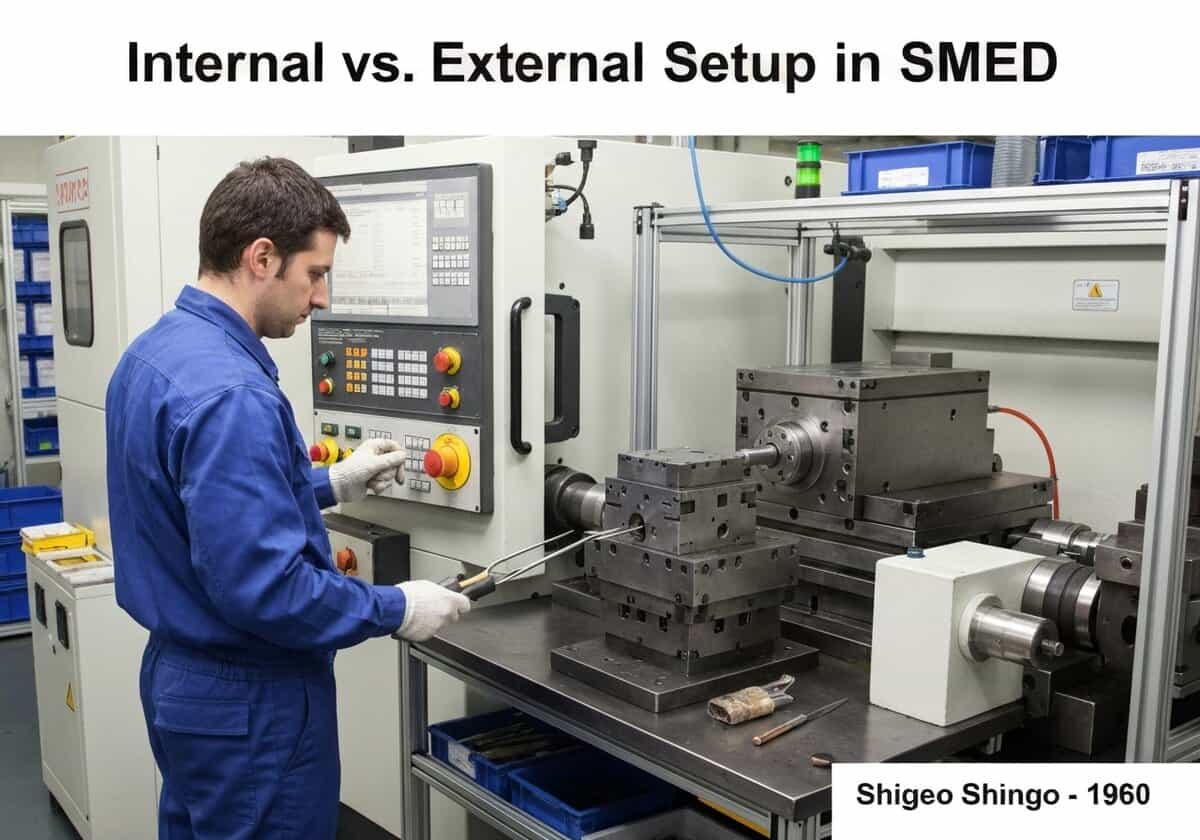
SMED 방법론은 근본적으로 내부 설정 작업과 외부 설정 작업을 구분합니다. 내부 설정 작업은 기계가 정지된 상태에서만 수행할 수 있으며, 새 금형을 장착하는 것이 일반적인 예입니다. 외부 설정 작업은 기계가 작동 중인 상태에서 완료할 수 있으며, 공구 예열이나 다음 금형 가져오기 등이 있습니다. 주요 목표는 내부 설정 시간을 외부 설정 시간으로 전환하는 것입니다.


(설명을 위한 생성된 이미지입니다)
SMED 방법론은 근본적으로 내부 설정 작업과 외부 설정 작업을 구분합니다. 내부 설정 작업은 기계가 정지된 상태에서만 수행할 수 있으며, 새 금형을 장착하는 것이 일반적인 예입니다. 외부 설정 작업은 기계가 작동 중인 상태에서 완료할 수 있으며, 공구 예열이나 다음 금형 가져오기 등이 있습니다. 주요 목표는 내부 설정 시간을 외부 설정 시간으로 전환하는 것입니다.
The distinction between internal and external setup is the cornerstone of the 스메드 system. Before its formalization, changeover processes were often treated as a monolithic block of time where the machine was unproductive. Shigeo Shingo’s critical insight was to analyze every single action taken during a changeover and categorize it. Internal setup (Internal Exchange of Die or IED) includes any task that absolutely requires the machine to be shut down. Examples include unbolting the old tool, cleaning the machine bed, and securing the new tool. External setup (External Exchange of Die or OED) encompasses all preparatory and post-processing tasks that can be performed while the machine is still producing the last batch. This includes transporting the next die to the machine, pre-heating molds, preparing clamps and bolts, and moving the finished parts away. The initial stages of a SMED implementation focus heavily on identifying and separating these activities. A simple checklist is often the first tool used. By meticulously preparing all necessary tools, parts, and conditions beforehand (externalizing the setup), the time the machine is actually stopped (internal setup) can be dramatically reduced. This conceptual separation is what enables the subsequent, more technical steps of converting and streamlining.
SMED에서 내부 설정과 외부 설정의 차이점
(날짜를 알 수 없거나 관련이 없는 경우, 예를 들어 "유체역학"의 경우, 주목할 만한 등장 시기를 대략적으로 추정하여 제공합니다.)

고화질 이미지 및 다운로드는 등록된 회원에게만 100% 무료로 제공됩니다.
> 로그인 <