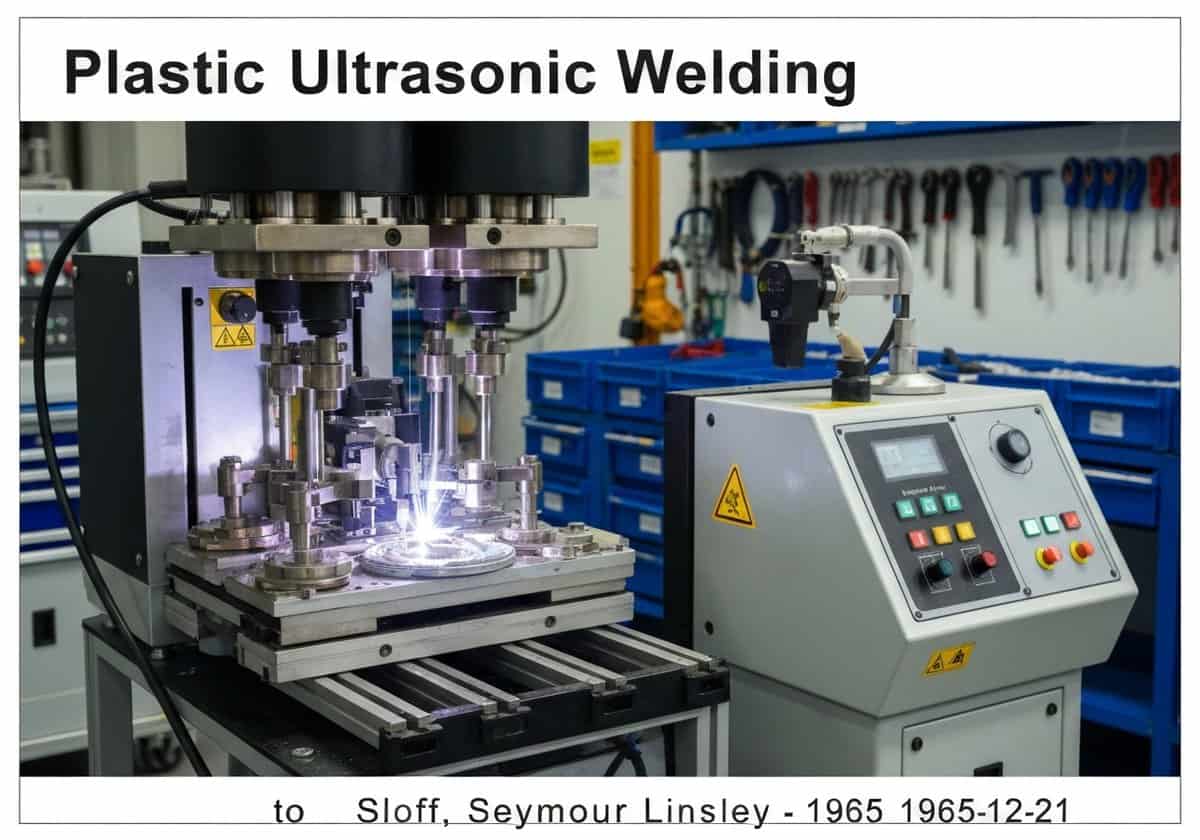
The core of an ultrasonic welding system consists of a power supply (generator), a transducer (converter) that changes high-frequency electrical energy into mechanical vibrations, a booster to amplify these vibrations, and a sonotrode (or horn) that transmits the energy to the workpiece. The process is extremely fast, with weld times often under one second. A critical aspect of successful ultrasonic welding is the joint design. Parts are often molded with ‘energy directors’—small, sharp triangular ridges on one of the surfaces. These features concentrate the ultrasonic energy, initiating a rapid melt and ensuring a uniform bond. The technique is best suited for amorphous polymers like ABS, polystyrene, and 聚碳酸酯, as their random molecular structure allows for efficient transmission of vibrational energy. Semi-crystalline polymers like 聚乙烯 和 聚丙烯 can also be welded, but they require higher energy levels due to their ordered structure, which dampens the vibrations. The process is clean, energy-efficient, and highly repeatable, making it ideal for automated, high-volume manufacturing.