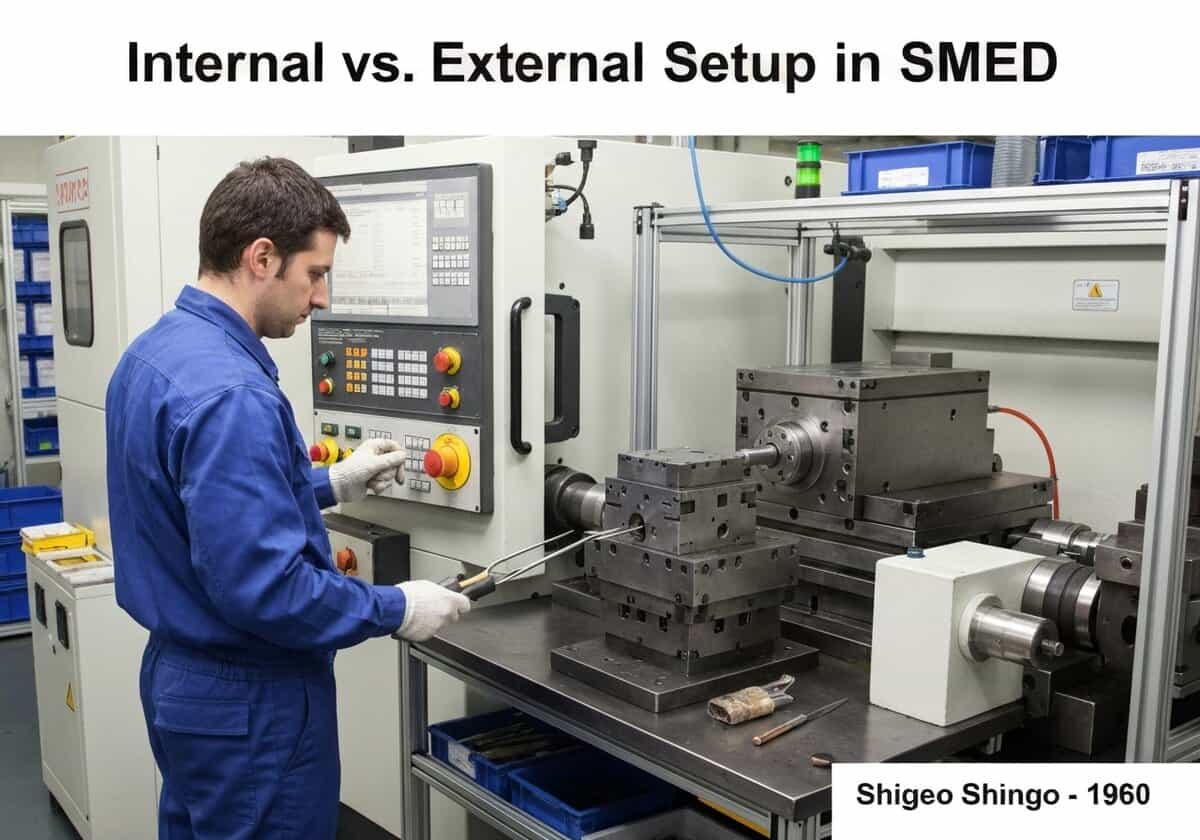
SMED方式では、内部セットアップ作業と外部セットアップ作業を根本的に区別します。内部セットアップ作業は、新しい金型を取り付けるなどのように、機械が停止しているときにのみ実行できます。一方、外部セットアップ作業は、工具の予熱や次の金型の取り出しなど、機械が稼働中でも完了できます。主な目的は、内部セットアップ時間を外部セットアップ時間に変換することです。


(画像はイメージです)
SMED方式では、内部セットアップ作業と外部セットアップ作業を根本的に区別します。内部セットアップ作業は、新しい金型を取り付けるなどのように、機械が停止しているときにのみ実行できます。一方、外部セットアップ作業は、工具の予熱や次の金型の取り出しなど、機械が稼働中でも完了できます。主な目的は、内部セットアップ時間を外部セットアップ時間に変換することです。
The distinction between internal and external setup is the cornerstone of the SMED system. Before its formalization, changeover processes were often treated as a monolithic block of time where the machine was unproductive. Shigeo Shingo’s critical insight was to analyze every single action taken during a changeover and categorize it. Internal setup (Internal Exchange of Die or IED) includes any task that absolutely requires the machine to be shut down. Examples include unbolting the old tool, cleaning the machine bed, and securing the new tool. External setup (External Exchange of Die or OED) encompasses all preparatory and post-processing tasks that can be performed while the machine is still producing the last batch. This includes transporting the next die to the machine, pre-heating molds, preparing clamps and bolts, and moving the finished parts away. The initial stages of a SMED implementation focus heavily on identifying and separating these activities. A simple checklist is often the first tool used. By meticulously preparing all necessary tools, parts, and conditions beforehand (externalizing the setup), the time the machine is actually stopped (internal setup) can be dramatically reduced. This conceptual separation is what enables the subsequent, more technical steps of converting and streamlining.
SMEDにおける内部設定と外部設定
(日付が不明または関連性がない場合、例えば「流体力学」などでは、その注目すべき出現時期の概算値が提示されます。)

フルサイズの画像とダウンロードは、登録会員のみが100%無料で利用できます。
> ログイン <