贴片机(P&P 或 PnP)是一种自动化工业系统,旨在快速、精确地从已知位置拾取小型元件,并将其高重复性地放置到目标表面或组件上。这些机器最初是为电子制造行业(SMT)开发的,它们结合了计算机控制的运动系统、真空或机械夹具以及基于视觉的对准技术,能够处理尺寸从几毫米到几分之一毫米的元件。贴片机的运行速度可达每小时数万次以上,其精度和一致性是人工操作员在整个生产过程中无法达到的,因此成为现代大批量生产的基石。
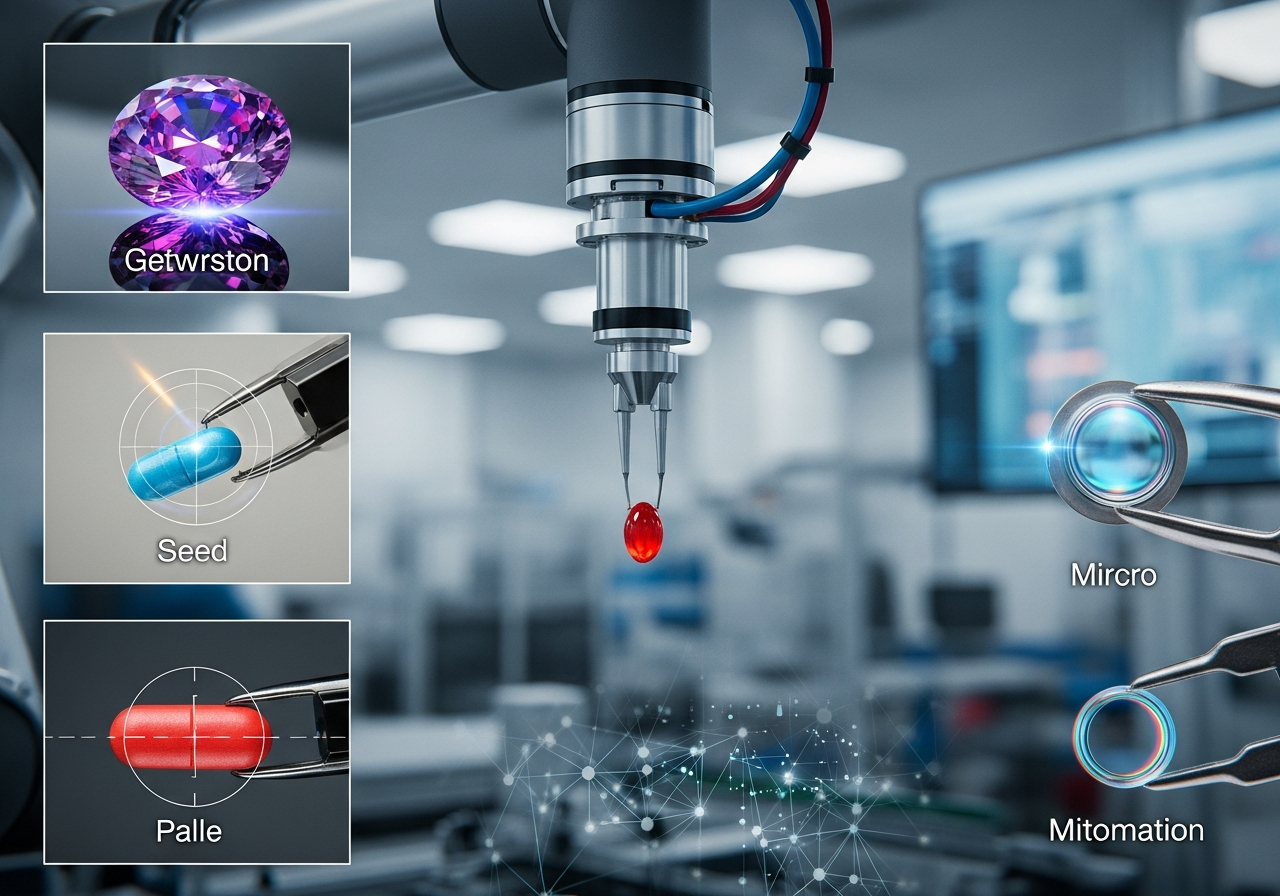
拾放技术之所以在电子领域之外也如此引人注目,在于其核心能力的普适性:在三维空间中对微小物体进行可控且可重复的操作。无论物体是宝石、种子、药丸还是微型透镜,其根本挑战始终如一——识别物体、正确定向、无损移动,并将其精确放置到所需位置。拾放设备能够优雅且大规模地解决这一难题,因此其价值远远超出电路板领域。
This transferability becomes even more powerful when combined with modern sensing and software. Computer vision systems can distinguish between object types, detect defects, and confirm correct placement in real time. Force-sensitive grippers can handle fragile biological or optical materials without crushing them. And programmable motion paths mean the same physical machine can be reconfigured for an entirely different product with a software update rather than a hardware overhaul. Across pharmaceuticals, jewelry, agri-tech, medical devices, and beyond, the pick and place principle quietly underpins a growing share of precision manufacturing — one placement at a time.
取货和放置通常是
典型的表面贴装技术(SMT)电子应用:
以及功能更全面、体积更大的机器人或协作机器人(不适用于SMT):
1. 药品泡罩包装
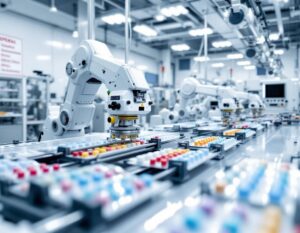
药品泡罩包装是将单个剂量的药品(药片、胶囊、软胶囊或锭剂)放入预先成型的塑料或铝制泡罩中,然后再进行铝箔封口。这项技术应用已相当成熟,是电子行业之外最早采用包装与包装(P&P)技术的应用之一。该领域的设备高度专业化,通常集成到包含泡罩成型、铝箔封口、印刷和装盒等工序的更大型包装生产线中。美国食品药品监督管理局(FDA)或欧洲药品管理局(EMA)等监管机构要求实现完全可追溯性,因此现代系统会记录每一次放置操作,标记缺失或破损的药片,并在不合格的泡罩到达封口工位之前自动将其剔除。
The key benefit over manual or bulk-filling methods is the elimination of dose errors and cross-contamination, which are critical in a regulated environment where a single missing tablet in a blister pack can trigger a costly recall. Vision systems that verify tablet color, shape, and size before placement add an extra layer of quality assurance that bulk filling simply cannot provide. The main risk lies in handling friable or oddly shaped tablets that can break under vacuum suction, so nozzle geometry and suction pressure must be carefully tuned per product. A practical tip is to invest early in changeover tooling standardization, as pharmaceutical lines switch products frequently and downtime during changeover is one of the largest hidden costs.
2. 垂直农场的种子单粒化

垂直农业和可控环境农业对种子投放的精准度要求极高,以确保种子均匀发芽、根系间距合理,并有效利用种植空间。与传统的撒播或人工装盘不同,基于精准定位技术的单粒播种方式是从散装种子中逐粒拣选,并将其以预设的深度和方向投放到育苗盘或育苗块的特定格子中。这项技术尚处于发展初期,尚未完全成熟,目前只有少数农业科技公司和研究机构正在积极研发专用的种子处理末端执行器。由于不同物种的种子在大小、形状、表面纹理和易碎性方面差异巨大,因此难以设计出通用的抓取器,这无疑是一项巨大的挑战。
与温室作业中常用的滚筒式播种机或真空轮式播种系统相比,P&P(压载式播种)方式具有更大的灵活性——同一台机器可以通过软件驱动的参数更改,而非机械工具更换,轻松切换播种生菜、罗勒和芝麻菜等不同品种的种子。这对于实行多样化作物轮作的垂直农场而言是一项重大优势。只需确保播种深度一致,即可将发芽率提高几个百分点,从而直接转化为产量和收益。主要风险在于,对于微型蔬菜或香草等娇嫩种子,过大的真空压力可能会造成种子损伤,因此建议使用带有柔软硅胶头的低压柔性喷嘴。污染控制也至关重要,因为机器产生的任何油渍或残留物都必须符合食品安全标准,最好获得有机生产环境认证。
3. 巧克力和糖果组装

在高端糖果制造领域,装饰和组装仍然主要依靠手工完成,熟练的工人将坚果、干果、食用花卉或糖霜装饰放置在沿着传送带移动的巧克力上。自动取放(P&P)技术正逐渐渗透到这一领域,尤其适用于那些希望在不损失手工精细加工的前提下扩大生产规模的中高产量手工品牌。由于巧克力表面非常娇嫩,如果处理不当可能会起霜或变形,因此所使用的机器必须在温湿度可控的环境中运行。一些制造商已经开始使用三角洲机器人取放系统——这种快速、类似蜘蛛的并联机器人常见于食品包装行业——来放置均匀的装饰物,但利用视觉引导放置不规则装饰物的完全灵活的装饰方式仍处于研发前沿。
与人工装饰相比,其核心优势在于生产效率的稳定性:人工装饰员在轮班期间速度会下降,摆放位置的美观性也会有所差异,而且难以保证数千件产品上每种配料的克数都完全一致。而自动摆放系统能够连续数小时将相同的坚果放在每件产品的相同位置,且不会感到疲劳。对于视觉对称性是品牌承诺一部分的高端礼盒而言,这种稳定性具有直接的商业价值。主要风险在于产品损坏——巧克力表面容易刮花,真空吸盘可能会留下可见的痕迹——因此,值得探索使用轻柔气流而非吸力接触的非接触式或超轻触式末端执行器。一个关键的成功技巧是将摆放站设置在略低于环境温度的低温区,以使巧克力表面变硬,减少接触过程中的变形。

4. 显微外科器械组件
Micro-surgical instruments such as those used in ophthalmology, neurosurgery, or robotic-assisted minimally invasive surgery contain components that are simply too small and too precise to be assembled reliably by human hands alone. Needle tips, micro-forceps jaws, valve seats, and actuator pivots often measure less than a millimeter and must be assembled to tolerances in the tens of microns. Automated P&P assembly of such instruments is an active and growing field, particularly as the market for single-use surgical devices expands rapidly and demands high-volume production of components that were previously made in small batches by skilled technicians. Several medical device manufacturers are already deploying custom P&P cells for subassembly tasks, though full end-to-end automated assembly of complex instruments remains largely in development.
Compared to manual assembly under magnification — which is slow, ergonomically taxing, and highly dependent on individual operator skill — automated P&P brings repeatability, speed, and full process documentation that is essential for ISO 13485 and FDA 21 CFR Part 820 compliance. Every placement event can be logged with timestamp, force data, and vision confirmation, creating a complete assembly record for each unit — something virtually impossible to achieve manually at scale. The primary risk is the extreme fragility of the components: a misaligned gripper applying even slightly excess force can permanently deform a micro-tip worth hundreds of dollars. Success depends heavily on investing in high-resolution inline vision and force-torque sensing on the end effector, and on designing the component feeding system carefully since micro-parts are notoriously difficult to orient reliably from bulk.
5. 制表和微机械

机械制表是所有行业中要求最高的装配工艺之一,涉及数十个部件——擒纵轮、擒纵叉、游丝、宝石轴承——这些部件组装成机芯,公差以微米计。虽然瑞士奢侈品制表业由于传统和品牌特性,仍然很大程度上坚持手工技艺,但中端和大批量制表市场却有着强烈的经济动机去实现子装配步骤的自动化。一些机芯制造商已经在使用制表专用的压装系统(P&P系统)来完成宝石压装、齿轮系定位和转子组装等任务,但这些系统需要高度定制的模具,并且通常是定制安装,而非现成的解决方案。
与纯手工组装相比,自动化组装的优势最明显地体现在一致性和产量上:熟练的制表师可以在几分钟内组装好机芯,但宝石轴承深度或齿轮啮合间隙等微小差异会在批量生产中累积,影响走时精度和长期磨损。自动化组装消除了这种偏差。风险也相当显著——在许多情况下,腕表零件是不可替代的,尤其是在古董或限量版机芯中,一个零件的错位就可能损坏整个齿轮系,其价值甚至超过机器的每小时运行成本。零件输送系统是成功的关键因素:零件必须以精确控制的方向到达取件工位,这通常需要定制的、带有视觉辅助定向的振动送料器,而不是普通的碗式送料器。
6. DNA微阵列的制备

DNA微阵列是一种玻璃或聚合物载玻片,其上精确排列着数千个微小的基因探针点,使研究人员能够同时检测生物样本与多个基因序列的匹配情况。这些阵列的制备本质上是一项高精度的流体分配和定位任务:必须将纳升级的试剂精确地沉积在特定坐标上,且点与点之间不能发生交叉污染。这项应用在生命科学仪器行业已相当成熟,安捷伦和Illumina等公司已在自动化点样和定位系统方面投入巨资。然而,随着空间基因组学和即时诊断技术的发展,对更小点尺寸和更高阵列密度的需求日益增长,这项技术仍在不断发展。
Compared to manual pipetting or early robotic liquid handlers, modern P&P-derived deposition systems offer spot sizes below 100 microns with positional accuracy in the single-micron range, enabling array densities that would be physically impossible by hand. This directly increases the information content per slide and reduces reagent consumption, both of which are commercially critical. The primary risk is carryover contamination between spots, which requires meticulous nozzle washing protocols and careful fluid dynamics design to prevent satellite droplets from landing outside their intended location. A practical tip is to control humidity precisely in the deposition environment, as evaporation rate during spotting directly affects spot morphology and hybridization performance — even small humidity fluctuations can degrade array quality enough to invalidate experimental results.
7. 眼镜镜片镀膜应用

High-performance ophthalmic lenses are coated with multiple functional layers — anti-reflective, scratch-resistant, UV-blocking, and hydrophobic — often applied as thin films or laminate layers that must be positioned and bonded with great accuracy. While many coatings are applied by vacuum deposition or spin coating, certain specialty products involve the physical placement of pre-cut film layers or polarizing inserts onto lens blanks, a task that requires precise alignment to the lens optical axis. This is an emerging automation target, as the growing demand for progressive and photochromic lenses with complex geometries makes manual film alignment increasingly error-prone and labor-intensive. Some manufacturers are already trialing P&P-assisted lamination cells, though full automation of the alignment step remains technically challenging.
与人工贴片相比,自动化贴片的主要优势在于光学质量的一致性:即使偏光膜偏差半度,也会造成可见的畸变,导致客户退货和返工,这在眼科行业成本极高。采用角度视觉对准的自动化贴片能够保持人工操作员在整个工作班次中都无法可靠实现的精度。主要风险在于表面污染——任何滞留在镜片和偏光膜之间的灰尘颗粒都会造成永久性缺陷——因此,洁净室级别的环境和电离空气净化装置是系统设计中必不可少的组成部分。一个关键技巧是将贴片单元直接集成到镜片表面加工生产线中,从而尽可能减少镜片在不同工序之间的搬运次数,因为每一次额外的搬运都可能造成表面污染或划痕。
8. 子弹和弹壳组件
弹药制造涉及将多个精密部件——黄铜弹壳、底火、发射药和弹头——组装成成品弹药,这些部件必须满足严格的尺寸和弹道性能指标。拾取和放置原理已广泛应用于高速弹药组装机中,底火被单独定向并压入弹壳凹槽,弹头则以精确的力道进行安装和压紧。而更新的技术是将视觉引导的拾取和放置技术应用于高端弹药生产线,用于质量检测和选择性放置。在允许每一发弹药进入生产线之前,都会对底火安装深度、弹壳口几何形状和弹头同心度进行单独验证。
Compared to purely mechanical indexing machines that have dominated this industry for decades, vision-integrated P&P systems enable a level of per-round traceability and quality sorting that is increasingly demanded by military and precision shooting customers. The benefit is fewer duds, fewer pressure anomalies, and a verifiable quality record per lot. The risk is primarily mechanical: ammunition components are subjected to significant press forces during assembly, and any misalignment at the placement stage that goes undetected can result in dangerous cartridges entering the supply chain. Robust go/no-go force monitoring on every placement stroke, combined with automatic reject lanes, is non-negotiable. A practical success tip is to design the system for single-piece flow with no batch buffers between stations, which forces every defect to be caught immediately rather than discovered after thousands of rounds have been assembled.

9. 微光学组件
Micro-optics assembly involves placing and bonding tiny optical elements — lenses as small as 0.3mm in diameter, beam splitters, diffractive elements, or fiber collimators — into housings for cameras, LiDAR sensors, endoscopes, augmented reality headsets, or laser modules. This is a well-established but rapidly growing application area, driven by the explosion of demand for compact imaging systems in smartphones, autonomous vehicles, and medical devices. The assembly process is unusually demanding because optical alignment tolerances are often measured in sub-micron units and angular tolerances in milliradians, requiring active alignment — where the optical output is measured in real time while the element is being positioned, and placement is locked only when the measured performance peaks.
The benefit of P&P automation here is not just speed but achievability: many micro-optics assemblies are physically impossible to build reliably by hand at production volumes because human hands simply cannot achieve the required positional resolution consistently. Automated systems using piezoelectric stages and interferometric feedback can place and bond elements to tolerances that exceed what any manual process can deliver. The risk is adhesive management — UV-cure adhesives used for bonding must be dispensed in precise volumes and cured without introducing mechanical stress that shifts the element out of alignment during shrinkage. Careful characterization of adhesive shrinkage vectors and compensation routines built into the placement algorithm are essential for achieving high first-pass yield in volume production.
10. 盲文文档制作

传统的盲文制作依赖于机械压印——用钢针根据预设图案在厚纸或聚合物基材上压印凸点。这种方法虽然适用于标准文本文件,但对于混合格式的内容(例如在同一表面上结合盲文文本、触觉图形和立体标记)则存在不足。一种新兴的替代方案是采用打印印刷(P&P)技术,将预先成型的凸点或触觉元素直接粘贴到带有背胶的平面基材上,从而实现更丰富的立体变化,并在同一页面上整合不同高度、形状和材质的点。这项技术目前仍处于相对小众的开发阶段,一些辅助技术研究小组和专业印刷公司正在探索将其应用于高质量的触觉教育材料。
与传统压纹相比,触觉反馈技术的主要优势在于其丰富的触觉体验:压纹点的高度和直径固定,受纸张和压纹力的限制;而放置的元素则可以改变高度、硬度和形状,从而传达更细微的信息——这对于面向视障用户的触觉地图、科学图表或艺术复制品至关重要。其主要风险在于粘合剂的耐久性,因为放置的点必须能够经受反复的手指触摸而不脱落,这就需要精心选择与基材兼容且耐皮肤油脂的压敏胶。一个实用技巧是,精心设计点阵载体胶带的形状,以便贴标机能够高速送料和放置,而不会在粘合牢固之前使微小的点发生翻转或倾斜。
请注意,还有其他几种专门用于盲文的方法,特别是用于纸板盲文打孔。
11. 珠宝宝石镶嵌
宝石自动镶嵌是珠宝制造业的新兴领域。在珠宝制造业中,将钻石、红宝石、蓝宝石和其他宝石镶嵌到预先切割好的底座(爪镶、包镶、密镶、槽镶)上,历来都是由技艺精湛的镶嵌师手工完成的。用于此应用的定位与定位系统(P&P系统)利用高分辨率视觉技术来识别宝石的方向——特别是台面朝上的方向——并以足够的精度将其放置到底座中,从而确保后续机械镶嵌步骤(推爪或压包)的可靠性。安特卫普、苏拉特和深圳等几个珠宝制造中心正在积极试点应用自动镶嵌机,但定位后推爪步骤的完全自动化仍然是一个尚未解决的工程难题。
经济效益显而易见:熟练的宝石镶嵌师成本高昂、数量稀少,且易受疲劳影响,导致技艺参差不齐;而宝石本身——尤其是1毫米以下的碎钻——尺寸极小,手工镶嵌过程中的损耗会造成巨大的成本损失。自动化镶嵌能够显著降低损耗率,仅此一项就足以证明在批量密镶项目中进行资本投资的合理性。主要风险在于宝石损伤:钻石虽然坚硬但易碎,如果夹具以错误的角度作用于刻面边缘,就可能导致崩裂,从而彻底摧毁宝石的价值。使用与台面精确对齐的微型真空吸盘进行非接触式镶嵌是最安全的方法,而视觉系统必须经过校准,才能应对抛光宝石极高的镜面反射率,因为这种反射率可能会干扰标准的边缘检测算法。
12. 微流控芯片制造
Microfluidic chips — also called lab-on-a-chip devices — are diagnostic or research tools that route tiny fluid volumes through networks of micro-channels to perform biochemical reactions, cell sorting, or analyte detection. Their fabrication requires assembling multiple functional layers: membranes, valves, electrode arrays, and optical windows that must be aligned to within a few microns and bonded without blocking the microchannels. This application sits at the intersection of semiconductor fabrication and medical device assembly, and automated P&P systems are already being used by companies like Illumina, 10x Genomics, and various point-of-care diagnostics manufacturers for layer alignment and component placement steps. As the market for rapid diagnostic tests expands — accelerated significantly by the COVID-19 pandemic — production volumes are rising to levels where manual assembly is no longer economically viable.
The benefit of P&P automation over manual assembly under microscopes is throughput and alignment consistency: a human assembler aligning a 5mm membrane over a microfluidic layer under magnification can achieve perhaps 50–100 units per hour with variable yield, while an automated system can place thousands per hour with alignment errors measured in single microns. This directly improves device performance, since even a slight misalignment of a valve membrane can alter the flow resistance of a channel and give erroneous test results. The main risk is electrostatic damage and particle contamination — microfluidic channels are easily blocked by a single dust particle, and static charge on polymer components attracts contamination — making cleanroom operation and ionization essential. A critical tip is to design the chip architecture so that the most dimensionally critical layers are placed last, allowing earlier layers to serve as reference datums for vision alignment.

13. 玩具和套装组件包装
爱好套件、模型套装、STEM教育玩具和收藏级微缩游戏都需要对特定的小零件——齿轮、人偶、积木、代币、连接器——进行分类、计数,然后放入分隔包装或独立包装袋中,确保每个零件都包含精确的配件。目前,在劳动力成本较低的地区,这项工作主要依靠人工完成,工人从料箱中拣选零件,并根据清单装入袋子或托盘。随着全球劳动力成本的上升和套件复杂性的增加,玩具零件的自动化分拣和包装(P&P)正在兴起,一些大型玩具制造商已开始部署视觉引导拣选系统进行零件分拣和包装。与电子产品零件的P&P相比,玩具零件的挑战在于其几何形状不规则、由柔性材料制成,并且尺寸和重量的种类远比电子元件丰富。
The benefit over manual kitting is accuracy and auditability: a missing part in a premium hobby kit generates a disproportionately negative customer experience, and manual picking error rates of even 0.1% translate into thousands of unhappy customers at scale. Automated systems with post-placement weight verification or vision confirmation can achieve near-zero missing-part rates. The risk is the sheer geometric diversity of toy parts — a single kit may contain 50 different part types with irregular shapes that resist reliable vacuum gripping — making flexible grippers or a combination of vacuum and mechanical fingers necessary. A practical success tip is to design new kit products from the outset with automation in mind, standardizing part geometries, surface finishes, and weight ranges to the capabilities of the placement system rather than retrofitting automation to a legacy product line.
14. 法医证据微量取样
In forensic science, the collection and preparation of trace evidence — soil particles, textile fibers, glass fragments, hair samples, or biological material — for laboratory analysis requires precise handling of extremely small quantities that must be placed onto analysis slides, sample holders, or storage substrates without cross-contamination and with full chain-of-custody documentation. P&P technology adapted for this purpose could enable a robotic evidence preparation workstation that picks micro-samples from a collection substrate, places them onto labeled analysis slides, and logs the entire process with timestamps and positional data. This application is largely at the research and concept stage, with some forensic automation work underway in academic and government laboratory settings, but no widely deployed commercial system yet exists.
The benefit over manual evidence preparation is the elimination of examiner-introduced contamination and the creation of a fully auditable, legally defensible preparation record — increasingly important as forensic evidence faces greater scrutiny in criminal proceedings. Every placement event logged by the machine becomes part of the evidence chain, something a human examiner’s notes can never fully replicate. The primary risk is cross-contamination between samples, which demands single-use or rigorously sterilized end effectors for each sample and an enclosed, filtered environment that prevents airborne transfer of fibers or biological material. A key tip for development is to involve forensic legal experts early in the system design process, as the admissibility standards for evidence handling vary significantly by jurisdiction and must be built into the workflow architecture from the start rather than added as an afterthought.
15. 纺织品装饰

高端时装及配饰的生产通常涉及将亮片、水钻、金属铆钉、热转印宝石或微珠等材料以精确的装饰图案缝制在面料上——这一过程目前要么由工匠在作坊中手工完成,要么由半自动刺绣机完成,但后者可应用的装饰类型有限。适用于纺织品的P&P系统能够将种类繁多、尺寸各异、材质不同的装饰物以可编程的图案形式缝制在面料上,从而实现传统方法无法企及的大规模定制。这项应用正处于积极的商业开发阶段,多家时尚科技初创公司和工业缝纫机制造商正致力于研发柔性装饰自动化技术,尤其针对运动服、高档皮革制品和牛仔装饰市场。
与手工镶嵌相比,自动化系统的优势在于速度和图案精度:人工将3毫米水钻一颗一颗地贴到服装面料上,每小时可能只能完成几百颗,而自动化系统每小时可以完成数万颗,并且每颗水钻都能精准地放置在预设的坐标和方向上。对于将图案对称性视为产品品质感知一部分的奢侈品牌而言,这种一致性是真正的差异化优势。主要风险在于面料变形——纺织基材在贴钻头的照射下会发生移位、拉伸和扭曲,因此基于视觉的实时坐标补偿至关重要,而非可选项。一个实用技巧是使用刚性背衬框架,在贴钻过程中保持面料的张力,并在贴钻前进行视觉扫描以绘制面料变形图,以便软件在贴钻前完成整个图案的补偿。
External Links on Pick and Place (P&P or PnP)
国际标准
(将鼠标悬停在链接上即可查看内容描述)
常用术语表
Code of Federal Regulations (CFR): 汇编了美国联邦机构发布的通用和永久性规则,按主题分为 50 个标题,作为联邦法规的官方法律来源。
Controlled-Environment Agriculture (CEA): 一种在受控环境中种植植物的方法,利用技术控制温度、湿度、光照和养分等因素,优化生长条件和资源效率,通常在温室或室内农场实施。
Cost and Freight (CFR): a shipping agreement where the seller pays for transportation and freight charges to deliver goods to a specified port, while the buyer assumes risk and responsibility for insurance and costs once the goods are loaded onto the vessel.
Deoxyribonucleic Acid (DNA): 一种由两条链构成双螺旋结构的分子,由核苷酸组成,通过腺嘌呤、胸腺嘧啶、胞嘧啶和鸟嘌呤四种碱基的序列编码遗传信息。它是大多数生物体的遗传物质。
Food and Drug Administration (FDA): 美国卫生与公众服务部的一个联邦机构,负责监管食品安全、药品、医疗器械、化妆品和烟草产品,通过科学评估和执行合规标准来确保公众健康和安全。
International Organization for Standardization (ISO): 一个非政府国际机构,致力于制定和发布标准,确保各行各业的质量、安全、效率和互操作性,促进全球贸易与合作。该机构成立于1947年,由各成员国的国家标准化组织组成。
Surface-Mount Technology (SMT): 这是一种将电子元件直接组装到印刷电路板表面的方法,可实现更高的器件密度和更小的尺寸。它采用焊膏和回流焊技术进行元件固定。该方法针对高速全自动机器组装进行了优化,但也支持手动组装。