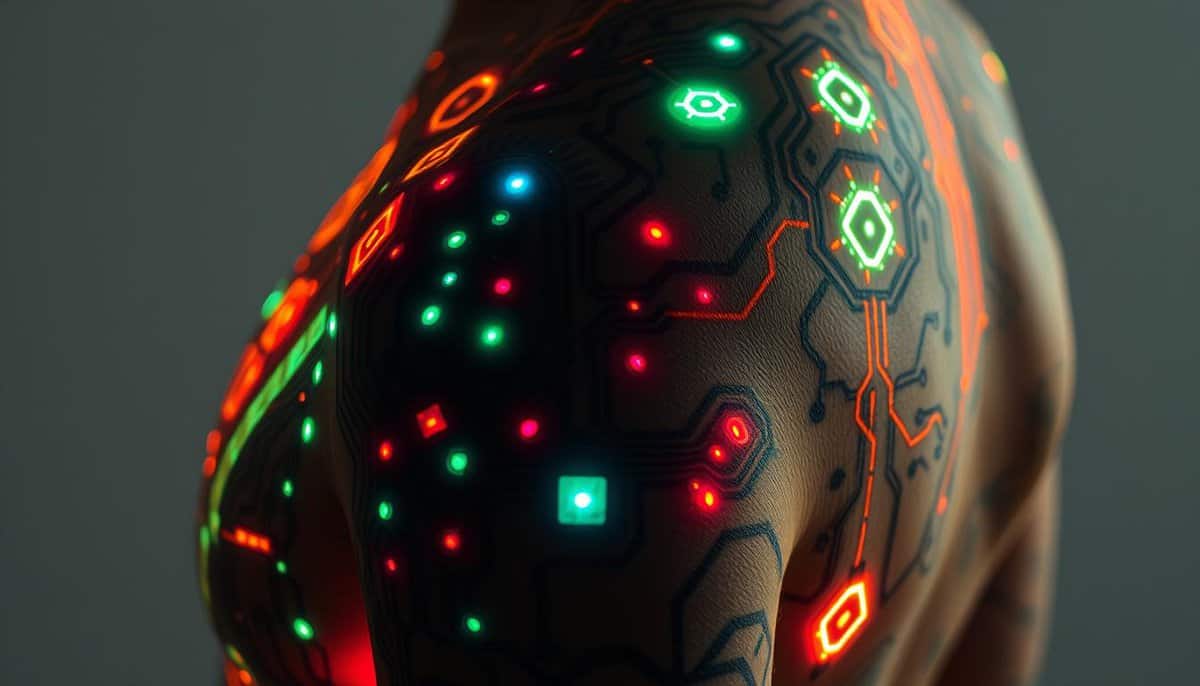
Did you know nearly 40% of millennials sport a tattoo? The Pew Research Center revealed this. Tattoos have been meaningful for ages. Now, tech tattoos are adding a new twist. They mix art with technology. Smart tattoos connect with devices, while bioelectronics ink is game-changing.
Devices are getting tinier. So, adding sensors and chips to tattoos is a big move. These tattoos aren’t just for looks. They monitor health, gather data, and link with tech. Imagine a tattoo that watches your health or connects with your phone.
Nanotechnology and 3D printing are changing tattoos. Nanotech makes ink safer and longer-lasting. 3D printing creates precise, custom tattoos. This tech brings more detailed and personal tattoos to life.
The Evolution of Body Art and Technology
Body art has come a long way. It went from ancient cultural markers to modern expressions of self and techno-innovations. This journey shows the growth of art and the deep mix of technology in body art.
A Brief History of Tattoos
Tattoos have been around since ancient times. They were used for spirituality, culture, and personal symbols. Starting in many ancient societies, tattoos showed things like rites of passage, tribe membership, and health uses. As time passed, tattoo art changed, showing shifts in society and tech improvements.
The Rise of Biomechanical Tattoos
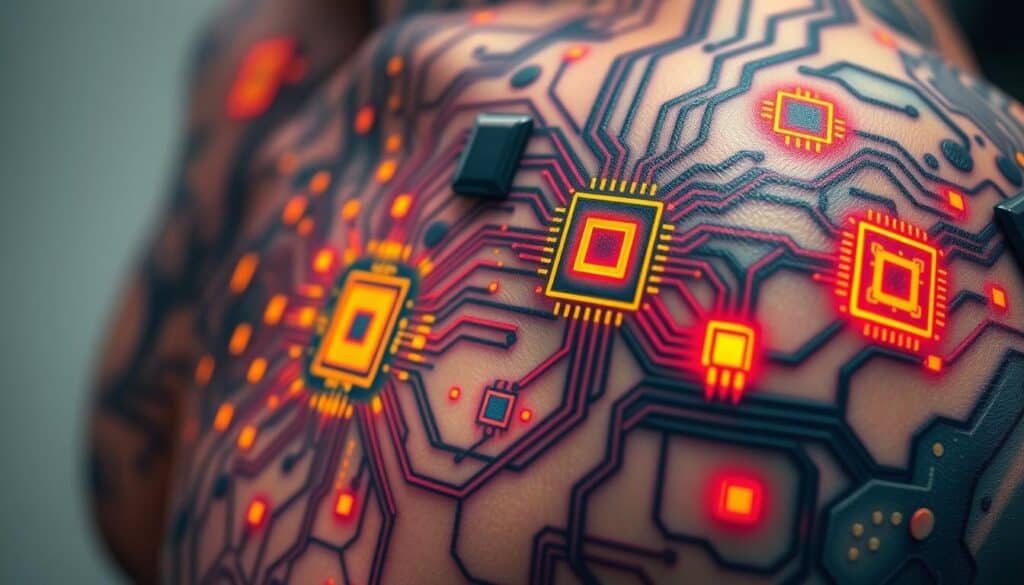
Biomechanical tattoos blend organic and mechanical looks. They create the illusion of machine parts mixed with human skin. This style marks a big step in tattoo art, linking traditional art to tech themes. It not only changes how we see tattoos but also opens doors for smart ink and digital skin tech.
Smart ink isn’t just for looks. Scientists at Harvard and MIT made biosensitive inks. These inks change color with body fluid changes, showing blood chemistry shifts. It shows how smart ink can change both the art and use of tattoos. It makes biomechanical tattoos able to monitor health in real time.
New ideas like this are changing the tattoo scene. There’s a push with scientists and artists working together. The e-tattoo from the University of Texas at Austin combines tech with traditional tattoos. It’s light, powered by a small battery, and lasts over 40 hours. It fits into daily life easily while sending health data wirelessly.
Wearable Technological Tattoos: Merging Art and Functionality
Wearable technological tattoos are the height of merging art with tech. These tattoos blend style with tech smarts.
Integration with Wearable Devices
Smart tattoos work well with gadgets like smartwatches and fitness trackers. They make using these devices feel more natural. For example, Microsoft Research’s capacitive tattoos let you control gadgets by touch and last on non-skin surfaces for months.
Applications in Healthcare
In healthcare, these tattoos are changing the game. They track vital signs, offering instant data to doctors and patients. Because they’re thin and flexible, they make monitoring easy to handle every day.
Augmented Reality Enhancements
Augmented reality (AR) will take these tattoos to the next level. They could show cool effects that change with your environment or how you move. This mix of AR and tattoos opens new doors for expressing yourself and using technology.
The rest of this article is reserved for members
To limit scraping bots (currently 40,000 hits per day!),
we had to restrict access to full articles and tools to registered members only.
to access all the rest.