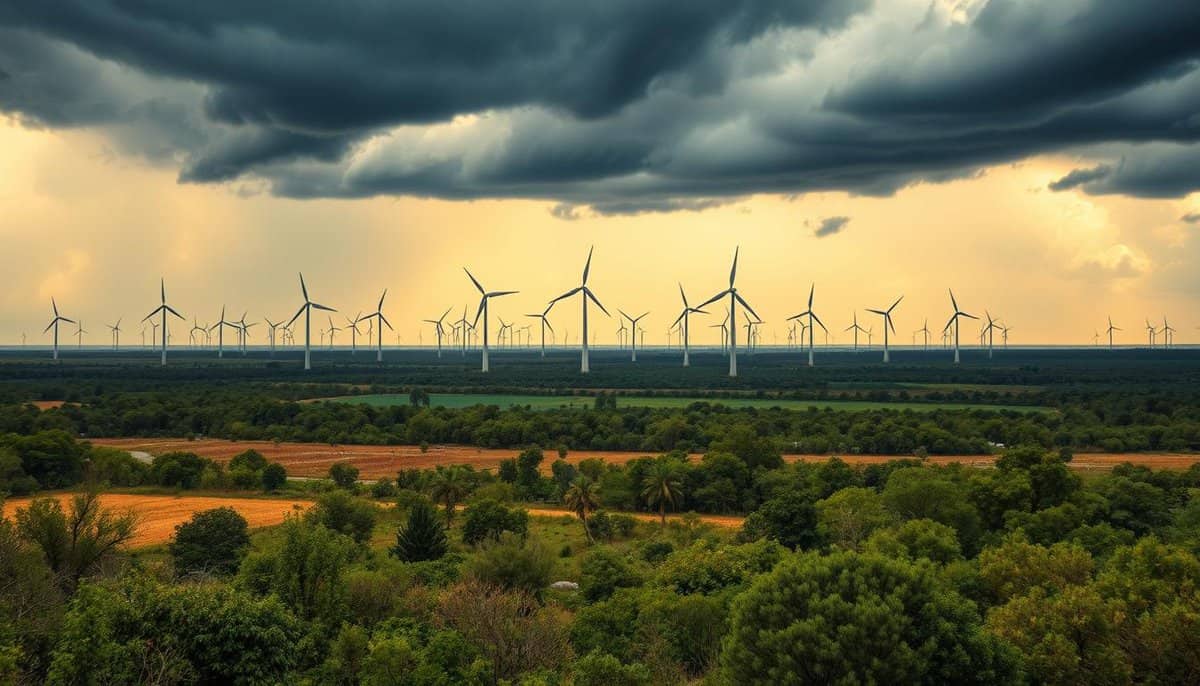
Does clean energy from wind farms have hidden costs? We look into the main worries from people and ecologists about wind farms. They share serious reasons for their growing resistance to these green energy projects.
Even with strong global support for wind power, there’s pushback from environmentalists and locals. This resistance shines a light on often-ignored environmental, economic, and social impacts.
Wind turbines are praised for low carbon emissions. They emit only 0.02 to 0.04 pounds of CO2 equivalents per kilowatt-hour. But, they face scrutiny for other environmental and social issues. In contrast, natural gas and coal power emit much more CO2, from 0.6 to 3.6 pounds per kilowatt-hour.
Research indicates wind turbines could cause many wildlife deaths each year, especially in bats and birds during their migration. These issues lead to questions about our ethical duty to protect life while combating climate change. We will explore the complex opposition to wind power, highlighting critical voices and evidence.
Key Takeaways
- Wind farms, though eco-friendly, face strong opposition from ecologists and local communities.
- The environmental impact of wind turbines extends beyond carbon emissions to include wildlife fatalities and habitat disruption.
- Local communities express concern over noise and visual pollution, which can negatively affect human health and property values.
- Ethical dilemmas arise from conservation conflicts, particularly involving endangered species like bats and birds.
- Arguments against wind farms are deeply political and influenced by unequal power structures.
Introduction: Benefits of Wind Farms
Wind farms have brought many positive changes. They are good for the economy and the environment. Their impact is significant in today’s renewable energy push.
Wind farms generate clean, renewable energy throughout the U.S. They provided over 10% of the nation’s energy in 2022. This supports energy independence and reduces the use of fossil fuels. It also cuts down 336 million metric tons of carbon dioxide emissions each year. Thus, it makes a big difference in fighting climate change.
| Wind Energy Statistics | Data |
|---|---|
| Employment in Wind Industry | Nearly 150,000 people |
| Energy Contribution | 10% of net total energy |
| Economic Value | $20 billion in investments (2022) |
| Annual CO2 Emissions Avoided | 336 million metric tons |
| State and Local Tax Payments | $2 billion annually |
Wind farms also offer great economic benefits. New projects added $20 billion to the U.S. economy in 2022. They create about $2 billion in tax payments each year, helping local communities. This money helps schools and infrastructure projects.
Wind farms create a lot of jobs, nearly 150,000 across the U.S. More jobs are expected by 2050. These include maintenance, construction, and operation roles. This offers diverse job opportunities in various sectors.
Wind energy is also cost-effective. Land-based wind turbines offer very low-cost energy. They are cheaper than gas, geothermal, coal, or nuclear sources. This keeps energy prices low for consumers.
Moreover, wind farms support community development. They contribute through land-lease payments and taxes. This improves local infrastructure, schools, and public services. This shows the wide-ranging benefits of wind farms.
Overall, wind farms are key for sustainable energy. They offer renewable energy benefits and support economic and community development. They play a crucial role in our move to sustainable energy sources.
Environmental Concerns About Wind Turbines
Many people think wind energy is a clean, sustainable option compared to fossil fuels. It’s true that wind turbines create electricity with fewer greenhouse gases. But, there are environmental issues with wind turbines we should not ignore.
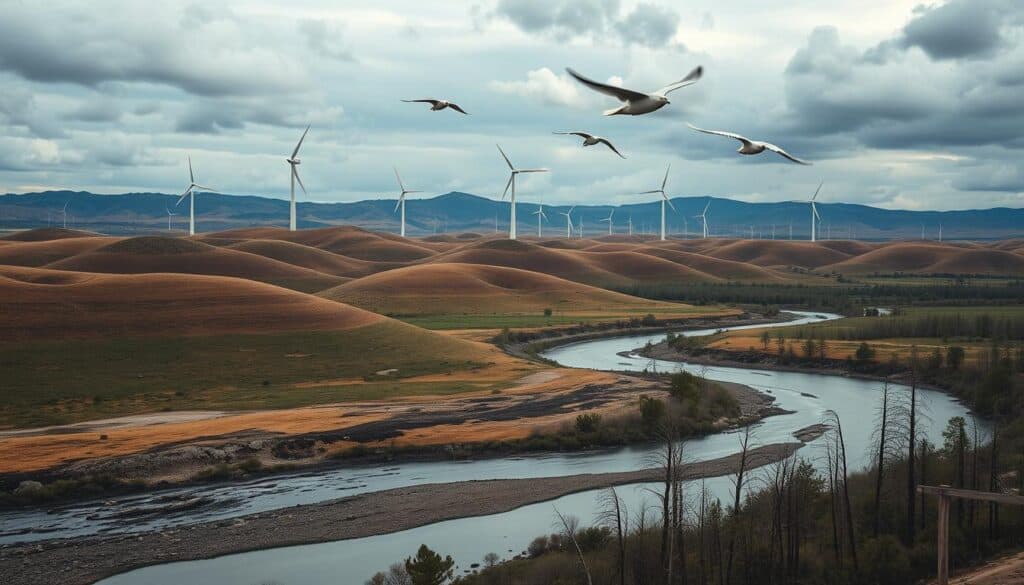
Impact on Air Quality
Wind turbines produce some emissions over their life. This happens during production, transport, and maintenance. Most emissions come from making the steel, concrete, and other materials for turbines. Yet, compared to fossil fuel power, wind turbines’ effect on global warming is much less.
Contamination During Production and Maintenance
One problem is the pollution from making turbine magnets with neodymium, a rare-earth element. The process of getting and refining these materials creates pollution. Also, recycling old turbine blades is hard because they often contain fiberglass, which is tough to recycle.
The need for lithium and other rare earth elements for turbines is expected to grow. This brings more environmental challenges for wind turbines. It’s important to tackle these issues to reduce wind energy’s environmental impact.
| Aspect | Environmental Impact |
|---|---|
| Greenhouse Gas Emissions | Minimal compared to fossil fuels |
| Material Production | Emissions from production of steel, concrete, etc. |
| Rare Earth Element Use | Extraction and processing pollution concerns |
| Recycling | Challenges due to fiberglass in blades |
The rest of this article is reserved for members
To limit scraping bots (currently 40,000 hits per day!),
we had to restrict access to full articles and tools to registered members only.
to access all the rest.
FAQ
What are the main concerns of people and ecologists against wind farms?
People and ecologists worry about several things. These include harm to wildlife, changes to habitats, and land harm. Others are the drop in property values and using a lot of land for wind farms. Then, there are problems like noise, how they look, and people not wanting them.
How do wind farms impact local communities?
Wind farms change how land is used. They can lower property values and harm natural areas. This makes some people oppose them.<br />
How does opposition to wind energy development differ in the United States and Germany?
In the U.S., people focus on local worries and harming nature. In Germany, they think more about energy policies and keeping landscapes. Both places see different levels of resist