Product Design, Manufacturing & Innovation Resources
» 제품 디자인 » 문화와 세계 » 풍력 발전소에 반대하는 시민과 환경 운동가들의 주요 우려 사항

풍력 발전소에 반대하는 시민과 환경 운동가들의 주요 우려 사항

풍력 발전 단지에 반대하는 사람들과 생태학자들

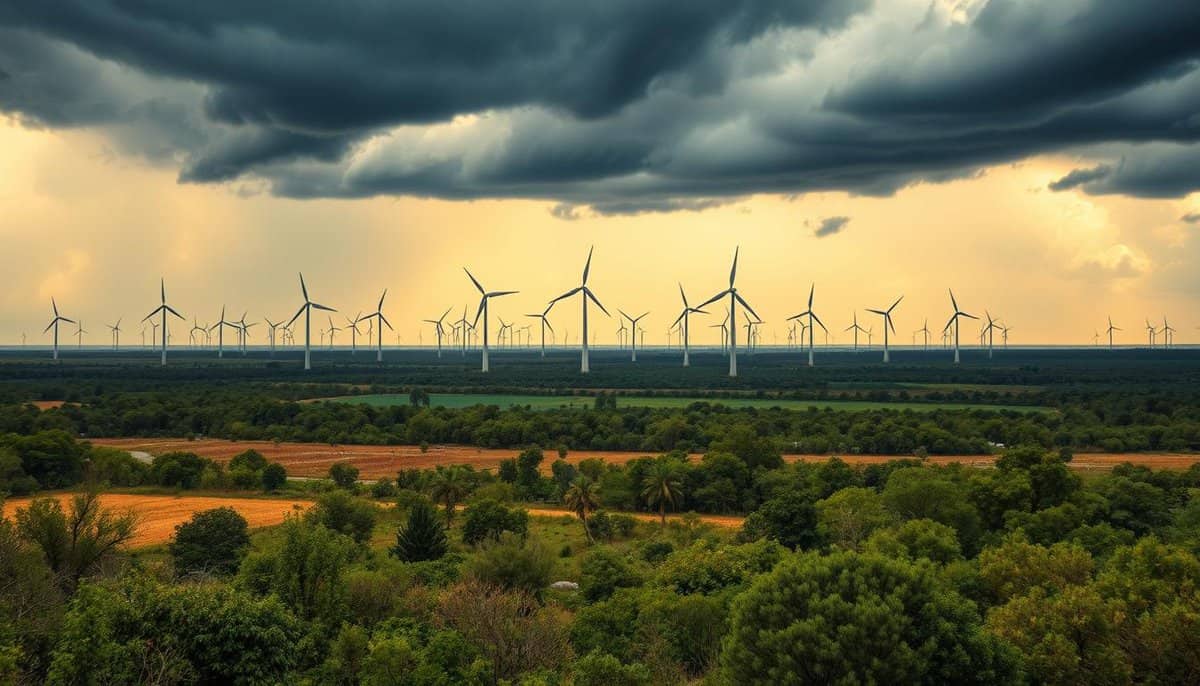
풍력 발전으로 얻는 청정에너지에는 숨겨진 비용이 있을까요? 풍력 발전에 대한 일반인과 환경운동가들의 주요 우려 사항을 살펴봅니다. 그들은 이러한 친환경 에너지 프로젝트에 대한 반감이 커지는 심각한 이유들을 공유합니다.

풍력 발전에 대한 전 세계적인 지지에도 불구하고, 환경 운동가들과 지역 주민들의 반발이 존재합니다. 이러한 저항은 종종 간과되는 환경적, 경제적, 사회적 영향에 대한 관심을 불러일으킵니다.

풍력 터빈은 탄소 배출량이 적다는 점에서 높은 평가를 받고 있습니다. 풍력 터빈은 이산화탄소를 0.02~0.04파운드(약 0.9~1.8kg)만 배출합니다.2 킬로와트시당 에너지 환산량은 높지만, 다른 환경 및 사회적 문제로 인해 비판을 받고 있습니다. 반면 천연가스와 석탄 발전은 훨씬 더 많은 이산화탄소를 배출합니다.2킬로와트시당 0.6~3.6파운드입니다.

연구에 따르면 풍력 터빈은 매년 많은 야생 동물의 죽음을 초래할 수 있으며, 특히 박쥐와 철새의 이동 중에 큰 피해를 줄 수 있다고 합니다. 이러한 문제들은 풍력 발전과 환경 파괴에 맞서 싸우면서 생명을 보호해야 할 윤리적 의무에 대한 의문을 제기합니다. 기후 변화우리는 풍력 발전에 대한 복잡한 반대 여론을 살펴보고, 비판적인 목소리와 증거들을 조명할 것입니다.

핵심 요약

  • 풍력 발전소는 친환경적임에도 불구하고 생태학자들과 지역 사회의 강력한 반대에 직면하고 있습니다.
  • 풍력 터빈이 환경에 미치는 영향은 탄소 배출뿐만 아니라 야생 동물 폐사 및 서식지 파괴까지 포함합니다.
  • 지역 주민들은 소음과 시각적 공해에 대해 우려를 표명하고 있으며, 이는 인간의 건강과 부동산 가치에 부정적인 영향을 미칠 수 있습니다.
  • 멸종 위기에 처한 박쥐나 새와 같은 종을 둘러싼 보존 갈등에서 윤리적 딜레마가 발생합니다.
  • 풍력 발전소에 대한 반대 의견은 정치적인 색채가 짙으며 불평등한 권력 구조의 영향을 받습니다.

서론: 풍력 발전소의 이점

풍력 발전소는 많은 긍정적인 변화를 가져왔습니다. 경제와 환경 모두에 유익하며, 오늘날 재생 에너지 확대를 위한 노력에 있어 중요한 역할을 합니다.

미국 전역의 풍력 발전소는 깨끗하고 재생 가능한 에너지를 생산합니다. 2022년에는 미국 전체 에너지의 10% 이상을 풍력 발전이 공급했습니다. 이는 에너지 자립을 지원하고 화석 연료 사용을 줄이는 데 기여합니다. 또한 매년 3억 3,600만 톤의 이산화탄소 배출량을 감축하여 기후 변화 대응에 큰 역할을 합니다.

풍력 에너지 통계 데이터
풍력 산업 분야의 고용 약 15만 명
에너지 기여도 순 총 에너지의 10%
경제적 가치 2022년 기준 투자액 200억 달러
연간 이산화탄소 배출량 감소 3억 3600만 미터톤
주 및 지방세 납부 연간 20억 달러

풍력 발전소는 경제적으로도 큰 이점을 제공합니다. 2022년 신규 풍력 발전 프로젝트는 미국 경제에 200억 달러를 추가했습니다. 또한 매년 약 20억 달러의 세수를 창출하여 지역 사회에 도움을 줍니다. 이 자금은 학교와 사회 기반 시설 프로젝트에 사용됩니다.

풍력 발전소는 많은 일자리를 창출하며, 미국 전역에서 약 15만 개의 일자리가 생겨났습니다. 2050년까지 더 많은 일자리가 창출될 것으로 예상됩니다. 이러한 일자리에는 유지 보수, 건설 및 운영 관련 직종이 포함됩니다. 이는 다양한 기회를 제공합니다. 직업 다양한 분야에서 기회가 있습니다.

풍력 에너지는 비용 효율성도 뛰어납니다. 육상 풍력 터빈은 매우 저렴한 비용으로 에너지를 생산합니다. 가스, 지열, 석탄 또는 원자력 발전보다 저렴하기 때문에 소비자에게 낮은 에너지 가격을 제공할 수 있습니다.

게다가 풍력 발전소는 지역 사회 발전을 지원합니다. 토지 임대료와 세금 납부를 통해 지역 기반 시설, 학교 및 공공 서비스 개선에 기여합니다. 이는 풍력 발전소의 광범위한 이점을 보여줍니다.

전반적으로 풍력 발전소는 지속 가능한 에너지에 있어 핵심적인 역할을 합니다. 풍력 발전소는 재생 에너지의 이점을 제공할 뿐만 아니라 경제 및 지역 사회 발전을 지원합니다. 지속 가능한 에너지원으로의 전환에 있어 풍력 발전소는 매우 중요한 역할을 담당합니다.

풍력 터빈에 대한 환경적 우려

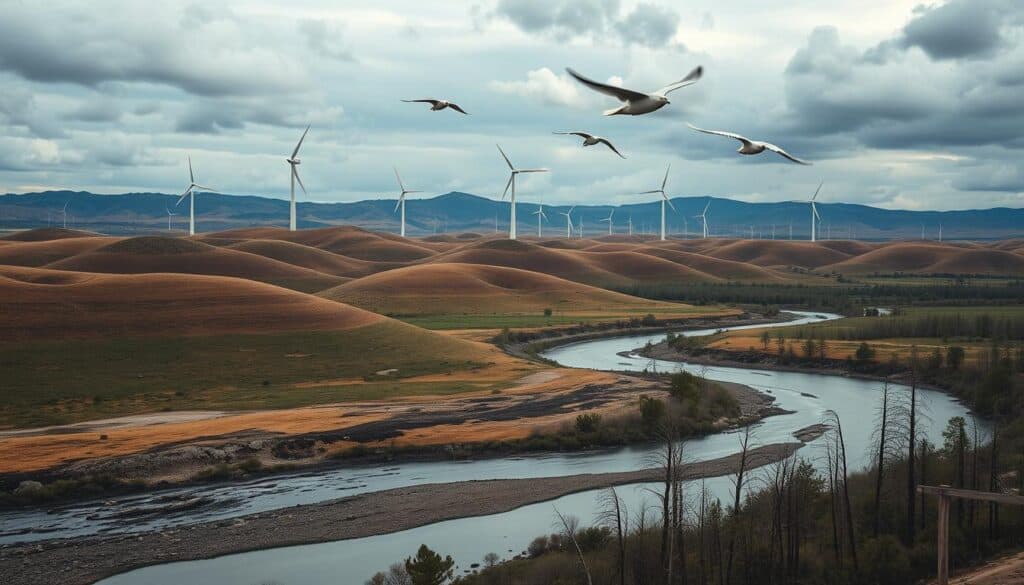
많은 사람들은 풍력 에너지가 화석 연료에 비해 깨끗하고 지속 가능한 선택이라고 생각합니다. 풍력 터빈이 온실가스를 덜 배출하면서 전기를 생산하는 것은 사실입니다. 하지만 풍력 터빈에는 우리가 간과해서는 안 될 환경 문제가 존재합니다.
Environmental concerns about wind turbines

대기질에 미치는 영향

풍력 터빈은 수명 주기 동안 일정량의 배출물을 발생시킵니다. 이는 생산, 운송 및 유지 보수 과정에서 발생합니다. 대부분의 배출물은 터빈에 사용되는 강철, 콘크리트 및 기타 재료를 제조하는 과정에서 발생합니다. 하지만 화석 연료 발전과 비교했을 때 풍력 터빈이 지구 온난화에 미치는 영향은 훨씬 적습니다.

생산 및 유지보수 중 오염

한 가지 문제는 터빈 자석을 만드는 과정에서 발생하는 오염입니다. 네오디뮴, a 희토류 원소이러한 재료를 얻고 정제하는 과정에서 오염이 발생합니다. 또한, 오래된 터빈 날개는 재활용하기 어려운 유리 섬유를 함유하는 경우가 많아 재활용이 어렵습니다.

필요성 리튬 그리고 기타 희토류 풍력 터빈용 부품 수요는 증가할 것으로 예상됩니다. 이는 풍력 터빈에 더 많은 환경적 문제를 야기합니다. 풍력 에너지의 환경적 영향을 줄이기 위해서는 이러한 문제들을 해결하는 것이 중요합니다.

측면 환경적 영향
온실가스 배출 화석 연료에 비하면 극히 미미한 수준입니다.
재료 생산 철강, 콘크리트 등의 생산으로 인한 배출량
희토류 원소 사용 추출 및 가공 과정에서 발생하는 오염 문제
Recycling 블레이드에 유리섬유가 사용됨으로 인한 문제점

Wildlife Impacts of Wind Farms

The negative impact of wind farms on wildlife has become a top environmental worry. These facilities can lead to the death of birds and bats. While modern wind farms generally report low raptor deaths, California and Wyoming see higher numbers.

Turbines cause bat deaths at every wind facility, showing the big problem of wind turbine wildlife disruption. Most birds that die are songbirds. Raptors’ deaths can go up if there are more raptors near the turbines.

Bat deaths are most common in late summer and early fall during migration. Three kinds of migratory bats are especially at risk. Plus, ground-nesting birds like prairie-chickens might leave areas with turbines, hurting their breeding.

There are efforts to lessen the negative impact of wind farms on wildlife. Guidelines and materials for land-based wind projects are in place. A 2020 study noted small impacts on prairie grouse, similar to other human structures. Wind turbines account for less than 0.01% of all bird deaths from human actions in the U.S. They affect a tiny part of the songbird population.

To fight wind turbine wildlife disruption, curtailment strategies have been made. These can cut bat deaths by half on average. The American Clean Power Association’s best practice might lower bat deaths by 30% without big energy losses. “Smart curtailment,” using temperature and bat activity, is also being looked into.

High-frequency sounds are tested to keep bats away from turbines. Systems placed on the turbines have halved bat deaths. Also, there are models to avoid eagle accidents by knowing their flight paths.

New monitoring tech like radar and thermal cameras help track animals at wind sites. Operators check wildlife impacts for a year after starting. The U.S. Geological Survey’s GenEst tool gives key estimates on bird and bat deaths. Operators also think about the environment when upgrading or closing down turbines, showing a full plan to reduce wildlife harm from wind farms.

Noise and Visual Impact of Wind Turbines

Wind turbines are key for green energy, but they face issues with noise pollution and how they look. These problems affect our health and how pretty the landscape is.

Noise Pollution and Human Health

Noise pollution from wind turbinesThe noise from wind turbines comes mainly from the blades moving through the air. This noise gets louder as the wind speeds up. But, the usual noise outdoors often covers up the sound from the turbines, so you might not notice it.

The sound from a wind farm, when you’re 350 meters away, is similar to the quiet of the countryside at night. This means it might not bother people too much. Yet, modern turbines make a very low hum that we can barely hear. However, if turbines are too loud or look annoying, they can make people feel stressed or lose sleep.

Visual Pollution and Landscape Aesthetics

How wind turbines change the view really matters. According to the European Landscape Convention, landscapes are areas that people see and are shaped by nature and humans. The big structures and moving blades of turbines change this view, making them stand out.

To make turbines blend in better, they can be made to look the same size and color. They should also spin in the same direction. Putting them in flat areas and picking colors that don’t stand out helps too. Knowing how far away you are from turbines matters for how much they change the view. Zones I to IV show different distances and their effects. Smart design and placement can make turbines less of a sight.

Impact Zones Distance Range
Zone I up to 2 km
Zone II 1-4.5 km
Zone III 2-8 km
Zone IV over 7 km

Detriment to Local Community

Wind farms bring big challenges to local communities. A major problem is how much land they need. For example, the Pedra Lavrada project in Brazil plans to place 372 turbines on 4,000 acres. This development could lead to cutting down forests and losing important places for bats to live.

People living near these projects often do not support them. This is because the way wind power grows can harm local areas. For example, in Rio Grande do Norte, Brazil, which makes up 30% of the country’s wind energy, the consequences can be serious. It can change animal homes and make the area look different.

Wind farms' impact on communities

Fears about home values also cause opposition to wind farms. Wind turbines can change beautiful views, affecting tourism and home prices. In places known for their scenery, this problem has ~ 주도의 to many disputes.

Comparing wind farm effects in different areas can show their complex influence. Here’s a table with stats from Brazilian wind farms. It shows how the impact varies by region.

Region Number of Wind Farms Energy Production (Gigawatts)
Rio Grande do Norte 240 7.39
Brazil (Total) 903 24.62

Land Usage and its Consequences

Setting up wind farms takes up a lot of space, leading to ecological concerns regarding wind energy. We will look at how wind farms use land. This includes the risk of harming the land and nearby life forms.

Land usage by wind farms

Land Degradation

Wind farms mean we have to clear big areas of land. The International Energy Agency sees wind power growing by 17% yearly until 2050. This growth puts more 압력 on our lands.

Clearing land for wind farms can cause the soil to erode and fertile land to be lost. This changes the natural landscape. It can also hurt the areas around these sites.

Disruption of Local Ecosystems

Wind farms can also break apart the living spaces of animals and plants. Building and running these farms can make it hard for wildlife to survive. Oregon State University found that wind farms can disturb animals.

For every gigawatt-hour of power a wind farm makes, about 0.27 birds die. This shows the bigger picture of how wind power affects 생태학.

Even though wind farms are good for making clean energy, we must think about the land they use. We need to take care of the plants and animals around these farms. By assessing and reducing harm, we can protect our environment.

Decreased Property Value

There’s a lot of talk about how wind farms might lower the worth of homes. Studies have pointed out that homes overlooking Wolfe Island wind turbines lost about 15 percent of their value. This is something people owning homes worry about.

In areas near wind farms, the impact is big on the economy. A detailed study showed these areas might see a $27 million drop in home values combined. Homes close to planned wind farms also saw their values go down, showing how big this issue is.

This matter is serious. Homes with a view of wind turbines went from adding 10 percent to their value to losing 15 percent. In Ontario, research supported this, showing wind turbines negatively affect home prices. Plus, a study found a 25% value drop for homes near working wind farms.

Gathering this information shows a clear trend: wind turbines tend to decrease home values in many places. This affects both the local and wider economy. We must think about this impact when looking at wind farms’ overall economic effect, especially in rural and suburban areas.

People and Ecologists Against Wind Farms

People are increasingly opposing wind farms, voicing concerns over their effects on nature and health. The push for wind farms along coastlines and in neighborhoods has sparked major protests. Residents are worried about the environment, how these structures look, and potential health issues.

Public Backlash

Plans for up to eight floating wind turbines near the California coast have faced strong opposition. The area, meant for the Chumash Heritage National Marine Sanctuary, covers a vast stretch of coastline. Communities, tribal leaders, and environmentalists fear the turbines could harm marine life and historical sites. Projects by Cierco Corp. and Ideol USA demonstrate the depth-related challenges and environmental concerns of using floating platforms.

Community Resistance

In Germany, almost 30,000 onshore wind turbines meet resistance despite the government’s clean energy goals. The government wants to use 2% of land for wind power by 2030, sparking public protest. Issues like lengthy permit processes, health risks, and effects on wildlife fuel this opposition. Although renewable energy is encouraged, such challenges lead communities to resist.

The growing resistance against wind farms highlights the struggle of fitting renewable energy into our surroundings. Plans to produce 30 gigawatts of offshore renewable energy by 2030, aiming to create 44,000 jobs, raise the stakes. It’s essential to find a balance between development and preserving community and environmental integrity.

Backlash Against Wind Farm Projects

The push for wind energy faces strong backlash against wind farm projects. Communities in the U.S. and other countries are speaking out. They raise social, ecological, and economic concerns.

Since 2015, over 300 local communities or governments in the US have pushed back on wind projects. For example, the Shasta County Planning Commission in California said no to the 216-megawatt Fountain Wind project. This decision shows that economic benefits may not overcome local resistance.

In New York, there’s tension over renewable energy projects. A new law lets state officials in Albany overrule local objections. It shows the struggle between local control and state renewable energy goals.

Health and Environmental Concerns

In Scituate, Massachusetts, people worry about noise from wind turbines. This has led to turbines being turned off at night sometimes. Foster, Rhode Island, banned wind turbines because of noise, vibrations, and lower property values. A report in Minnesota links wind farms to sleep issues and headaches.

Nationwide and International Resistance

In Iowa, Worth County paused new wind projects due to citizen concerns. L.A. County in California also banned wind turbines in certain areas.

This resistance isn’t just in the U.S. About 90 towns in Ontario, Canada, don’t want wind projects. Projects near Loch Ness in Scotland and some areas in Poland and Bavaria are also facing pushback.

Economic Considerations and Local Economies

Local economies and ecosystems might suffer from the vast land needed for wind projects. In places like Shasta County, people worry about their economic and ecological stability. Also, the American Wind Energy Association spends over $20 million a year on promotion but hasn’t fully addressed rural worries.

In conclusion, the backlash against wind farm projects involves health, ecology, and economy. It highlights the clash between renewable energy efforts and community interests.

Opposition to Wind Energy Development: Case Studies

The growth of wind energy projects has seen opposition in different areas. This is due to various reasons like social, environmental, and political issues. Studies in the United States and Germany show us how complex and varied these objections can be.

미국

From 2000 to 2016, 17% of wind projects in the U.S. met resistance. About 23% of people opposed such projects. Interestingly, areas with a higher white population were more likely to oppose.

Letting local communities have a say has been proposed as a solution. For instance, community-owned projects with a couple of turbines face less resistance than larger ones. Developers often 관계를 맺다 more with those who object, which could distort their view on general opinion.

독일

In Germany, opposition to wind energy is notable despite its leadership in renewables. Environmental policies and active public involvement have driven community actions against wind farms. Critics argue they ruin landscapes and are noisy, raising health issues.

The push for Energiewende highlights the need for better engagement and benefit sharing with communities. This challenge calls for a balanced approach between adopting renewables and ensuring local support.

To overcome opposition, we need thoughtful strategies. Addressing social concerns and including communities in the dialogue is key. Such efforts aim to align the goal of renewable energy transition with community acceptance.

추가 자료

  • Solar energy integration: exploring how wind farms can be complemented with solar panels for hybrid renewable energy systems.
  • Battery storage solutions: investigating energy storage technologies to manage intermittent wind energy production and ensure consistent power supply.
  • Grid infrastructure development: enhancing electrical grid systems to efficiently transmit and distribute power generated by wind farms.
  • Offshore wind technology: advancements in offshore wind farm technologies to harness stronger and more consistent winds at sea.
  • Environmental impact assessments: conducting thorough impact studies to minimize ecological disruption caused by wind farm installations.
  • Community engagement strategies: implementing methods to involve and educate local communities about the benefits and impacts of wind farms.
  • Turbine design innovations: researching and developing more efficient and durable wind turbine designs to maximize energy output.
  • Data analytics for wind forecasting: utilizing big data and machine learning techniques to improve wind prediction and optimize energy production.
  • Hybrid renewable systems: integrating other renewable sources, like biomass or geothermal, to create more resilient and sustainable energy solutions.

자주 묻는 질문

What are the main concerns of people and ecologists against wind farms?

People and ecologists worry about several things. These include harm to wildlife, changes to habitats, and land harm. Others are the drop in property values and using a lot of land for wind farms. Then, there are problems like noise, how they look, and people not wanting them.

How do wind farms impact local communities?

Wind farms change how land is used. They can lower property values and harm natural areas. This makes some people oppose them.<br />

How does opposition to wind energy development differ in the United States and Germany?

In the U.S., people focus on local worries and harming nature. In Germany, they think more about energy policies and keeping landscapes. Both places see different levels of resist

다룬 주제: 풍력 발전소, 환경 영향, 야생 동물 폐사, 탄소 배출, 재생 에너지, 지역 사회 개발, 윤리적 딜레마, 서식지 파괴, 소음 공해, 시각적 공해, 경제적 이익, 에너지 독립, 환경 보호 갈등, 희토류 원소, 재활용 문제, 온실가스 배출, 유지 보수 배출량, 에너지 기여도.

역사적 맥락

1946
1950
1960
1970
1970
1978
1980
1940
1950
1950
1960
1970
1975
1980
1980

(날짜를 알 수 없거나 관련이 없는 경우, 예를 들어 "유체역학"의 경우, 주목할 만한 등장 시기를 대략적으로 추정하여 제공합니다.)

인기 게시물 및 기사

최고급 오리지널 도구

고화질 이미지 및 다운로드는 등록된 회원에게만 100% 무료로 제공됩니다.

> 로그인 <