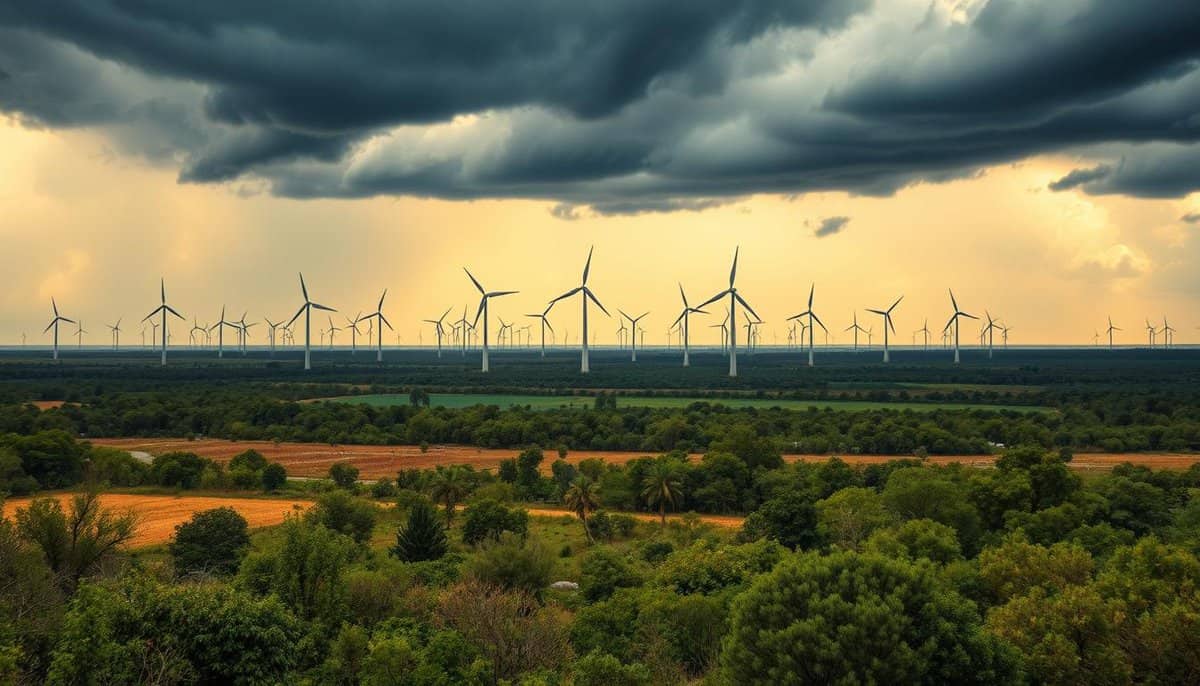
風力発電所によるクリーンエネルギーには、隠れたコストがあるのだろうか? 本稿では、風力発電所に関して人々や環境保護活動家が抱く主な懸念事項を探る。彼らは、こうしたグリーンエネルギープロジェクトへの抵抗が高まっている深刻な理由を語る。
風力発電は世界的に強い支持を得ているにもかかわらず、環境保護活動家や地元住民からの反発も存在する。こうした抵抗は、これまで見過ごされてきた環境、経済、社会への影響を浮き彫りにしている。
風力タービンは二酸化炭素排出量が少ないことで高く評価されている。二酸化炭素の排出量はわずか0.02~0.04ポンドである。2 キロワット時当たりの換算値。しかし、他の環境問題や社会問題について精査を受けている。対照的に、天然ガスと石炭火力発電ははるかに多くのCOを排出する。21キロワット時あたり0.6~3.6ポンド。
研究によると、風力タービンは毎年多くの野生生物の死を引き起こす可能性があり、特にコウモリや渡り鳥に被害が及ぶ可能性がある。これらの問題は、風力発電と闘いながら生命を守るという倫理的義務について疑問を投げかける。 気候変動風力発電に対する複雑な反対意見を探り、批判的な意見や証拠に焦点を当てます。
主なポイント
- 風力発電所は環境に優しいものの、環境保護活動家や地域住民から強い反対を受けている。
- 風力タービンの環境への影響は、二酸化炭素排出量にとどまらず、野生生物の死亡や生息地の破壊にも及ぶ。
- 地域住民は、騒音や景観汚染が人々の健康や不動産価値に悪影響を与える可能性があるとして懸念を表明している。
- 環境保護をめぐる対立、特にコウモリや鳥類といった絶滅危惧種に関わる対立からは、倫理的なジレンマが生じる。
- 風力発電所建設に反対する議論は、非常に政治的なものであり、不平等な権力構造に影響を受けている。
はじめに:風力発電所の利点
風力発電所は多くの良い変化をもたらしました。経済にも環境にも有益です。今日の再生可能エネルギー推進において、その影響は非常に重要です。
風力発電所は全米各地でクリーンな再生可能エネルギーを生成しています。2022年には、国内のエネルギー需要の10%以上を風力発電所が供給しました。これはエネルギー自給率の向上と化石燃料の使用量削減に貢献しています。また、年間3億3600万トンの二酸化炭素排出量を削減しており、気候変動対策において大きな役割を果たしています。
| 風力エネルギー統計 | データ |
|---|---|
| 風力発電業界での雇用 | 約15万人 |
| エネルギー貢献 | 正味総エネルギーの10% |
| 経済的価値 | 200億ドルの投資(2022年) |
| 年間CO2排出量削減量 | 3億3600万トン |
| 州税および地方税の支払い | 年間20億ドル |
風力発電所は、経済面でも大きなメリットをもたらします。2022年には、新規プロジェクトによって米国経済に200億ドルがもたらされました。また、年間約20億ドルの税収を生み出し、地域社会の発展に貢献しています。この資金は、学校やインフラ整備事業などに活用されています。
風力発電所は多くの雇用を生み出し、米国全体で約15万人の雇用が創出されています。2050年までにさらに多くの雇用が見込まれています。これには、保守、建設、運用などの職種が含まれます。これは多様な機会を提供します。 仕事 様々な分野における機会。
風力発電は費用対効果にも優れています。陸上風力タービンは非常に低コストのエネルギーを提供します。ガス、地熱、石炭、原子力といったエネルギー源よりも安価です。これにより、消費者のエネルギー価格を低く抑えることができます。
さらに、風力発電所は地域社会の発展を支援します。土地の賃貸料や税金を通じて地域に貢献し、地域のインフラ、学校、公共サービスの改善につながります。これは、風力発電所がもたらす幅広いメリットを示しています。
総じて言えば、風力発電所は持続可能なエネルギーにとって極めて重要です。再生可能エネルギーの利点を提供するだけでなく、経済発展や地域社会の発展も支えています。持続可能なエネルギー源への移行において、風力発電所は決定的な役割を果たします。
風力タービンに関する環境上の懸念
多くの人は、風力エネルギーは化石燃料に比べてクリーンで持続可能な選択肢だと考えています。確かに、風力タービンは温室効果ガスの排出量を抑えて発電します。しかし、風力タービンには無視できない環境問題も存在します。
大気質への影響
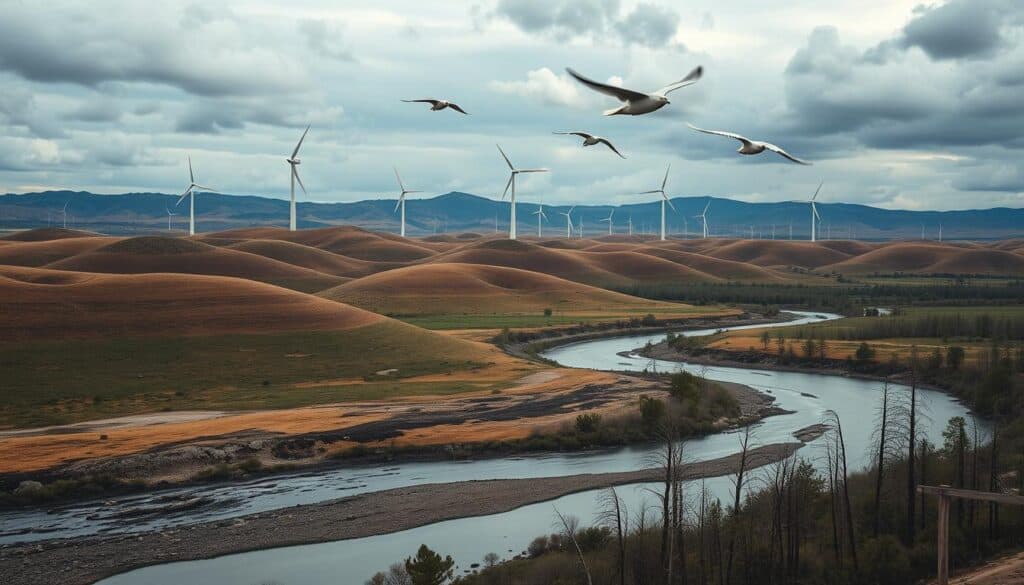
風力タービンは、その寿命期間中に一定量の排出物を発生させます。これは、製造、輸送、およびメンテナンスの過程で発生します。排出物の大部分は、タービンに使用される鉄鋼、コンクリート、その他の材料の製造過程で発生します。しかし、化石燃料による発電と比較すると、風力タービンが地球温暖化に与える影響ははるかに小さいと言えます。
製造およびメンテナンス中の汚染
問題の一つは、タービン磁石の製造による汚染です。 ネオジム、 希土類元素これらの材料を入手・精製する過程で汚染が発生します。また、古いタービンブレードはリサイクルが難しいため、リサイクルが困難です。
必要性 リチウム その他 希土類 風力タービンの部品需要は増加すると予想されています。これは風力タービンにとって、より多くの環境上の課題をもたらします。風力エネルギーの環境負荷を軽減するためには、これらの課題に取り組むことが重要です。
| 側面 | 環境への影響 |
|---|---|
| 温室効果ガス排出量 | 化石燃料と比較するとごくわずか |
| 材料生産 | 鉄鋼、コンクリートなどの生産に伴う排出量 |
| 希土類元素 使用 | 採掘および加工における汚染に関する懸念 |
| リサイクル | ブレード内のグラスファイバーに起因する課題 |
Wildlife Impacts of Wind Farms
The negative impact of wind farms on wildlife has become a top environmental worry. These facilities can lead to the death of birds and bats. While modern wind farms generally report low raptor deaths, California and Wyoming see higher numbers.
Turbines cause bat deaths at every wind facility, showing the big problem of wind turbine wildlife disruption. Most birds that die are songbirds. Raptors’ deaths can go up if there are more raptors near the turbines.
Bat deaths are most common in late summer and early fall during migration. Three kinds of migratory bats are especially at risk. Plus, ground-nesting birds like prairie-chickens might leave areas with turbines, hurting their breeding.
There are efforts to lessen the negative impact of wind farms on wildlife. Guidelines and materials for land-based wind projects are in place. A 2020 study noted small impacts on prairie grouse, similar to other human structures. Wind turbines account for less than 0.01% of all bird deaths from human actions in the U.S. They affect a tiny part of the songbird population.
To fight wind turbine wildlife disruption, curtailment strategies have been made. These can cut bat deaths by half on average. The American Clean Power Association’s best practice might lower bat deaths by 30% without big energy losses. “Smart curtailment,” using temperature and bat activity, is also being looked into.
High-frequency sounds are tested to keep bats away from turbines. Systems placed on the turbines have halved bat deaths. Also, there are models to avoid eagle accidents by knowing their flight paths.
New monitoring tech like radar and thermal cameras help track animals at wind sites. Operators check wildlife impacts for a year after starting. The U.S. Geological Survey’s GenEst tool gives key estimates on bird and bat deaths. Operators also think about the environment when upgrading or closing down turbines, showing a full plan to reduce wildlife harm from wind farms.
Noise and Visual Impact of Wind Turbines
Wind turbines are key for green energy, but they face issues with noise pollution and how they look. These problems affect our health and how pretty the landscape is.
Noise Pollution and Human Health
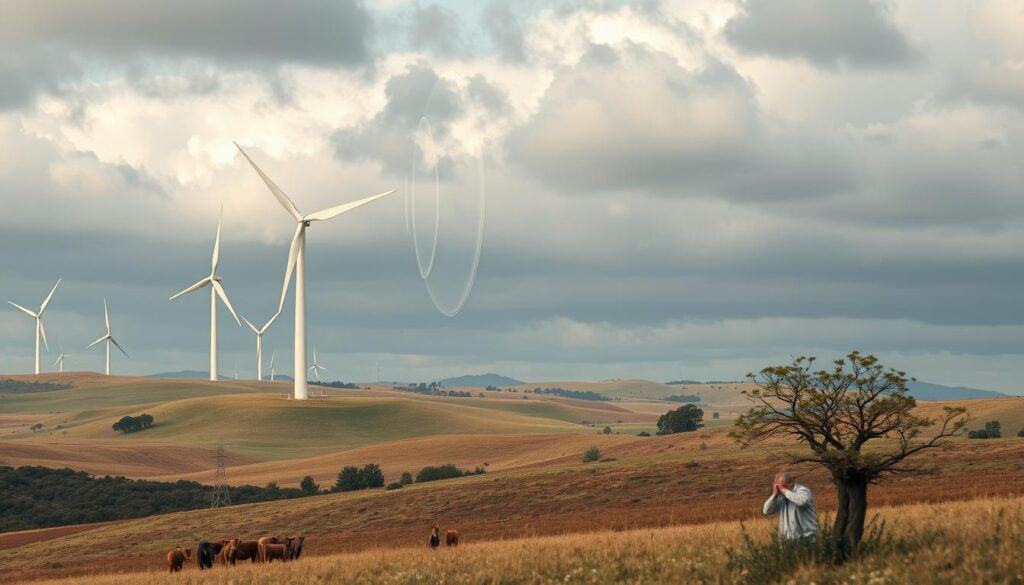 The noise from wind turbines comes mainly from the blades moving through the air. This noise gets louder as the wind speeds up. But, the usual noise outdoors often covers up the sound from the turbines, so you might not notice it.
The sound from a wind farm, when you’re 350 meters away, is similar to the quiet of the countryside at night. This means it might not bother people too much. Yet, modern turbines make a very low hum that we can barely hear. However, if turbines are too loud or look annoying, they can make people feel stressed or lose sleep.
Visual Pollution and Landscape Aesthetics
How wind turbines change the view really matters. According to the European Landscape Convention, landscapes are areas that people see and are shaped by nature and humans. The big structures and moving blades of turbines change this view, making them stand out.
To make turbines blend in better, they can be made to look the same size and color. They should also spin in the same direction. Putting them in flat areas and picking colors that don’t stand out helps too. Knowing how far away you are from turbines matters for how much they change the view. Zones I to IV show different distances and their effects. Smart design and placement can make turbines less of a sight.
| Impact Zones | Distance Range |
|---|---|
| Zone I | up to 2 km |
| Zone II | 1-4.5 km |
| Zone III | 2-8 km |
| Zone IV | over 7 km |
Detriment to Local Community
Wind farms bring big challenges to local communities. A major problem is how much land they need. For example, the Pedra Lavrada project in Brazil plans to place 372 turbines on 4,000 acres. This development could lead to cutting down forests and losing important places for bats to live.
People living near these projects often do not support them. This is because the way wind power grows can harm local areas. For example, in Rio Grande do Norte, Brazil, which makes up 30% of the country’s wind energy, the consequences can be serious. It can change animal homes and make the area look different.
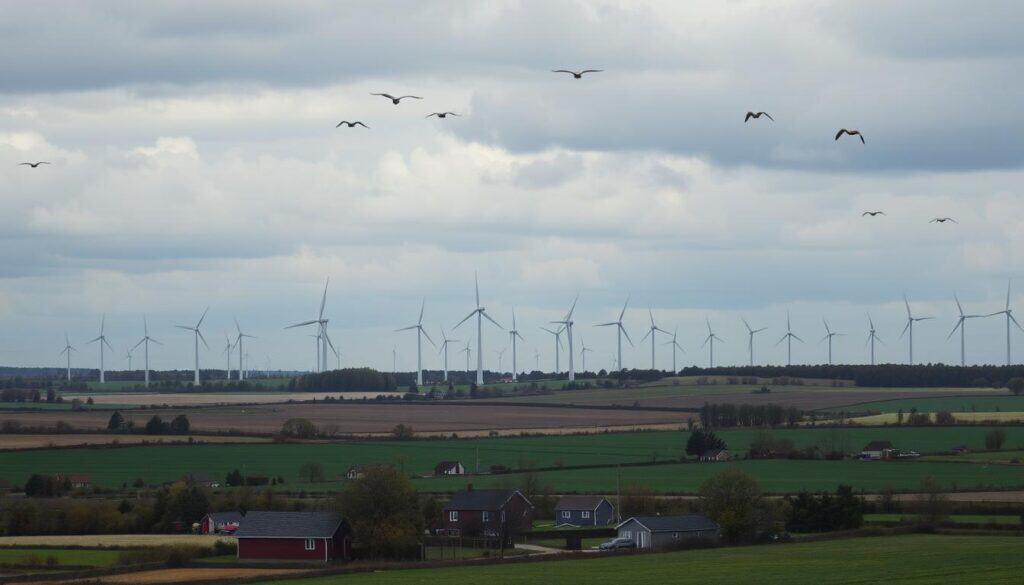
Fears about home values also cause opposition to wind farms. Wind turbines can change beautiful views, affecting tourism and home prices. In places known for their scenery, this problem has 導かれた to many disputes.
Comparing wind farm effects in different areas can show their complex influence. Here’s a table with stats from Brazilian wind farms. It shows how the impact varies by region.
| Region | Number of Wind Farms | Energy Production (Gigawatts) |
|---|---|---|
| Rio Grande do Norte | 240 | 7.39 |
| Brazil (Total) | 903 | 24.62 |
Land Usage and its Consequences
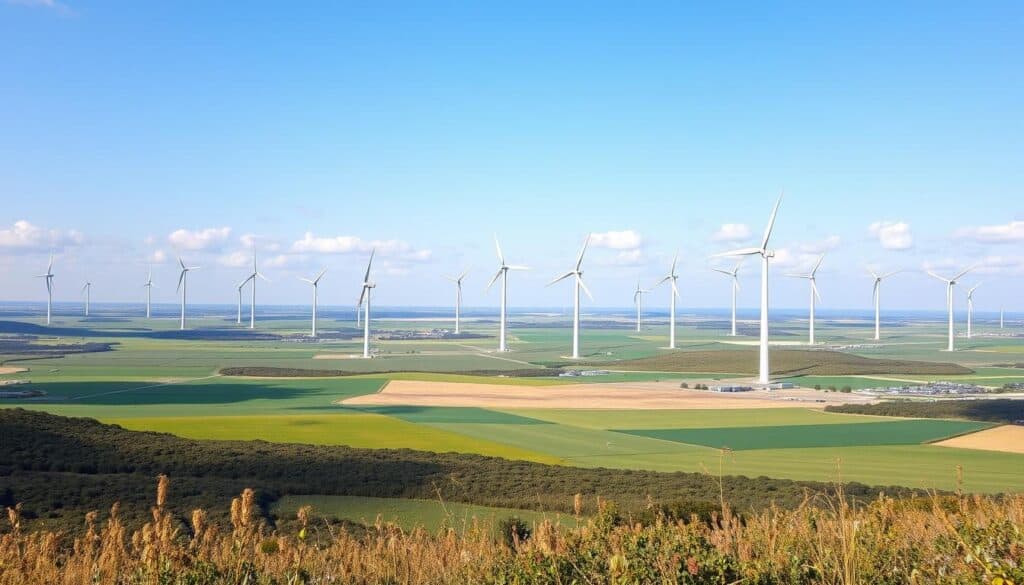
Setting up wind farms takes up a lot of space, leading to ecological concerns regarding wind energy. We will look at how wind farms use land. This includes the risk of harming the land and nearby life forms.
Land Degradation
Wind farms mean we have to clear big areas of land. The International Energy Agency sees wind power growing by 17% yearly until 2050. This growth puts more プレッシャー on our lands.
Clearing land for wind farms can cause the soil to erode and fertile land to be lost. This changes the natural landscape. It can also hurt the areas around these sites.
Disruption of Local Ecosystems
Wind farms can also break apart the living spaces of animals and plants. Building and running these farms can make it hard for wildlife to survive. Oregon State University found that wind farms can disturb animals.
For every gigawatt-hour of power a wind farm makes, about 0.27 birds die. This shows the bigger picture of how wind power affects 生態学.
Even though wind farms are good for making clean energy, we must think about the land they use. We need to take care of the plants and animals around these farms. By assessing and reducing harm, we can protect our environment.
Decreased Property Value
There’s a lot of talk about how wind farms might lower the worth of homes. Studies have pointed out that homes overlooking Wolfe Island wind turbines lost about 15 percent of their value. This is something people owning homes worry about.
In areas near wind farms, the impact is big on the economy. A detailed study showed these areas might see a $27 million drop in home values combined. Homes close to planned wind farms also saw their values go down, showing how big this issue is.
This matter is serious. Homes with a view of wind turbines went from adding 10 percent to their value to losing 15 percent. In Ontario, research supported this, showing wind turbines negatively affect home prices. Plus, a study found a 25% value drop for homes near working wind farms.
Gathering this information shows a clear trend: wind turbines tend to decrease home values in many places. This affects both the local and wider economy. We must think about this impact when looking at wind farms’ overall economic effect, especially in rural and suburban areas.
People and Ecologists Against Wind Farms
People are increasingly opposing wind farms, voicing concerns over their effects on nature and health. The push for wind farms along coastlines and in neighborhoods has sparked major protests. Residents are worried about the environment, how these structures look, and potential health issues.
Public Backlash
Plans for up to eight floating wind turbines near the California coast have faced strong opposition. The area, meant for the Chumash Heritage National Marine Sanctuary, covers a vast stretch of coastline. Communities, tribal leaders, and environmentalists fear the turbines could harm marine life and historical sites. Projects by Cierco Corp. and Ideol USA demonstrate the depth-related challenges and environmental concerns of using floating platforms.
Community Resistance
In Germany, almost 30,000 onshore wind turbines meet resistance despite the government’s clean energy goals. The government wants to use 2% of land for wind power by 2030, sparking public protest. Issues like lengthy permit processes, health risks, and effects on wildlife fuel this opposition. Although renewable energy is encouraged, such challenges lead communities to resist.
The growing resistance against wind farms highlights the struggle of fitting renewable energy into our surroundings. Plans to produce 30 gigawatts of offshore renewable energy by 2030, aiming to create 44,000 jobs, raise the stakes. It’s essential to find a balance between development and preserving community and environmental integrity.
Backlash Against Wind Farm Projects
The push for wind energy faces strong backlash against wind farm projects. Communities in the U.S. and other countries are speaking out. They raise social, ecological, and economic concerns.
Since 2015, over 300 local communities or governments in the US have pushed back on wind projects. For example, the Shasta County Planning Commission in California said no to the 216-megawatt Fountain Wind project. This decision shows that economic benefits may not overcome local resistance.
In New York, there’s tension over renewable energy projects. A new law lets state officials in Albany overrule local objections. It shows the struggle between local control and state renewable energy goals.
Health and Environmental Concerns
In Scituate, Massachusetts, people worry about noise from wind turbines. This has led to turbines being turned off at night sometimes. Foster, Rhode Island, banned wind turbines because of noise, vibrations, and lower property values. A report in Minnesota links wind farms to sleep issues and headaches.
Nationwide and International Resistance
In Iowa, Worth County paused new wind projects due to citizen concerns. L.A. County in California also banned wind turbines in certain areas.
This resistance isn’t just in the U.S. About 90 towns in Ontario, Canada, don’t want wind projects. Projects near Loch Ness in Scotland and some areas in Poland and Bavaria are also facing pushback.
Economic Considerations and Local Economies
Local economies and ecosystems might suffer from the vast land needed for wind projects. In places like Shasta County, people worry about their economic and ecological stability. Also, the American Wind Energy Association spends over $20 million a year on promotion but hasn’t fully addressed rural worries.
In conclusion, the backlash against wind farm projects involves health, ecology, and economy. It highlights the clash between renewable energy efforts and community interests.
Opposition to Wind Energy Development: Case Studies
The growth of wind energy projects has seen opposition in different areas. This is due to various reasons like social, environmental, and political issues. Studies in the United States and Germany show us how complex and varied these objections can be.
アメリカ合衆国
From 2000 to 2016, 17% of wind projects in the U.S. met resistance. About 23% of people opposed such projects. Interestingly, areas with a higher white population were more likely to oppose.
Letting local communities have a say has been proposed as a solution. For instance, community-owned projects with a couple of turbines face less resistance than larger ones. Developers often 従事する more with those who object, which could distort their view on general opinion.
ドイツ
In Germany, opposition to wind energy is notable despite its leadership in renewables. Environmental policies and active public involvement have driven community actions against wind farms. Critics argue they ruin landscapes and are noisy, raising health issues.
The push for Energiewende highlights the need for better engagement and benefit sharing with communities. This challenge calls for a balanced approach between adopting renewables and ensuring local support.
To overcome opposition, we need thoughtful strategies. Addressing social concerns and including communities in the dialogue is key. Such efforts aim to align the goal of renewable energy transition with community acceptance.
補足資料
- Solar energy integration: exploring how wind farms can be complemented with solar panels for hybrid renewable energy systems.
- Battery storage solutions: investigating energy storage technologies to manage intermittent wind energy production and ensure consistent power supply.
- Grid infrastructure development: enhancing electrical grid systems to efficiently transmit and distribute power generated by wind farms.
- Offshore wind technology: advancements in offshore wind farm technologies to harness stronger and more consistent winds at sea.
- Environmental impact assessments: conducting thorough impact studies to minimize ecological disruption caused by wind farm installations.
- Community engagement strategies: implementing methods to involve and educate local communities about the benefits and impacts of wind farms.
- Turbine design innovations: researching and developing more efficient and durable wind turbine designs to maximize energy output.
- Data analytics for wind forecasting: utilizing big data and machine learning techniques to improve wind prediction and optimize energy production.
- Hybrid renewable systems: integrating other renewable sources, like biomass or geothermal, to create more resilient and sustainable energy solutions.
よくある質問
What are the main concerns of people and ecologists against wind farms?
People and ecologists worry about several things. These include harm to wildlife, changes to habitats, and land harm. Others are the drop in property values and using a lot of land for wind farms. Then, there are problems like noise, how they look, and people not wanting them.
How do wind farms impact local communities?
Wind farms change how land is used. They can lower property values and harm natural areas. This makes some people oppose them.<br />
How does opposition to wind energy development differ in the United States and Germany?
In the U.S., people focus on local worries and harming nature. In Germany, they think more about energy policies and keeping landscapes. Both places see different levels of resist