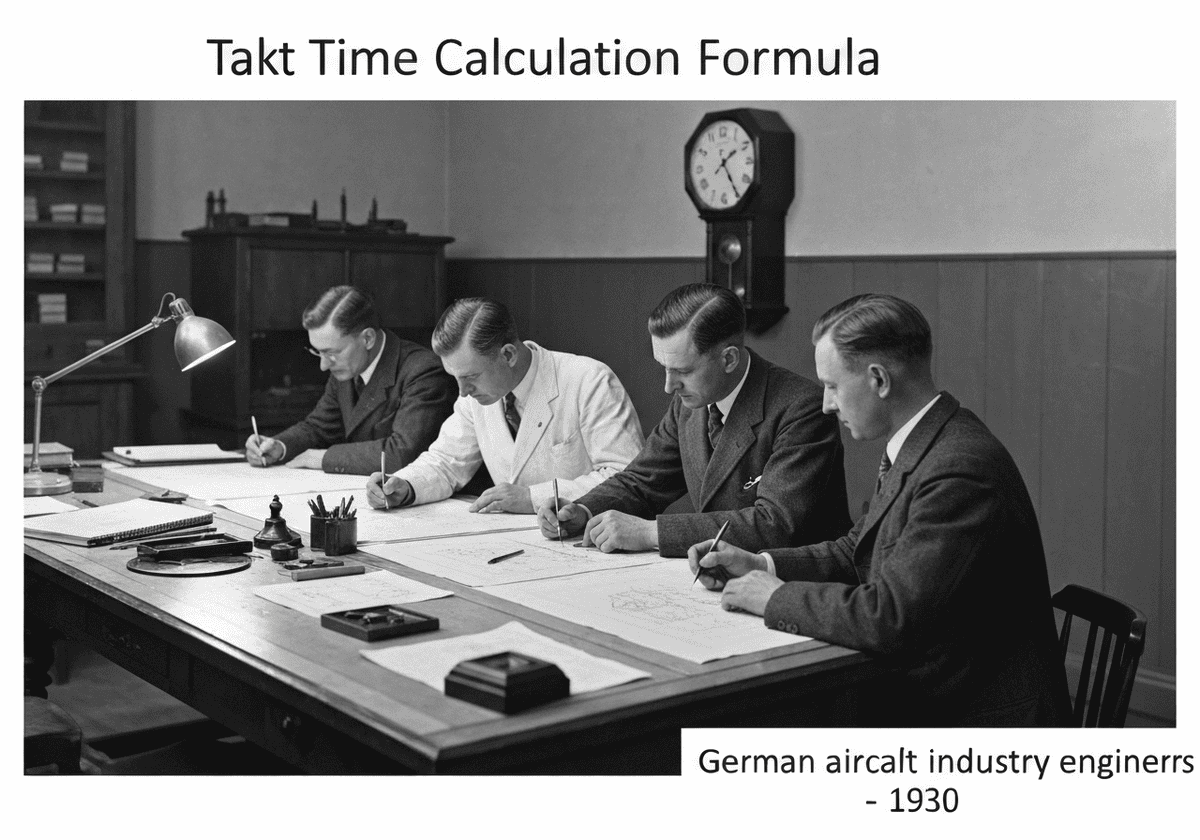
택트 타임은 고객 수요를 충족하기 위해 제품을 생산하는 데 허용되는 최대 시간입니다. 이는 해당 기간 동안의 순 가용 생산 시간을 고객 수요로 나누어 계산합니다. 공식은 [latex]T = frac{T_a}{D}[/latex]이며, 여기서 T는 택트 타임, Ta는 순 가용 시간, D는 고객 수요입니다.

(설명을 위한 생성된 이미지입니다)
택트 타임은 고객 수요를 충족하기 위해 제품을 생산하는 데 허용되는 최대 시간입니다. 이는 해당 기간 동안의 순 가용 생산 시간을 고객 수요로 나누어 계산합니다. 공식은 [latex]T = frac{T_a}{D}[/latex]이며, 여기서 T는 택트 타임, Ta는 순 가용 시간, D는 고객 수요입니다.

The Takt time formula, [latex]T = \frac{T_a}{D}[/latex], is a cornerstone of 린 생산 systems. Its components must be carefully defined for an accurate calculation. ‘Net Available Time’ ([latex]T_a[/latex]) is not simply the total shift time; it is the time that is genuinely available for production. This means subtracting planned stops such as breaks, team meetings, and scheduled maintenance. Unplanned downtime is typically not subtracted from Ta, as its occurrence is a problem to be solved, and including it would artificially inflate the Takt time, masking the underlying issue. ‘Customer Demand’ (D) refers to the number of units the customer requires within the specified time period. This figure should be based on actual sales or orders, not production forecasts, to ensure the system is truly pulled by the customer.
계산 결과는 제품당 소요 시간 단위(예: 제품당 초)입니다. 이 값은 생산 시스템의 핵심 동력을 나타냅니다. 모든 workstation 생산 공정은 이 시간 내에 작업을 완료할 수 있도록 설계되고 균형을 이룹니다. 특정 공정의 사이클 타임이 택트 타임을 초과하면 병목 현상이 발생하여 고객 수요를 충족하지 못하게 됩니다. 반대로 사이클 타임이 택트 타임보다 현저히 낮으면 과잉 생산 능력을 나타내며, 이는 린(Lean) 철학에서 주요 낭비 요소인 과잉 생산으로 이어질 수 있습니다. 따라서 이 공식은 공정 설계 및 지속적인 개선 활동을 위한 명확하고 객관적인 목표를 제공합니다.
택트 타임 계산 공식
(날짜를 알 수 없거나 관련이 없는 경우, 예를 들어 "유체역학"의 경우, 주목할 만한 등장 시기를 대략적으로 추정하여 제공합니다.)

고화질 이미지 및 다운로드는 등록된 회원에게만 100% 무료로 제공됩니다.
> 로그인 <