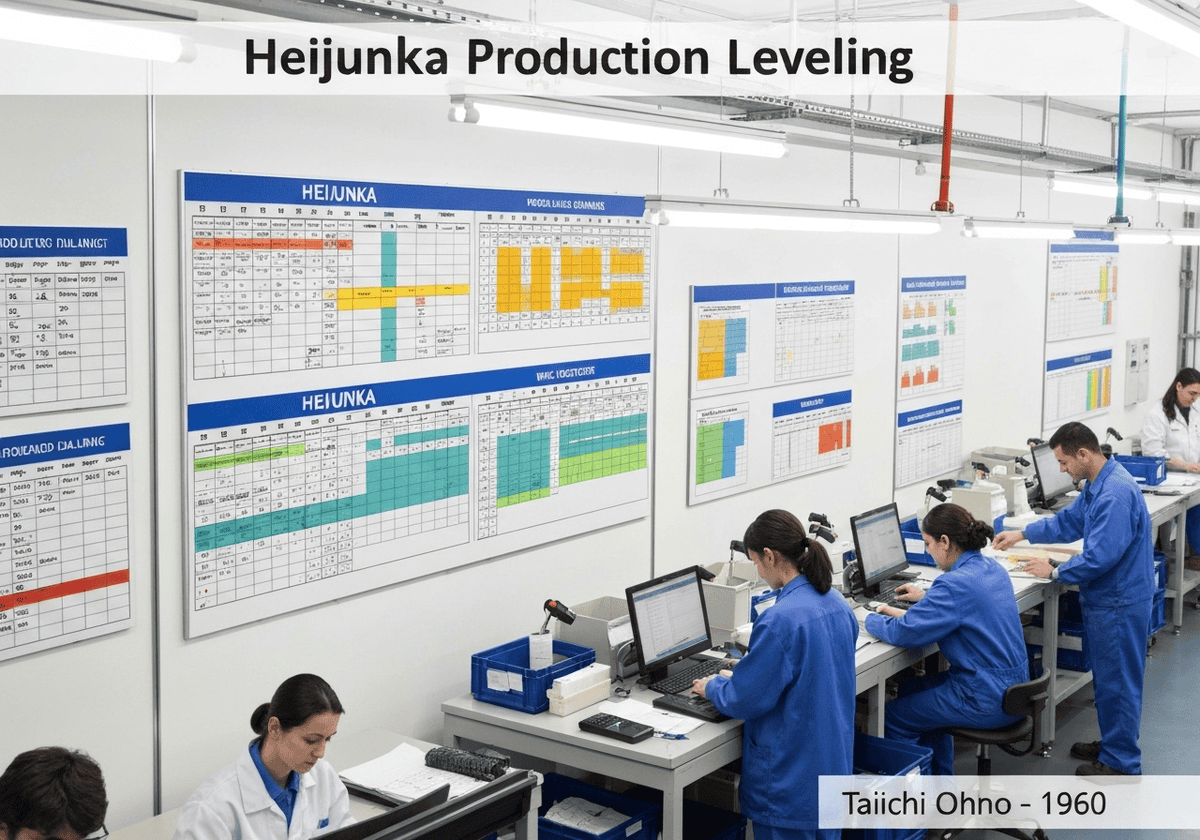
헤이준카는 도요타 생산 시스템(TPS) 내에서 생산량을 평준화하거나 안정시키는 원칙입니다. 이는 일정 기간 동안 생산량과 제품 구성을 평균화하여 작업량의 급격한 변동을 없애는 것을 의미합니다. 이를 통해 예측 가능하고 안정적인 생산 환경이 조성되며, 이는 적시 생산(JIT) 및 표준화된 작업을 효과적으로 구현하는 데 필수적인 조건입니다.


(설명을 위한 생성된 이미지입니다)
헤이준카는 도요타 생산 시스템(TPS) 내에서 생산량을 평준화하거나 안정시키는 원칙입니다. 이는 일정 기간 동안 생산량과 제품 구성을 평균화하여 작업량의 급격한 변동을 없애는 것을 의미합니다. 이를 통해 예측 가능하고 안정적인 생산 환경이 조성되며, 이는 적시 생산(JIT) 및 표준화된 작업을 효과적으로 구현하는 데 필수적인 조건입니다.

Instead of producing products in large batches according to customer orders (e.g., all of Model A, then all of Model B), 헤이준카 dictates producing a mixed model sequence in smaller batches. For example, if the weekly demand is for 500 of Model A, 300 of Model B, and 200 of Model C, a traditional system might produce all 500 A’s, then 300 B’s, etc. A Heijunka system would create a repeating sequence like A-B-A-C-A-B-A… This levels the demand for upstream processes and suppliers, preventing the “bullwhip effect” where demand fluctuations are amplified up the supply chain.
이를 위해 도요타는 다양한 모델의 생산을 관리하는 데 사용되는 시각적 스케줄링 도구인 '헤이준카 박스'와 같은 도구를 개발했습니다. 박스의 각 칸은 시간 간격을 나타냅니다. Kanban cards for different products are placed in the slots to dictate the production sequence. This leveling of both volume and mix reduces inventory, shortens lead times, and stabilizes the workload for employees and equipment. It is a crucial enabler of the entire TPS, as the stability it creates is necessary for JIT and 카이젠 제대로 기능하기 위해서입니다. 헤이준카가 없다면 수요 변동에 대응하기 위해 대규모 비축량이 필요하게 되어 폐기물 감축의 핵심 원칙이 훼손될 것입니다.
헤이준카 생산 평준화
(날짜를 알 수 없거나 관련이 없는 경우, 예를 들어 "유체역학"의 경우, 주목할 만한 등장 시기를 대략적으로 추정하여 제공합니다.)

고화질 이미지 및 다운로드는 등록된 회원에게만 100% 무료로 제공됩니다.
> 로그인 <