参入しやすい業界は、収益が少なく、市場支配力も低いことが多いことをご存知ですか?この興味深い点は、競合他社を知ることがなぜ重要なのかを示しています。マイケル・ポーターは1979年にポーターの5つの競争要因モデルを発表しました。これは戦略立案のための重要なツールです。
企業は、社内競争、新たな競合相手、サプライヤーや顧客の力、代替品の脅威などを分析することで、市場をより深く理解することができる。これは、企業が賢明な計画を立てる上で役立つ。
主なポイント
- ポーターのファイブフォースモデルは、内部競争、新規参入、サプライヤーと顧客の交渉力を分析する。
- 競争の激しさは、ライバルの数や業界の成長速度といった要素によって左右される。
- 参入が容易であれば、利益は減り、市場シェアも縮小する。
- 供給業者の力は、その数と切り替えコストによって決まる。
- サプライヤーが大きな力を持つと、企業にとってはコスト増や選択肢の減少につながる可能性がある。
- 競争が激しい場合、利益は減少する可能性がある。
- 最安値を目指す、他社と差別化する、ニッチ市場に特化するといった戦略を用いることで、企業は競争に対処しやすくなる。
ポーターの5つの競争要因入門
Michael Porter introduced Porter’s Five Forces in a 1979 Harvard Business Review article. It’s a strong framework for analyzing an industry’s competitiveness, highlighting five key forces. It has become vital in strategic management and crafting business strategies.
定義と背景
ポーターのファイブフォース分析は、業界の競争環境を詳細に分析する手法です。供給者の交渉力、買い手の交渉力、代替品の脅威、新規参入の脅威、既存企業間の競争といった要素を考慮します。これにより、企業は競争環境と戦略を理解することができます。新規市場への参入決定や事業戦略の策定に活用されます。
モデルの構成要素
- 既存の競合企業間の競争: これは、業界における競争の激しさを測る指標です。研究開発、デジタルスキル、流通、規制といった要素が考慮されます。
- 新規参入の脅威: これは、新規企業が競争に参入しやすいかどうかを評価するものです。重要な要素としては、規制、ブランド力、知的財産権の必要性、規模の経済などが挙げられます。
- 供給業者の交渉力: これは、サプライヤーが価格設定や条件をどれだけコントロールできるかを検証するものです。サプライヤーの数、切り替えコスト、そして労働者の結束力などを考慮します。
- 買い手の交渉力: これは、顧客が価格や条件にどれだけ影響を与えられるかを示す指標です。購入者の数、交渉力、価格の透明性などが考慮されます。
- 代替製品の脅威: この指標は、顧客が代替製品をどれだけ容易に見つけられるかを示します。製品の違い、ブランドロイヤルティ、そして利用可能な代替品について分析します。
戦略的経営における関連性
Knowing Porter’s Five Forces helps with strategic management. It lets companies fully understand their industry’s competitive scene. This understanding helps companies plan strategies that match the market, find growth chances, and avoid risks. The model works best when sales, marketing, or product leaders work together on it.
内部競争の理解
どの分野においても、競争はいくつかの重要な要素によって変化します。これらの要素を詳細に分析することで、計画立案や意思決定に役立ちます。これらの要素は、企業がどのように競争し、市場の性質を形成するかを決定づけます。ここでは、業界内の競争を促進する要因について見ていきましょう。
重要な要素
企業が業界内でどれだけ競争するかは、いくつかの要因によって左右されます。これらの要因を把握するためには、企業は競合他社を徹底的に分析する必要があります。
- 参加者数: 競合他社が増えれば、市場シェアを巡る争いはより激化する。
- 業界成長率: 急速に成長する産業はより多くの企業を引き付け、競争を激化させる。
- 提供内容の類似点: 製品やサービスが似通っている場合、他社との差別化を図るための競争は激化する。
- 出口の障壁: 撤退コストが高いため、経営不振の企業は市場に留まり続け、競争はさらに激化する。
事例とケーススタディ
コカ・コーラとペプシのライバル関係はよく知られています。両社は何年も激しい競争を繰り広げ、それぞれが革新的な製品開発と大胆なマーケティング戦略を展開してきました。こうした熾烈な競争は市場を形成し、私たちが何を購入するかという選択にも影響を与えています。
Apple そして、サムスンの技術競争もまたその一例だ。両社は絶えず革新とマーケティングを行い、より多くの市場シェアを獲得しようとしている。この競争は、新たな技術を生み出すだけでなく、トレンドや基準をも形成する。
競争は企業だけでなく、私たちの購買行動、価格、そして市場の健全性にも影響を及ぼします。そのため、企業はこうした競争要因に巧みに対応するために、自社の業界を綿密に分析する必要があります。
この分析に慎重なアプローチを取ることで、企業は自社の市場における立ち位置を把握できる。また、成長や改善の余地がある分野も明らかになる。
The Threat of New Entrants
New companies entering a market can hugely affect the profits and market share of existing firms. This impact is largely due to the barriers set by the industry. Barriers like economies of scale, the need for large amounts of money, distribution access, and well-known brands matter a lot.
The Five Forces model by Porter shows that high entry barriers keep new companies out. This is good for the firms already there as it keeps competition low. For example, the airline sector needs a lot of money to start.
“Barriers to entry reduce the threat of new entrants into a market.” – Michael E. Porter
On the other hand, if it’s easy and cheap to enter a market, more new companies will join. This increases competition and makes the sector less appealing for those already there. Take online retail as an example. It’s easier to start because of low upfront costs and digital market access.
Other factors, like how existing firms might react or government rules, also play a role.
Industries with loyal customers, big investments, and unique tech face fewer threats
This helps keep the competition stable and profitable for those already involved.
To stay ahead, understanding how to build and use entry barriers is key. By doing this, companies can protect their place in the market and their earnings. Below are some key factors that show if a market is easy or hard for new companies to enter:
| Indicator | High Threat of New Entrants | Low Threat of New Entrants |
|---|---|---|
| Capital Investment | 低い | 高い |
| 製品差別化 | Undifferentiated | Highly Differentiated |
| Consumer Switching Costs | 低い | 高い |
| Access to Distribution Channels | Easy | Difficult |
| Proprietary Technology | なし | 高い |
Supplier Bargaining Power
The power of suppliers in the industry supply chain greatly affects market dynamics and profits. It’s essential to understand what influences supplier negotiations. This knowledge helps with strategic planning and improving operations.
Influencing Factors
Several key factors play into supplier power. These factors include the number of available suppliers, how unique their supplies are, and the costs of switching suppliers.
Switching costs also play a role. When these costs are low, like in the fast food industry, it’s easier for buyers to change suppliers. This can reduce the power of suppliers.
Impact on Industry Profitability
Suppliers with more power can demand higher prices or better terms. This directly affects the profits of businesses in that sector. The oil industry, for example, struggles to keep profits up because of strong supplier negotiation power.
To deal with this, companies might combine with others or buy them out. This is to get more control over their supply chains and improve their negotiation power.
The below table shows how supplier power affects profits. It also shows how automation tools can help:
| Automation Tool | 利点 |
|---|---|
| Accounts Payable Automation | Improves efficiency by 80%, speeds financial close by 25%, reduces error rates by 66%, decreases fraud risk |
| Global Payments Automation | Offers cross-border payments to 196 countries in 120 currencies |
| Supplier Relationship Management | Enhances communication, reduces costs, and improves supplier negotiation |
| Spend Management Automation | Controls expenditures, increases efficiency |
Understanding supplier power is key for businesses to plan effectively. This helps them stay competitive and maintain their profits.
Customer Bargaining Power
Customer bargaining power greatly affects industry strategies. The number of buyers, switching costs, and product uniqueness play key roles. They decide how much buyers can influence the market.

Factors That Enhance Customer Power
When there are few buyers and many suppliers, buyer power is strong. Low switching costs and the ability to buy in bulk also boost their power.
- Number of buyers relative to suppliers: more buyers mean medium power.
- Dependence on a particular supplier: more supplier options increase buyer power.
- Switching costs: lower costs lead to higher buyer power.
- Backward integration: less backward integration keeps buyer power low.
Strategies to Mitigate Customer Power
To reduce customer power, companies have strategies. These involve improving products, customer service, and creating higher switching costs:
- Product differentiation: unique products decrease negotiation power and increase loyalty.
- Customer service enhancement: excellent service builds loyalty and discourages switching.
- Creating switching costs: higher costs prevent customers from leaving.
The table below shows factors affecting buyer power:
| 要素 | 説明 |
|---|---|
| Number of Buyers Relative to Suppliers | Buyer power grows with more buyers. |
| Dependence on a Specific Supplier | More supplier choices boost negotiation power. |
| Switching Costs | Low costs make switching easier, increasing power. |
| Backward Integration | Limited backward integration means less power. |
Understanding customer power helps spot threats and opportunities. Acting on these insights, companies can stand out and boost their profits.
Threat of Substitute Products
The threat of substitute products is about the risk from alternatives that meet the same needs. Knowing potential substitutes is key for businesses to see their competitive threat. Customer switching ease, cost, and quality are big factors in this risk.
Identifying Substitutes

To find substitute products, you need to see if other options do the same 仕事. Like how video conferencing can replace business trips. If substitutes are easy to switch to, and offer better or the same quality, they pose a bigger threat.
Impact on Industry and Strategic Responses
Substitute products can really change an industry by limiting profits and market share. Let’s dive deeper:
- Cheaper substitutes: cheaper and better quality substitutes make customers more likely to switch. This challenges industries to lower prices or make their products better.
- Expensive substitutes: if substitutes cost more and aren’t as good, the threat is lower. Companies can stay ahead by innovating and connecting better with customers.
- No substitutes: without alternatives, the original product becomes more powerful. This means more profit and less need to change.
| 基準 | High Threat | Low Threat |
|---|---|---|
| Cost of Substitute | Less expensive or comparable | More expensive |
| Customer Switching Costs | 低い | 高い |
| Quality and Performance | Equal or superior | Inferior |
| Availability of Substitute | Many available | Few or none available |
To handle substitute threats, companies may need big innovations, better customer relations, and smart pricing. They have to keep an eye on market trends and what customers like to keep up with substitutes.
Applying Porter’s Five Forces: A Practical Example
Applying Porter’s Five Forces framework helps understand the tech industry better. It looks at competitive rivalry, bargaining power, and the threat of new products. This way, companies like Apple and Samsung keep up with competition and innovation.
Case Study: Tech Industry
The tech industry is a battleground of innovation with giants like Microsoft and Amazon. This intense rivalry drives companies to dominate the market. Suppliers have big power because they provide essential technology and materials.
Stores like Walmart show the strong position of buyers through their pricing power. The threat of new gadgets and entry barriers also play a big role in shaping strategies.
Steps to Conduct Your Own Analysis
Doing a Porter analysis means following certain steps. It combines data and insights strategically.
- Define the industry: set clear boundaries for the industry under analysis.
- Identify key players: find out who the main competitors, suppliers, and buyers are.
- Evaluate the power of each force: look at how strong each force is. Think about things like money needed, rules, and big-scale operations.
- Draw strategic insights: finish by figuring out what the analysis means for your strategy.
Here is a table that shows specific points from the analysis:
| 要素 | インパクト | 例 |
|---|---|---|
| Competitive Rivalry | 高い | Apple vs. Samsung |
| 供給電源 | 強い | Limited high-quality chip manufacturers |
| Buyer Power | 適度 | Retail giants like Walmart |
| Threat of New Entrants | 低い | High capital requirements |
| Threat of Substitutes | 高い | Rapid technology innovation |
Alternatives to Porter’s Five Forces
Porter’s Five Forces is a key tool in strategic planning. But alternative models offer different insights. They help us look at business analysis in new ways. Let’s dive into three models: SWOT Analysis, PESTEL Analysis, and BCG Matrix. They give us a full picture of external factors and internal strengths.
SWOT分析
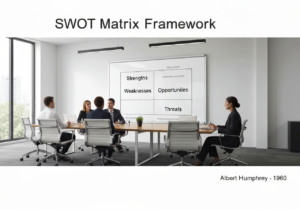
The SWOT Analysis checks a company’s internal strengths and weaknesses. It also looks at external opportunities and threats. This method is vital for planning strategies that match what a company does best with the market.
- 強み: these are what give a company its edge.
- 弱点: factors that might slow a company down.
- 機会: chances outside the company that it can use.
- 脅威: outside challenges that could cause problems.
PESTEL Analysis
PESTEL Analysis looks at Political, Economic, Social, Technological, Environmental, and Legal factors. Understanding these helps companies see the big picture that affects their plans.
- Political: rules by the government, taxes, and trading limits.
- Economic: things like inflation, jobs, and economic health.
- Social: what people are into, population facts, and shopping habits.
- Technological: new tech, inventions, and ways to automate work.
- Environmental: how to stay green, climate issues, and nature’s conditions.
- Legal: laws to follow, rules for doing business, and industry standards.
BCG Matrix
The BCG Matrix helps businesses organize their products by market growth and share. It has four quadrants to plan strategy. This makes it easier to see where to invest or cut back.
| Quadrant | 説明 |
|---|---|
| Stars | High growth, high market share. They need investment to stay on top. |
| Cash Cows | Low growth, high market share. They bring in steady money. |
| Question Marks | High growth, low market share. They need careful thought for the future. |
| Dogs | Low growth, low market share. Might cost more than they bring in. |
Using these models helps companies see the full scene. They can use their strengths and deal with outside factors well.
結論
Michael E. Porter introduced his Five Forces model in 1979. It’s a key tool for business strategy. This framework helps companies understand and manage their industry’s competitive forces.
By examining factors such as rivalry, new competitors, supplier power, and customer influence, companies can position better in the market. It helps them see where they stand.
Using Porter’s Five Forces helps businesses improve their strategy-making. For example, in markets with many competitors and similar products, rivalry is high. This insight lets companies plan how to stay profitable despite tough competition.
Also, the model suggests strategies for dealing with powerful suppliers or customers. For example, Walmart’s buying power or Unilever’s issues with suppliers show why strategies like working with more suppliers or integrating are important. Using Porter’s model, businesses can deal with risks, find new chances, and grow over time.
よくある質問
ポーターのファイブフォースモデルの構成要素は何ですか?
ファイブフォースモデルの構成要素は、新規参入企業、顧客とサプライヤーの交渉力、代替品のリスク、そして既存企業間の競争である。
ポーターのファイブフォース分析は、戦略的経営にどのように役立つのでしょうか?
このフレームワークは戦略的経営に非常に役立ちます。業界競争を形成する要因を明らかにし、企業は市場における地位を向上させるための戦略を立てることができます。
業界内の競争に影響を与える要因は何ですか?
業界内における競争は、企業の数、成長率、製品の多様性、そして余剰生産能力によって影響を受ける。
業界における新規参入の脅威とは、具体的にどのようなものを指すのか?
新規参入者は新たな競争相手となる。彼らは市場シェアを獲得し、価格を引き下げる可能性がある。市場参入の容易さは非常に重要だ。
サプライヤーの交渉力に影響を与える要因は何ですか?
供給者の力は、供給者の数、代替品の有無、製品の独自性、そして買い手にとっての重要性によって左右される。
サプライヤーの交渉力は、業界の収益性にどのような影響を与えるのか?
仕入先が主導権を握ると、コストが上昇する可能性がある。仕入先はより高い価格や厳しい取引条件を要求し、利益率を圧迫するかもしれない。
顧客の交渉力を高める要因は何ですか?
顧客の数が少なく、代替品が利用可能で、乗り換えが容易で、価格変動に敏感な場合、顧客はより大きな力を持つ。
顧客の高い交渉力を緩和するには、どのような戦略が有効でしょうか?
影響力のある顧客に対応するには、他にはない独自の製品やサービスを提供することが重要です。一流のサービスで顧客の忠誠心を高め、他社への乗り換えを困難にしましょう。
代替製品とは何ですか?また、なぜ代替製品は競争上の脅威となるのでしょうか?
代替製品は、同じニーズを満たす別の選択肢を提供する。しかし、需要を減少させ、価格や利益に影響を与える可能性があるため、脅威となる。
企業は代替製品の脅威に対して、どのように戦略的に対応できるだろうか?
企業は、機能を追加したり、サービスを改善したり、価値と価格面で優位性を維持したりすることで、競合他社に打ち勝つことができる。
戦略評価において、ポーターの5つの競争要因に代わる方法にはどのようなものがありますか?
その他のツールとしては、強み、弱み、機会、脅威を分析するSWOT分析、政治、経済、社会、技術、環境、法律といった要因を分析するPESTEL分析、そして製品成長分析のためのBCGマトリックスなどがある。
市場競争分析に関する外部リンク
国際規格
(リンクにカーソルを合わせると、コンテンツの説明が表示されます)