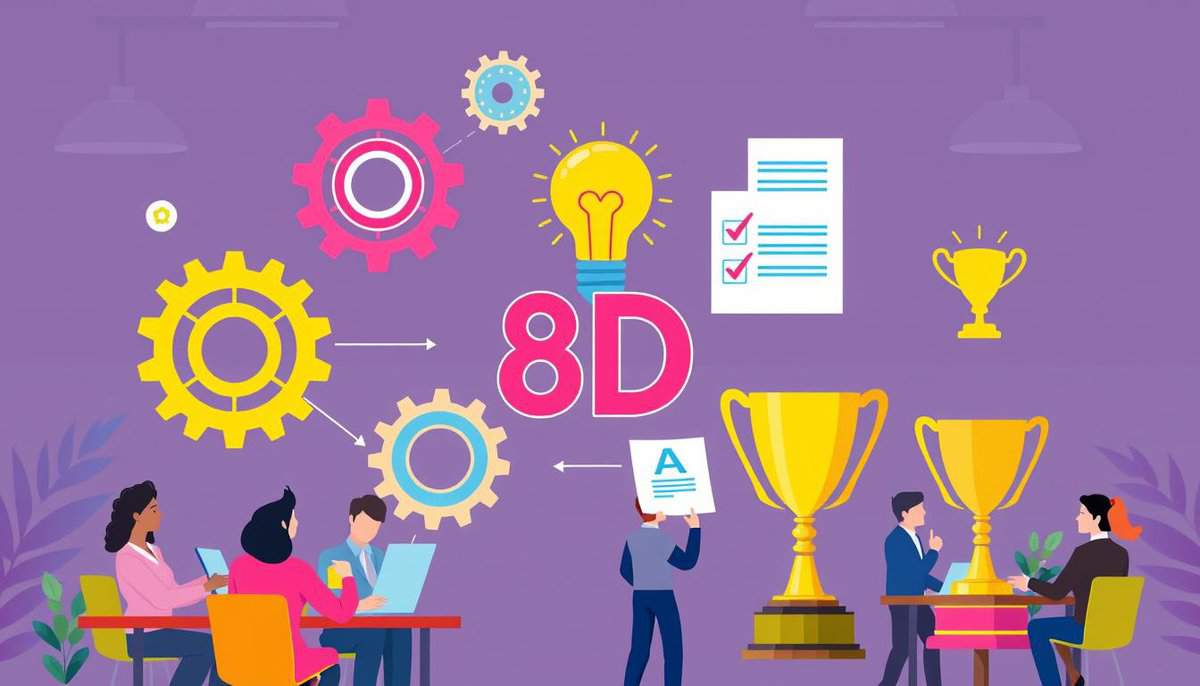
8D 문제 해결 방법은 포드에서 개발했습니다. 모터 1980년대 후반에 한 회사에서 개발된 이 방법은 오늘날 전 세계 기업들이 품질과 운영을 개선하기 위해 사용하는 핵심 도구 중 하나입니다. 이 방법은 8단계, 즉 8가지 원칙으로 구성되어 있으며, 문제를 식별하고 해결하며 재발을 방지하는 데 도움을 줍니다.
이 가이드를 끝까지 읽으시면 8D 방법이 어떻게 어려움을 성장의 기회로 바꿀 수 있는지 알게 될 것입니다.
핵심 요약
- 8D 문제 해결은 1980년대 후반 포드 자동차 회사에서 시작된 체계적인 접근 방식입니다.
- 이 여덟 가지 원칙에는 팀 구성부터 영구적인 시정 조치 및 팀 인정에 이르는 단계가 포함됩니다.
- This approach heavily relies on collaboration, documentation, and verification.
- 8D 문제 해결 방식은 다학제 팀의 중요성을 강조합니다.
- 효과적인 실행을 위해서는 의사소통과 명확한 역할 분담이 매우 중요합니다.
8D 문제 해결 소개
8D 문제 해결 프로세스는 품질 문제를 찾아 해결하기 위한 상세한 방법입니다. 이 프로세스는 제2차 세계 대전 중에 시작되었으며, 이후 포드 자동차 회사에서 개선했습니다. 8D 프로세스는 8단계로 구성되어 있으며, 1990년대에 D0 단계라는 계획 단계가 추가되었습니다.
이 방법은 복잡한 문제를 해결하기 위한 팀워크에 중점을 둡니다. 여러 가지 품질 관리 방식을 결합했기 때문에 제조 및 생산 분야에 매우 적합합니다.
팀은 8D 방법을 면밀히 따르면서 문제의 주요 원인을 파악하고 해결합니다. 주요 단계는 다음과 같습니다.
- D1: 팀 구성.
- 디2: 문제를 정의하고 설명합니다.
- 디3: 임시 봉쇄 조치를 시행합니다.
- 디4: 근본 원인 분석.
- D5: 영구적인 시정 조치를 개발하고 검증합니다.
- D6: 시정 조치를 시행합니다.
- 디7: 예방 조치.
- 디8: 마무리 및 팀원 감사 인사.
8D 프로세스는 문제 해결 그 이상의 가치를 지닙니다. 팀워크, 책임감, 그리고 상세한 기록 관리를 강화하여 기업의 운영 효율성 향상과 장기적인 성공으로 이끌어줍니다.
8D 문제 해결의 역사
8D 문제 해결 방법은 산업 변혁이 시작되던 시기부터 깊은 역사를 지니고 있습니다. 포드 자동차 회사는 1980년대에 이 방법을 개발했는데, 엔지니어링 및 제품 생산 과정에서 발생하는 고질적인 문제들을 해결하기 위한 것이었습니다.
포드 자동차 회사에서의 시작
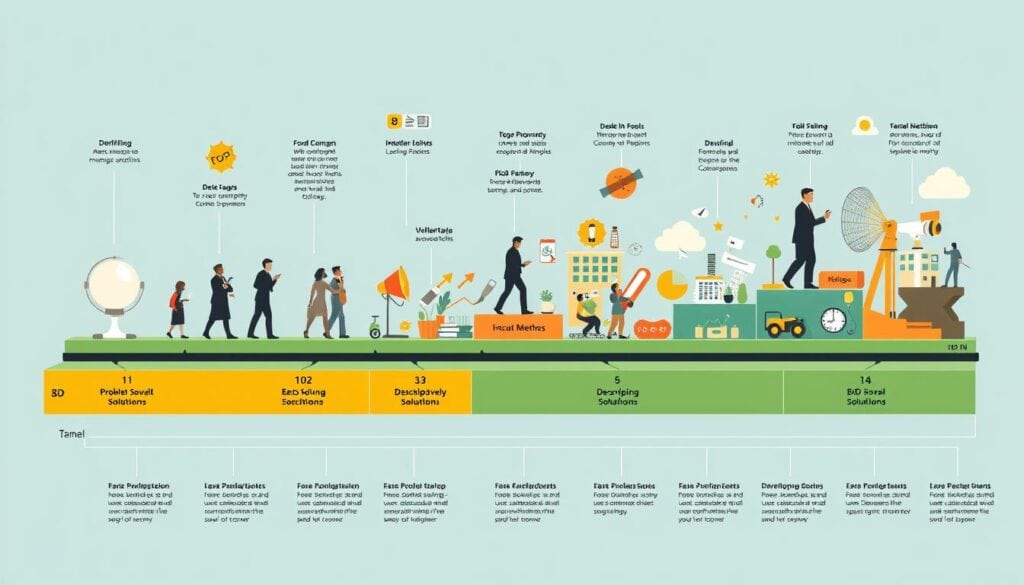
1986년, 포드 자동차는 품질 및 엔지니어링 문제를 해결하기 위해 8D 방법론을 도입했습니다. 원래 '팀 중심 문제 해결'이라고 불렸던 이 방법론은 전문가들을 한데 모아 문제의 근본 원인을 찾아내고 근본적으로 해결하는 것을 목표로 했습니다. 이후, 이 방법론을 더욱 개선하기 위해 D0 계획 단계를 추가했습니다.
산업 전반에 걸친 진화
8D 방법은 시작된 이래로 꾸준히 성장하여 다양한 분야로 확산되었습니다. 현재는 자동차 제조, 식품 생산, 의료 및 기술 산업에서 사용되고 있습니다. 이는 8D 방법이 자동차 산업에만 국한되지 않고 모든 분야에서 유용하게 활용될 수 있음을 보여줍니다.
다른 방법론의 영향
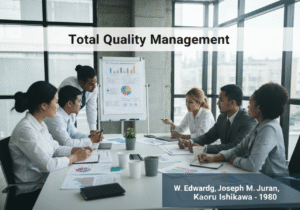
8D는 다음과 같은 방법들을 통해 형성되었습니다. 전사적 품질 관리 (TQM) and Six Sigma. It uses things like Ishikawa diagrams, Pareto charts, and the 5 Whys. Also, its link with Failure Modes and Effects Analysis (FMEA) helps in solving problems well. This promotes ongoing improvement.
| 주요 영향 요인 | 세부 |
|---|---|
| 전사적 품질 관리(TQM) | 체계적인 접근 방식과 지속적인 개선 활동의 통합에 영향을 미쳤습니다. |
| 식스 시그마 | 분석 도구와 데이터 기반 의사결정 전략을 도입했습니다. |
| 고장 모드 및 영향 분석(FMEA)FMEA) | 데이터 공유 및 브레인스토밍을 통해 문제 해결 능력과 예방 조치를 강화합니다. |
The Eight Disciplines Explained
It follows these eight steps to fix complex problems:
D1: Formation of the Team
D1 is about creating a strong team. A group approach is key. It brings different views and skills, making the solution better.
D2: Defining and Describing the Problem
D2 makes sure the problem is clearly stated. This helps everyone understand. It also keeps all steps focused on fixing the actual issue.
D3: Implementing Interim Containment Actions
D3 is about quick, temporary measures to limit the problem’s impact. These actions stop the problem from getting worse until a final solution is ready.
D4: Root Cause Analysis
In D4, tools like the Fishbone Diagram and the 5가지 질문 help find the real cause of the problem. Knowing this helps create actions that tackle the issue at its core.
D5: Developing and Verifying Permanent Corrective Actions
D5 has the team find and check permanent solutions. The step ensures solutions last and really work. Testing proves these actions will fix the problem.
D6: Implementing Corrective Actions
D6 is when permanent solutions are put into place. It’s important to make sure these solutions work well in the actual system or process.
D7: Preventive Measures
D7 focuses on stopping future problems. Changing systems and processes helps prevent the same issue. These changes also improve the whole system.
D8: Closure and Team Acknowledgment
D8 celebrates solving the problem. The team’s work is documented and shared. Recognizing everyone’s effort is key for morale and future teamwork.
Benefits and Limitations of 8D Method
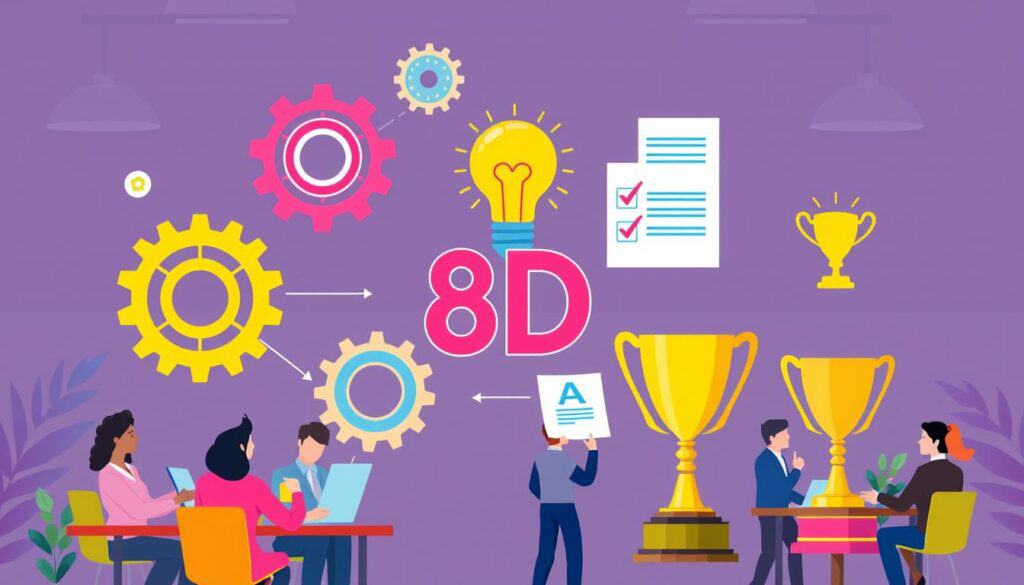
The 8D Problem Solving Method boosts problem-solving skills within companies. It dives deep into issues to find their root causes. This method also encourages teams with different skills to work together. They use short-term fixes to control problems, leading to long-lasting quality improvements.
Benefits of 8D Problem Solving
8D problem solving excels at finding the real cause of issues. Teams use the 5 Whys, Fishbone diagrams, and cause-and-effect analysis to uncover these causes. They then create and test actions to fix these problems for good. This reduces the chance of the same issues happening again and cuts costs linked to poor quality. Plus, involving employees in solving problems boosts their empowerment, happiness at work, and morale.
This process also helps organizations keep getting better by offering insights that improve practices. It’s acknowledged in quality systems like ISO-9001:2015 and IATF 16949:2016. This shows its effectiveness and flexibility across different fields. AS13000 sets a Problem-Solving standard for aero-engine suppliers, proving the method works well even in critical sectors.
Limitations to Consider
While 8D has many pluses, it also has downsides. The process is complicated and requires lots of training in problem-solving techniques. It leans heavily on detailed documentation and tools like Pareto charts and Fishbone diagrams. These can demand a lot of resources.
The 8D method goes to the root of complex problems to find long term solutions, but is heavy and far from a quick Agile solution, thus the D3 phase (Implementing interim containment actions)
The success of 8D greatly depends on how well the team works together. Strong teamwork and clear communication are key. If the team doesn’t work well together, it can be hard to find and fix root causes effectively. This shows how critical good team leadership and management support are to the 8D process.
Core Components of the 8D Problem Solving Process
The 8D problem-solving method is widely used in different fields like automotive, manufacturing, and healthcare. It tackles problems by identifying, analyzing, and fixing them successfully. Collaboration, documenting each step, and making sure solutions work are key parts of this strategy. These help in dealing with complex problems effectively.
Collaboration and Teamwork
Teamwork is vital in 8D, with people from different areas working together. The main team usually has three people who know a lot about the product, the process, and data. Besides, there’s a Subject Matter Expert team that helps out. They brainstorm, collect data, and look at outcomes. This way, the team covers all parts of the problem ensuring thorough solutions.
Documentation and Record Keeping
Keeping detailed records is a must in the 8D process. It helps track the steps taken to solve a problem and ensures everyone is accountable. Documentation begins with defining the problem and goes through finding its cause, short-term fixes, and lasting solutions. It also stores successes for future use, helping with ongoing improvement.
검증 및 유효성 검사
Checking if solutions work is a key step in the 8D method. A short-term fix is put in place before a final solution. It’s important to check this fix works to stop the problem from coming back. Tools like the 5 Why technique and Affinity Diagrams help find the root cause. Having a detailed plan, keeping in touch, and measuring success are crucial for ensuring solutions last.
Is the 8D Method Agile?
The 8D Problem Solving method is both careful and flexible. It started in 1986 with the US military’s standard 1520C. Since then, it has grown to aid various industries. Companies like it for its structured yet adaptable way of solving problems, especially where safety matters.
Flexibility in Problem Solving
The 8D Method is good at tackling different problems thanks to its systematic but adaptable approach. It is valuable across many industries, like automotive, aerospace, and manufacturing. The method’s eight steps encourage detailed analysis and ongoing betterment.
Adaptability to Various Sectors
The 8D approach is useful not just in its main areas like automotive and manufacturing. It also works well in healthcare and finance. Its flexibility meets the special challenges of various fields. Plus, it fits with Lean Six Sigma’s high-quality aims, so it’s used more broadly.
A comparison below shows how 8D and Lean Six Sigma work and their key strengths:
| 측면 | 8D Problem Solving | Lean Six Sigma |
|---|---|---|
| 기원 | 1986, US military standard 1520C | 1970s, Motorola |
| 핵심 초점 | Structured problem-solving, teamwork | Data-driven, comprehensive process improvement |
| 애플리케이션 | Automotive, aerospace, manufacturing | Healthcare, finance, services |
| 방법론 | 8 steps from problem definition to team recognition | DMAIC (Define, Measure, Analyze, Improve, Control) |
| 도전 과제 | Relies on team expertise, strict timelines | Complex statistical requirements |
Using 8D and Lean Six Sigma together offers a strong way to solve problems. It combines their strengths for flexible, wide-ranging solutions.
Role of Quality Management in 8D Problem Solving
Combining 8D problem solving with Quality Management Systems (QMS) boosts quality control. The 8D method targets and prevents problem reoccurrence through a detailed process. It fits well with quality management, leading to constant betterment.
Continuous Improvement and CAPA Process
The 8D steps are vital for Continuous Improvement and CAPA. They make sure problems are deeply analyzed and solved correctly. This way, quality issues keep getting spotted and fixed. It encourages a workplace focused on regular enhancement.
Tools and Techniques Used in 8D Problem Solving
The 8D problem-solving process features a mix of techniques and tools. These include the Fishbone diagram, the 5 Whys method, and Pareto analysis. They help find, examine, and fix issues well.
Fishbone Diagram
The Fishbone diagram, or Ishikawa, is a key tool for teams. It visually lays out potential problem causes. Issues are sorted into categories like ‘Man,’ ‘Machine,’ ‘Method,’ and ‘Materials.’
This method gives a complete view to avoid missing any root cause. It ensures thorough consideration from all angles.
5 Whys Analysis
The 5 Whys technique gets to the root cause by asking “Why?” five times. This questioning method reveals the issue’s core. It helps teams find the real cause and fix it.
파레토 차트
The Pareto Chart uses the 80/20 rule. It shows that 80% of problems come from 20% of causes. This bar chart highlights the most frequent issues.
It helps teams target their efforts on the major factors. This ensures resources are used where they can make the biggest impact.
Using the Fishbone diagram, 5 Whys, and Pareto analysis helps teams in the 8D process. They can find, investigate, and solve the root causes effectively. This leads to better, lasting solutions.
Related Readings
자주 묻는 질문
8D 문제 해결 기법은 어떤 산업 분야에서 활용되나요?
포드가 자동차를 위해 개발했지만, 이제는 다양한 분야에서 활용되고 있습니다. 의료, 엔지니어링, 고객 서비스 등 여러 분야에서 8D 방법론의 명확한 단계별 접근 방식 덕분에 많은 이점을 얻고 있습니다. 8D는 모든 종류의 업무에서 문제 해결에 효과적입니다. 근본적인 문제를 제대로 파악하고, 효과적인 해결책을 실행하며, 기록을 유지함으로써 문제 재발을 방지합니다. 이를 통해 품질이 지속적으로 향상될 수 있도록 도와줍니다.
8D 문제 해결의 8가지 핵심 요소는 무엇인가요?
8단계는 다음과 같습니다. 1. 팀 구성 2. 문제 상세화 3. 문제 확산 방지를 위한 임시 조치 4. 근본 원인 파악 5. 영구적인 해결책 마련 및 점검 6. 해결책 적용 7. 재발 방지 조치 8. 팀의 업무 마무리 및 인정.
조직에서 8D 문제 해결 방식을 활용하면 어떤 이점이 있습니까?
8D 방법론은 팀이 문제를 효과적으로 해결하고, 근본적인 문제를 찾아내고, 협업을 강화하고, 품질을 지속적으로 향상시키는 데 도움을 줍니다. 또한 문제를 해결하고 재발을 방지하기 위한 명확한 계획을 제시합니다. 이 방법론에는 근본 원인을 파악하기 위한 피시본 다이어그램, 문제의 핵심을 파헤치는 5가지 질문(5 Whys), 그리고 가장 시급한 부분을 식별하는 데 도움이 되는 파레토 차트와 같은 도구들이 포함됩니다.
문제 해결 및 프로세스 관리 관련 외부 링크
국제 표준
(링크 위에 마우스를 올려놓으면 콘텐츠에 대한 설명을 볼 수 있습니다.)
사용된 용어집
Corrective Action and Preventative Action (CAPA): a systematic approach to identifying, investigating, and addressing nonconformities and potential issues to prevent recurrence and ensure compliance with regulatory standards in quality management systems.
Corrective and Preventive Action (CAPA): 규제 기준 준수 및 프로세스와 제품의 지속적인 개선을 보장하기 위해 부적합 사항을 식별, 조사 및 해결하는 체계적인 접근 방식입니다.
Define Measure Analyze Improve Control (DMAIC): 식스 시그마에서 프로세스 개선을 위해 사용되는 데이터 기반 품질 전략으로, 문제 식별, 현재 성과 측정, 원인 파악을 위한 데이터 분석, 분석 결과를 바탕으로 프로세스 개선, 그리고 개선 사항 유지를 위한 향후 성과 관리의 다섯 단계로 구성됩니다.
Eight Disciplines Problem Solving (8D): 반복되는 문제를 식별, 수정 및 제거하기 위해 사용되는 구조화된 문제 해결 방법론으로, 팀 구성, 문제 설명, 문제 확산 방지 조치, 근본 원인 분석, 시정 조치, 실행, 예방 및 팀 노력 인정의 8단계로 구성됩니다.
Failure Mode and Effects Analysis (FMEA): a systematic method for evaluating potential failure modes within a system, process, or product, assessing their effects on performance, and prioritizing risks to improve reliability and safety through corrective actions.
International Organization for Standardization (ISO): a non-governmental international body that develops and publishes standards to ensure quality, safety, efficiency, and interoperability across various industries and sectors, facilitating global trade and cooperation. Established in 1947, it comprises national standardization organizations from member countries.
Quality Management System (QMS): 제품 및 서비스의 일관된 품질을 보장하고, 지속적인 개선을 촉진하며, 고객 및 규제 요건을 충족하기 위한 체계적인 프로세스, 절차 및 책임 시스템.
Root Cause Analysis (RCA): 문제나 실패로 이어지는 근본적인 요인을 체계적으로 파악하는 과정으로, 단순히 증상만 치료하는 것이 아니라 근본적인 문제를 해결하고 제거하는 것을 목표로 합니다.
Total quality management (TQM): 고객 만족을 통한 장기적인 성공에 초점을 맞춘 경영 접근 방식으로, 조직의 모든 구성원이 프로세스, 제품 및 서비스의 지속적인 개선에 참여하여 품질과 성과를 향상시키는 것을 목표로 합니다.
Verification and Validation (V&V): 시스템이 사양을 충족하고 의도된 목적을 달성하는지 확인하는 프로세스로, 두 가지 별개의 활동으로 구성됩니다. 검증은 제품이 설계 사양을 충족하는지 확인하는 것이고, 유효성 검사는 제품이 사용자의 요구 사항을 충족하는지 평가하는 것입니다.