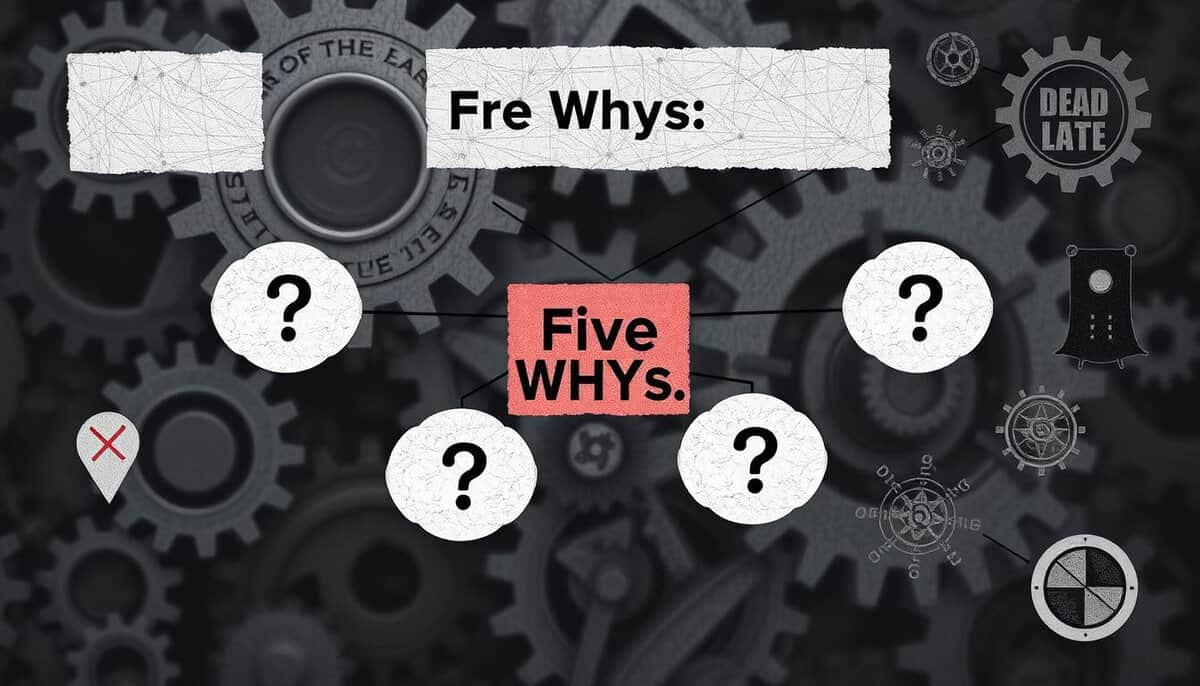
複雑な問題の真の原因を見つけるには、「5つのなぜ」分析手法だけで十分だろうか?
「5つのなぜ」は、簡単な問題を解決するためのシンプルで人気のある方法です。 トヨタ問題の根本原因を突き止めるために、「なぜ?」と5回も問い続ける。しかし、ジョン・オールスポーのような専門家やARMS Reliabilityのような団体は、複雑な問題にはこの方法が通用しないと考えている。
「5つのなぜ」の大きな問題点の1つは、主な原因を1つしか探さないことです。このアプローチでは、複雑な問題の本質に迫れない可能性があります。常に改善を目指そうとしているときには、これは大きな問題となります。
もう一つの問題は、誰が調査するかによって結果が左右されることです。適切な質問をする必要がありますが、それは容易ではありません。つまり、結果が大きく異なる可能性があり、信頼できる回答が必要な場合にはリスクとなります。
主なポイント
- 「5つのなぜ」は単純な問題には有効だが、複雑な問題には対応しにくい。
- 表面的なことばかりに目を向け、根本的な原因を見落としてしまうことが多い。
- その効果の程度は、捜査官のスキルと質問内容によって左右される。
- 人によって結果が異なる可能性があり、信頼性に影響を与える可能性がある。
- その単純なアプローチは、より複雑な問題には適さないかもしれない。
5つのなぜ分析手法の紹介
5つのなぜ分析手法は、トヨタ自動車の創業者である豊田佐吉氏によって考案されました。1900年代初頭に設立されたトヨタ自動車は、 モーター 企業はこの手法を採用した。隠れた問題を発見するのにシンプルながら効果的であることで知られている。
それで、 5つのなぜ(Five Whys)根本原因分析手法とは何ですか?それは、「なぜ?」と5回問いかけることで問題の本質に迫ることを意味します。「なぜ?」と問いかける実際の回数は、問題の規模によって変わります。このアプローチは、さまざまな原因がどのように関連しているかを理解する上で役立ちます。
「5つのなぜ」の最大の利点は、問題の根本原因を見つけ出すことです。これにより、チームは問題の兆候だけでなく、真の問題を解決できるようになります。その方法は次のとおりです。
- 問題点を特定する。
- 「なぜ?」と問いかけ、答えを提示してください。
- 前の回答を参照しながら、「なぜ?」と再度尋ねてください。
- 「なぜ?」と5回尋ねるまで繰り返してください。
For example, a business might discover that weird water pressure levels come from ignored control valves. Asking why they were overlooked can reveal bigger issues. This way, teams can solve deep-rooted problems.
また、5つのなぜ分析は、石川ダイアグラムなどのツールと組み合わせることで、より徹底的な分析が可能になります。この組み合わせによって、原因と結果を明確に把握でき、分析の質を高めることができます。
シンプルさと使いやすさ
The Five Whys technique is known for being simple and easy to use. It comes from Toyota and is a big part of リーン生産方式. All you have to do is ask “Why?” five times or more to find the main issue. This method lets teams tackle problems quickly without complex tools.
その最大の強みは、問題の根本原因を迅速に突き止めることにある。しかし、調査を主導する人物には高いスキルが求められる。問題をより深く掘り下げ、解決能力を高めるためには、研修が不可欠だ。

この手法は様々な業界で有効です。また、多様な問題への対応力にも優れています。現場での観察を加えることで、問題の理解を深めることができます。EasyRCAのようなツールを使えば、テクノロジーと従来の手法を組み合わせることで、プロセスをさらに精密にすることができます。
The simplicity of the Five Whys is a big plus in finding solutions. Yet, the outcome can vary based on who is using it. This shows the need for proper training and experience. Adding risk assessment makes the method even more effective, as it helps deal with potential risks fully.
Potential for Missing the Root Cause
The Five Whys root cause analysis technique is a key part of Six Sigma’s DMAIC methodology. It’s great at identifying the main factors behind issues. But, it sometimes doesn’t do well with complex vs simple problems.
The 5 Whys technique asks “Why?” over and over to find the root cause. It works well for issues with human factors without needing complex stats. But its simple approach might miss deeper causes in complex problems. These problems can have many layers that the Five Whys doesn’t catch.
The Five Whys needs few resources, so it’s easy and cheap to use. You usually ask “Why?” three to five times to find the cause. But complex issues might need more questions. For complicated problems, using a broader tool like the fishbone diagram helps find hidden causes.
Albert Einstein once said, “If I had an hour to solve a problem, I’d spend 55 minutes defining it and 5 minutes solving it.”
Einstein’s advice shows why understanding problems fully is crucial. Just asking “Why?” may not be enough for complicated issues. We might have to use other tools with the Five Whys. This helps us get a complete picture and solve the problem well. Knowing the Five Whys’ limits helps us pick the best tool for the 仕事.
Oversimplification Risks
The Five Whys technique is simple and easy to use but it can have downsides. Its design to dig deep into problems can sometimes oversimplify complex issues. Using the Five Whys alone might lead to shallow solutions that don’t fix the real problem.
One major issue is that it can focus on quick fixes instead of thorough analysis. This is risky in situations where deep review is vital. For example, blaming an equipment failure solely on maintenance mistakes might miss bigger issues, leading to more failures later.
To avoid oversimplification, critical thinking is key. It’s important to look beyond the Five Whys and use other methods for a full picture. Adding techniques like Failure Mode and Effects Analysis (FMEA) or Root Cause Failure Analysis (RCFA) helps support and strengthen your findings.
Bringing together a diverse team can help counteract oversimplification. This approach ensures different viewpoints are considered in tackling the problem. Using a mix of analytical tools with the Five Whys can make root cause analysis more effective and sustainable, addressing deep-rooted issues effectively over time.
関連文献および方法論
- Root Cause Analysis (RCA): a systematic process for identifying the root causes of problems or events and an approach for responding to them.
- Fishbone Diagram (Ishikawa Diagram): a visual tool used to systematically identify and present possible causes of a problem, categorized into various factors.
- Failure Mode and Effects Analysis (FMEA): a proactive method for evaluating a process to identify where and how it might fail and assessing the relative impact of different failures.
- Pareto Analysis: a statistical technique that applies the Pareto Principle (80/20 rule) to identify the most significant factors in a dataset.
- フォールトツリー解析(FTA): a top-down, deductive failure analysis that maps the pathways within a system that can lead to a potential failure.
- 8D (八つの規律 問題解決): a problem-solving methodology primarily used in the automotive industry, focusing on product and process improvement.
- PDCA Cycle (Plan-Do-Check-Act): an iterative four-step management method used for the control and continuous improvement of processes and products.
よくある質問
5つのなぜ(Five Whys)根本原因分析手法とは何ですか?
5つのなぜ(Five Whys)という手法はシンプルながら広く用いられており、特にトヨタのようなリーン生産方式で活用されています。問題の根本原因を迅速に突き止めるために、「なぜ」という問いを何度も繰り返します。
5つのなぜ分析法の利点は何ですか?
「5つのなぜ」メソッドは使いやすく、問題の原因を素早く特定できます。継続的な改善に最適で、適用に高度なスキルは必要ありません。
「5つのなぜ」分析手法の限界は何ですか?
この手法は複雑なシステムではうまく機能しない可能性があります。単純な答えしか得られず、根本的な問題を解決できない場合があるからです。そのため、より徹底的なツールが必要になるかもしれません。
5つのなぜ分析手法は、どのようにして過度の単純化につながる可能性があるのか?
「5つのなぜ」だけを用いると、問題を過度に単純化してしまう可能性があります。その結果、根本的な問題に対処しない一時的な解決策しか得られず、問題が繰り返されることになります。
5つのなぜ分析手法と併せて、より広範な分析手法を用いることが重要なのはなぜですか?
複雑な状況においては、「5つのなぜ」を他の手法と組み合わせることが重要です。これにより、問題が完全に解決されることが保証され、複雑な課題に効果的に対処できるようになります。
「5つのなぜ」法は、単純な問題解決と複雑な問題解決の両方に役立つのでしょうか?
「5つのなぜ」は、単純な問題や迅速な解決には有効です。しかし、複雑な問題には不十分です。こうした状況では、真の原因を見つけるために、より詳細な分析が必要となります。
根本原因分析に関する外部リンク
国際規格
(リンクにカーソルを合わせると、コンテンツの説明が表示されます)
用語集
Define Measure Analyze Improve Control (DMAIC): シックスシグマで用いられる、プロセス改善のためのデータ駆動型品質戦略であり、問題の特定、現状のパフォーマンスの測定、原因特定のためのデータ分析、分析結果に基づくプロセスの改善、そして改善を持続させるための将来のパフォーマンス管理という5つの段階から構成される。
Eight Disciplines Problem Solving (8D): 繰り返し発生する問題を特定、修正、排除するために用いられる、構造化された問題解決手法。チーム編成、問題の説明、封じ込め措置、根本原因分析、是正措置、実施、予防、チームの努力の評価という8つのステップから構成される。
Failure Mode and Effects Analysis (FMEA): a systematic method for evaluating potential failure modes within a system, process, or product, assessing their effects on performance, and prioritizing risks to improve reliability and safety through corrective actions.
Fault Tree Analysis (FTA): システム障害の原因を特定・分析するための体系的かつグラフィカルな手法であり、ツリー構造で表現される。ブール論理を用いて事象を関連付け、望ましくない結果が生じる確率を評価することで、リスク管理や安全性評価に役立つ。
Plan Do Check Act (PDCA): 目標の計画、計画の実行、期待値に対する結果の評価、パフォーマンスとプロセスを改善するための是正措置の実施という4つの反復的なステップからなる継続的改善モデル。
Root Cause Analysis (RCA): 問題や失敗につながる根本的な要因を特定するための体系的なプロセスであり、単に症状を治療するのではなく、根本的な問題に対処し、排除することを目的としている。
Root Mean Square (RMS): 一連の値の二乗の平均の平方根を計算するために使用される統計的尺度であり、信号処理や電気工学において、様々な量の実効値を決定するためによく用いられる。