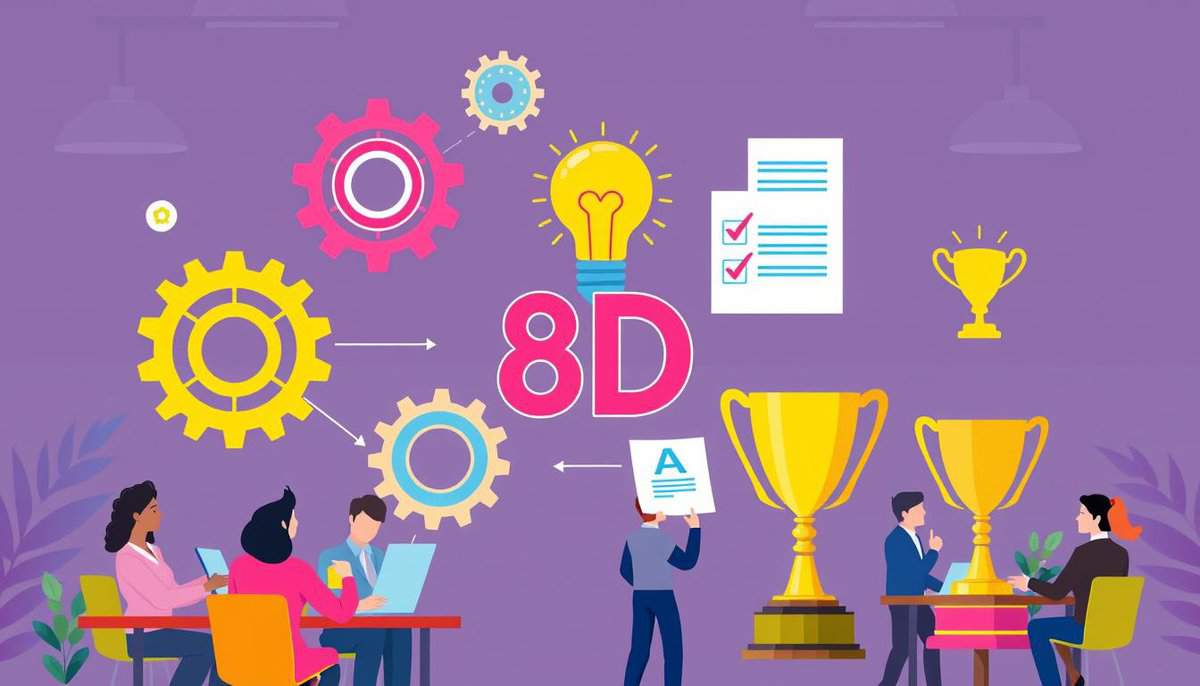
8D समस्या समाधान पद्धति को 1980 के दशक के उत्तरार्ध में फोर्ड मोटर कंपनी द्वारा विकसित किया गया था। आज, यह दुनिया भर के उन संगठनों के लिए एक प्रमुख उपकरण है जो गुणवत्ता और संचालन में सुधार करना चाहते हैं। इस पद्धति में आठ चरण या अनुशासन हैं। ये समस्याओं की पहचान करने, उन्हें ठीक करने और उन्हें दोबारा होने से रोकने में मदद करते हैं।
इस गाइड के अंत तक, आप देखेंगे कि 8D विधि चुनौतियों को विकास के अवसरों में कैसे बदल सकती है।
मुख्य बातें
- 8D problem solving is a methodical approach originating from Ford Motor Company in the late 1980s.
- The eight disciplines include steps from team formation to permanent corrective actions and team acknowledgment.
- This approach heavily relies on collaboration, documentation, and verification.
- 8D problem solving emphasizes the importance of multidisciplinary teams.
- Communication and clear role definition are crucial for effective implementation.
Introduction to 8D Problem Solving
The 8D Problem Solving Process is a detailed method to find and fix quality issues. It started in World War II, and Ford Motor Company later improved it. This process includes eight steps and a planning stage called D0, added in the 1990s.
This method focuses on teamwork to solve complicated problems. It mixes several quality management practices. This makes it great for the manufacturing and production sectors.
Teams follow the 8D method closely to identify the main causes of a problem and solve it. Here are in short the main steps detailed after:
- D1: Formation of the Team.
- D2: Defining and describing the problem.
- D3: Implementing interim containment actions.
- D4: Root cause analysis.
- D5: Developing and verifying permanent corrective actions.
- D6: Implementing corrective actions.
- D7: Preventive measures.
- D8: Closure and team acknowledgment.
The 8D process is valuable for more than just solving problems. It boosts teamwork, responsibility, and detailed records. This leads businesses towards better operation and long-term success.
History of 8D Problem Solving
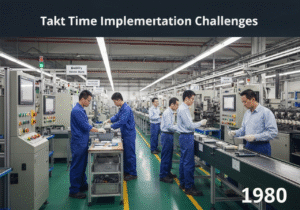
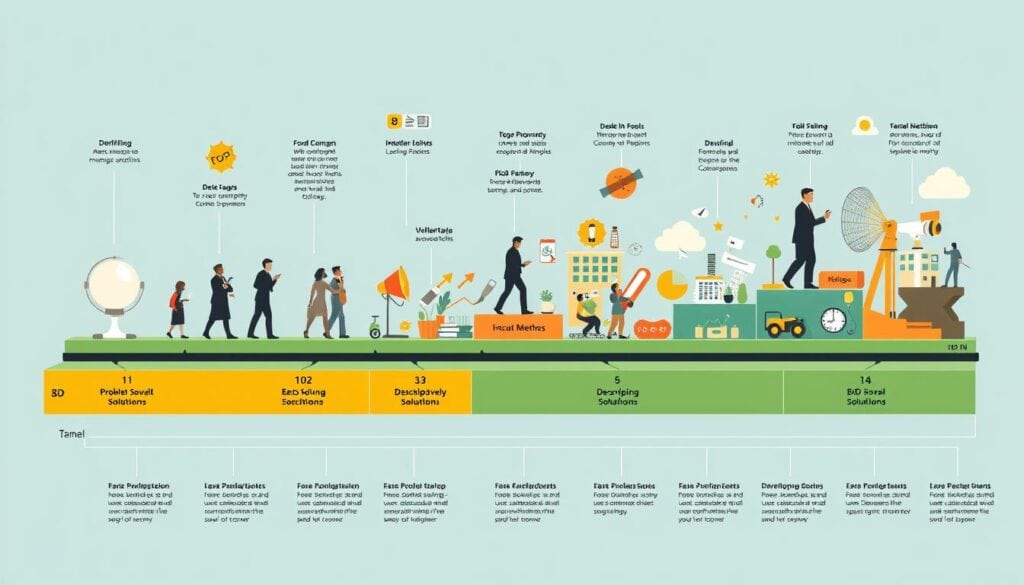
The 8D problem solving method has a deep history, starting when industries began to change. Ford Motor Company created it in the 1980s. It was meant to fix ongoing issues in engineering and making things.
Origins at Ford Motor Company
1986 में, फोर्ड मोटर कंपनी ने गुणवत्ता और इंजीनियरिंग समस्याओं को हल करने के लिए 8D पद्धति की शुरुआत की। मूल रूप से इसे "टीम ओरिएंटेड प्रॉब्लम सॉल्विंग" नाम दिया गया था, जिसमें विशेषज्ञों को एक साथ लाया जाता था। उनका उद्देश्य समस्याओं के मूल कारणों का पता लगाना और उन्हें स्थायी रूप से ठीक करना था। बाद में, उन्होंने इस पद्धति को और बेहतर बनाने के लिए इसमें D0 योजना चरण जोड़ा।
Evolution Across Industries
Since it started, the 8D method has grown and spread to many areas. It’s now used in car making, food production, स्वास्थ्य देखभाल, and tech industries. This shows how it moved from just automotive to being useful everywhere.
Influences from Other Methodologies
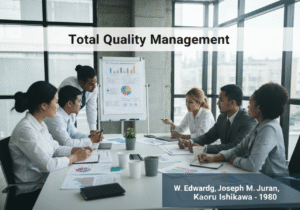
8D को निम्नलिखित विधियों द्वारा आकार दिया गया है: कुल गुणवत्ता प्रबंधन (कुल गुणवत्ता प्रबंधन) and Six Sigma. It uses things like Ishikawa diagrams, Pareto charts, and the 5 Whys. Also, its link with Failure Modes and Effects Analysis (FMEA) helps in solving problems well. This promotes ongoing improvement.
| Key Influences | विवरण |
|---|---|
| कुल गुणवत्ता प्रबंधन (TQM) | व्यवस्थित दृष्टिकोणों और एकीकरण को प्रभावित किया निरंतर सुधार अभ्यास। |
| सिक्स सिग्मा | Introduced analytical tools and data-driven decision-making strategies. |
| Failure Modes and Effects Analysis (FMEA) | Enhanced problem-solving and preventive measures through shared data and brainstorming sessions. |
The Eight Disciplines Explained
It follows these eight steps to fix complex problems:
D1: Formation of the Team
D1 is about creating a strong team. A group approach is key. It brings different views and skills, making the solution better.
D2: Defining and Describing the Problem
D2 makes sure the problem is clearly stated. This helps everyone understand. It also keeps all steps focused on fixing the actual issue.
D3: Implementing Interim Containment Actions
डी3 समस्या के प्रभाव को सीमित करने के लिए त्वरित, अस्थायी उपायों से संबंधित है। ये उपाय समस्या को तब तक और बिगड़ने से रोकते हैं जब तक कि कोई अंतिम समाधान तैयार नहीं हो जाता।
D4: Root Cause Analysis
D4 में, फिशबोन डायग्राम और जैसे उपकरण 5 क्यों इससे समस्या की असली वजह का पता लगाने में मदद मिलती है। यह जानने से समस्या की जड़ तक पहुंचने वाले उपाय तैयार करने में सहायता मिलती है।
D5: Developing and Verifying Permanent Corrective Actions
D5 has the team find and check permanent solutions. The step ensures solutions last and really work. Testing proves these actions will fix the problem.
D6: Implementing Corrective Actions
D6 वह चरण है जब स्थायी समाधान लागू किए जाते हैं। यह सुनिश्चित करना महत्वपूर्ण है कि ये समाधान वास्तविक प्रणाली या प्रक्रिया में अच्छी तरह से काम करें।
D7: Preventive Measures
D7 focuses on stopping future problems. Changing systems and processes helps prevent the same issue. These changes also improve the whole system.
D8: Closure and Team Acknowledgment
D8 समस्या के समाधान का जश्न मनाता है। टीम के काम का दस्तावेजीकरण किया जाता है और उसे साझा किया जाता है। सभी के प्रयासों को पहचानना मनोबल और भविष्य में टीम वर्क के लिए महत्वपूर्ण है।
Benefits and Limitations of 8D Method
The 8D Problem Solving Method boosts problem-solving skills within companies. It dives deep into issues to find their root causes. This method also encourages teams with different skills to work together. They use short-term fixes to control problems, leading to long-lasting quality improvements.
Benefits of 8D Problem Solving
8D problem solving excels at finding the real cause of issues. Teams use the 5 Whys, Fishbone diagrams, and cause-and-effect analysis to uncover these causes. They then create and test actions to fix these problems for good. This reduces the chance of the same issues happening again and cuts costs linked to poor quality. Plus, involving employees in solving problems boosts their empowerment, happiness at work, and morale.
This process also helps organizations keep getting better by offering insights that improve practices. It’s acknowledged in quality systems like ISO-9001:2015 and IATF 16949:2016. This shows its effectiveness and flexibility across different fields. AS13000 sets a Problem-Solving standard for aero-engine suppliers, proving the method works well even in critical sectors.
Limitations to Consider
While 8D has many pluses, it also has downsides. The process is complicated and requires lots of training in problem-solving techniques. It leans heavily on detailed documentation and tools like Pareto charts and Fishbone diagrams. These can demand a lot of resources.
The 8D method goes to the root of complex problems to find long term solutions, but is heavy and far from a quick Agile solution, thus the D3 phase (Implementing interim containment actions)
8D की सफलता काफी हद तक टीम के आपसी तालमेल पर निर्भर करती है। मजबूत टीमवर्क और स्पष्ट संचार बेहद जरूरी हैं। अगर टीम आपस में मिलकर अच्छा काम नहीं करती, तो मूल कारणों को प्रभावी ढंग से ढूंढना और उनका समाधान करना मुश्किल हो सकता है। इससे पता चलता है कि 8D प्रक्रिया के लिए अच्छे टीम नेतृत्व और प्रबंधन का सहयोग कितना महत्वपूर्ण है।
Core Components of the 8D Problem Solving Process
The 8D problem-solving method is widely used in different fields like automotive, manufacturing, and healthcare. It tackles problems by identifying, analyzing, and fixing them successfully. Collaboration, documenting each step, and making sure solutions work are key parts of this strategy. These help in dealing with complex problems effectively.
Collaboration and Teamwork
Teamwork is vital in 8D, with people from different areas working together. The main team usually has three people who know a lot about the product, the process, and data. Besides, there’s a Subject Matter Expert team that helps out. They brainstorm, collect data, and look at outcomes. This way, the team covers all parts of the problem ensuring thorough solutions.
Documentation and Record Keeping
Keeping detailed records is a must in the 8D process. It helps track the steps taken to solve a problem and ensures everyone is accountable. Documentation begins with defining the problem and goes through finding its cause, short-term fixes, and lasting solutions. It also stores successes for future use, helping with ongoing improvement.
सत्यापन और मान्यता
समाधानों के कारगर होने की जाँच करना 8D पद्धति का एक महत्वपूर्ण चरण है। अंतिम समाधान से पहले एक अस्थायी उपाय लागू किया जाता है। यह सुनिश्चित करना महत्वपूर्ण है कि यह उपाय कारगर हो ताकि समस्या दोबारा न आए। जैसे उपकरण 5 क्यों तकनीक और एफिनिटी डायग्राम मूल कारण का पता लगाने में मदद करते हैं। एक विस्तृत योजना बनाना, संपर्क बनाए रखना और सफलता का आकलन करना समाधानों के स्थायी होने के लिए महत्वपूर्ण हैं।
Is the 8D Method Agile?
8D समस्या समाधान विधि सावधानीपूर्वक और लचीली दोनों है। इसकी शुरुआत 1986 में अमेरिकी सेना के मानक 1520C से हुई थी। तब से, यह विभिन्न उद्योगों की सहायता के लिए विकसित हुई है। कंपनियां इसे समस्या समाधान के संरचित लेकिन अनुकूलनीय तरीके के लिए पसंद करती हैं, खासकर जहां सुरक्षा का महत्व है।
Flexibility in Problem Solving
8D पद्धति अपने व्यवस्थित लेकिन अनुकूलनीय दृष्टिकोण के कारण विभिन्न समस्याओं को हल करने में कारगर है। यह ऑटोमोटिव, एयरोस्पेस और विनिर्माण जैसे कई उद्योगों में उपयोगी है। इस पद्धति के आठ चरण विस्तृत विश्लेषण और निरंतर सुधार को प्रोत्साहित करते हैं।
Adaptability to Various Sectors
8D दृष्टिकोण न केवल ऑटोमोटिव और विनिर्माण जैसे अपने मुख्य क्षेत्रों में उपयोगी है, बल्कि स्वास्थ्य सेवा और वित्त में भी यह कारगर साबित होता है। इसकी लचीलता विभिन्न क्षेत्रों की विशेष चुनौतियों का सामना करने में सहायक है। साथ ही, यह लीन सिक्स सिग्मा के उच्च गुणवत्ता लक्ष्यों के अनुरूप है, इसलिए इसका उपयोग व्यापक रूप से किया जाता है।
A comparison below shows how 8D and Lean Six Sigma work and their key strengths:
| पहलू | 8D Problem Solving | Lean Six Sigma |
|---|---|---|
| Origin | 1986, US military standard 1520C | 1970s, Motorola |
| Key Focus | Structured problem-solving, teamwork | Data-driven, comprehensive प्रक्रिया सुधार |
| Application | Automotive, aerospace, manufacturing | Healthcare, finance, services |
| क्रियाविधि | 8 चरण समस्या की परिभाषा से लेकर टीम की पहचान तक | DMAIC (परिभाषित करना, मापना, विश्लेषण करना, सुधारना, नियंत्रण करना) |
| चुनौतियां | Relies on team expertise, strict timelines | Complex statistical requirements |
Using 8D and Lean Six Sigma together offers a strong way to solve problems. It combines their strengths for flexible, wide-ranging solutions.
Role of Quality Management in 8D Problem Solving
Combining 8D problem solving with Quality Management Systems (QMS) boosts quality control. The 8D method targets and prevents problem reoccurrence through a detailed process. It fits well with quality management, leading to constant betterment.
Continuous Improvement and CAPA Process
The 8D steps are vital for Continuous Improvement and CAPA. They make sure problems are deeply analyzed and solved correctly. This way, quality issues keep getting spotted and fixed. It encourages a workplace focused on regular enhancement.
Tools and Techniques Used in 8D Problem Solving
The 8D problem-solving process features a mix of techniques and tools. These include the Fishbone diagram, the 5 Whys method, and Pareto analysis. They help find, examine, and fix issues well.
Fishbone Diagram
फिशबोन डायग्राम, जिसे इशिकावा डायग्राम भी कहते हैं, टीमों के लिए एक महत्वपूर्ण उपकरण है। यह संभावित समस्या के कारणों को दृश्य रूप से दर्शाता है। समस्याओं को "मानव", "मशीन", "विधि" और "सामग्री" जैसी श्रेणियों में वर्गीकृत किया जाता है।
This method gives a complete view to avoid missing any root cause. It ensures thorough consideration from all angles.
5 Whys Analysis
फाइव व्हाईज़ तकनीक में पांच बार "क्यों?" पूछकर समस्या की जड़ तक पहुंचा जाता है। यह प्रश्न पूछने की विधि समस्या के मूल कारण को उजागर करती है। इससे टीमों को वास्तविक कारण का पता लगाने और उसे ठीक करने में मदद मिलती है।
Pareto Chart
The Pareto Chart uses the 80/20 rule. It shows that 80% of problems come from 20% of causes. This bar chart highlights the most frequent issues.
It helps teams target their efforts on the major factors. This ensures resources are used where they can make the biggest impact.
Using the Fishbone diagram, 5 Whys, and Pareto analysis helps teams in the 8D process. They can find, investigate, and solve the root causes effectively. This leads to better, lasting solutions.
संबंधित पठन
अक्सर पूछे जाने वाले प्रश्न
What industries utilize 8D Problem Solving?
हालांकि फोर्ड ने इसे कारों के लिए बनाया था, लेकिन अब कई क्षेत्रों में इसका उपयोग होता है। स्वास्थ्य सेवा, इंजीनियरिंग और ग्राहक सेवा इसके स्पष्ट चरणों से लाभान्वित होते हैं। यह हर तरह के काम में समस्याओं को हल करने में कारगर है। मूल समस्याओं को अच्छी तरह से हल करके, प्रभावी समाधान करके और रिकॉर्ड रखकर, 8D समस्याओं को दोबारा आने से रोकता है। यह गुणवत्ता को लगातार बेहतर बनाने में मदद करता है।
What are the eight disciplines in 8D Problem Solving?
The 8 steps are: 1. Forming a Team 2. Detailing the Problem 3. Taking Temporary Steps to Keep it in Check 4. Finding the Root Cause 5. Creating and Checking Permanent Fixes 6. Applying Fixes 7. Taking Steps to Prevent Repeat 8. Finishing and Recognizing the Team’s Work.
What are the benefits of using 8D Problem Solving in an organization?
8D विधि टीमों को समस्याओं को बेहतर ढंग से हल करने, वास्तविक समस्याओं का पता लगाने, बेहतर ढंग से मिलकर काम करने और गुणवत्ता में निरंतर सुधार करने में मदद करती है। यह समस्याओं को ठीक करने और उन्हें दोबारा होने से रोकने के लिए एक स्पष्ट योजना प्रदान करती है। कुछ उपकरणों में मूल कारणों का पता लगाने के लिए फिशबोन डायग्राम, समस्या की जड़ तक पहुंचने के लिए 5 व्हाईज़ और पैरेटो चार्ट शामिल हैं। यह चार्ट यह पहचानने में मदद करता है कि सबसे अधिक ध्यान किस पर देने की आवश्यकता है।
समस्या समाधान और प्रक्रिया प्रबंधन पर बाहरी लिंक
अंतर्राष्ट्रीय मानक
(सामग्री का हमारा विवरण देखने के लिए लिंक पर होवर करें)
प्रयुक्त शब्दों की शब्दावली
Corrective Action and Preventative Action (CAPA): गुणवत्ता प्रबंधन प्रणालियों में गैर-अनुरूपताओं और संभावित मुद्दों की पहचान करने, उनकी जांच करने और उन्हें संबोधित करने के लिए एक व्यवस्थित दृष्टिकोण, ताकि पुनरावृत्ति को रोका जा सके और नियामक मानकों का अनुपालन सुनिश्चित किया जा सके।
Corrective and Preventive Action (CAPA): अनियमितताओं की पहचान करने, उनकी जांच करने और उनका समाधान करने के लिए एक व्यवस्थित दृष्टिकोण अपनाना ताकि उनकी पुनरावृत्ति को रोका जा सके और संभावित समस्याओं को दूर किया जा सके, नियामक मानकों का अनुपालन सुनिश्चित किया जा सके और प्रक्रियाओं और उत्पादों में निरंतर सुधार किया जा सके।
Define Measure Analyze Improve Control (DMAIC): सिक्स सिग्मा में प्रक्रिया सुधार के लिए उपयोग की जाने वाली एक डेटा-संचालित गुणवत्ता रणनीति, जिसमें पाँच चरण होते हैं: समस्या की पहचान करना, वर्तमान प्रदर्शन को मापना, कारणों की पहचान करने के लिए डेटा का विश्लेषण करना, निष्कर्षों के आधार पर प्रक्रियाओं में सुधार करना और सुधारों को बनाए रखने के लिए भविष्य के प्रदर्शन को नियंत्रित करना।
Define, Measure, Analyze, Improve, Control (DMAIC): प्रक्रिया सुधार के लिए सिक्स सिग्मा में उपयोग की जाने वाली एक डेटा-संचालित गुणवत्ता रणनीति, जिसमें पांच चरण होते हैं: समस्या को परिभाषित करना, वर्तमान प्रदर्शन को मापना, कारणों की पहचान करने के लिए डेटा का विश्लेषण करना, निष्कर्षों के आधार पर प्रक्रियाओं में सुधार करना और सुधारों को बनाए रखने के लिए भविष्य के प्रदर्शन को नियंत्रित करना।
Eight Disciplines Problem Solving (8D): एक संरचित समस्या-समाधान पद्धति जिसका उपयोग आवर्ती मुद्दों की पहचान करने, उन्हें ठीक करने और समाप्त करने के लिए किया जाता है, जिसमें आठ चरण होते हैं: टीम का गठन, समस्या का वर्णन, रोकथाम संबंधी कार्यवाहियां, मूल कारण विश्लेषण, सुधारात्मक कार्यवाहियां, कार्यान्वयन, रोकथाम और टीम के प्रयासों की मान्यता।
Failure Mode and Effects Analysis (FMEA): एक प्रणाली, प्रक्रिया या उत्पाद के भीतर संभावित विफलता मोड का मूल्यांकन करने, प्रदर्शन पर उनके प्रभावों का आकलन करने और सुधारात्मक कार्यों के माध्यम से विश्वसनीयता और सुरक्षा में सुधार के लिए जोखिमों को प्राथमिकता देने की एक व्यवस्थित विधि।
International Organization for Standardization (ISO): एक गैर-सरकारी अंतर्राष्ट्रीय निकाय जो विभिन्न उद्योगों और क्षेत्रों में गुणवत्ता, सुरक्षा, दक्षता और अंतर-संचालनीयता सुनिश्चित करने के लिए मानक विकसित और प्रकाशित करता है, जो वैश्विक व्यापार और सहयोग को सुविधाजनक बनाता है। 1947 में स्थापित, इसमें सदस्य देशों के राष्ट्रीय मानकीकरण संगठन शामिल हैं।
Quality Management System (QMS): प्रक्रियाओं, कार्यविधियों और जिम्मेदारियों की एक संरचित प्रणाली जिसका उद्देश्य उत्पादों और सेवाओं में सुसंगत गुणवत्ता सुनिश्चित करना, निरंतर सुधार को सुविधाजनक बनाना और ग्राहक तथा नियामक आवश्यकताओं को पूरा करना है।
Root Cause Analysis (RCA): किसी समस्या या विफलता के मूल कारणों की पहचान करने की एक व्यवस्थित प्रक्रिया, जिसका उद्देश्य केवल लक्षणों का उपचार करने के बजाय अंतर्निहित मुद्दों को संबोधित करना और समाप्त करना है।
Total quality management (TQM): एक प्रबंधन दृष्टिकोण जो ग्राहक संतुष्टि के माध्यम से दीर्घकालिक सफलता पर केंद्रित है, जिसमें गुणवत्ता और प्रदर्शन को बढ़ाने के लिए प्रक्रियाओं, उत्पादों और सेवाओं में निरंतर सुधार में संगठन के सभी सदस्यों को शामिल किया जाता है।
Verification and Validation (V&V): एक ऐसी प्रक्रिया जो यह सुनिश्चित करती है कि कोई प्रणाली विनिर्देशों को पूरा करती है और अपने इच्छित उद्देश्य को पूरा करती है, जिसमें दो अलग-अलग गतिविधियाँ शामिल हैं: सत्यापन यह जाँचता है कि उत्पाद डिज़ाइन विनिर्देशों को पूरा करता है या नहीं, जबकि प्रमाणीकरण यह आकलन करता है कि यह उपयोगकर्ता की ज़रूरतों और आवश्यकताओं को पूरा करता है या नहीं।