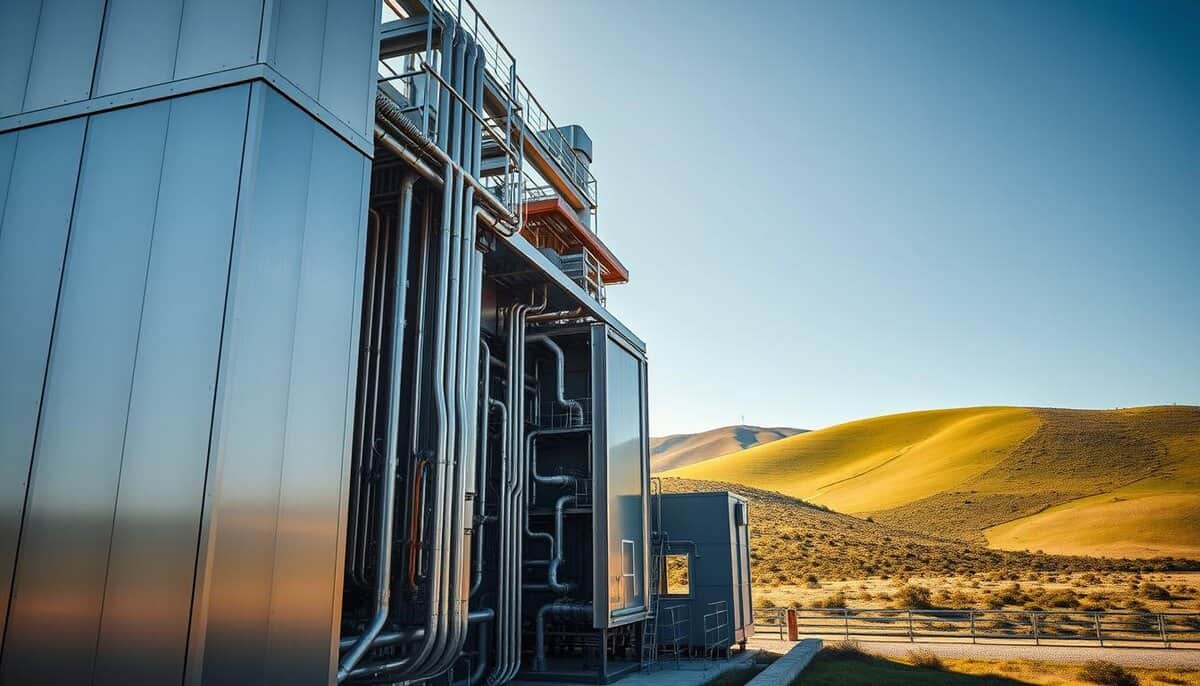
Con l'impegno globale a combattere cambiamento climatico si intensifica, Cattura diretta dell'aria (DAC), usually meant for Direct Air Cattura del carbonio (DACC) emerges as a promising yet controversial technology in the arsenal of carbon dioxide removal (CDR) strategies. This article will dissect the fundamental principles of DAC technology, analyze various approaches such as solid sorbents and liquid solvents, and highlight the current stage of development traversed by key industry players. Inoltre, si affronteranno i requisiti energetici, l'impossibile redditività economica e l'impatto ambientale dei sistemi DAC, affrontando anche le sfide e le idee sbagliate che possono offuscarne l'efficacia e la scalabilità.
Punti Chiave
- Il DAC si basa sulla cattura di CO2 direttamente dall'aria ambiente.
- Le diverse tecnologie includono sorbenti solidi e solventi liquidi.
- La tecnologia si sta evolvendo e stanno emergendo importanti operatori del settore.
- Per il funzionamento del DAC è necessario un apporto energetico molto significativo.
- La fattibilità economica varia in modo significativo a seconda della regione e della tecnologia.
- La scalabilità si scontra con idee sbagliate riguardo all'efficacia e ai costi.
- I rifiuti migliori sono quelli che non si producono all'inizio.
Principi fondamentali della tecnologia di cattura del carbonio ad aria diretta
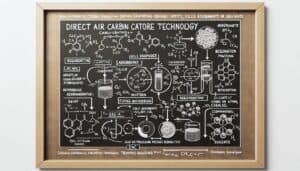
Direct Air Carbon Capture (DAC) technology operates on the principle of chemically capturing carbon dioxide (CO₂) straight from the atmosphere. It typically employs a sorbent or solvent that selectively binds CO₂. Upon saturation, the material is then subjected to a regeneration process, often involving heat or a reduction in pressione, to release the captured CO₂. For instance, systems using solid sorbents might employ a cyclic process where the sorbent is heated to around 100-150 degrees Celsius to release CO₂. This process can be represented by the reaction:
[latex] {CO}_2 + {Sorbente} {\code(0144)} {Sorbente-CO}_2 {(forma legata)} [/latex]
The overall efficiency of DACC systems can vary significantly based on the technology and design employed. Several methods include high-temperature sorbents, aqueous amine-based solvents, and alkaline mineralization. A report by the Global CCS Institute indicated that high-temperature sorbents can capture 90% of CO₂, while amine solutions can achieve similar results with lower energy costs. Each method shows distinct trade-offs in energy input, capture efficiency, and scalability potential, which influences the choice of technology based on the application required.
Un notevole progresso nella tecnologia DAC è la cattura diretta di CO₂ dall'aria ambiente combinata con fonti di energia rinnovabile per compensare i requisiti energetici operativi. Ad esempio, Climeworks, un'azienda leader nel settore dei DAC, ha riportato un costo di cattura di $600 per tonnellata di CO₂ nel 2021. Questa cifra evidenzia le attuali sfide finanziarie, sottolineando al contempo che con l'aumento degli investimenti e dell'innovazione i costi potrebbero diminuire nel tempo.
A partire dal 2025, test in scala reale hanno dimostrato che ciò è discutibile.
The rest of this article is reserved for members
To limit scraping bots (currently 40,000 hits per day!),
we had to restrict access to full articles and tools to registered members only.
to access all the rest.