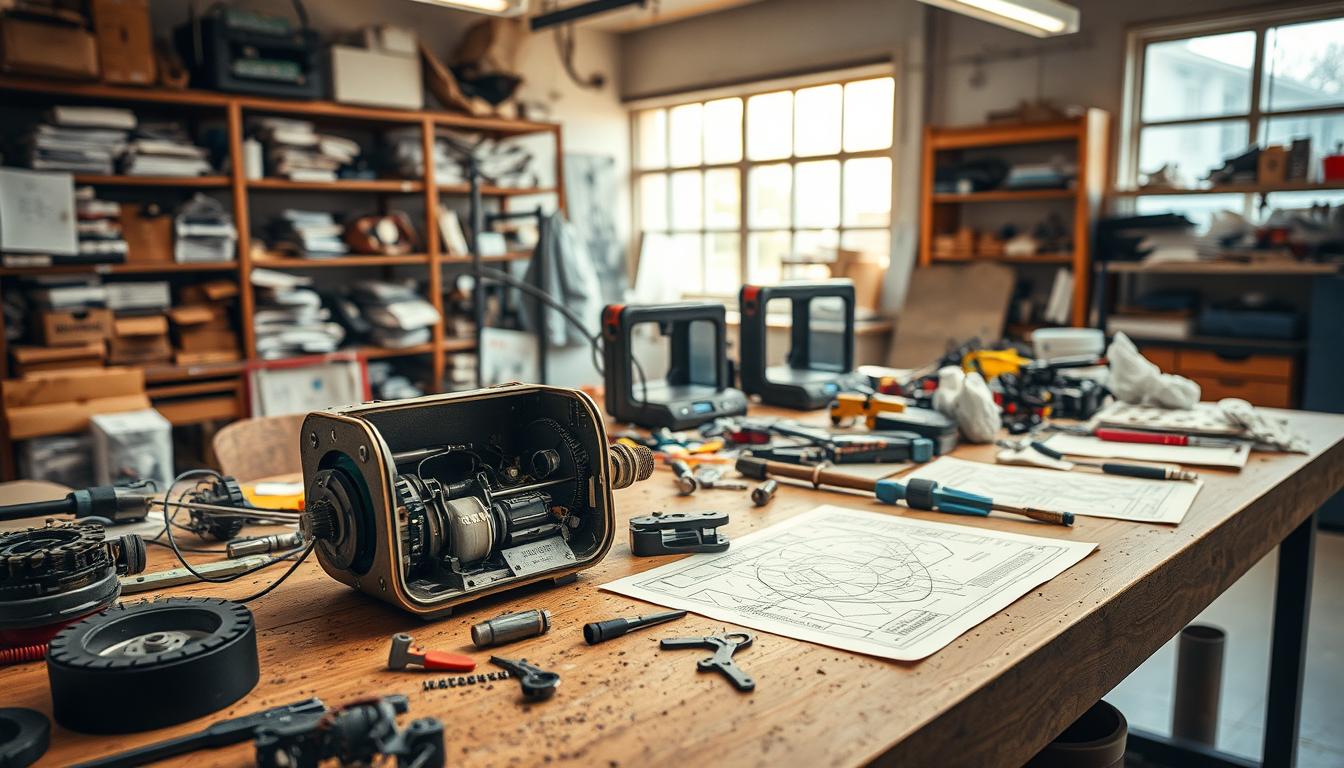
As we look to make our planet greener, the journey of one engineer stands out. We found that ingegneria inversa could breathe new life into old machines, home appliances or consumer products. This method not only made the products last longer but also opened doors to recycle and create new products from old materials. With a need to decrease waste and keep things in use longer, reverse engineering becomes key.
This piece will explore how reverse engineering can play a big part in keeping engineering and manufacturing sustainable.
Reverse engineering is not necessary copying and infringing someone-else proprietà intellettuale (or at least regulation should move into that direction).
Punti Chiave
- Reverse engineering optimizes maintenance strategies for aging machinery and un-maintained products.
- It facilitates riciclaggio processes, making waste reduction more efficient.
- Riciclo creativo opportunities arise through the analysis of materials and old product designs.
- Reverse engineering supports sustainable solutions across product lifecycles.
- This approach can play a significant role in enhancing product longevità.
Reverse engineering is about taking apart a product to see how it works. This includes taking it apart, looking at each piece, and writing down what you find. The main goal is usually to make the product better or to come up with new ideas or to reproduce an obsolete part.
In areas from old electronics to retired cars, ingegneria inversa helps make products work better. By studying and tweaking designs, companies can keep their products up-to-date. This helps avoid having to stop using old products too soon. Through careful study, engineers can find ways to reuse and redesign, reducing waste.
Reverse Engineering in Product Lifecycle Management
“Reverse engineering is critical in managing a product’s durata, even if, or especially if, not intended so by original manufacturer.”
Assessing current products permits to spot improvement areas. This allows for better design and more efficient production, improving the product’s overall functionality and longevity. It also leads to better maintenance strategies. By understanding a product’s details, other companies can maintain it better, increases the product’s life and satisfies initial or secondary product owners.
This approach helps companies follow environmental rules. It promotes the use of sustainable solutions in design. Products then become easier to riciclare o riutilizzare, meeting both legal and consumer eco-friendly expectations.
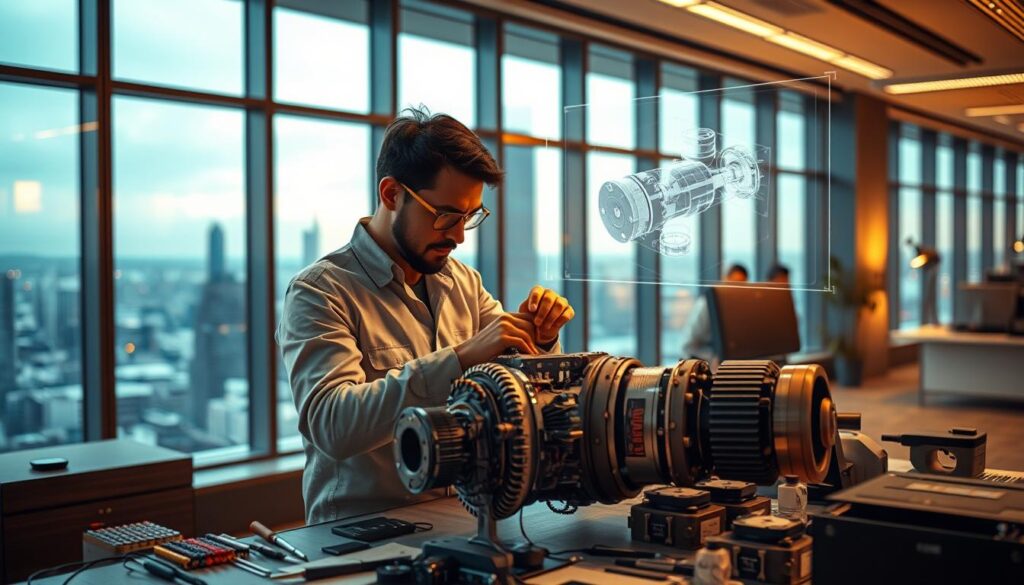
Reverse Engineering for Maintenance, Recycle and Upcycle
Reverse engineering makes products last longer and waste less. It allows businesses to look at existing products and find what can be better. This way, they can see what parts need fixing or can be made better, leading to better maintenance.
- enhancing product lifespans: organizations use reverse engineering to deeply understand their products. This helps in making smart improvements. By finding and fixing weak spots, products become more durable. This not only saves money but also helps the environment by reducing the need for new products.
- reducing waste through effective maintenance: using reverse engineering for maintenance helps cut down on waste. It lets companies fix parts before they break fully. This keeps more products usable and lessens waste. It matches well with efforts to recycle more and use resources wisely, making operations more efficient.
(indeed, buying a new east-made cheap motore would have spared him 2 hours of work)
- sustainable practices enabled by reverse engineering: by studying old or competitor products, companies can create designs that last longer and use fewer resources. It helps find green solutions, making products that help the environment longer. This method helps create eco-friendly materials and ways to make things that save energy. These ideas often come from re-thinking how we’ve made stuff in the past.
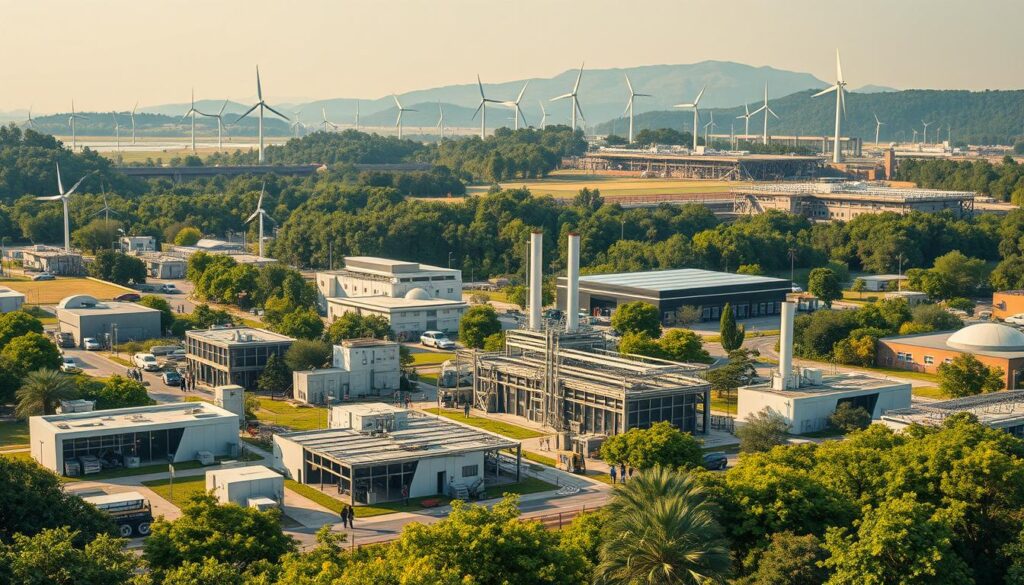
Implementing Repair and Reuse Strategies
Making products that last is key to sustainability. By focusing on how long they last and how easy they are to fix, companies meet customer needs and shrink their environmental impact. It’s important to pick out essential parts for repair early in the design stage. This makes fixing and making products last longer easier. Such forward-thinking boosts new ways to fix things and extends durata del prodotto.
- Identifying key components for repair: finding which parts wear out or break easily is a big part of repair plans. Companies should use materials and parts that are easy to fix or switch out. Designing with these important parts in mind helps build a habit of taking care of what we own. This way, people keep their stuff longer, saving resources and focusing on being green. Tip: refer to many posts of this blog for many techniques and processes for design for reliability and maintenance.
- Designing for smontaggio: making products easy to take apart is essential for fixing and recycling. They should be made so you can get to important parts easily, without breaking anything else. By designing with disassembly and reuse in mind, engineers make products simpler to maintain and recycle. This approach cuts down waste, supporting sustainable goals and a economia circolare. Tip: refer to many posts of this blog for many design tips for design for disassembly.
- Support circular economy initiatives: reverse engineering helps the circular economy by making use of resources better and finds raw materials to reuse or recycle. This cuts down on waste. Keeping resources in use for as long as possible is a major goal of the circular economy.

Upcycling Techniques Through Reverse Engineering
Upcycling techniques use reverse engineering to turn waste into valuable products. This method lessens environmental harm and creates new value. By studying how rejected materials were originally made and used, we can find creative ways to make them better and more beautiful.
Creating value from waste: seeing the hidden worth in things usually thrown away leads to new, imaginative creations. This process can change old furniture into redesigned pieces or turn fabric scraps into stylish accessories.
Examples of Upcycled Products
- Furniture: old pallets converted into stylish coffee tables or benches.
- Fashion: jeans turned into trendy bags or aprons, showing how fabrics can be reused.
- Home ddecor: glass bottles made into decorative lamps or vases, revealing innovation in lighting designs.
- Automotive parts: car tires repurposed as outdoor planters, aiding in eco-friendly gardening.

Challenges in Applying Reverse Engineering for Sustainability
Using reverse engineering to help the planet faces tough challenges. Cost is a big one. Companies often find the initial expenses hard to handle. This can stop them from buying the tech needed for going green. Since these investments don’t pay off right away, people hesitate to make the leap.
Technology is another roadblock. Many older systems can’t handle today’s complex recycling needs. This makes it hard to reuse or recycle materials well, adding to waste. Without the latest automatic material analysis tools, figuring out if materials can be recycled is tough. Coatings and complex material assemblies make ordinamento and reuse even tougher.
Rules and laws add to the problem. The rules about recycling and managing waste change from place to place. They have to deal with lots of rules that can slow things down, making it costly and tricky. To deal with these issues, industries need better plans and rewards.
Per le grandi aziende la tentazione può essere quella di inviare vecchi prodotti dove le normative ambientali sono meno severe.
| Sfide | impatto | Potential Solutions |
|---|---|---|
| Economic Factors | High initial costs reduce investment in sustainable technologies | Incentives and subsidies from government bodies Taking into account full cost of ownership, including recycling |
| Technological Limitations | Outdated tools hinder accurate analysis and assessment | Investment in advanced software and machinery |
| Regulatory Barriers | Inconsistent regulations complicate compliance Intellectual property laws | Streamlined regulation frameworks conducive to sustainability. Update in IP regulations for non-maintained products. |

Conclusione
Reverse engineering brings big benefits for maintenance, recycling, and upcycling. By taking apart and studying products, industries can make them last longer, cut down on waste, and come up with new ideas. This way, they can work better in a circular economy, where things are reused and recycled.
Looking ahead, the success of green practices depends a lot on better reverse engineering tools and laws. As these tools improve, we’ll find smarter ways to use resources and recycle.
In the end, using reverse engineering can lead us to a greener future. It can make fixing and reusing things the norm, not just rare exceptions.
An update of intellectual property laws is needed to promote some cases or reverse.
Related Techniques
- Product disassembly analysis: techniques for taking apart products to understand their construction, materials, and functionality for ecologia and recycling.
- Material identification and characterization: spettroscopia (FTIR, XRF), microscopy, and other analytical techniques to identify materials for proper recycling or upcycling.
- Gemello digitale: developing digital models from physical parts for optimization, reuse, or rigenerazione.
- 3D scanning and imaging: use of laser scanners, CT scanners, and photogrammetry to reverse engineer parts for remanufacture or modification.
- Non-Destructive Testing (NDT): ultrasound, magnetic resonance, and other techniques for inspecting parts without damaging them, aiding maintenance and recycling.
- Progettato per lo smontaggio (DfD): engineering approaches to make future disassembly, recycling, and reuse more feasible.
- Component re-engineering: redesigning outdated or obsolete parts using RE for improved environmental performance.
- Circular economy platforms: digital marketplaces and systems that track and facilitate part reuse, recycling, and upcycling.
- Remanufacturing technologies: automated cleaning, refurbishment, and repair technologies for returned products.
- Recyclability enhancement algorithms: AI and machine learning tools that suggest design changes for better recyclability during RE.
- Eco-labeling and tracking technologies: RFID, blockchain, and IoT for tracing product and material origin, lifespan, and recycling status.
- Functional decomposition: breaking down products into functional modules to identify reusable or upcyclable subsystems.
- Chemical recycling processes: advanced depolymerization and material recovery technologies to process complex waste streams.
External Links on Reverse Engineering For Maintenance & Recycle
Standard internazionali
(passa il mouse sul link per vedere la nostra descrizione del contenuto)
Glossario dei termini utilizzati
Computed Tomography (CT): Una tecnica di imaging medico che utilizza raggi X ed elaborazione computerizzata per creare immagini trasversali del corpo, consentendo una visualizzazione dettagliata delle strutture e dei tessuti interni. Migliora le capacità diagnostiche fornendo rappresentazioni tridimensionali a partire da dati bidimensionali.
Design for Disassembly (DfD): Un approccio progettuale che facilita la separazione dei componenti e dei materiali al termine del ciclo di vita di un prodotto, promuovendo il riciclo, il riutilizzo e un'efficiente gestione dei rifiuti. Enfatizza la modularità e l'accessibilità per migliorare la sostenibilità e ridurre l'impatto ambientale.
Design for Reliability (DfR): un approccio sistematico allo sviluppo del prodotto che enfatizza l'affidabilità durante l'intero processo di progettazione, incorporando tecniche per identificare e mitigare potenziali modalità di guasto, garantendo prestazioni costanti e longevità negli ambienti operativi.
Fourier Transform Infrared Spectroscopy (FTIR): una tecnica che misura lo spettro infrarosso di assorbimento o emissione di un campione raccogliendo simultaneamente dati su un intervallo di lunghezze d'onda, utilizzando algoritmi di trasformata di Fourier per convertire i dati del dominio del tempo in spettri del dominio della frequenza per l'analisi chimica.
Internet of Things (IoT): una rete di dispositivi interconnessi dotati di sensori, software e altre tecnologie che consentono loro di raccogliere e scambiare dati tramite Internet, facilitando l'automazione, il monitoraggio e il controllo di vari processi e sistemi.
Non-Destructive Testing (NDT): un metodo utilizzato per valutare le proprietà, l'integrità o la struttura dei materiali senza causare danni, impiegando tecniche quali test ultrasonici, radiografici, con particelle magnetiche e con liquidi penetranti per rilevare difetti o discontinuità.
Product Lifecycle Management (PLM): un approccio sistematico alla gestione del ciclo di vita di un prodotto, dall'ideazione alla progettazione ingegneristica e alla produzione, fino all'assistenza e allo smaltimento, integrando persone, processi, dati e tecnologia per migliorare la qualità del prodotto, ridurre i tempi di commercializzazione e migliorare la collaborazione tra le parti interessate.
Upcycle: per trasformare materiali di scarto o prodotti indesiderati in nuovi articoli di qualità o valore superiore, spesso attraverso il riutilizzo o la riqualificazione creativa, riducendo così l'impatto ambientale e promuovendo la sostenibilità.
X-ray Fluorescence (XRF): Tecnica utilizzata per analizzare la composizione elementare dei materiali misurando i raggi X caratteristici emessi da un campione quando viene eccitato da una sorgente primaria di raggi X. È comunemente impiegata in vari campi, tra cui la scienza dei materiali e l'analisi ambientale.
































