Product Design, Manufacturing & Innovation Resources
Casa » Dalla culla alla culla (C2C)

Dalla culla alla culla (C2C)

2002
  • William McDonough
  • Michael Braungart
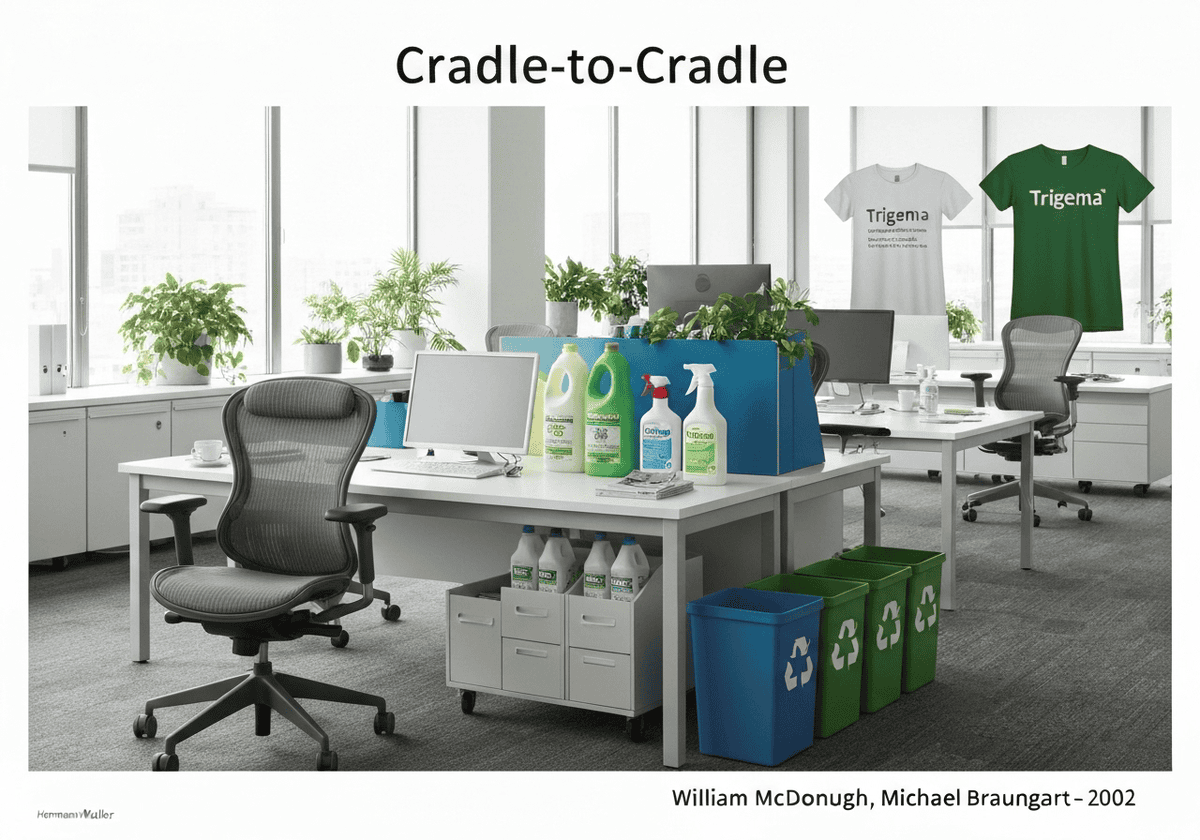
Ufficio sostenibile con prodotti certificati Cradle-to-Cradle, tra cui sedie e prodotti per la pulizia.

(Immagine generata a solo scopo illustrativo)

Cradle-to-Cradle (C2C) is a design philosophy that models human industry on nature’s processes. It views materials as “nutrients” circulating in closed-loop systems. The framework distinguishes between two cycles: the biological cycle, for biodegradable materials that can safely return to the soil, and the technical cycle, for materials that are continuously reused or upcycled in industrial processes without losing quality. Superabsorbent polymers show why the label matters: a claim of sodium polyacrylate biodegradable behavior should be verified before such a material is placed in the biological cycle.


IL Dalla culla alla culla framework fundamentally challenges the traditional “cradle-to-grave” industrial model, which results in a one-way flow of materials to landfills or incinerators. C2C proposes a circular economy where waste is eliminated by design. This is achieved by meticulously selecting materials based on their human and environmental health characteristics, avoiding toxic substances altogether. Products are designed for smontaggio, allowing their components to be easily separated and returned to their respective cycles at the end of their use phase.

In the biological cycle, materials like natural fibers, certain bioplastica, and organic pigments are designed to be consumed by microorganisms and return to the biosphere as biological nutrients, enriching the soil. In the technical cycle, synthetic materials like polymers, metals, and alloys are designed to be high-quality “technical nutrients.” These materials are intended to be perpetually upcycled into new products of the same or higher quality, never becoming waste. This contrasts with conventional recycling, which often results in downcycling, where the material quality degrades with each cycle.

L'implementazione del C2C richiede un cambiamento di mentalità, passando dal semplice essere "meno dannosi" (eco-efficienza) all'essere "più buoni" (eco-efficacia). Incoraggia l'innovazione nella scienza dei materiali, nella progettazione dei prodotti e nei modelli di business. Il programma C2C Certified™ Products offre un sistema di verifica di terze parti che valuta i prodotti in base alla salubrità dei materiali, al riutilizzo dei materiali, alle energie rinnovabili e alla gestione del carbonio, alla gestione delle risorse idriche e all'equità sociale.

UNESCO Nomenclature: 3308
- Tecnologia industriale

Tipo

Sistema astratto

Interruzione

Rivoluzionario

Utilizzo

Uso diffuso

Precursori

  • Walter R. Stahel’s work on the performance economy and circuito chiuso systems in the 1970s
  • Il concetto di ecologia industriale, emerso alla fine degli anni '80
  • The German “Green Dot” packaging riciclaggio system (1991)
  • Principi generali di biomimetica

Applicazioni

  • Sedie da ufficio certificate C2C di Herman Miller (ad esempio, Aeron)
  • method home cleaning products with biodegradable ingredients and riciclato imballaggio
  • Piastrelle per moquette eco-worx di Shaw Industries, progettate per essere smontate e riciclate.
  • T-shirt compostabili certificate C2C di trigema
  • materiali da costruzione certificati C2C di van houten

Brevetti:

NA

Idee e potenziali innovazioni

  • self-disassembling electronics triggered by a specific signal at fine vita
  • imballaggio commestibile per prodotti alimentari che diventa un nutriente biologico
  • componenti edilizi modulari che possono essere riconfigurati per usi diversi nel corso dei secoli
  • Filamenti per stampa 3D realizzati con nutrienti tecnici che possono essere restituiti e ristampati all'infinito
  • “material passports” using blockchain to track a component’s composition and history through the technical cycle
  • sistemi di agricoltura urbana che utilizzano rifiuti di prodotti compostabili come input diretto di fertilizzante
  • abbigliamento realizzato con fibre che possono essere compostate biologicamente o tecnicamente rifilate in nuovi filati
  • service models where manufacturers retain ownership of products, leasing them to users and ensuring their return for upcycling
Related to: cradle-to-cradle, C2C, economia circolare, william mcdonough, michael braungart, upcycling, closed-loop system, industrial design.

Contesto storico

Dalla culla alla culla (C2C)

2000
2000
2000
2002
2010
2013
2000
2000
2000
2000
2003
2010
2013-09-24

(se la data è sconosciuta o non rilevante, ad esempio "meccanica dei fluidi", viene fornita una stima approssimativa della sua notevole comparsa)

decimo anno anniversario

Le immagini a grandezza naturale e i download sono disponibili, gratuitamente al 100%, solo per gli utenti registrati.

> Login <