Product Design, Manufacturing & Innovation Resources
Home » Iterative Design Process Cycle

Iterative Design Process Cycle

1980
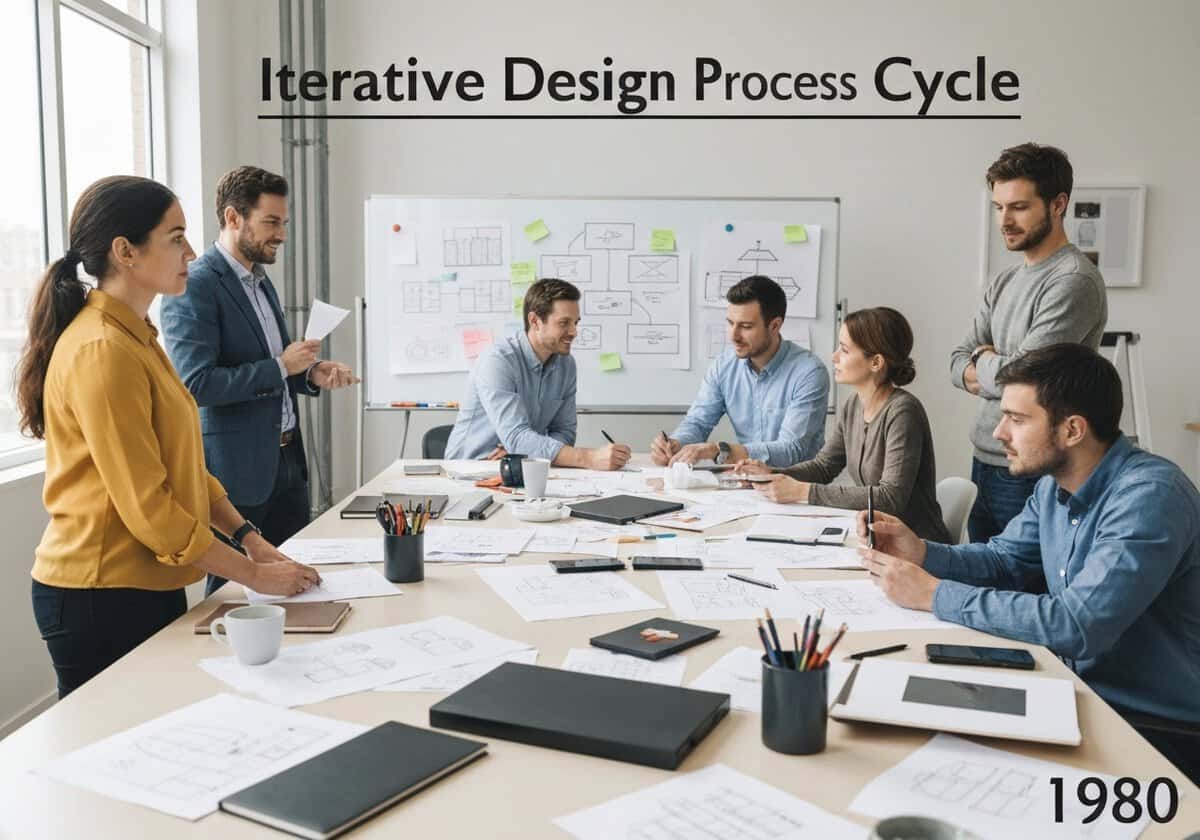
Industrial designers collaborating in a modern studio on iterative design methodology.

(generated image for illustration only)

Iterative design is a design methodology based on a cyclic process of prototyping, testing, analyzing, and refining a product or process. Based on the results of testing the most recent iteration, changes and refinements are made. This process is intended to ultimately improve the quality and functionality of a design by repeatedly cycling through these steps.
The iterative design process begins with an initial implementation or prototype, which may be a simple paper sketch, a wireframe, or a minimally functional piece of software. This initial version is then subjected to testing, often involving end-users, to gather feedback on its usability, functionality, and overall effectiveness. The key is to test against specific goals and requirements defined at the outset. Following the testing phase, the results are analyzed to identify problems, areas for improvement, and new requirements that may have emerged. This analysis informs the next iteration. The design is then refined based on these findings, and a new, improved prototype is created. This cycle of implementation, testing, and evaluation repeats until the design meets its goals to a satisfactory level or until project constraints (like time or budget) are met. This approach contrasts sharply with linear models like the Waterfall method, where each phase must be fully completed before the next begins. The primary advantage of iteration is its ability to incorporate feedback early and often, reducing the risk of developing a final product that fails to meet user needs.

UNESCO Nomenclature: 3301
– Industrial design and technology

Type

Abstract System

Disruption

Incremental

Usage

Widespread Use

Precursors

  • scientific method (hypothesis, experiment, analysis)
  • plan-do-check-act (PDCA) cycle
  • cybernetics and feedback loop theory
  • early prototyping in engineering and architecture

Applications

  • agile software development
  • user experience (UX) design
  • lean startup methodology
  • rapid prototyping of physical products
  • scientific research methodologies

Patents:

NA

Potential Innovations Ideas

Due to scrapping bot traffic, currently more than 40k per day, this content is reserved to community members.
> Login < or > Register < (100% free) to access this, so as all other restricted content and tools.

Related to: iterative design, cyclic process, prototype, test, analyze, refine, user feedback, product development, methodology, agile.

Historical Context

Iterative Design Process Cycle

1980
1980
1980
1980
1980
1981
1986
1980
1980
1980
1980
1980
1980
1984
1986

(if date is unknown or not relevant, e.g. "fluid mechanics", a rounded estimation of its notable emergence is provided)

Related Invention, Innovation & Technical Principles

Full size images and downloads are only available, 100% free, for registered members.

> Login <