Product Design, Manufacturing & Innovation Resources
Home » Hot Gas Welding of Thermoplastics

Hot Gas Welding of Thermoplastics

1950
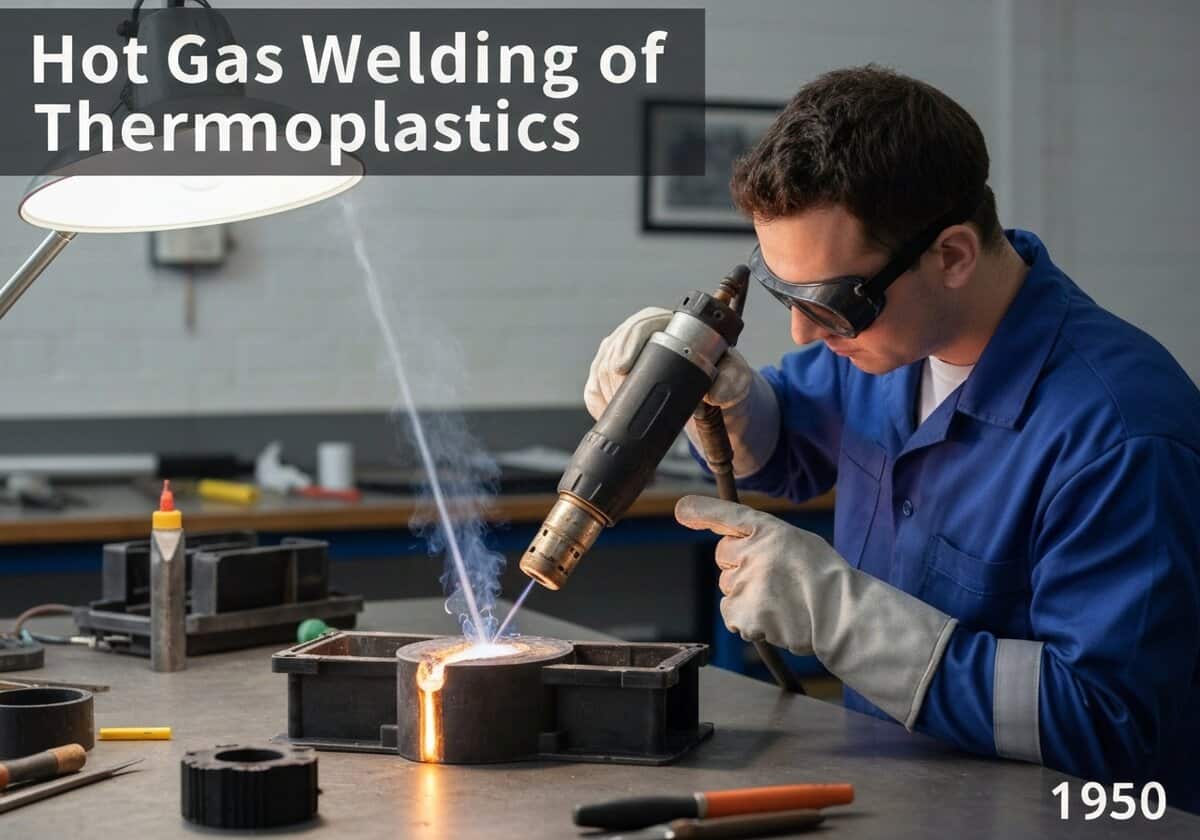
Technician welding thermoplastics using hot gas in a workshop setting.

(generated image for illustration only)

Hot gas welding is a fabrication process that joins thermoplastic materials using a stream of heated gas, typically air, to soften the surfaces. A specialized heat gun directs the hot gas onto the joint area and a plastic filler rod simultaneously. As the base material and the rod melt, they are pressed together, fusing upon cooling to form a continuous, solid bond. Because the filler rod must match the base material, the plastic is identified first, and a plastic identification chart helps choose the right rod.


Hot gas welding is analogous to oxy-fuel welding for metals but operates at much lower temperatures and uses hot gas instead of an open flame. The process requires a handheld or automated heat gun, pressure rollers, and a filler rod made of the same or a very similar plastic as the workpiece to ensure material compatibility. The temperature of the hot gas is critical and must be carefully controlled based on the specific thermoplastic being welded, typically ranging from 200°C to 300°C (400-575°F). Proper technique involves maintaining a consistent angle and distance for the heat gun and applying steady pressure to the filler rod to force it into the joint. Surface preparation, such as cleaning and beveling the edges of the joint, is essential for achieving a strong weld. The technique is versatile and portable, making it suitable for both in-shop fabrication and on-site repairs. It is commonly used for materials like polyethylene (PE), polypropylene (PP), polyvinyl chloride (PVC), and acrylonitrile butadiene styrene (ABS).

UNESCO Nomenclature: 3322
– Polymer Technology

Type

Physical Process

Disruption

Substantial

Usage

Widespread Use

Precursors

  • invention of thermoplastics like PVC and polyethylene
  • development of electric heat guns
  • principles of metal welding (oxy-acetylene and arc welding)
  • understanding of polymer melt behavior and rheology

Applications

  • fabrication of chemical and water tanks
  • repair of plastic automotive parts like bumpers
  • welding of plastic pipes and ductwork
  • boat hull repairs
  • lining and geomembrane installation

Patents:

NA

Potential Innovations Ideas

  • automated hot gas welding systems with robotic arms for repetitive tasks
  • smart heat guns with integrated temperature sensors and feedback loops
  • development of co-extruded filler rods with a core for strength and an outer layer for better bonding
  • portable, battery-powered hot gas welders for field repairs
  • integration of computer vision to guide the welding process and ensure consistent bead application
  • use of inert gas instead of air for welding oxygen-sensitive polymers
  • 3d printing nozzles that incorporate hot gas welding to join printed layers more effectively
  • miniaturized hot gas tools for electronics and medical device assembly
  • filler rods containing conductive particles for creating embedded circuits
  • self-healing plastics that use a similar heat-activated principle for repair
Related to: hot gas welding, plastic fabrication, thermoplastic welding, filler rod, heat gun, polymer joining, plastic repair, polyethylene, polypropylene, PVC.

Historical Context

Hot Gas Welding of Thermoplastics

1949
1950
1950
1950
1950
1950
1955
1948
1950
1950
1950
1950
1950
1950
1955

(if date is unknown or not relevant, e.g. "fluid mechanics", a rounded estimation of its notable emergence is provided)

10th year anniversary

Full size images and downloads are only available, 100% free, for registered members.

> Login <