Product Design, Manufacturing & Innovation Resources
Home » Electrolysis of Water

Electrolysis of Water

1800-05-02
  • William Nicholson
  • Anthony Carlisle
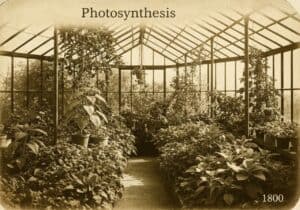
Electrolysis apparatus demonstrating water decomposition into hydrogen and oxygen gases.

(generated image for illustration only)

The electrolysis of water is the decomposition of water (H₂O) into its constituent elements, oxygen (O₂) and hydrogen (H₂), by passing an electric current through it. At the cathode, two water molecules are reduced to form hydrogen gas and hydroxide ions. At the anode, two water molecules are oxidized to form oxygen gas, protons, and electrons.
The decomposition of pure water into hydrogen and oxygen is a thermodynamically unfavorable process, requiring external energy in the form of electricity. Pure water is a poor conductor of electricity, so an electrolyte, such as a small amount of a soluble salt or an acid like sulfuric acid, is typically added to increase conductivity. The overall balanced equation for the reaction is \(2H_2O(l) \rightarrow 2H_2(g) + O_2(g)\).

The process occurs in an electrolytic cell. At the negatively charged cathode, a reduction reaction takes place: \(2H_2O(l) + 2e^- \rightarrow H_2(g) + 2OH^-(aq)\). At the positively charged anode, an oxidation reaction occurs: \(2H_2O(l) \rightarrow O_2(g) + 4H^+(aq) + 4e^-\). The production of hydrogen gas at the cathode is exactly twice the volume of oxygen gas produced at the anode, a direct consequence of the stoichiometry of water. This 2:1 volume ratio is a classic demonstration in chemistry classrooms, often performed using a Hofmann voltameter.

The minimum voltage required for electrolysis to occur, known as the decomposition potential, is 1.23 V at standard conditions. However, in practice, a higher voltage, called overpotential, is needed to overcome various activation barriers. The efficiency of water electrolysis is a key factor in the viability of a hydrogen-based economy, with significant research focused on developing more effective and cheaper catalysts for the anode and cathode to reduce the overpotential and energy consumption.

UNESCO Nomenclature: 2406
– Electrochemistry

Type

Chemical Process

Disruption

Substantial

Usage

Widespread Use

Precursors

  • discovery of hydrogen by henry cavendish
  • discovery of oxygen by carl wilhelm scheele and joseph priestley
  • invention of the voltaic pile by alessandro volta

Applications

  • hydrogen production for fuel cells and vehicles
  • production of high-purity oxygen for medical and industrial use
  • life support systems in submarines and spacecraft
  • welding and cutting torches (oxyhydrogen)
  • production of deuterium (heavy water)

Patents:

NA

Potential Innovations Ideas

Due to scrapping bot traffic, currently more than 40k per day, this content is reserved to community members.
> Login < or > Register < (100% free) to access this, so as all other restricted content and tools.

Related to: water electrolysis, hydrogen production, oxygen production, decomposition, cathode, anode, hofmann voltameter, green hydrogen.

Historical Context

Electrolysis of Water

1800
1800-05-02
1880
1900
1910
1921
1930
1930
1800
1834-01-01
1880
1902
1920
1928
1930

(if date is unknown or not relevant, e.g. "fluid mechanics", a rounded estimation of its notable emergence is provided)

Related Invention, Innovation & Technical Principles

Full size images and downloads are only available, 100% free, for registered members.

> Login <