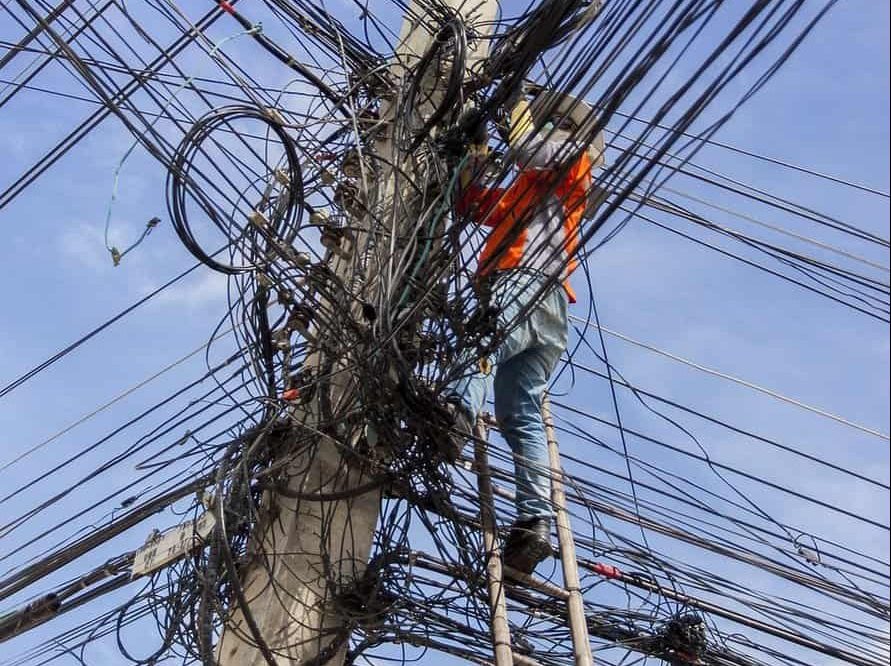
For product design engineers. The 40 TRIZ Principles are the solutions to solve the “TRIZ contradictions” in product design problem-solving or to highlight other approaches during your product design brainstorming sessions.
द ideal final result in TRIZ resembles the clean sheet design meaning: a new concept is imagined without the limits of the current product. A cleansheet analysis of cost can then compare that concept with the existing one.
This article focuses on the 40 triz principles to be used with or without the TRIZ methodology.
Refer to TRIZ methods, tips, and tools at the end of this article.
The 40 TRIZ Principles
As these are translations from Russian -that may vary from book to book-, we have taken the most commonly used terminology, and we have regrouped the triz principles by family.
Note: we added complementary principles and technologies in the following chapter.
Highlighted in green is our selection of principles of high interest & frequent usage in Product Design
Different Assembly
This family regroups all means of assembling the components or parts differently. Clearly to be applied during the design choices.
| examples | our comments | |||
| #1 | Segmentation | Divide an object into independent parts |  | Good to solve a tech problem or source a component of the shelf, but may lead to complexity & additional costs |
| #2 | Taking out | Separate an interfering part or property from an object, or single out the only necessary part or property of an object |  | can be very effective, but product intent must be clear to eventually cut into the product specs |
| #4 | Asymmetry | Do not apply force or loads in a uniform or even way |  | Applied locally frequently permits to reduce of the power and lean the structure (min exception and fatigue) |
| #5 | Merging | Regroups smaller parts or components to achieve the main goal |  | Depends on context and volume: a dedicated part or component could be more cost and material effective |
| #7 | Nesting | Do you remember the “Matrioshka“, the Russian nested wood-carved dolls? | 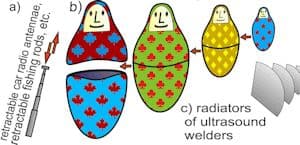 | Modularity, a gain in storage, transport, उत्पाद वेरिएंट … |
| #27 | Intermediary | असेंबली में एक मध्यवर्ती भाग या फ़ंक्शन जोड़ें |  | Not the leanest approach. Is that the only solution? |
Adapt To Users or Context
This category regroups all means of changing the product or the system relative to its environment. Mostly at the specification phase rather than later at the design board.
| examples | our comments | |||
#3 | Local quality | adapt the level of quality to the strict required, and only at the required place |  | “Overprocessing” in the 7 लीन की बर्बादी mindset, but for the Design Phase |
| #6 | Universality | Give other usages to an existing part or product |  | Open new markets at very low effort and environmentally friendly. Not exactly to solve a design issue, but upstream. |
| #22 | Benefit From Harm | By lowering, adding, or increasing the harmful factor, make it a beneficial or secondary function | 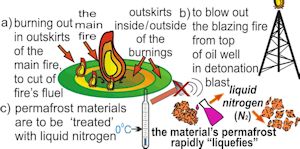 | |
| #23 | Feedback | Adapt actuator to effectively required parameter; control loop |  | Self-leveling & without user intervention. |
| #25 | Self-service | Have the part or product perform other functions, regenerate itself, or produce usable wastes. |  | When possible, a nice way of value added |
| #26 | Copying | Replace complex and costly components with cheap light and simple copies, or work on an image rather than the costly object itself |  | (का सार मूल्य विश्लेषण (यदि आप पहले से इसका उपयोग नहीं कर रहे थे) |
| #27 | Consumables | Replace something strong and costly with consumable parts or components |  | mind the wastes, environment, and new regulations. Other Lean approaches exist |
Forms Follow Functions
One of the motos of this site. Read the corresponding post on Forms Follow Functions (fff): regroups all mean that change the shape or space. Usually, the simplest, most reliable, and most cost-effective solutions.
| examples | our comments | |||
| #8 | Anti-weight | Use the weight to lower other actuators |  | typically the counterweight in an elevator |
| #14 | Spheroidality, Curvature | Make is round | 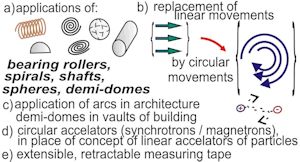 | |
| #17 | Another dimension | made 2D what is 1D, and 3D what is 2D |  | Permits opportunities (gaps, spaces) in the solving |
| #30 | Thin and Flexible | यदि हिलने-डुलने की आवश्यकता हो तो भारी संरचनाओं को पतला और अंततः लचीला बनाएं | 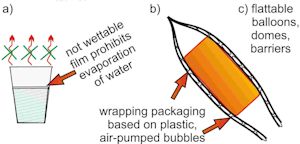 | See the plastic tricks design library for molded hinges or thin walls |
Time Is The Essence
Family regrouping all TRIZ principles function related to time and new sequence.
Because not visible on the drawing board, solving a technical challenge with a new timed sequence can be overlooked
… but beware of not degrading the प्रयोगकर्ता का अनुभव with longer or additional steps
| examples | our comments | |||
| #9 | Preliminary anti-action | Anticipate the harm with a counteraction | 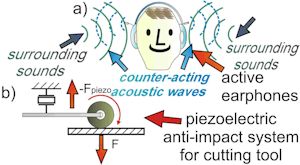 | ex: preload of concrete beams, before the load itself |
| #10 | Preliminary action | Perform in advance the requirement or change or prepare in advance | 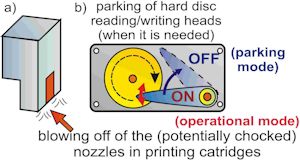 | |
| #11 | Beforehand cushioning | “Prevent rather than cure” before too late |  | Quality, Lean (…) but for design here |
| #13 | The other way round | Invert the physical principle or the parts relative to each other | 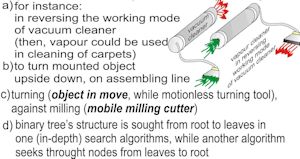 | ex: on a पेल्टियर मॉड्यूलएक तरफ को गर्म करने के बजाय ठंडा करें। |
| #20 | Continuity of useful action | Do not stop the process or movement |  | limit operations and WIP & uses inertia |
| #21 | Rushing Through | Perform the action quick |  | Same logic as applying the force not evenly listed earlier, but on time, to limit the effort, energy, or risk |
| #34 | Discarding and recovering | Use, dispose or reuse at a later time | 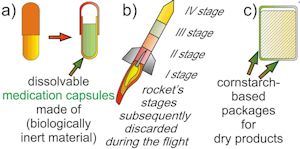 | Environment and production friendly |
Physical Properties
TRIZ Principles which are related to either mechanical, physical, or chemical properties of the materials or the environment.
| examples | our comments | |||
| #12 | Equipotentiality | To conserve energy, limit position changes in a potential field | 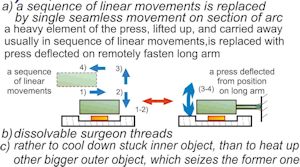 | do not move metal in a magnetic field, or raise parts in a gravity field |
| #15 | Dynamics | Make parts or components move relative to each other | 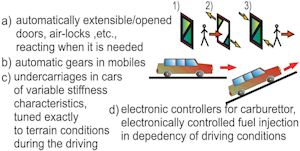 | |
| #16 | आंशिक या अत्यधिक क्रिया | Reduce or increase slightly some specs to reach the conform zone |  | Pareto: 20% makes the 80%. Or is 95% enough? |
| #18 | Mechanical vibration | Use vibrations rather than big movements |  | permits very local effect, usually more energy efficient |
| #19 | Periodic action | Replace continuous linear actuators with rotary, pulsating, or repetitive means |  | link to the previous, depending on the magnitude |
| #28 | Mechanics substitution | Replace Mechanics with चुंबक or electromagnetism |  | Refer to our Design with Magnets post |
| #29 | Pneumatics and hydraulics | Replace Mechanics with Hydraulics system |  | some constraints, but worth every cent when adaptative, flexible, or long distances |
| #31 | Porous materials | Design with porous materials (or increase micro or macro porosity) |  | Lighter. 3D पाजी & metal powder sintering helps these days |
| #32 | Color change | Change the color, or transparency to ease the process. Indicate information by a color change. | 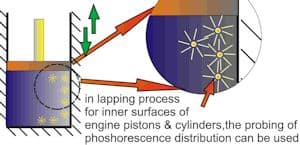 | many special inks or materials are available, for pressure, temperature, density, humidity (…) indication |
| #33 | Homogeneity | Two interacting parts should have the same or similar materials | 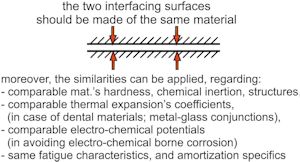 | … and if fixed, be the same part! |
| #35 | Material Properties changes | use change of material properties: physical state change, strength, rigidity, texture, flexibility … |  | (color, length in other principles) |
| #36 | Phases transition | use phase transition consequences: heat absorption or generation, volume change, transparency change … |  | |
| #37 | Thermal expansion | Use material thermal expansion (or contraction) to apply a force |  | Fixed or temporary assemblies. Use bimetals also |
| #38 | मजबूत ऑक्सीडेंट | O2 or O3 enriched atmosphere |  | Mind the flammability & corrosivity aspects |
| #39 | Inert atmosphere | O2 or O3 lowered atmospheres to freeze some chemical reactions | 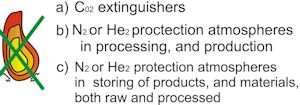 | Opposite of previous; refer to the Triangle of Fire |
| #40 | Composite materials | Use composite materials |  | Lighter. Well-known these days, but mind aging and process repeatability |
The TRIZ Methodology in a Nutshell
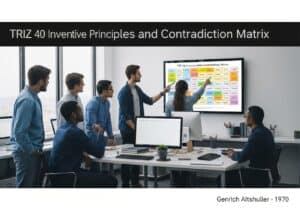
The contradiction matrix and the TRIZ principles are the fundamental tools within this methodology, developed by the Soviet inventor and science fiction writer Genrich Altshuller.
1 – Preparing the Contradiction Table
The table consists on aligning all 39 engineering parameters versus the new product functions. By cross-referencing these parameters within the matrix, designers and engineers can identify potential solutions that might not be immediately obvious, fostering innovative thinking and efficient problem resolution.
The 39 engineering parameters
| Weight of moving object Weight of non-moving object Length of moving object Length of non-moving object Area of moving object Area of non-moving object Volume of moving object Volume of non-moving object रफ़्तार Force Tension, pressure Shape Stability of object | Strength Durability of moving object Durability of non-moving object Temperature Brightness Energy spent by moving object Energy spent by non-moving object Power Waste of energy पदार्थ की बर्बादी Loss of information Waste of time Amount of substance | विश्वसनीयता Accuracy of measurement Accuracy of manufacturing Harmful factors acting on object Harmful side effects Manufacturability Convenience of use Repairability Adaptability Complexity of device Complexity of control Level of automation उत्पादकता |
The Product Functions
Refer to other articles on this site to define proper user product functions, not to be confused with constraints (ex: a mandatory legal standard is a constrain from a product design point of view … unless you are the standard distributor or reseller)
2 – Applying the 40 Principles
Addressing contradictions is the crucial step in problem-solving. The process begins with identifying the specific contradiction, which typically falls into one of two categories: technical or physical.
- A technical contradiction arises when improving one aspect of a system leads to the deterioration of another.
- A physical contradiction involves conflicting requirements for the same element.
Now filling the table with one or more of the 40 principles listed above in each cell is the key step.
As the table consists of likely several hundreds of cells, to be reviewed in details with an open mind to creative and new solution, the process can be very long. Some software do help for that, but you loose the global view of the table, adjacent columns or rows that can be grouped together in a common solution.
We have seen some detailed research on AI applied to TRIZ, without a publicly available tool so far (see public research paper here)
बख्शीश: if time is a factor, we recommend focusing on key contradictions and user functions, rather filling superficially all the cells. A design-to-cost या minimal viable product approche can help in this priorisation -see other posts for these methods-.
This systematic approach enables the transformation of the contradiction into a creative opportunity, facilitating innovative breakthroughs.
Triz Methodology examples
A classic example of TRIZ in action is its application in the automotive industry to address the challenge of reducing vehicle weight without compromising safety. By employing TRIZ principles, engineers identified the use of high-strength, lightweight materials like carbon fiber composites, which allowed for substantial weight reduction while maintaining structural integrity.
Another example can be found in electronics, where TRIZ has been used to enhance battery life in smartphones. By analyzing and overcoming contradictions, such as increasing battery capacity without enlarging the phone size, engineers innovated with energy-efficient processors and software optimizations. These examples demonstrate how TRIZ enables systematic innovation by transforming problems into opportunities for inventive solutions.
हमारे 9 नए पूरक इनोवेशन.वर्ल्ड सिद्धांत
हमें लगा कि मूल 40 TRIZ सिद्धांतों की सूची में ये पूरक सिद्धांत या प्रौद्योगिकियां अनुपस्थित थीं:

- मानकीकरण: अपने उत्पादन उपकरणों और उत्पादों की श्रृंखला दोनों के भीतर, साथ ही OEM और रेडीमेड घटकों का भी उपयोग करें (यह किसी भी सिद्धांत का अंतिम परिणाम नहीं हो सकता)। पेटेंट अनुसंधान, जो TRIZ पद्धति का मूल है)
- ठोस गैस या तरल: उदाहरण: हवा से जमी हुई नमी का उपयोग करके छोटे घटकों को उठाना और रखना। #35-सामग्री गुणों में परिवर्तन के साथ कुछ समानताएँ।
- प्रभाव: आवश्यकता पड़ने पर ही अचानक ऊर्जा के उच्च स्तर प्राप्त करना, न कि औसत शक्ति को बढ़ाना (उदाहरण: यांत्रिक दांत या रोलर एक्सट्रैक्टर)। #21-जल्दीबाजी से कुछ समानताएँ।
- गैर-न्यूटनियन तरल पदार्थस्थिर अवस्था में तरल अवस्था में रहता है, ऊर्जा, बल या गति मिलने पर कठोर हो जाता है। इसका उपयोग पहले से ही चारा उद्योग में किया जाता है। अंतिम प्रभाव से कुछ समानता रखते हुए, यह एक धातु पाउडर भी हो सकता है जो चुंबकीय क्षेत्र के संपर्क में आने पर ठोस हो जाता है, जैसा कि फेरोफ्लुइड्स में होता है।
- केशिकात्व: तरल को ऊपर उठाना, चूसना, दृश्यमान बनाना या तरल पदार्थों को मिलाना
- असमस और व्युत्क्रम परासरण: छिद्रयुक्त झिल्ली के माध्यम से अति सूक्ष्म तत्वों को अलग करना
- योजक सामग्री: रेजिन और पिघले हुए प्लास्टिक से लेकर सिंटर्ड मेटल पाउडर तक, विभिन्न 3डी प्रिंटिंग प्रौद्योगिकियां।
- चुंबकसूची में उल्लिखित विद्युतचुंबकत्व के अलावा; चुम्बकों के साथ डिजाइन के लिए समर्पित लेख देखें।
- स्प्रिंग्सया तो रेखीय या संकेंद्रित। हलचल या ऊर्जा शिखरों को समाप्त करने के लिए, लेकिन ऊर्जा को संग्रहित करने और बाद में उसे वापस देने के लिए भी (TRIZ विरोधाभास समाधानों में से एक: "समय में अलग")
TRIZ सिद्धांतों के लिए उपयोगी संसाधन
TRIZ सिद्धांतों पर कई वीडियो उपलब्ध हैं, लेकिन इस वीडियो में करेन गड्ड 40 सिद्धांतों की सूची बनाने के बजाय अवधारणाओं, वास्तविक उद्देश्य और संदर्भ को समझाती हैं। इसे देखें।
प्रत्येक 40 सिद्धांतों के लिए मूल चित्रों के साथ एक प्रस्तुति:
TRIZ सिद्धांत – आविष्कारशील समस्या समाधान का सिद्धांत का LogeshrajV

पूर्ण आकार की TRIZ सिद्धांतों की संक्षिप्त जानकारी पत्रक
पूरक पठन सामग्री एवं विधियाँ
- सोच को आकार दें: नवाचार के लिए एक मानव-केंद्रित दृष्टिकोण जो उपयोगकर्ता की जरूरतों को समझने, समस्याओं को पुनर्परिभाषित करने और प्रोटोटाइपिंग और परीक्षण के माध्यम से नवीन समाधान बनाने पर केंद्रित है।
- प्रणालियों की सोच: an approach to problem solving that considers the broader context and the interconnections between different components within a system.
- मूल कारण विश्लेषण: किसी समस्या के मूल कारणों की पहचान करने के लिए इस्तेमाल की जाने वाली एक विधि, जो लक्षणों के बजाय मूल मुद्दों को संबोधित करने वाले अधिक प्रभावी समाधानों को सक्षम बनाती है।
- आकारिकी विश्लेषण: एक ऐसी विधि जिसका उपयोग विभिन्न चरों के बीच संबंधों की जांच करके एक बहुआयामी, गैर-मात्रात्मक जटिल समस्या के सभी संभावित समाधानों का पता लगाने के लिए किया जाता है।
- ब्लू ओशन रणनीति: एक रणनीतिक दृष्टिकोण जो व्यवसायों को संतृप्त बाजारों (रेड ओशन) में प्रतिस्पर्धा करने के बजाय नए बाजार क्षेत्र (ब्लू ओशन) बनाने के लिए प्रोत्साहित करता है।
- विचारमंथन और माइंड मैपिंग: विभिन्न प्रकार के विचारों को उत्पन्न करने और उन्हें दृश्य रूप से व्यवस्थित करने के लिए रचनात्मक तकनीकें, ताकि उनके बीच संबंध स्थापित किए जा सकें और नवीन समाधान विकसित किए जा सकें।
- के लिए डिज़ाइन सिक्स सिग्मा (डीएफएसएस): एक ऐसा दृष्टिकोण जो डिजाइन सिद्धांतों को सिक्स सिग्मा पद्धतियों के साथ मिलाकर ऐसे उत्पाद और प्रक्रियाएं तैयार करता है जो ग्राहकों की जरूरतों को पूरा करती हैं और उच्च गुणवत्ता प्राप्त करती हैं।
- प्रतिष्ठित इंजीन्यरिंग: वस्तुओं या उत्पादों के 'मूल्य' को बेहतर बनाने के लिए कार्यक्षमता, लागत और प्रदर्शन की जांच और अनुकूलन करने की एक व्यवस्थित विधि।
अक्सर पूछे जाने वाले प्रश्न
TRIZ का पूरा नाम क्या है?
TRIZ रूसी परिवर्णी शब्द "टेओरिया रेशेनिया इज़ोब्रेटाटेल्सिख ज़दाच" के लिए, आमतौर पर आविष्कारशील समस्या समाधान के सिद्धांत के रूप में अनुवादित किया जाता है।
40 TRIZ सिद्धांतों को किसने और कैसे बनाया?
सोवियत इंजीनियर और आविष्कारक जेनरिच अल्टशुलर ने 1940 के दशक में सोवियत नौसेना में पेटेंट परीक्षक के रूप में काम करते हुए इस कार्य की शुरुआत की थी। उन्होंने और उनकी टीम ने लाखों पेटेंटों का विश्लेषण किया और पाया कि विभिन्न क्षेत्रों में किए गए आविष्कारों में एक ही तरह के दोहराए जाने वाले पैटर्न वाली समस्याओं का समाधान किया गया था।
TRIZ के कितने सिद्धांत हैं और क्या उनके नाम निश्चित हैं?
पारंपरिक सूची में कुल 40 सिद्धांत हैं। चूंकि यह सूची रूसी भाषा से अनुवादित है, इसलिए प्रत्येक पुस्तक में शब्दावली भिन्न है, और एक ही सिद्धांत के नाम थोड़े अलग हो सकते हैं। इस लेख में सबसे सामान्य नामों का उपयोग किया गया है और 9 पूरक सिद्धांत भी शामिल किए गए हैं।
TRIZ में तकनीकी विरोधाभास क्या है?
एक ऐसी स्थिति जहां एक पैरामीटर को बेहतर बनाने से दूसरा पैरामीटर खराब हो जाता है, जैसे कि किसी हिस्से को मजबूत बनाने के साथ-साथ उसका वजन भी बढ़ा देना। TRIZ समझौता करने के बजाय इस समस्या को दूर करने का तरीका ढूंढता है।
TRIZ में भौतिक विरोधाभास क्या है?
एक ऐसी आवश्यकता जिसमें एक ही तत्व के विपरीत गुण होने चाहिए, जैसे गर्म और ठंडा, या खुला और बंद। समय, स्थान या परिस्थितियों के आधार पर इन दोनों गुणों को अलग करने वाले सिद्धांत आमतौर पर इसका समाधान होते हैं।
वे 39 इंजीनियरिंग पैरामीटर क्या हैं?
गतिमान वस्तु का भार, गति, बल, सामर्थ्य, तापमान, विश्वसनीयता, निर्माण क्षमता और उत्पादकता जैसी तकनीकी विशेषताओं की एक मानक सूची। ये विरोधाभास मैट्रिक्स की पंक्तियों और स्तंभों का निर्माण करती हैं, और पूरी सूची इस लेख में दी गई है।
मैं विरोधाभास मैट्रिक्स का उपयोग कैसे करूँ?
जिस पैरामीटर को आप सुधारना चाहते हैं (एक पंक्ति) और जिस पैरामीटर में गिरावट आती है (एक स्तंभ) उसे चुनें। जिस सेल में ये दोनों पैरामीटर मिलते हैं, वहां उस विरोधाभास को हल करने के लिए सबसे अधिक उपयोग किए जाने वाले सिद्धांतों की संख्या सूचीबद्ध करें। प्रत्येक को एक डिज़ाइन विचार के रूप में परखें। उदाहरण के लिए, वजन बढ़ाए बिना मजबूती में सुधार करने से सिद्धांत 40, 26, 27 और 1 को अंक प्राप्त होते हैं।
क्या मुझे 40 सिद्धांतों का उपयोग करने के लिए मैट्रिक्स की आवश्यकता है?
नहीं। आप बिना मैट्रिक्स बनाए, विचार-मंथन, विनिर्देशन या डिज़ाइन समीक्षा के दौरान सिद्धांतों को चेकलिस्ट के रूप में देख सकते हैं। मैट्रिक्स केवल यह तय करने में मदद करता है कि पहले किन सिद्धांतों को आजमाना है।
रोजमर्रा के उत्पादों में TRIZ सिद्धांत कैसे दिखाई देते हैं?
सिद्धांत 7, नेस्टिंग, रूसी गुड़िया की अवधारणा पर आधारित है, जो स्टैकेबल कुर्सियों और टेलीस्कोपिक एंटेना में पाई जाती है। सिद्धांत 15, डायनामिक्स, भागों को एक दूसरे के सापेक्ष गतिमान बनाता है, जैसे कि एक समायोज्य कुर्सी में। सिद्धांत 13, इसके विपरीत, सामान्य क्रिया को उलट देता है, उदाहरण के लिए उपकरण के बजाय भाग को घुमाना।
इस लेख में जोड़े गए 9 पूरक सिद्धांत क्या हैं?
मानकीकरण, ठोस गैस या तरल, प्रभाव, गैर न्यूटोनियन तरल पदार्थ, केशिकात्व, परासरण और व्युत्क्रम परासरण, योजक पदार्थ, चुंबक और स्प्रिंग। इनमें मूल सूची में मौजूद न होने वाली प्रौद्योगिकियां शामिल हैं, और कुछ मौजूदा सिद्धांतों के साथ आंशिक रूप से मेल खाती हैं, जैसे कि प्रभाव के साथ तेजी से गुजरना।
TRIZ का पेटेंट से क्या संबंध है?
ये सिद्धांत पेटेंट से लिए गए हैं, इसलिए पेटेंट यह दर्शाते हैं कि प्रत्येक सिद्धांत को व्यवहार में कैसे लागू किया गया था। अन्य उद्योगों में इसी विरोधाभास से संबंधित पेटेंट की खोज करना, तैयार समाधानों के विचार खोजने का एक तरीका है।
TRIZ, ब्रेनस्टॉर्मिंग से किस प्रकार भिन्न है?
ब्रेनस्टॉर्मिंग मुक्त साहचर्य के माध्यम से विचारों को उत्पन्न करती है। TRIZ पहले विरोधाभास को परिभाषित करता है और फिर उन समाधान पैटर्न की ओर इशारा करता है जो अन्यत्र कारगर साबित हुए हैं। ये दोनों सिद्धांत अच्छी तरह से काम करते हैं: ब्रेनस्टॉर्मिंग सत्र में इन सिद्धांतों को मार्गदर्शक के रूप में उपयोग करें।
क्या TRIZ का उपयोग मैकेनिकल इंजीनियरिंग के बाहर भी किया जा सकता है?
जी हाँ। ये सिद्धांत इतने अमूर्त हैं कि इन्हें सॉफ्टवेयर, प्रक्रियाओं, सेवाओं और व्यावसायिक समस्याओं पर लागू किया जा सकता है। हालांकि, पारंपरिक मापदंड तकनीकी प्रणालियों का वर्णन करते हैं, इसलिए किसी गैर-तकनीकी समस्या को पहले इन मापदंडों में रूपांतरित करना आवश्यक है।
प्रयुक्त शब्दों की शब्दावली
Computer Aided Design (CAD): यह एक सॉफ्टवेयर एप्लिकेशन है जिसका उपयोग इंजीनियरिंग, वास्तुकला और विनिर्माण जैसे विभिन्न क्षेत्रों में डिजाइन बनाने, संशोधित करने, विश्लेषण करने और अनुकूलित करने के लिए किया जाता है, जिससे डिजिटल उपकरणों और तकनीकों के माध्यम से सटीक चित्र और मॉडल बनाना संभव हो पाता है।
Computer-Aided Design (CAD): यह एक सॉफ्टवेयर एप्लिकेशन है जिसका उपयोग इंजीनियरिंग, वास्तुकला और विनिर्माण जैसे विभिन्न क्षेत्रों में डिजाइन बनाने, संशोधित करने, विश्लेषण करने और अनुकूलित करने के लिए किया जाता है, जिससे डिजिटल उपकरणों और तकनीकों के माध्यम से सटीक चित्र और मॉडल बनाना संभव हो पाता है।
Design for Six Sigma (DfSS): एक व्यवस्थित कार्यप्रणाली जिसका उद्देश्य ग्राहकों की आवश्यकताओं को पूरा करने और दोषों और भिन्नता को कम करके उच्च गुणवत्ता प्राप्त करने के लिए उत्पादों या प्रक्रियाओं को डिजाइन करना है, जिसमें डिजाइन चरण के दौरान सिक्स सिग्मा सिद्धांतों के उपकरणों और तकनीकों का उपयोग किया जाता है।
Forms Follow Functions (FFF): एक डिजाइन सिद्धांत जो यह बताता है कि किसी वस्तु का आकार या स्वरूप मुख्य रूप से उसके इच्छित कार्य या उद्देश्य पर आधारित होना चाहिए, जिसमें सौंदर्य संबंधी विचारों की तुलना में व्यावहारिकता और उपयोगिता पर जोर दिया जाता है।
Ideal Final Result (IFR): एक वांछित परिणाम जो किसी प्रणाली या प्रक्रिया की इष्टतम स्थिति को दर्शाता है, जिसे सभी नकारात्मक प्रभावों को समाप्त करके और सकारात्मक गुणों को अधिकतम करके प्राप्त किया जाता है, जिसका उपयोग अक्सर इंजीनियरिंग और TRIZ या इसी तरह की समस्या-समाधान पद्धतियों में डिजाइन और सुधार प्रयासों को निर्देशित करने के लिए किया जाता है।
Original Equipment Manufacturer (OEM): एक ऐसी कंपनी जो ऐसे पुर्जे या उपकरण बनाती है जिन्हें कोई अन्य निर्माता बाजार में बेच सकता है। आमतौर पर, ये पुर्जे अंतिम उत्पाद में एकीकृत किए जाते हैं, जिसे बाद में निर्माता के ब्रांड नाम से बेचा जाता है।
Root Cause Analysis (RCA): किसी समस्या या विफलता के मूल कारणों की पहचान करने की एक व्यवस्थित प्रक्रिया, जिसका उद्देश्य केवल लक्षणों का उपचार करने के बजाय अंतर्निहित मुद्दों को संबोधित करना और समाप्त करना है।
User experience (UX): किसी उत्पाद, प्रणाली या सेवा के साथ बातचीत करते समय उपयोगकर्ता की समग्र संतुष्टि और धारणा, जिसमें संपूर्ण बातचीत प्रक्रिया के दौरान उपयोगिता, पहुंच, डिजाइन और भावनात्मक प्रतिक्रिया शामिल होती है।
Value Engineering (VE): यह परियोजना के कार्यों का विश्लेषण करके, लागत कम करके और गुणवत्ता या विश्वसनीयता से समझौता किए बिना प्रदर्शन को बढ़ाकर परियोजना के मूल्य में सुधार करने की एक व्यवस्थित विधि है। इसमें लागत प्रभावी विकल्पों की पहचान और कार्यान्वयन के लिए अंतःविषयक टीम वर्क शामिल है।
Work in Progress (WIP): उत्पादन प्रक्रिया में आंशिक रूप से पूर्ण हो चुकी वस्तुएं, जिनमें कच्चा माल, श्रम और एक निश्चित बिंदु तक हुए अतिरिक्त खर्च शामिल हैं। ये परिसंपत्तियां अभी तैयार माल नहीं हैं और उत्पादन दक्षता और इन्वेंट्री प्रबंधन पर नज़र रखने के लिए आवश्यक हैं।